
Athens Acropolis Implements Strict 2026 Tourism Controls: How to Bypass European Travel Chaos Amid Record Visitor Demand: Airline News
As the Acropolis faces record visitor demand in 2026, Greece is deploying strict sustainable tourism controls. Learn how to navigate the new regulations and avoid severe travel chaos in Athens.

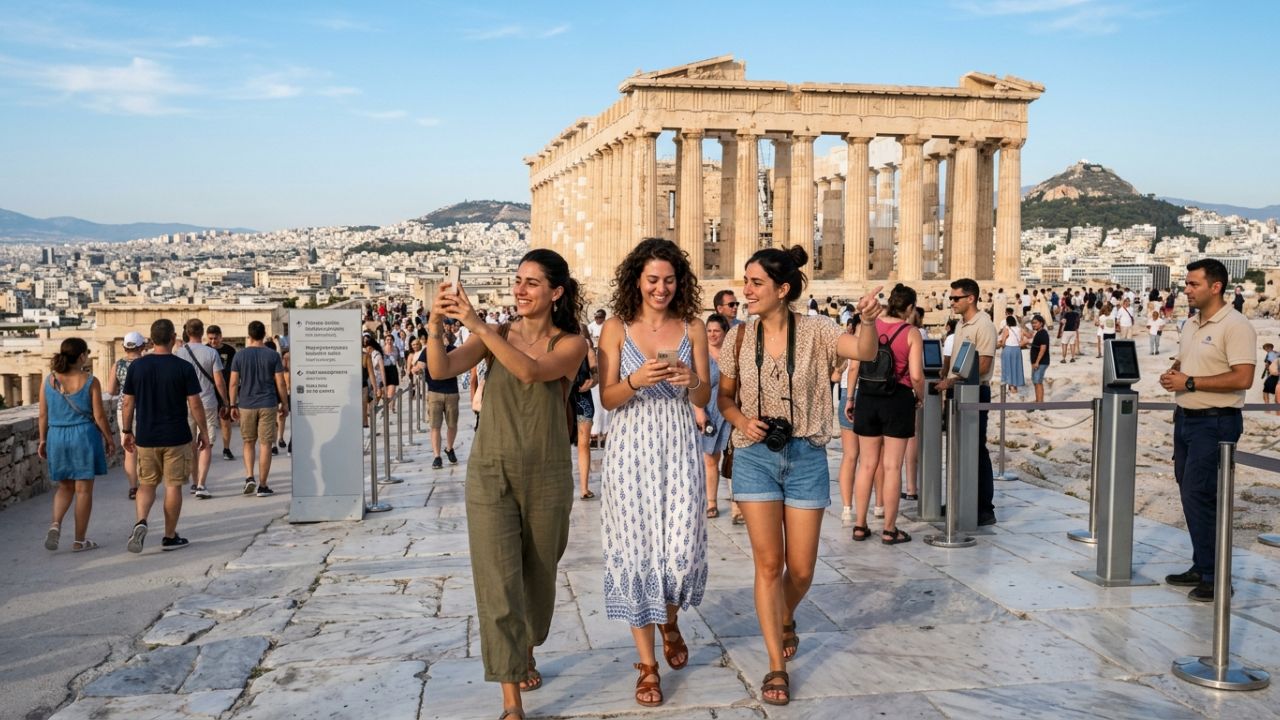
Image generated by AI
As global wanderlust aggressively rebounds and European transit hubs buckle under the sheer volume of international arrivals, Greece has become the epicenter of a massive infrastructural stress test. The Acropolis in Athens, long celebrated as a fundamental pillar of Western civilization, is currently experiencing record visitor demand throughout 2026. However, this massive influx of cultural tourism is threatening the physical integrity of the monument and simultaneously generating severe localized travel chaos. To prevent the structural degradation of its most vital historical asset—and to mitigate the compounding airport disruptions echoing out from the capital—the Greek Ministry of Culture is aggressively implementing strict sustainable tourism controls. For international travelers desperate to secure their itinerary against sudden access denials or the cascading effects of regional flight cancellations, understanding these new heritage protection frameworks is the ultimate survival intelligence required to successfully navigate the Greek summer season.
These strict regulations are not mere suggestions; they represent a fundamental paradigm shift in how Europe manages mass tourism. Greece is signaling that unrestricted access to the ancient citadel is over, forcing travelers to adopt military-level precision when planning their Mediterranean expeditions.
Context: The Infrastructure Strain of Mass Cultural Tourism
The Acropolis is far more than an ancient ruin; it is the economic engine driving the entirety of the Athens cultural tourism sector. As one of Europe’s leading cultural destinations, the ancient citadel draws millions of global visitors annually. However, the steady, unrelenting rise in tourist arrivals has transformed the site from a historical marvel into an operational chokepoint. The very footprint of millions of visitors is causing physical erosion on the ancient stone pathways, while seasonal overcrowding during the blistering summer months presents a severe safety hazard to unprepared tourists.
In direct alignment with UNESCO recommendations for safeguarding World Heritage Sites, Greek authorities have realized that without immediate intervention, the pressure of mass tourism will irreversibly damage the monument. The implementation of structured visitor management systems is not just about preservation; it is a tactical necessity to prevent the surrounding urban infrastructure from collapsing under the weight of human traffic. For the modern traveler, tracking these new access restrictions is as critical as monitoring the latest airline news—failing to secure digital entry could render a long-haul flight to Greece completely pointless.
Section-Wise Breakdown: Navigating the Acropolis Restrictions
The Imposition of Time-Slot Ticketing
The era of arriving at the Acropolis and purchasing a walk-up ticket is officially dead. To combat peak-hour congestion, authorities have mandated absolute adherence to time-slot ticketing systems. Visitors must digitally secure their entry window weeks in advance. Missing this specific window—even due to uncontrollable aviation updates or delayed ferries—will likely result in denied entry.
Controlled Entry Flow and Crowd Density Monitoring
Once on site, visitors are no longer permitted to roam the citadel freely. Enhanced monitoring of crowd density dictates the physical flow of foot traffic. Authorities are utilizing real-time monitoring systems to digitally track how many individuals are within specific protected zones. If a zone becomes too congested, physical barriers and visitor guidance systems will forcibly reroute tourists, ensuring conservation-based infrastructure limits are never breached.
The Urban Impact Across Athens
The surge at the Acropolis directly dictates the operational tempo of the entire city. Athens functions as both the primary historical destination and the central gateway to the wider Greek islands. When the Acropolis gridlocks, the surrounding archaeological zones, nearby Metro stations, and adjacent hospitality sectors experience immediate infrastructural strain. This interconnected ecosystem means that congestion on the rocky hill overlooking Athens instantly triggers localized transit chaos at the street level.
Technical Roster: Official Tourism Impact Matrices
To provide travelers with verifiable intelligence regarding the specific economic sectors impacted by this demand, and the exact historical sites governed by the new UNESCO-aligned conservation frameworks, the following matrices detail the explicitly verified operational parameters within the Athens Heritage Zone:
Key Tourism Impact Areas in Athens
| Sector | Contribution | Impact |
|---|---|---|
| Heritage tourism | Acropolis and ancient sites | Primary visitor attraction |
| Hospitality | Hotels and accommodation | High occupancy rates in peak season |
| Transport | Metro, taxis, tours | Increased urban mobility demand |
| Retail & dining | Local businesses | Strong visitor-driven revenue |
Key Locations Within the Acropolis and Athens Heritage Zone
| Site | Type | Significance |
|---|---|---|
| Parthenon | Temple | Iconic symbol of ancient Greece |
| Erechtheion | Temple complex | Religious and mythological importance |
| Propylaea | Entrance gate | Architectural landmark |
| Temple of Athena Nike | Religious structure | Classical heritage site |
| Acropolis Museum | Cultural museum | Artifact preservation and education |
Data sourced directly from official Greek Ministry of Culture heritage management frameworks detailing the 2026 sustainable tourism regulations.
Passenger Impact: The Logistical Reality of Modern Athens
The shift toward strict digital management fundamentally alters the tourist experience. Travelers arriving in Athens must now operate with absolute precision. The integration of smart tourism solutions—including mobile applications providing historical context and audio-guided multilingual tours—is designed to enhance educational engagement while simultaneously controlling visitor flow.
For the international traveler, the impact is severe. An unexpected delay at Athens International Airport or a missed ferry connection from Santorini can now obliterate an entire itinerary. Because Acropolis entry is strictly timed, travelers cannot afford the luxury of flexibility. Furthermore, ongoing conservation efforts—including the continuous restoration of marble structures, climate protection measures for ancient stonework, and structural reinforcement—mean that certain iconic vantage points may be temporarily obstructed. Tourists must aggressively monitor their digital ticketing applications and remain highly adaptable to sudden rerouting by site security.
Industry Analysis: The Future of UNESCO Conservation
As a designated UNESCO World Heritage Site, the Acropolis is subjected to strict international conservation guidelines ensuring that tourism activity does not compromise historical authenticity. Greek authorities are utilizing these guidelines to pioneer the future of global heritage management.
Industry analysts tracking the 2026 data note that the Greek strategy focuses heavily on expanding off-peak tourism promotion and strengthening conservation funding models through increased entry fees. By integrating educational augmented content for cultural interpretation and deploying real-time visitor flow monitoring systems, Greece is attempting to strike a delicate balance: maximizing revenue from global tourism while physically barricading the monuments from the destructive forces of that very same demand. These smart tourism systems are expected to become the global standard, deployed to protect hyper-congested heritage sites from Rome to Kyoto.
Actionable Advice for Bypassing Athens Gridlock
Because the Acropolis operates under zero-tolerance entry parameters, all visitors must execute this strategic planning checklist prior to arriving in Greece:
- Pre-Book Everything: Do not rely on local availability. Secure your digital time-slot tickets for the Acropolis and the Acropolis Museum months in advance, specifically targeting early morning or late afternoon windows to bypass peak thermal exposure and crowd density.
- Buffer Your Itinerary: Given the high likelihood of regional transit delays and airport disruptions, build a massive time buffer between your flight arrival into Athens and your scheduled Acropolis entry slot.
- Exploit Digital Infrastructure: Download all official Greek heritage mobile applications and audio-guided tours prior to departure. Relying on local cellular networks within the heavily congested ancient citadel is a tactical error.
FAQ: Acropolis Sustainable Tourism Controls
Why is Greece implementing strict tourism controls at the Acropolis?
The Acropolis is facing unprecedented record visitor demand in 2026, forcing Greek authorities to implement sustainable tourism controls to prevent physical erosion and structural damage to the ancient monument.
How do the new time-slot ticketing systems work?
Visitors must digitally secure a specific, non-negotiable entry time-slot prior to arrival. Missing this window due to transit delays will likely result in denied entry to manage crowd density.
What digital tools are being used to manage the site?
Greek authorities have integrated digital ticketing systems, real-time visitor flow monitoring, and mobile applications featuring augmented educational content to safely control and guide the millions of tourists on site.
Conclusion: Adapting to the New Mediterranean Reality
The implementation of aggressive sustainable tourism controls at the Acropolis marks the definitive end of spontaneous cultural travel in Greece. As Athens continues to experience staggering visitor demand throughout 2026, travelers must recognize that access to the world's greatest historical monuments is no longer guaranteed. Navigating this new landscape requires the same level of tactical preparation used to survive severe travel chaos and compounding airport disruptions. By utilizing digital ticketing, strictly adhering to designated time-slots, and maintaining a high level of operational flexibility, international tourists can successfully bypass the gridlock and witness the legacy of the ancient citadel before the crowds force even stricter preservation measures.
Key Takeaways
- Record Demand: The Acropolis is experiencing unprecedented 2026 visitor demand, triggering severe localized travel chaos across central Athens.
- Strict Controls: Greece has implemented time-slot ticketing and controlled entry flows to prevent structural damage and enforce UNESCO conservation guidelines.
- Digital Management: Real-time visitor flow monitoring and smart tourism applications are now actively used to control crowd density within the ancient citadel.
- Interconnected Gridlock: The surge at the Acropolis directly impacts the surrounding Athens infrastructure, increasing demand for Metro transport and hospitality services.
- Proactive Booking: Travelers must secure digital entry slots far in advance and build massive itinerary buffers to survive unexpected regional transit delays.
Related Travel Guides
Europe Overtourism Crisis: How to Bypass 80,000 Visitor Daily Cap in Top Heritage Hubs
Spain 100 Million Tourism Surge: Bypassing Travel Chaos and Airport Disruptions
Japan Expands Transit Hubs to Defeat Travel Chaos Amid Overtourism Crisis
Disclaimer
This article is for informational and educational purposes only. It does not constitute legal, financial, or professional advice. While we strive to provide accurate and up-to-date information, travel policies, regulations, and conditions change rapidly. Always verify information with official sources before making travel decisions. Nomad Lawyer makes no representations about the accuracy, reliability, completeness, or suitability of the information provided. Readers should consult qualified professionals for advice specific to their circumstances. The views expressed in this article are those of the author and do not necessarily reflect the views of Nomad Lawyer.
Kunal K Choudhary
Co-Founder & Contributor
A passionate traveller and tech enthusiast. Kunal contributes to the vision and growth of Nomad Lawyer, bringing fresh perspectives and driving the community forward.
Learn more about our team →