
China Underground Tourism: Tianquan Cave Chute Slide Blends 3-Million-Year-Old Geology with Adventure 2026

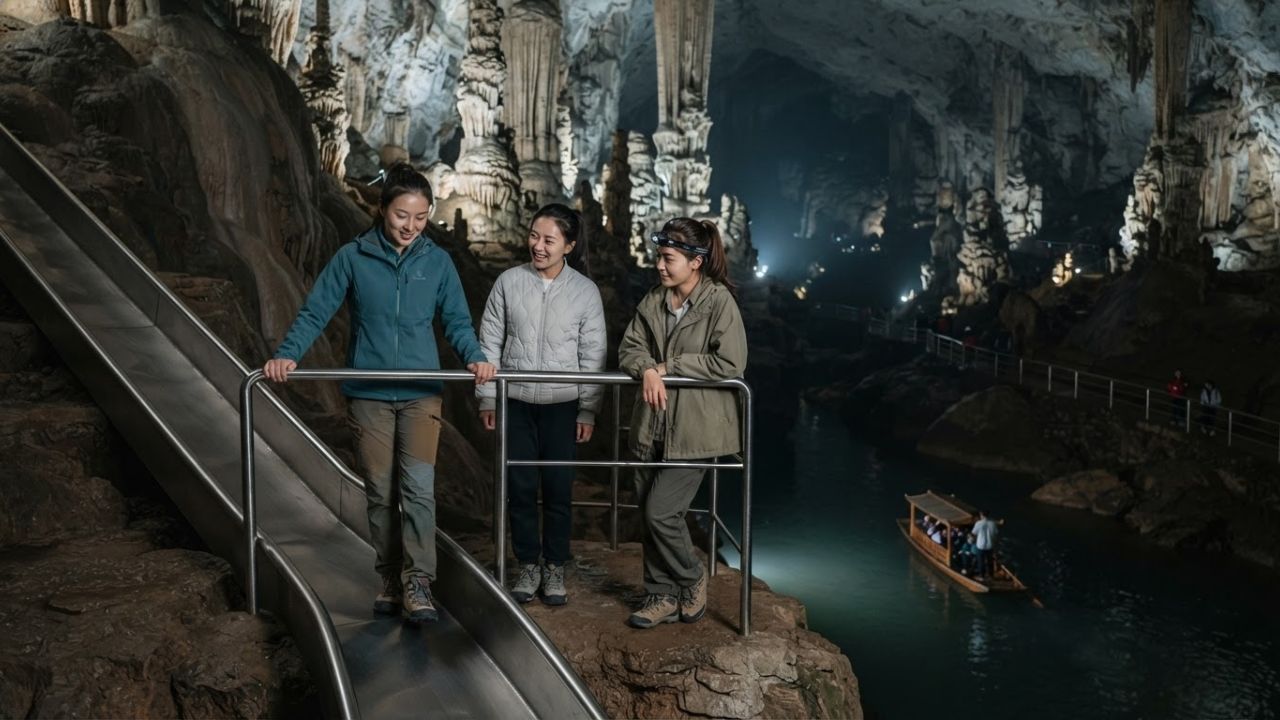
Carved by groundwater over nearly three million years within the UNESCO Global Geopark in Yibin, Sichuan, Tianquan Cave now lets adventurous travelers bypass traditional staircases via a rock-wall chute slide into a 10.5-kilometer subterranean cavern system. Featuring a 1.5-kilometer underground boat river, 18°C year-round microclimates, and indigenous Hmong cultural feasts, this geological marvel demonstrates how modern experiential tourism revitalizes deep karst heritage.
Subterranean exploration across southwest China is undergoing a radical transformation. Moving away from passive walking tours constrained to paved boardwalks, geological destinations are introducing kinetic adventures that engage younger demographics without compromising ancient speleological formations.
At the center of this trend is Tianquan Cave, situated within the renowned Xingwen Stone Sea Scenic Area in southern Sichuan Province. By integrating modern recreational engineering into a vertical karst labyrinth, the park allows visitors to slide through ancient rock fissures, navigate subterranean currents by boat, and participate in authentic minority cultural traditions.
The Local Trend Revealed: Thrill Engineering Meets Subterranean Karst
Rather than descending hundreds of concrete steps into the cavern abyss, visitors at Tianquan Cave can board a custom-engineered chute slide anchored directly against the natural limestone wall. The slide traces the natural contours of narrow rock crevices, equipped with targeted low-heat lighting systems that illuminate ancient mineral striations as riders glide downward into the main cavern.
This slide provides a rapid, memorable transition from surface daylight into the cavernous depths. Once inside the principal chamber, visitors disembark to begin a three-kilometer guided walking route that winds through the third and fourth vertical tiers of the cave network.
The attraction expands far beyond a single slide:
- Subterranean Boat Navigation: Deep within the lower chambers, travelers board traditional-style wooden boats to cruise along the 1.5-kilometer Tianquan underground river, surrounded by water-sculpted limestone overhangs.
- Aerial Ziplining: Above ground and near cavern portals, zip-lines offer sweeping aerial views across the geopark’s limestone pinnacles and massive sinkholes (tiankeng).
- Hmong Communal Feasts: Visitors gather for traditional long-table banquets, sampling regional Sichuan delicacies accompanied by traditional music and dance performances celebrating indigenous Hmong heritage.
| Speleological & Visitor Metric | Dimension / Specification | Operational Context |
|---|---|---|
| Geological Age | Estimated ~3 million years | Formed via continuous groundwater dissolution |
| Total Explored Length | Approximately 10.5 kilometers | Multilevel karst network with nearly 100 branches |
| Vertical Complexity | 4 distinct structural levels | Public sightseeing concentrated on levels 3 and 4 |
| Public Walking Route | Approximately 3 kilometers | Well-lit, secure walkways with anti-slip surfaces |
| Subterranean River | 1.5 kilometers navigable route | Explored aboard traditional wooden vessels |
| Internal Climate | Constant ~18°C throughout the year | Natural subterranean shelter from summer heat |
| Scenic Area Admission | 80 yuan (peak) / 40 yuan (off-peak) | Standard entrance to Xingwen Stone Sea Geopark |
| Chute Slide Fee | 20 yuan per descent | Optional adventure add-on ticket |
| Boat Journey Fee | 20 yuan per passenger | Optional underground river cruise ticket |
Cultural & Environmental Value: Speleological Conservation and Hmong Heritage
For the visitor, the real impact is discovering how high-thrill recreation can exist alongside rigorous environmental stewardship. Rather than marring the geological structure, the slide was engineered to follow existing rock faults, avoiding drilling into fragile flowstone sheets, stalagmites, or mineral columns.
The Sichuan Provincial Department of Culture and Tourism, working alongside the UNESCO Global Geoparks Network, enforces strict visitor caps and directional airflow monitoring to preserve the cave’s stable 18°C subterranean microclimate. Low-intensity, spectrum-filtered illumination lines the walkways to prevent lampenflora—the destructive artificial green algae growth that plagues illuminated cave systems worldwide.
Simultaneously, the attraction provides direct economic vitality to Xingwen County's indigenous Hmong (Miao) communities. Minority artisan cooperatives run the park's culinary pavilions, craft workshops, and performance stages. Tourism revenue circulates through local villages, supporting authentic silver-smithing, wax-resist batik textile arts, and sustainable bamboo farming across southern Sichuan.
Visitor Insider Tips: Exploring Tianquan Cave and Yibin's Karst Country
To maximize an excursion to Tianquan Cave and the Xingwen Stone Sea, follow these practical travel tips:
- Pack Appropriate Subterranean Footwear: The cave maintains a steady 18°C temperature with high relative humidity, causing stone stairs and walkways to stay damp. Wear sturdy walking shoes with deep rubber tread to prevent slips on limestone pathways. Bring a lightweight, water-resistant windbreaker to stay warm during the boat ride.
- Time Your Visit for Shoulder Months: Peak season runs through summer and national holiday weeks, pushing general admission to 80 yuan. Visit during spring (April to May) or autumn (late September to November) to secure the 40 yuan off-peak rate, avoid long lines at the chute slide, and enjoy tranquil boat rides along the underground river.
- Respect Hmong Dining Etiquette: When participating in a traditional long-table feast, honor local custom by accepting ceremonial toasts of sweet rice wine (choujiu) presented in small earthenware bowls. Never place chopsticks upright into rice bowls, as this mirrors ancestral offerings.
- Savor Yibin's Signature Gastronomy: Pair your cave trip with Yibin’s famed street-food specialties. Try Yibin Ranmian (burning noodles), tossed with spicy chili oil, minced pork, crushed peanuts, and fragrant fermented yacai greens. In summer, refresh with sweet iced bean jelly (bingfen) topped with brown sugar syrup.
- Transit Connections from Chengdu and Chongqing: Yibin is linked to both Chengdu and Chongqing via high-speed bullet trains taking under 90 minutes to Yibin West Railway Station. From Yibin, regional buses and chartered cars reach Xingwen County and the Stone Sea Scenic Area in approximately one hour via modern expressways.
Tourism Outlook: Redefining Geopark Tourism Across Southwest China
The successful integration of adventure elements inside Tianquan Cave sets an influential benchmark for nature reserves throughout China. As domestic and foreign travelers increasingly seek experiential depth over static sightseeing, destinations that blend ancient geology with physical adventure and authentic regional culture stand out.
By pairing three-million-year-old subterranean formations with low-impact slide engineering, quiet electric boat navigation, and meaningful minority community partnerships, Tianquan Cave proves that conservation and high-engagement tourism can thrive together beneath the earth.
Related Travel Guides
Disclaimer
This article is for informational and educational purposes only. It does not constitute legal, financial, or professional advice. While we strive to provide accurate and up-to-date information, travel policies, regulations, and conditions change rapidly. Always verify information with official sources before making travel decisions. Nomad Lawyer makes no representations about the accuracy, reliability, completeness, or suitability of the information provided. Readers should consult qualified professionals for advice specific to their circumstances. The views expressed in this article are those of the author and do not necessarily reflect the views of Nomad Lawyer.
Raushan Kumar
Founder & Lead Developer
Full-stack developer with 11+ years of experience and a passionate traveller. Raushan built Nomad Lawyer from the ground up with a vision to create the best travel and law experience on the web.
Learn more about our team →