
Breaking Tourism News: Extreme Biometric Border Defenses Deployed to Shield World Cup 2026 from Massive Travel Chaos
Breaking tourism news: Faced with the threat of catastrophic airport disruptions, North American authorities have activated extreme biometric border defenses to shield the FIFA World Cup 2026 from massive travel chaos.

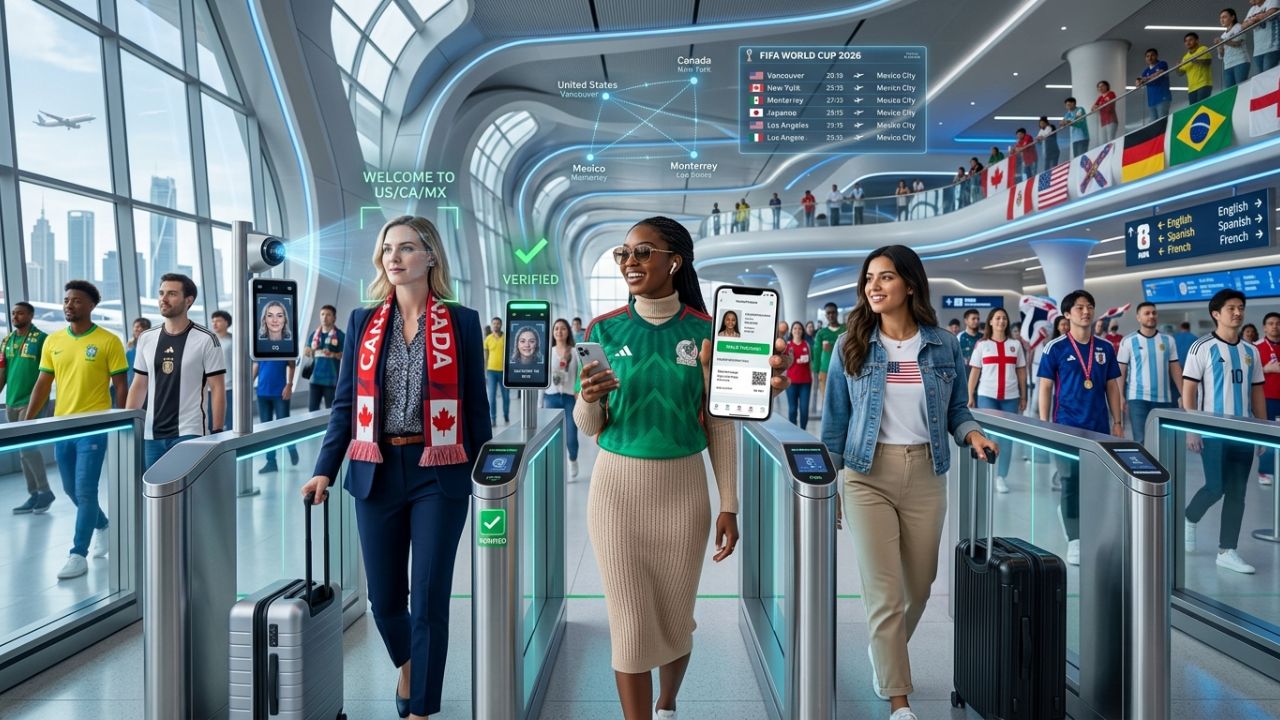
Image representing the intense technological defense activated across North American airports, utilizing aggressive biometric screening to process millions of international fans and prevent massive travel chaos during the World Cup 2026.
Breaking Tourism News: Extreme Biometric Border Defenses Deployed to Shield World Cup 2026 from Massive Travel Chaos
As paralyzing terminal bottlenecks, severe airspace congestion, and catastrophic operational fragility violently threaten to transform the largest sporting event in history into a grueling logistical nightmare, North American authorities have activated a massive emergency response. Driven by the unprecedented scale of the expanded 48-team FIFA World Cup 2026, the United States, Canada, and Mexico have deployed revolutionary digital border defenses to prevent total infrastructural collapse. A comprehensive intelligence report by the World Travel & Tourism Council (WTTC) confirms that without the immediate integration of extreme biometric identity screening, artificial intelligence, and trusted traveler frameworks, the influx of millions of international fans would trigger unparalleled airport disruptions. To combat this terrifying threat of summer travel chaos, these tech-driven systems—including the newly launched FIFA PASS and COMPASS platforms—have been aggressively weaponized to clear pre-approved international fans at high speed, establishing a critical global benchmark for secure, frictionless cross-border mobility.
In a brutal demonstration of how desperately global aviation and tourism sectors require extreme technological intervention to survive, the 2026 tournament is acting as a massive real-world testing ground. The sheer logistical scale of moving millions of international spectators across three distinct sovereign nations simultaneously meant that legacy immigration systems would have faced immediate, catastrophic failure. Border agencies were forced into a desperate pivot, rapidly deploying cutting-edge technological frameworks to violently balance absolute public safety with the high-speed passenger processing required to prevent massive flight cancellations and terminal gridlock.
Expanded Overview: Weaponizing Digital Borders
The terrifying reality of overwhelming passenger volumes brutally exposes the severe limitations of traditional physical passport checks. To prevent a massive operational meltdown, the three host countries have collaborated closely to completely replace outdated physical document checks with frictionless verification systems. This monumental event represents the culmination of a twenty-year evolution in global border management, designed explicitly to ensure that mass international migration can be processed effectively without creating monumental queues at major aviation gateways.
Section-Wise Breakdown: Decoding the Biometric Shield
To fully comprehend the massive technological countermeasures deployed to neutralize travel chaos, corporate travel planners and international tourists must rigorously review exactly how these specific digital platforms operate under extreme pressure.
The Trusted Traveler Shield: Processing Millions The operational core of this modern travel defense network relies heavily on aggressive pre-travel vetting. In a desperate bid to filter traffic before it hits congested terminals, the United States processed a record-breaking 5.9 million Electronic System for Travel Authorization (ESTA) applications in the intense lead-up to the opening games. Remarkably, over five million football fans received immediate automated approvals, granting them crucial visa-free entry privileges. Simultaneously, over 1.6 million frequent flyers successfully enrolled in expedited border systems, including Global Entry, NEXUS, and SENTRI, to facilitate swift terminal transits. This massive societal shift toward data-driven, pre-cleared security models drastically reduces the heavy administrative burdens placed on frontline officers, allowing them to focus entirely on genuine security threats while bypassing the threat of administrative gridlock.
FIFA PASS and COMPASS: AI-Driven Immigration To violently cut through the traditional confusion associated with multi-nation itineraries, authorities deployed bespoke artificial intelligence systems. The standout innovation, FIFA PASS, directly links tournament ticketing systems with national immigration databases to heavily expedite visa processing. Confirmed match ticket holders are automatically granted high-priority interview slots, neutralizing the threat of fans missing fixtures due to bureaucratic backlogs. Additionally, an advanced AI-powered digital assistant named COMPASS provides real-time, personalized guidance regarding complex custom requirements.
Regional Integration: ArriveCAN and Cross-Border Exemptions These interconnected software platforms successfully eliminate friction across the continent. Travelers holding valid visas for the UK or the Schengen Area can aggressively leverage special exemptions to enter Mexico seamlessly. Simultaneously, Canada is heavily utilizing its optimized ArriveCAN mobile application, requiring non-vetted passengers to submit digital customs declarations seventy-two hours (72 hours) before takeoff, effectively neutralizing processing delays upon arrival.
Biometric Eradication of Physical Documents The ultimate defense against terminal bottlenecks is the massive expansion of facial recognition software. At major aviation hubs, biometric comparison tools are rapidly replacing the standard practice of physical passport scanning. Eligible passengers enrolled in high-tier trusted traveler frameworks can walk directly through automated immigration lanes without ever presenting paper documents. Mexico has aggressively modernized its major aviation facilities by installing automated kiosks linked to its domestic Viajero Confiable framework. Tech providers such as Identy.io are leading this charge, designing highly secure mobile biometric authentication apps that allow fans to validate their identities remotely before they ever step foot on a plane.
World Cup 2026 Border Intelligence Matrix
To guarantee that travelers can aggressively track the specific technological metrics preventing a massive operational meltdown, the following matrix details the exact, verified deployment data dominating the tourism news.
| Verified Operational Metric | Digital Framework / Implementation Data |
|---|---|
| Tournament Scale | 48-team FIFA World Cup hosted across US, Canada, Mexico |
| ESTA Processing Volume | Record-breaking 5.9 million applications processed pre-tournament |
| Automated Visa Approvals | Over 5 million fans received immediate automated approvals |
| Expedited Border Enrollment | Over 1.6 million enrolled in Global Entry, NEXUS, and SENTRI |
| Bespoke AI Platforms | FIFA PASS (ticketing/immigration link) & COMPASS (digital guidance) |
| Regional Integration Tools | Canada's ArriveCAN (72hr advance) & Mexico's Viajero Confiable |
| Biometric Tech Providers | Identy.io leading remote biometric mobile authentication |
Data reflects the monumental technological deployment actively shielding North American airports from catastrophic gridlock.
Passenger Impact: Surviving the Logistical Gauntlet
For the millions of tourists attempting to confidently navigate the rapidly swelling, chaotic aviation networks across North America, these biometric defenses represent the ultimate difference between securing their seat in the stadium or being trapped in a terminal. Travelers suffering from the horrifying prospect of navigating aggressive security queues are actively utilizing these platforms to bypass delays. The combined impact of these high-speed clearance tools ensures that the massive influx of international fans does not trigger horrifying scheduling challenges, violently extended wait times, or massive operational meltdowns across the host nations.
Conclusion: The Future of Frictionless Transit
As the extremely critical North American transit network braces for the peak of the tournament, the monumental success of these biometric checkpoints provides an invaluable blueprint for the future of international tourism. Tourism experts agree that the legacy model of static visas and manual border gates is completely obsolete in the face of mega-event travel volumes. The real-world data gathered during this tournament proves that interoperable, multi-jurisdictional digital networks are the only viable defense against global travel chaos. This intelligence proves that surviving the modern era of hyper-congested aviation relies entirely on anticipating and aggressively utilizing digital border technologies to bypass the inevitable gridlock waiting at international gateways.
Key Takeaways
- Massive Administrative Processing: The US processed a record 5.9 million ESTA applications, granting over 5 million immediate automated approvals ahead of the 48-team tournament.
- Expedited Clearance: Over 1.6 million frequent flyers enrolled in expedited border systems (Global Entry, NEXUS, SENTRI) to bypass severe airport disruptions.
- AI Integration: The FIFA PASS system directly links match tickets with immigration databases, while COMPASS provides real-time AI customs guidance.
- Pre-Travel Declarations: Canada aggressively utilizes the ArriveCAN app to mandate customs declarations 72 hours prior to arrival.
- Touchless Biometrics: Physical passports are being rapidly replaced by facial recognition and automated systems, driven by platforms like Mexico's Viajero Confiable and tech providers like Identy.io.
Related Travel Guides
Disclaimer
This article is for informational and educational purposes only. It does not constitute legal, financial, or professional advice. While we strive to provide accurate and up-to-date information, travel policies, regulations, and conditions change rapidly. Always verify information with official sources before making travel decisions. Nomad Lawyer makes no representations about the accuracy, reliability, completeness, or suitability of the information provided. Readers should consult qualified professionals for advice specific to their circumstances. The views expressed in this article are those of the author and do not necessarily reflect the views of Nomad Lawyer.
Kunal K Choudhary
Co-Founder & Contributor
A passionate traveller and tech enthusiast. Kunal contributes to the vision and growth of Nomad Lawyer, bringing fresh perspectives and driving the community forward.
Learn more about our team →