
Charleston and Major US Cities Shift to Resident-Centric Tourism Management Model

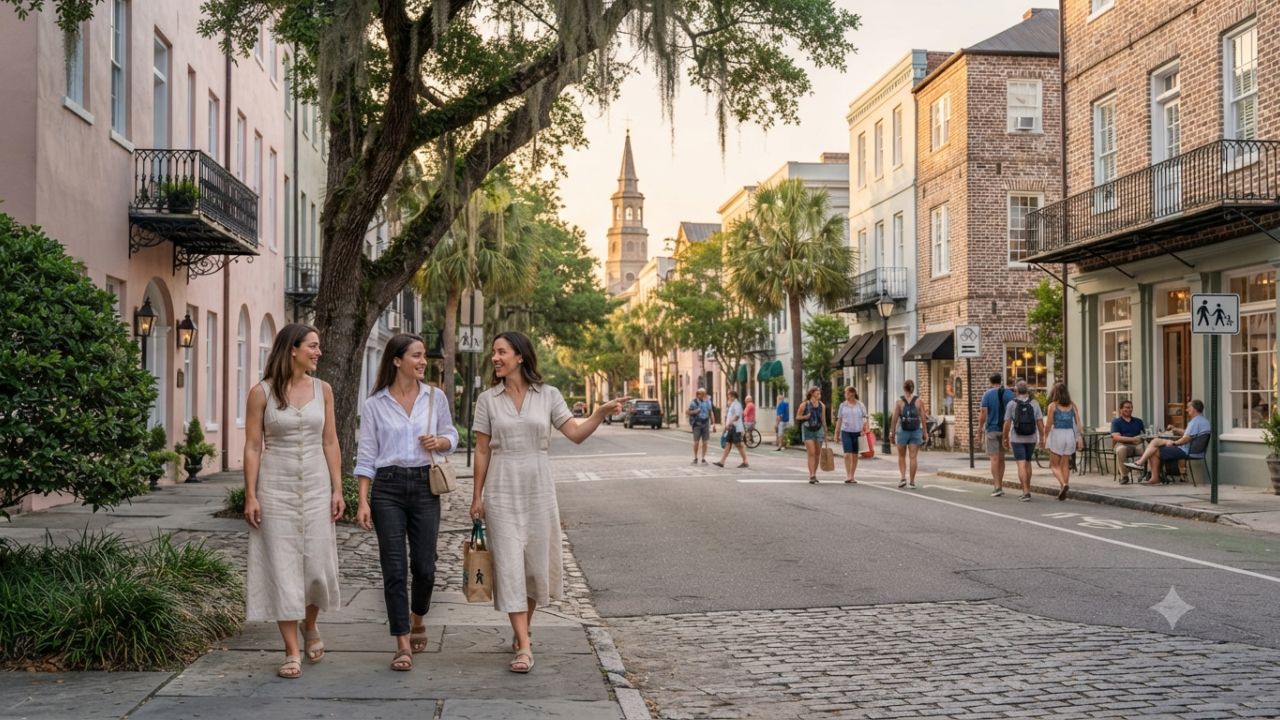
Image generated by AI
The City of Charleston is updating its historic Tourism Management Plan, joining major US cities including Los Angeles, Santa Monica, and Savannah in shifting from promotional marketing toward resident-centered visitor management and congestion control. As urban destinations across the United States navigate high visitor volumes, municipal planning departments are prioritizing destination stewardship over conventional travel promotion.
Originally enacting the nation's first formal city tourism management plan in 1978, Charleston is executing its fourth plan update. The 2026 initiative focuses on managing existing visitor flows, addressing traffic congestion, evaluating tourism revenue distribution, and dispersing visitor foot traffic beyond the historic peninsula to surrounding communities.
Charleston Advances Fourth Tourism Management Plan Update
Developing alongside the city’s broader peninsula planning framework, Charleston’s updated Tourism Management Plan is being shaped through a series of public open studio sessions. Following workshops conducted since July 2026, the city scheduled a public studio session for October 8, 2026, from 3:00 p.m. to 6:00 p.m., ahead of presenting a complete draft plan in November 2026.
Amy Southerland, Charleston’s Director of Livability and Tourism, emphasized that the initiative departs fundamentally from traditional destination marketing. Rather than seeking to attract higher visitor volumes, the plan establishes protocols to manage current visitor numbers while safeguarding resident quality of life and supporting local business operations.
A central element of the 2026 planning process involves geographic visitor distribution. City planners are evaluating strategies to draw tourists beyond the densely visited historic peninsula toward surrounding areas, including Daniel Island, Johns Island, and James Island.
Comparative Breakdown of US Destinations Implementing Stewardship Models
Charleston's move toward destination management reflects a growing national trend across American municipalities:
| City / Destination | Strategic Management Focus | Alignment with Charleston Model |
|---|---|---|
| Savannah, Georgia | Operates formal Tourism Management Plan balancing resident needs with tourism industry interests | Very High |
| Los Angeles, California | Tourism Master Plan targeting resident quality of life, visitor mobility & neighborhood dispersal | High |
| Santa Monica, California | 10-year Experience Management Plan covering residents, businesses, visitors & local workforce | High |
| Whitefish, Montana | Sustainable tourism planning mitigating overcrowding, transport, housing affordability & character | Very High |
| Jackson Hole, Wyoming | Sustainable Destination Management Plan focused on community wellbeing & growth management | Very High |
| Minneapolis, Minnesota | 10-year master plan connecting tourism development with neighborhood quality of life | Moderate–High |
| Oʻahu, Hawaii | Destination Management Action Plan addressing visitor hotspots, congestion & island dispersal | High |
| Lancaster, Pennsylvania | Master plan addressing geographic visitor distribution, parking, transport & neighborhood links | High |
| Hocking Hills, Ohio | Destination stewardship plan evaluating road capacity, overcrowding & resident access | High |
Source: Municipal Tourism Management Frameworks (2026).
National Trend Analysis: City-Wise US Tourism Marketing and Management Plans
Research conducted by the George Washington University International Institute of Tourism Studies evaluated 35 US destination stewardship and management plans. The study found that 94 percent of analyzed plans prioritized resident quality of life, while 77 percent explicitly addressed housing affordability or visitor overcrowding.
The table below outlines how major US metropolitan areas and regional destinations are structuring their strategic tourism plans between 2024 and 2026:
| City & State | Plan Name & Horizon | Primary Strategic Direction | Relevance to Charleston Model |
|---|---|---|---|
| Charleston, South Carolina | 2026 Tourism Management Plan Update | Visitor management, congestion, traffic, resident quality & peninsula dispersal | Very High |
| Los Angeles, California | Tourism Master Plan | Sustainable tourism, resident sentiment, neighborhood dispersal & mobility | Very High |
| Santa Monica, California | Experience Management Plan | Long-term stewardship of resident and visitor experience | Very High |
| Denver, Colorado | 2025 Tourism Roadmap | 10-year destination strategy, smart growth & resident quality of life | Very High |
| Seattle, Washington | 2025–2027 & 2026–2028 Strategic Plans | Destination stewardship, community engagement & sustainable visitor growth | High |
| Portland, Oregon | 2024–2026 & 2026–2028 Strategic Plans | Destination appeal, leisure travel, equity & convention management | High |
| Minneapolis, Minnesota | Destination Master Plan + 2026 Strategy | Long-term visitor economy, neighborhood development & events | High |
| Lancaster, Pennsylvania | 2026–2028 Tourism Plan | Destination management, unified branding, visitor infrastructure & local business | Very High |
| Sedona, Arizona | 2024–2025 Tourism Plan | Responsible visitation, stewardship, community engagement & economic vitality | Very High |
| Savannah, Georgia | Tourism Management Plan | Balancing tourism growth with resident needs & neighborhood impact | Very High |
| New York City, New York | 2024 Strategic Priorities | Global marketing, five-borough distribution & business event management | Moderate–High |
| Washington, D.C. | 2026 Sales & Marketing Strategy | Global promotion, resident storytelling & major international event hosting | Moderate–High |
| Philadelphia, Pennsylvania | 2025–2026 Development Plan | Neighborhood tourism, small business support & authentic heritage asset development | High |
| Scottsdale, Arizona | FY2026–27 Old Town Marketing Plan | City-led marketing, visitor conversion, local business support & campaigns | High |
| Carmel-by-the-Sea, California | 2024–2027 Marketing Services Strategy | Destination branding and promotion through Visit Carmel | Moderate |
| Hilton Head Island, South Carolina | 2024–2027 Destination Marketing Plans | Data-led destination marketing, resident sentiment & responsible promotion | High |
| Bluffton, South Carolina | 2024–2027 Regional Tourism Plans | Destination marketing, visitor economy management & regional travel | Moderate–High |
| Fayetteville, Arkansas | 2026 Tourism Marketing & Sales Plan | Sustainable tourism growth, community engagement & product development | High |
| Daytona Beach, Florida | 2024–2025 Marketing Plan | Visitor experience, local community integration & economic impact | Moderate–High |
Source: U.S. Destination Stewardship Survey & Municipal Master Plans (2024–2026).
Historical Peer Comparison: Savannah, Santa Monica, and Oʻahu
Examining peer destinations highlights how cities manage visitor activity within historic and coastal environments:
Savannah, Georgia
As a historic Southern coastal peer, Savannah operates a formal Tourism Management Plan designed to manage visitor concentration within historic squares and residential neighborhoods. The plan coordinates tour vehicle regulations, pedestrian infrastructure, and noise controls.
Santa Monica, California
Santa Monica executed a 10-year Experience Management Plan that brings residents, local businesses, visitors, and hospitality workers into a unified planning framework. The plan addresses beach access, parking infrastructure, public transit integration, and commercial corridor development.
Oʻahu, Hawaii
Under its Destination Management Action Plan, Oʻahu focuses on mitigating visitor congestion at high-density hotspots like Waikiki. The plan actively promotes visitor movement toward secondary cultural sites and regional communities across the island to reduce pressure on core infrastructure.
US City Tourism Planning FAQ: October 2026
When will Charleston publish its complete draft Tourism Management Plan? Following public studio sessions in July and October 2026, Charleston plans to present its complete draft Tourism Management Plan in November 2026.
Which areas outside the historic peninsula is Charleston targeting for visitor dispersal? City planners are evaluating opportunities to encourage visitor exploration on Daniel Island, Johns Island, and James Island.
What did academic research reveal about US destination stewardship plans? A study of 35 US plans by George Washington University found that 94 percent prioritized resident quality of life, and 77 percent addressed housing affordability or overcrowding.
Was Charleston the first US city to adopt a tourism management plan? Yes. Charleston established the first formal city tourism management plan in the United States in 1978. The 2026 initiative represents its fourth major update.
Why This Matters for Travel Destinations and Urban Communities in 2026
For urban travel destinations, the evolution from visitor marketing to destination stewardship redefines how tourism success is measured. Municipalities are acknowledging that unchecked visitor growth can strain public infrastructure, exacerbate traffic congestion, and diminish resident quality of life.
By adopting resident-centric management models, cities like Charleston, Santa Monica, and Savannah ensure that tourism remains an asset. Balancing economic benefits with traffic management, neighborhood preservation, and geographic dispersal creates resilient destinations capable of delivering exceptional visitor experiences while protecting community livability.
Related Travel Guides
Disclaimer
This article is for informational and educational purposes only. It does not constitute legal, financial, or professional advice. While we strive to provide accurate and up-to-date information, travel policies, regulations, and conditions change rapidly. Always verify information with official sources before making travel decisions. Nomad Lawyer makes no representations about the accuracy, reliability, completeness, or suitability of the information provided. Readers should consult qualified professionals for advice specific to their circumstances. The views expressed in this article are those of the author and do not necessarily reflect the views of Nomad Lawyer.
Kunal K Choudhary
Co-Founder & Contributor
A passionate traveller and tech enthusiast. Kunal contributes to the vision and growth of Nomad Lawyer, bringing fresh perspectives and driving the community forward.
Learn more about our team →