
Brooklyn and 5 Global Cities Lead Bicycle Tourism Boom with New Infrastructure in 2026
Brooklyn, Copenhagen, and Berlin are spearheading a multi-billion dollar shift toward bicycle tourism, integrating protected lanes and e-bike technology to replace traditional tour buses.

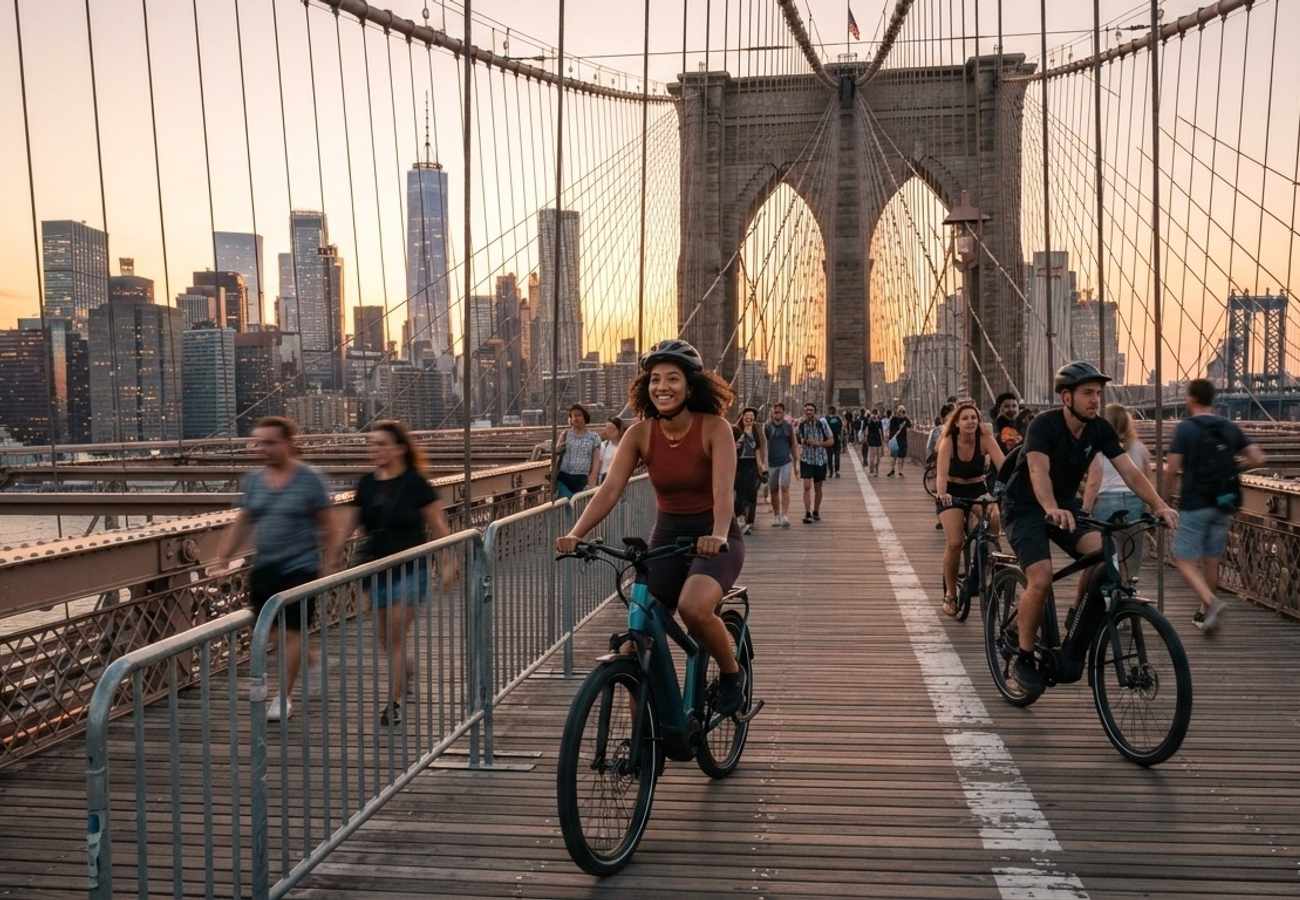
Image generated by AI
Global urban centers are pivoting away from tour-bus dependency, with Brooklyn and five other key cities deploying aggressive infrastructure upgrades to capture a cycling tourism market now valued in the tens of billions of dollars.
The Shift Toward Pedal-Powered Urban Exploration
Brooklyn has emerged as a primary hub for the accelerating bicycle tourism sector. Recent municipal planning documents and traffic data reveal a strategic expansion of protected bike lanes along critical corridors and enhanced access to waterfront greenways. The city's updated streets plan mandates the addition of dozens of miles of protected infrastructure, specifically designed to link Brooklyn’s residential neighborhoods with high-traffic bridges and parks.
This infrastructure surge coincides with record-breaking cycling volumes across the East River bridges. The dedicated cycling path on the Brooklyn Bridge, paired with traffic-calmed zones on the Brooklyn side, has transitioned the crossing from a high-stress transit point to a viable route for casual tourists and commercial bike operators.
Local commerce is adapting rapidly. Rental fleets in Williamsburg, DUMBO, and Red Hook are expanding, with a specific emphasis on e-bikes for first-time visitors. These operators are shifting away from high-mileage tours toward "slow travel" itineraries focusing on street art, gastronomy, and waterfront views.
Global Market Dynamics and Technology Integration
The growth in Brooklyn mirrors a global trend where the cycling tourism sector is seeing double-digit compound annual growth. Market analysts attribute this to a convergence of post-pandemic outdoor preferences, climate-conscious travel, and the democratization of e-bike technology.
The sector has evolved beyond performance riding into a diverse adventure travel market. Key drivers include:
- E-Bike Proliferation: Opening hilly terrains and longer distances to non-athletic travelers.
- Digital Navigation: GPS and route-planning apps reducing the barrier to entry for unfamiliar urban grids.
- Service Diversification: The rise of self-guided packages and professional luggage transfers between hotels.
Regional Infrastructure Benchmarks
Different global regions are employing varied strategies to integrate cycling into their tourism portfolios.
European Models: Copenhagen and Ghent
Copenhagen is utilizing a "positive impact" model to combat overtourism. The city has launched a pilot rewards scheme providing visitors with museum benefits, food, or coffee in exchange for documented eco-friendly behavior, such as cycling.
In Belgium, Ghent has leveraged its 500 kilometers of cycling infrastructure and specialized bike-friendly bridges to create a car-light city center. This allows visitors to navigate between major attractions entirely via two wheels, a model now supported by the European Union’s declaration on cycling as a strategic tool for decarbonization.
Emerging Hubs: Florence, Hoboken, and Berlin
Other cities are focusing on "everyday riding" to create a safer environment for tourists:
- Florence: Implementing public fund incentives for residents who commute by bike, creating a cultural norm that benefits visiting riders.
- Hoboken: Expanding bike-share systems that recorded over one million rides in a single year, facilitating transit between the Hudson River waterfront and New York City.
- Berlin: Utilizing crowdsourced data and counting stations to identify high-volume corridors, allowing the city to prioritize wayfinding and lane expansion where tourists and residents overlap.
Comparative Transit Specifications
| City | Primary Infrastructure Focus | Key Tourism Driver | Policy Mechanism |
|---|---|---|---|
| Brooklyn | Waterfront Greenways & Bridges | Neighborhood-focused "Slow Travel" | Municipal Streets Plan Updates |
| Copenhagen | Integrated City-Wide Lanes | Eco-Rewards & Sustainability | Positive Impact Pilot Scheme |
| Ghent | 500km+ Network / Bike Bridges | Car-Light Center Access | EU Decarbonization Strategy |
| Florence | Resident-First Infrastructure | Safety via Local Normalization | Public Fund Incentives |
| Hoboken | Dense Bike-Share Networks | Waterfront Connectivity | E-bike Membership Scaling |
| Berlin | Data-Driven Corridor Mapping | Optimized Wayfinding | Crowdsourced Volume Analysis |
Traveler Logistics Guide: Navigating the Bike-Tourism Wave
From a ground-level perspective, the best way to navigate these evolving networks is to prioritize "multimodal" planning.
Booking and Equipment For those visiting Brooklyn or Berlin, avoid relying solely on walk-in rentals. Use integrated apps to reserve e-bikes in advance, especially during peak summer months. If traveling between European cities, verify that your hotel offers "bike-friendly" storage to avoid theft—a common pain point in dense urban centers.
Navigating Customs and Digital Policies When moving across borders in Europe (e.g., Belgium to the Netherlands), ensure your rental agreement covers cross-border transit. For those utilizing bike-share systems in the US, link your payment method to a digital wallet to avoid the friction of physical kiosks.
Optimal Routing Avoid primary arterial roads during morning and evening rush hours (07:00–09:00 and 16:00–18:00). Instead, utilize the "greenway" systems—such as those in Brooklyn—which are physically separated from vehicular traffic and offer a more immersive experience.
Infrastructure Impact Assessment
The transition toward bicycle-centric tourism represents a fundamental shift in urban economic development. By treating cycling infrastructure as a tourism asset rather than just a commuter utility, cities are reducing the environmental load of traditional tourism. This shift decentralizes visitor footprints, moving crowds away from "overloaded hotspots" and distributing economic benefits into smaller neighborhood businesses in areas like Red Hook or the outskirts of Berlin.
The urban grid is no longer just a map of roads, but a curated gallery of experiences accessible only at five miles per hour.
Related Travel Guides
Disclaimer
This article is for informational and educational purposes only. It does not constitute legal, financial, or professional advice. While we strive to provide accurate and up-to-date information, travel policies, regulations, and conditions change rapidly. Always verify information with official sources before making travel decisions. Nomad Lawyer makes no representations about the accuracy, reliability, completeness, or suitability of the information provided. Readers should consult qualified professionals for advice specific to their circumstances. The views expressed in this article are those of the author and do not necessarily reflect the views of Nomad Lawyer.
Kunal K Choudhary
Co-Founder & Contributor
A passionate traveller and tech enthusiast. Kunal contributes to the vision and growth of Nomad Lawyer, bringing fresh perspectives and driving the community forward.
Learn more about our team →