
Bolivia Establishes 907,244 Hectares Across Four Amazon Municipal Reserves for Community Ecotourism
Bolivia designates 907,244 hectares across four new municipal protected areas, connecting Madidi with community-led Amazon river safaris and agroforestry trails.

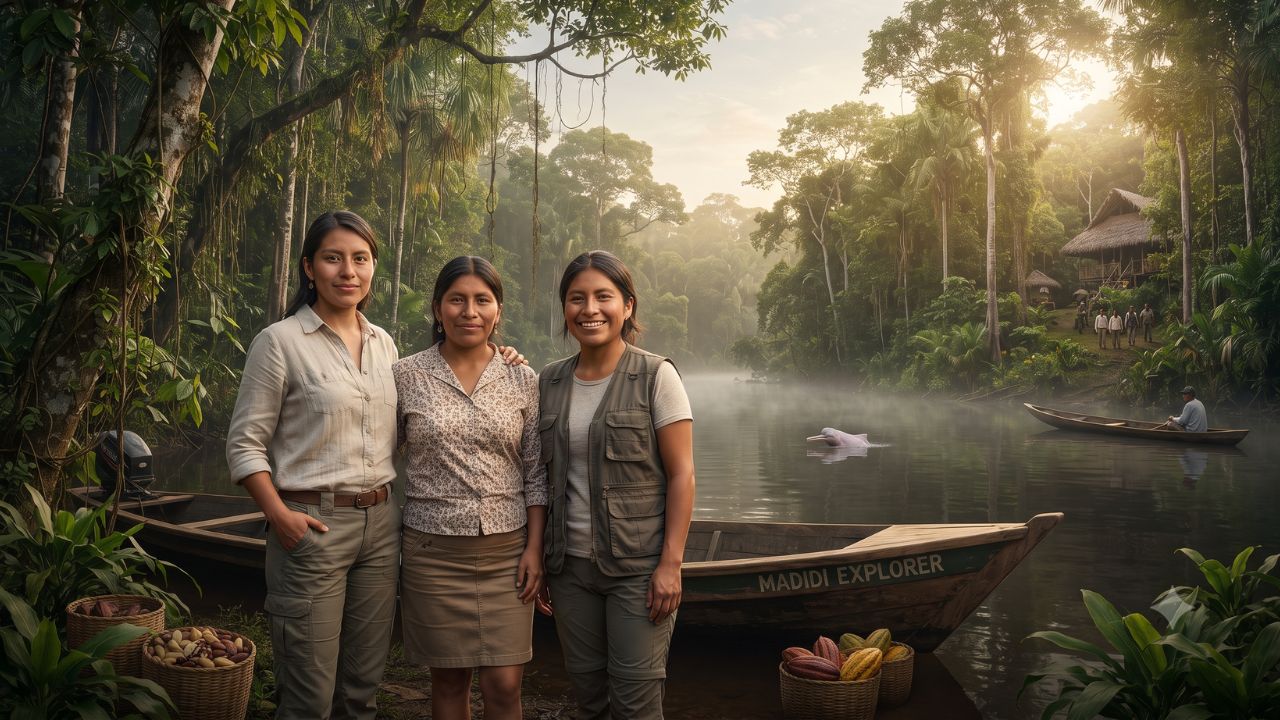
Image generated by AI
Bolivia has officially designated 907,244 hectares of pristine tropical rainforest and river corridors across four new municipal protected areas, creating expansive ecological pathways that link the high Andes with the Amazon basin to catalyze community-led wildlife safaris and sustainable agroforestry tourism.
Announced on September 5, 2026, the sweeping conservation framework establishes four municipal reserves: Gran Paitití, Los Palmares de Villa Nueva, Guardián Amazónico Pacahuara, and Serranías de Palos Blancos. Spanning northern and central Bolivia, these newly safeguarded territories connect existing national parks like Madidi with autonomous Indigenous homelands, including lands of the Mosetén and Pacahuara peoples. Rather than isolating remote forests from regional economies, the municipal initiative empowers local river communities and Indigenous cooperatives to operate guided wildlife expeditions, riverboat journeys, and agroforestry tours centered on wild cacao and native Brazil nut harvesting.
The Local Trend Revealed: Municipal Corridors Connect the Andes to the Amazon
For decades, international tourism in Bolivia focused overwhelmingly on highland attractions—the historic streets of La Paz, Lake Titicaca, and the vast expanse of the Salar de Uyuni. While Madidi National Park earned global acclaim as one of the planet's most biologically diverse protected zones, surrounding lowland municipalities faced intense pressures from commercial logging and agricultural expansion.
The establishment of 907,244 hectares across four municipal conservation areas fundamentally alters this dynamic by closing critical habitat gaps:
- Gran Paitití: Protects dense lowland rainforests and sacred cultural corridors, establishing sustainable wildlife observation routes that interpret traditional forest uses.
- Serranías de Palos Blancos: Anchors the rugged sub-Andean mountain ridges (Yungas ecotone), preserving essential watershed headwaters and forested hiking routes in the department of La Paz.
- Los Palmares de Villa Nueva: Safeguards vulnerable Amazonian palm wetland forests, providing vital sanctuary for migratory birds, tapirs, and felines.
- Guardián Amazónico Pacahuara: Protects remote river basins in northern Bolivia, safeguarding ancestral territories while providing controlled avenues for scientific expeditions and low-impact nature travel.
Managed directly by municipal governments in close consultation with Indigenous federations, these reserves bypass top-down bureaucratic models. Local authorities establish visitor regulations, set conservation boundaries, and train resident naturalists to lead river excursions along pristine waterways where roads do not exist.
| Reserve Parameter | Official Conservation Specification |
|---|---|
| Total Territory Protected | 907,244 hectares across four municipal reserves |
| Designated Reserves | Gran Paitití, Los Palmares de Villa Nueva, Guardián Amazónico Pacahuara, Serranías de Palos Blancos |
| Ecological Transition | High Andean Yungas cloud forests descending to lowland Amazon basin |
| Anchor National Park | Madidi National Park (direct biological corridor connection) |
| Indigenous Affiliations | Territories associated with Mosetén, Tsimané, and Pacahuara communities |
| Primary Wildlife Assets | Giant river otters, pink river dolphins, jaguars, black caimans, spider monkeys |
| Sustainable Forest Products | Wild native cacao, wild-harvested Brazil nuts (castaña) |
Cultural & Environmental Value: Indigenous Ethnobotany and River Sanctuary
The creation of these corridors preserves some of South America's most intricate riparian food webs while providing a legal shield for traditional Indigenous ways of life.
By keeping these 907,244 hectares free from industrial development, the reserves secure uninterrupted migratory paths for apex predators and aquatic mammals. Motorized river excursions along the Beni, Tuichi, and Kaka rivers bring travelers into direct proximity with endangered giant river otters (Pteronura brasiliensis), black caimans, red howler monkeys, and pink river dolphins (Inia boliviensis). Because access is strictly managed by boat, sensitive riverbanks remain protected from heavy road construction and erosion.
Culturally, the corridors honor ancient agroforestry traditions. For centuries, Mosetén and riverbank campesino families have sustained themselves through non-timber forest harvesting. Travelers can participate in interpretive walks through ancient groves to observe the gathering of wild Brazil nuts (Bertholletia excelsa) and ancestral shade-grown wild cacao (Theobroma cacao). Purchasing these single-origin forest products directly from community cooperatives provides sustainable financial incentives to keep native canopies standing.
Visitor Insider Tips: Navigating the Bolivian Lowlands
Travelers embarking on expeditions into Bolivia’s newly expanded Amazon corridors should prepare with specific operational advice:
- Expedition Gateways and Air Connections: Begin your journey by flying from La Paz El Alto Airport (LPB) to the lowland outpost of Rurrenabaque (RBQ) aboard EcoJet (approx. 40 minutes), or take regional ground transport down through the dramatic cloud forests of Palos Blancos. From Rurrenabaque and neighboring San Buenaventura, all travel into the interior relies on motorized long-tail wooden riverboats (peki-pekis).
- Optimal Wildlife Viewing Seasons: The dry winter season between May and October offers the best wildlife observation conditions. Receding river levels expose extensive sandbanks where caimans, river turtles, tapirs, and jaguars congregate to bask and drink, while hiking trails remain firmer and mosquito activity is minimized.
- Witnessing the Brazil Nut Harvest: To experience Amazonian agroforestry traditions, visit during the wet summer months between December and March, when massive woody pods drop from the canopy and local harvesting cooperatives gather and shell nuts using traditional machete techniques.
- Mandatory Health Requirements: Carry an official International Certificate of Vaccination against Yellow Fever, as proof of immunization is frequently checked at regional transit points. Pack broad-spectrum insect repellent, malaria prophylaxis if recommended by your travel health clinic, and high-strength water purification tablets.
- Local Amazonian Culinary Specialties: Savor authentic regional gastronomy in riverside communities, including sudado de pacú (succulent freshwater fish steamed with herbs inside wild banana leaves), majadito de charque (toasted rice sautéed with shredded sun-dried beef, sweet plantains, and fried eggs), and rich, stone-ground hot chocolate made from wild forest cacao beans.
Tourism Outlook: A Decentralized Model for Amazon Conservation
The protection of 907,244 hectares across Gran Paitití, Los Palmares de Villa Nueva, Guardián Amazónico Pacahuara, and Serranías de Palos Blancos signals an important shift toward grassroots conservation tourism in the Amazon basin.
By placing environmental jurisdiction into the hands of local municipalities and Indigenous caretakers, Bolivia demonstrates that biodiversity protection thrives when local communities actively benefit from the visitor economy. For discerning international adventurers, these emerging corridors unlock unvarnished wilderness, living Indigenous heritage, and genuine conservation impact deep within the beating green heart of South America.
Related Travel Guides
Disclaimer
This article is for informational and educational purposes only. It does not constitute legal, financial, or professional advice. While we strive to provide accurate and up-to-date information, travel policies, regulations, and conditions change rapidly. Always verify information with official sources before making travel decisions. Nomad Lawyer makes no representations about the accuracy, reliability, completeness, or suitability of the information provided. Readers should consult qualified professionals for advice specific to their circumstances. The views expressed in this article are those of the author and do not necessarily reflect the views of Nomad Lawyer.
Raushan Kumar
Founder & Lead Developer
Full-stack developer with 11+ years of experience and a passionate traveller. Raushan built Nomad Lawyer from the ground up with a vision to create the best travel and law experience on the web.
Learn more about our team →