
Bhutan and Laos Align With Many Others as Foreign Gateway Destinations Redraw Asia’s Tourism Map
Bhutan and Laos Align With Many Others as Foreign Gateway Destinations Redraw Asia’s Tourism Map

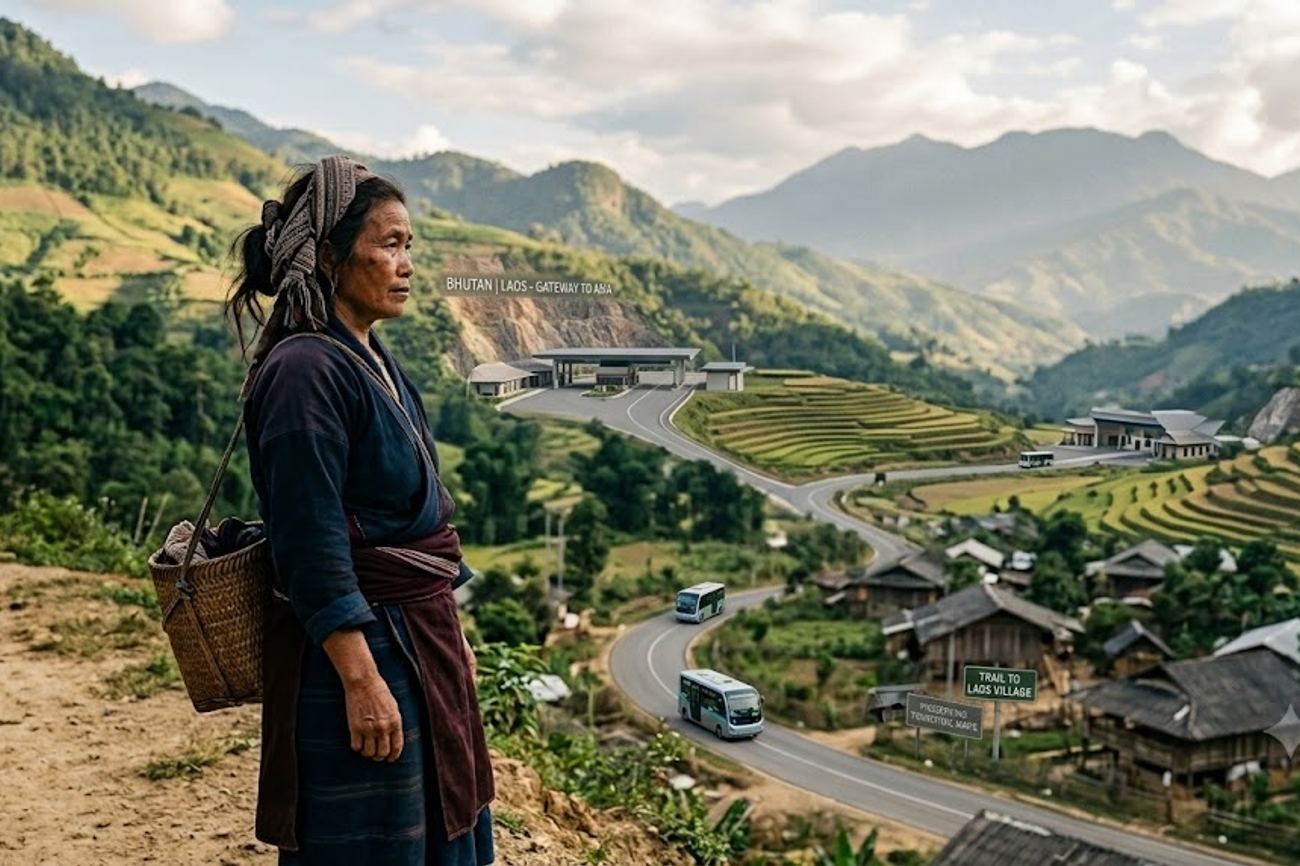
Image generated by AI
title: The Invisible Maps of Asia: Navigating Beyond Political Borders date: 2024-05-20 tags: [Sikkim-Travel-2024, Bhutan-Border-Tourism, Timor-Leste-Oecusse, Himalayan-Logistics, Southeast-Asia-Transit]
The most practical way to enter a country is often not through its own borders, but through the infrastructure of its neighbor. In the high altitudes of the Himalayas and the fragmented coasts of Southeast Asia, the political map is frequently a lie when it comes to actual movement.
The Rise of the Alternative Gateway
For decades, the standard travel logic dictated that you fly into a nation's capital or its primary international hub. However, a shift is occurring across Asia where geography—not sovereignty—dictates the route. In regions defined by jagged peaks, dense jungles, or colonial-era enclaves, the most efficient "front door" to a destination often exists in a different country entirely.
This is not merely a matter of convenience; it is a structural reality of Asian transit. When a destination is landlocked or mountainous, a neighboring country's airport may offer superior connectivity, more stable weather patterns, and better road networks than the domestic options. We are seeing the emergence of "tourism corridors" that ignore national lines, favoring river valleys and paved highways over immigration checkpoints. This evolution is transforming how we plan itineraries, moving away from a hub-and-spoke model toward a fluid, cross-border flow.
The Himalayan Paradox: Sikkim and Bhutan
In the Indian state of Sikkim, the tension between proximity and practicality is stark. On a map, Pakyong Airport is the logical choice, sitting just 27–35 km from the capital, Gangtok. Yet, seasoned travelers and official tourism planners frequently bypass it. The reality is that Pakyong is plagued by weather sensitivity and limited flight schedules.
Instead, the strategic heart of Sikkim’s access is Bagdogra Airport, located in the neighboring state of West Bengal. Despite being 124 km away from Gangtok, Bagdogra serves as the primary gateway because it connects to a vast network of major Indian cities. The logistical chain is further reinforced by New Jalpaiguri, also roughly 124 km from Gangtok, which serves as the principal railhead. For those navigating this region, the lesson is clear: the shortest distance on a map is rarely the fastest route to the hotel.
Bhutan operates on an even more sophisticated multi-gateway system. While Paro and Gelephu handle international aviation—connecting the kingdom to hubs like Bangkok, Dubai, Singapore, Delhi, Kolkata, and Kathmandu—the country relies heavily on four Indian land entry points. These are Samtse and Phuentsholing in the west, Gelephu in the center, and Samdrup Jongkhar in the east.
The Bhutanese government is now actively leaning into this border-centric model. Starting 2 June 2026, a new policy will allow tourists visiting specific areas of these four border towns to receive a Sustainable Development Fee (SDF) waiver for stays up to 24 hours. This effectively turns immigration checkpoints into legitimate tourism destinations, encouraging a slower, overland approach to the kingdom. For more details on entry requirements, the Official Bhutan Tourism portal provides the most current regulatory updates.
Oecusse: The Enclave Experience
Perhaps the most extreme example of border-defying travel is Oecusse-Ambeno. This coastal enclave of Timor-Leste is physically severed from the rest of its own country, entirely surrounded by Indonesian territory. To travel from the capital, Dili, to Oecusse by land, you must exit Timor-Leste, enter Indonesia, and then re-enter Timor-Leste.
This geographical quirk turns a domestic trip into an international expedition. To bypass the complexities of Indonesian transit, the government operates a ferry network. These services, starting at US$8, provide a direct link between Dili and Oecusse. However, these sailings are notoriously weather-dependent and timetable-sensitive. For those exploring the broader region, understanding the UNESCO World Heritage sites in neighboring Indonesia often provides the necessary context for why these borders were drawn so sporadically.
Visitor Insider Tips
Navigating the Sikkim Corridor If you are heading to Gangtok, do not book your flight based on distance. Fly into Bagdogra. While the drive is longer (124 km), the reliability of flights is significantly higher. Use the Siliguri corridor as your base for transport; it is the most dependable road connection (114 km to Gangtok) and offers the most competitive rates for private taxis.
The Bhutan Border Hack For those entering via India, Phuentsholing is the most common gateway for western itineraries. However, if you are visiting eastern Bhutan, skip the long internal drive from Paro and enter via Samdrup Jongkhar. Be mindful of the 2 June 2026 SDF waiver; planning a 24-hour stopover in a border town can significantly reduce your overall trip cost.
Timor-Leste Transit When visiting Oecusse, the ferry is the most seamless option to avoid multiple visa stamps, but always have a "Plan B" for your return to Dili. Ferry schedules are fluid. If you choose the overland route through Indonesia, ensure your Indonesian visa is current and you have a reliable driver who is familiar with the specific border crossing points.
Regional Etiquette In the Himalayan regions of Sikkim and Bhutan, dress modestly. When visiting monasteries or government buildings, ensure shoulders and knees are covered. In Bhutan, it is customary to walk to the side of the road to let official convoys pass.
Cultural and Environmental Context
The shift toward these "alternative gateways" reflects a broader struggle between national identity and economic pragmatism. In places like Sikkim and Bhutan, the reliance on Indian infrastructure creates a symbiotic relationship that transcends politics. However, this also places immense pressure on "gateway towns" like Phuentsholing and Siliguri, which must balance the needs of local residents with a massive influx of transient tourists.
Environmentally, the reliance on long road transfers (such as the 124 km trek from Bagdogra to Gangtok) increases the carbon footprint of each visitor. Bhutan is attempting to mitigate this by promoting its SDF (Sustainable Development Fee) to ensure that tourism remains "high value, low impact." By waiving fees for short stays in border towns, Bhutan is attempting to distribute tourism wealth more evenly across its periphery rather than concentrating it in the Paro-Thimphu corridor.
In Timor-Leste, the Oecusse enclave highlights the lasting impact of colonial mapping. The need for diplomatic coordination with Indonesia is not just a logistical hurdle but a daily exercise in sovereignty. Tourism here serves as a vital economic lifeline for a community that is geographically isolated from its own government.
FAQ: Visiting Asia's Border Regions 2024
What is the best time to visit Sikkim and Bhutan? The prime windows are March to May (spring) and September to November (autumn). During these months, the mountain passes are generally open, and the weather is stable enough for flights into Pakyong or Paro.
Do I need a visa for the Oecusse enclave? If you arrive by ferry from Dili, you only need your Timor-Leste entry permit. However, if you travel overland, you must possess a valid visa or entry permit for Indonesia, as you will be crossing international borders twice.
How do I get to Gangtok from Bagdogra Airport? The most common method is a private taxi or a shared jeep. The journey covers approximately 124 km and typically takes 4 to 6 hours depending on road conditions and traffic in the Siliguri corridor.
Is it safe for solo travelers to use cross-border transport? Yes, provided you use official transport operators. In Bhutan and Sikkim, registered tour operators are often mandatory or highly recommended. In Timor-Leste, stick to government-operated ferries or reputable agencies for enclave transit.
The map tells you where the country ends, but the road tells you where the journey actually begins.
Related Travel Guides
- United Kingdom Tourism Gains Momentum as Halton Visitor Economy Reaches £225 Million in 2025
- Abu Dhabi Boosts Tourism Strategy 2030 With New Digital Platform for Island and Sea Experiences
- Turkey Aligns With France And More Countries In Attracting Tourists As 8% European Travellers Fuel New Tourism Opportunities
Disclaimer
This article is for informational and educational purposes only. It does not constitute legal, financial, or professional advice. While we strive to provide accurate and up-to-date information, travel policies, regulations, and conditions change rapidly. Always verify information with official sources before making travel decisions. Nomad Lawyer makes no representations about the accuracy, reliability, completeness, or suitability of the information provided. Readers should consult qualified professionals for advice specific to their circumstances. The views expressed in this article are those of the author and do not necessarily reflect the views of Nomad Lawyer.
Raushan Kumar
Founder & Lead Developer
Full-stack developer with 11+ years of experience and a passionate traveller. Raushan built Nomad Lawyer from the ground up with a vision to create the best travel and law experience on the web.
Learn more about our team →