
Austria and Italy Target Mid-2027 for Transfer-Free Innsbruck-Bolzano Coradia Rail Service
Austria's planned transfer-free regional rail link between Innsbruck and Bolzano is now targeted for mid-2027, facing critical certification hurdles from ERA and ANSFISA despite the procurement of new Coradia Stream trains.

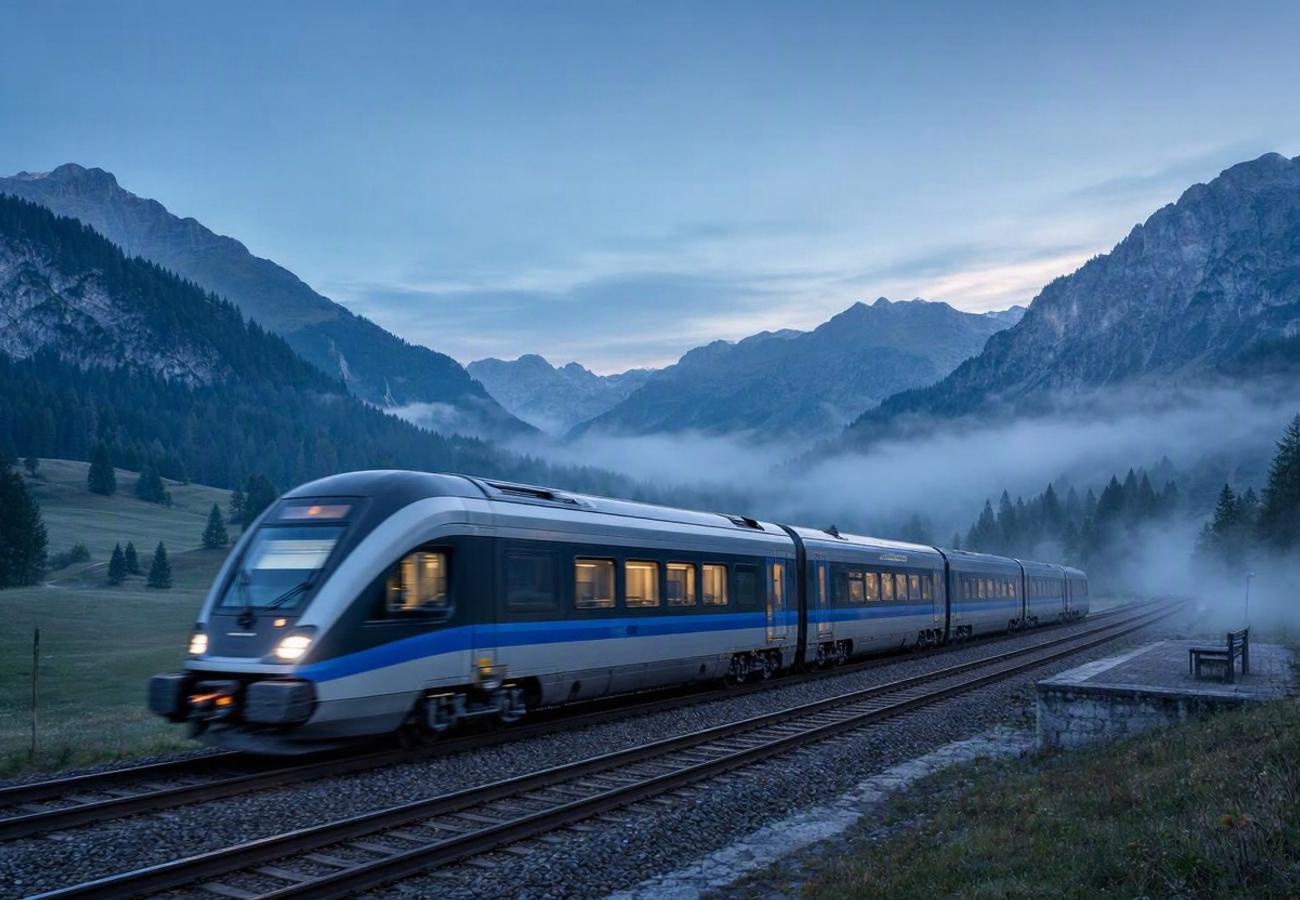
Image generated by AI
The target for the first international operations of the Innsbruck–Bolzano cross-border service has shifted from December 2026 to mid-2027, marking a six-month slide in the timeline for one of the Alps' most anticipated regional rail upgrades. This delay highlights a growing industry pattern where the procurement of rolling stock is no longer the primary bottleneck; instead, the "last mile" of regulatory certification and systems integration is now the dominant variable in European rail deployment.
The Brenner Connectivity Gap in Numbers
The transition to a seamless regional connection between Austria and Italy is currently stalled by technical and regulatory friction. While the State of Tyrol maintains a mid-2027 launch goal, the Autonomous Province of Bolzano–South Tyrol confirmed on October 1 that the Coradia Stream fleet is unable to reach Merano. This is due to pending approvals from the European Union Agency for Railways (ERA), Italy’s rail safety authority (ANSFISA), and the Rete Ferroviaria Italiana (RFI).
The operational complexity is significant. The Vinschgau railway modernization is the first regional line in Italy to implement ETCS Level 2 (European Train Control System), a move intended to standardize signaling across borders. However, the interaction between new power infrastructure and onboard technical components has led to service irregularities, meaning the "seamless" experience is currently limited to the Mals-Latsch segment.
Comparative Shift: 2023 vs. 2026 Projections
A comparison of official statements from June 2023 against the October 2026 status reveals a narrowing of scope and a pushback in delivery. The initial ambition for half-hourly service has been replaced by a more conservative hourly frequency for the launch phase.
Evolution of the Innsbruck–Bolzano Rail Project
| Planning Metric | June 2023 Position | October 2026 Status | Impact on Travel Planning |
|---|---|---|---|
| Launch Date | December 2026 | Mid-2027 (Target) | Avoid booking based on 2026 dates |
| Service Frequency | Half-hourly | Hourly | Lower capacity than originally projected |
| Route Scope | Innsbruck $\rightarrow$ Bolzano | Innsbruck $\rightarrow$ Bolzano $\rightarrow$ Merano $\rightarrow$ Mals | Expanded destination reach for tourists |
| Fleet Delivery | Mid-2026 | 2027 (6 ÖBB units) | Hardware is arriving, but software/certs lag |
| Network Access | Progressive 2026 | Pending RFI/ERA/ANSFISA | Through-running is not yet guaranteed |
| Timetable Status | Staged targets | No binding date for expansion | Mid-2027 is a goal, not a guarantee |
What This Means for Travelers
For those planning Alpine itineraries, the "transfer-free" promise requires a nuanced understanding. While passengers will no longer need to physically switch trains at the Brenner border—a massive benefit for families, cyclists, and travelers with reduced mobility—the train will still stop at the border. Crew changes are mandatory for operational communication, meaning the journey is "transfer-free" but not "non-stop."
Actionable Booking Advice:
- Q4 2026 - Q1 2027: Continue to plan for the traditional transfer at Brenner. Do not assume the new service will be active for winter 2026/27 trips.
- Route Planning: If traveling to the Vinschgau valley, be aware that the current system is fragmented. Electric Coradia trains run from Mals to Latsch, while diesel units handle the Latsch to Merano leg.
- Buffer Times: Currently, a 30-minute connection margin is maintained at Latsch to mitigate delays. Ensure your itinerary accounts for this "safety gap" until full through-running is certified.
Technical Trajectory: The Multi-System Solution
The viability of this route rests on the Coradia Stream ETR160 platform's ability to handle three distinct electrical systems: 25 kV (modernized Merano–Mals), 3 kV (standard Italian network), and 15 kV (Austrian network). This hardware versatility is what allows a single train to traverse the frontier.
The capacity increase is the most immediate win for the passenger. The new fleet provides a significant jump in available seating compared to older regional stock:
- New Coradia Stream: 381 seats (128 meters in length)
- Previous Regional Stock: 199 seats
- Net Gain: Approximately 91% increase in passenger capacity per trip.
As the project moves toward 2027, the focus shifts from the factory to the regulator. The ability of the International Union of Railways (UIC) and national bodies to harmonize these certifications will determine if the mid-2027 date holds or if the "regulatory gap" pushes the launch further into the year.
FAQ: Innsbruck-Bolzano Rail 2027
Will I still have to get off the train at the border? No. Once the service launches in mid-2027, you will stay on the train. However, the train will still stop at Brenner to allow the train crews to switch between Austrian and Italian personnel.
Is the half-hourly service cancelled? It has not been officially cancelled, but the current launch specification has been downgraded to an hourly service. Do not book trips expecting a train every 30 minutes at opening.
Which trains are being used for this route? The route will utilize Alstom Coradia Stream units, specifically the ETR160 platform, which is capable of operating across three different electrical voltages.
Can I travel from Mals to Bolzano without changing trains now? No. Currently, the route is fragmented. You must navigate a mix of electric and diesel trains with a mandatory transfer at Latsch.
The Alps are shrinking in distance, but the regulatory distance remains a hurdle.
Related Travel Guides
Disclaimer
This article is for informational and educational purposes only. It does not constitute legal, financial, or professional advice. While we strive to provide accurate and up-to-date information, travel policies, regulations, and conditions change rapidly. Always verify information with official sources before making travel decisions. Nomad Lawyer makes no representations about the accuracy, reliability, completeness, or suitability of the information provided. Readers should consult qualified professionals for advice specific to their circumstances. The views expressed in this article are those of the author and do not necessarily reflect the views of Nomad Lawyer.
Raushan Kumar
Founder & Lead Developer
Full-stack developer with 11+ years of experience and a passionate traveller. Raushan built Nomad Lawyer from the ground up with a vision to create the best travel and law experience on the web.
Learn more about our team →