
EU High-Speed Rail Drive: Berlin to Copenhagen and Sofia to Athens Journeys to Plummet by 2035
The European Parliament is accelerating a massive high-speed rail expansion, targeting a seamless network by 2040 that could slash travel times between major capitals and open regional hubs to international tourism.

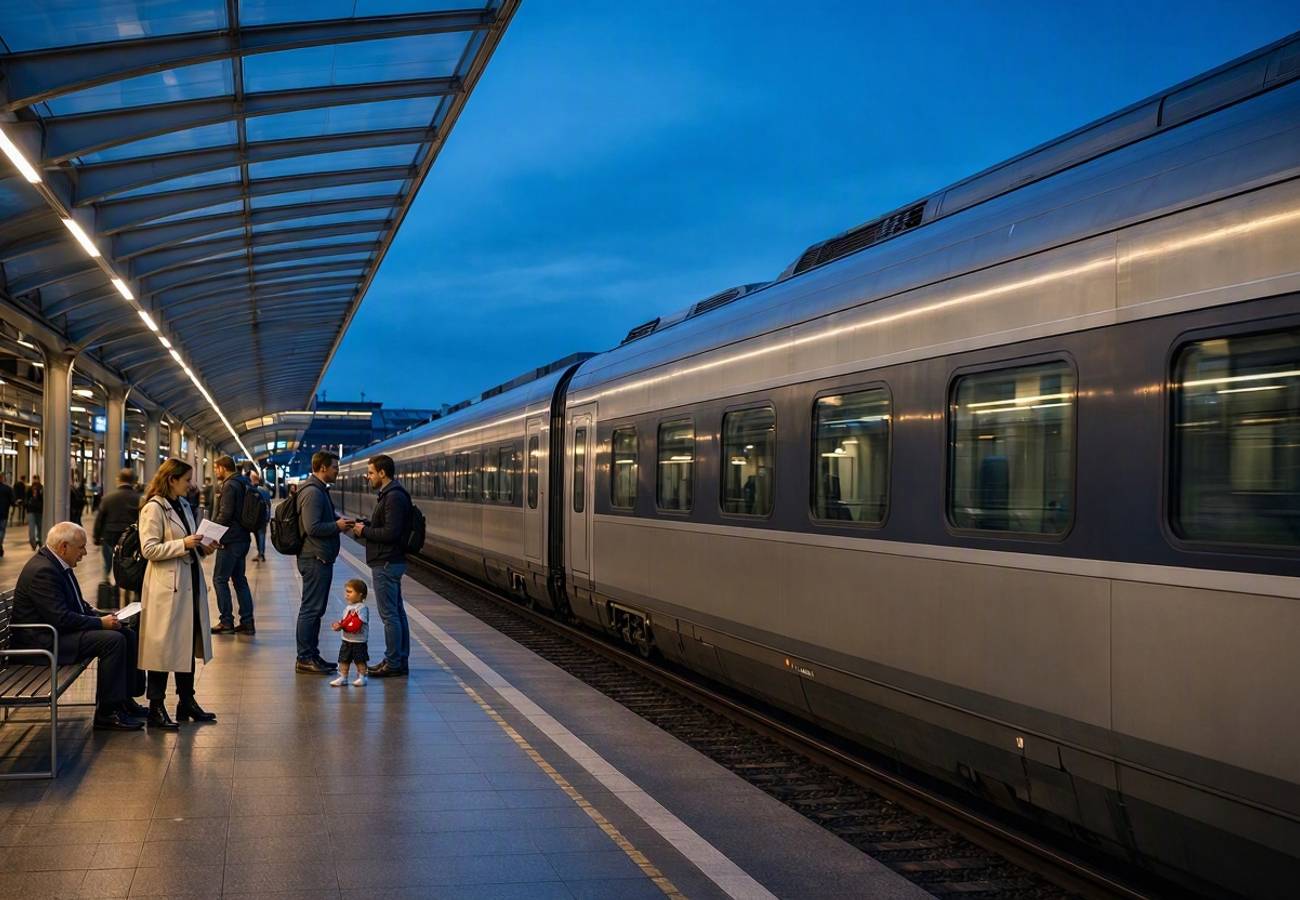
Image generated by AI
A journey from Berlin to Copenhagen that currently takes seven hours could be slashed to just four by 2030. This is the cornerstone of a sweeping initiative by the European Parliament’s Transport and Tourism Committee to dismantle the fragmented nature of continental rail travel. On 5 October 2026, the committee passed recommendations with 34 votes in favor, zero against, and seven abstentions, signaling a political mandate to transform the EU into a truly integrated rail zone.
The Shift Toward a Network-First Rail Strategy
For decades, European rail investment has focused almost exclusively on "prestige" lines connecting national capitals. The new strategy pivots toward a "network-first" approach. Instead of isolated high-speed corridors, the goal is to integrate these fast lines with regional cities, border zones, and existing urban transport.
This means the high-speed rail doesn't just serve the elite traveler moving between hubs; it acts as a backbone for a wider ecosystem. Local metros, buses, and conventional trains will serve as "feeder networks," allowing a traveler to arrive in a major city via high-speed rail and transition seamlessly to a secondary destination without the friction of disjointed ticketing or incompatible schedules. This vision aligns with the Trans-European Transport Network (TEN-T), the EU's strategic blueprint for connecting ports, airports, and urban nodes.
Redrawing the Tourism Map: New Time Horizons
The practical impact of this drive is most visible in the projected travel times. By targeting infrastructure bottlenecks, the EU aims to make overland travel a viable competitor to short-haul flights.
Projected Travel Time Reductions
| Route / Corridor | Current/Existing Context | EU Target | Target Year |
|---|---|---|---|
| Berlin $\rightarrow$ Copenhagen | ~7 Hours | ~4 Hours | 2030 |
| Sofia $\rightarrow$ Athens | ~13 Hours 40 Mins | ~6 Hours | 2035 |
| Paris $\rightarrow$ Lisbon | Incomplete connectivity | Direct via Madrid | 2035 |
| Baltic Corridor | Developing cross-border | Fully integrated network | 2030+ |
| Vienna $\rightarrow$ Ljubljana | Conventional rail | Upgraded fast corridor | Phased |
| Paris $\rightarrow$ Rome | Long-distance haul | Infrastructure improvements | Long-term |
The Iberian Peninsula stands to gain significantly. Currently, the rail link between Lisbon and Madrid is notoriously weak. The 2035 target envisions a corridor allowing passengers to travel from Paris through Madrid and into Lisbon, effectively ending the reliance on air travel for the Portugal-Spain circuit. Similarly, the Balkan corridor between Sofia and Athens is expected to see its travel time cut by more than 50%, opening the door for multi-city Balkan itineraries.
Visitor Insider Tips for the Transition Era
While these targets are ambitious, the transition will happen in phases. For those traveling now or planning for the next few years, keep these local nuances in mind:
- The Baltic Loop: If you are visiting Tallinn, Riga, or Vilnius, be aware that standard-gauge infrastructure is still being rolled out. Until 2030, rely on high-quality luxury coach services, but keep an eye on the European Commission's updates for the first high-speed segments.
- The Iberian Gap: For those planning a Lisbon-Madrid trip today, the "missing link" is real. Book your tickets well in advance through national carriers, as capacity on these non-high-speed lines is limited compared to the French TGV or Spanish AVE.
- Ticketing Hacks: The EU is pushing for simpler cross-border ticketing. Until this is standardized, avoid buying "point-to-point" tickets from different national operators. Use integrated platforms or official national rail sites to ensure your connections are protected.
- Regional Base-Camps: As high-speed hubs expand, consider basing yourself in secondary cities (like Ljubljana or Sofia) rather than the primary capitals. You will find lower costs and easier access to the new "feeder" networks.
Cultural and Environmental Context
The push for rail is not merely about speed; it is a response to the environmental urgency of the climate crisis. By shifting passengers from planes to trains, the EU aims to drastically lower the carbon footprint of tourism. However, this comes with a massive price tag.
The financial scale is staggering. The European Commission estimated in June 2026 that completing the network by 2040 will require approximately €345 billion in infrastructure. If the EU pursues a more aggressive scenario—targeting speeds of 250 km/h by 2050—the cost could balloon to €546 billion. This investment involves more than just tracks; it requires new bridges, tunnels through the Alps, and the implementation of unified digital signaling across borders to prevent trains from having to slow down or change locomotives at every frontier.
The success of this plan hinges on the 2028–2034 Multiannual Financial Framework, a budget proposed at nearly €2 trillion. The challenge lies in balancing this massive spending with national interests, as some member states may prioritize domestic lines over the cross-border connectivity required for a seamless European experience.
FAQ: Visiting Europe by Rail 2026-2035
When will the Berlin-Copenhagen 4-hour trip be available? The European Commission has set a target date of 2030. However, this is a policy goal; actual availability depends on construction progress and national investment.
Do I need a visa for cross-border rail travel in the EU? Rail travel follows the same visa rules as other transport. If you are traveling within the Schengen Area, you generally do not need internal border checks, but always carry a valid passport.
Is high-speed rail safer and more sustainable than flying? Yes. High-speed rail significantly reduces CO2 emissions per passenger compared to short-haul flights and maintains an excellent safety record across the UNESCO heritage regions it often traverses.
How do I book tickets for these new routes? Currently, you must use the respective national rail operators. The EU is working toward a unified booking system to eliminate the need for multiple apps and accounts.
The era of the short-haul flight may soon be replaced by the romance and efficiency of the high-speed rail.
Related Travel Guides
Disclaimer
This article is for informational and educational purposes only. It does not constitute legal, financial, or professional advice. While we strive to provide accurate and up-to-date information, travel policies, regulations, and conditions change rapidly. Always verify information with official sources before making travel decisions. Nomad Lawyer makes no representations about the accuracy, reliability, completeness, or suitability of the information provided. Readers should consult qualified professionals for advice specific to their circumstances. The views expressed in this article are those of the author and do not necessarily reflect the views of Nomad Lawyer.
Preeti Gunjan
Contributor & Community Manager
A passionate traveller and community builder. Preeti helps grow the Nomad Lawyer community, fostering engagement and bringing the reader experience to life.
Learn more about our team →