
Germany Drives Rail Innovation As RECOM Showcases Power Solutions At InnoTrans 2026
Germany Drives Rail Innovation As RECOM Showcases Power Solutions At InnoTrans 2026

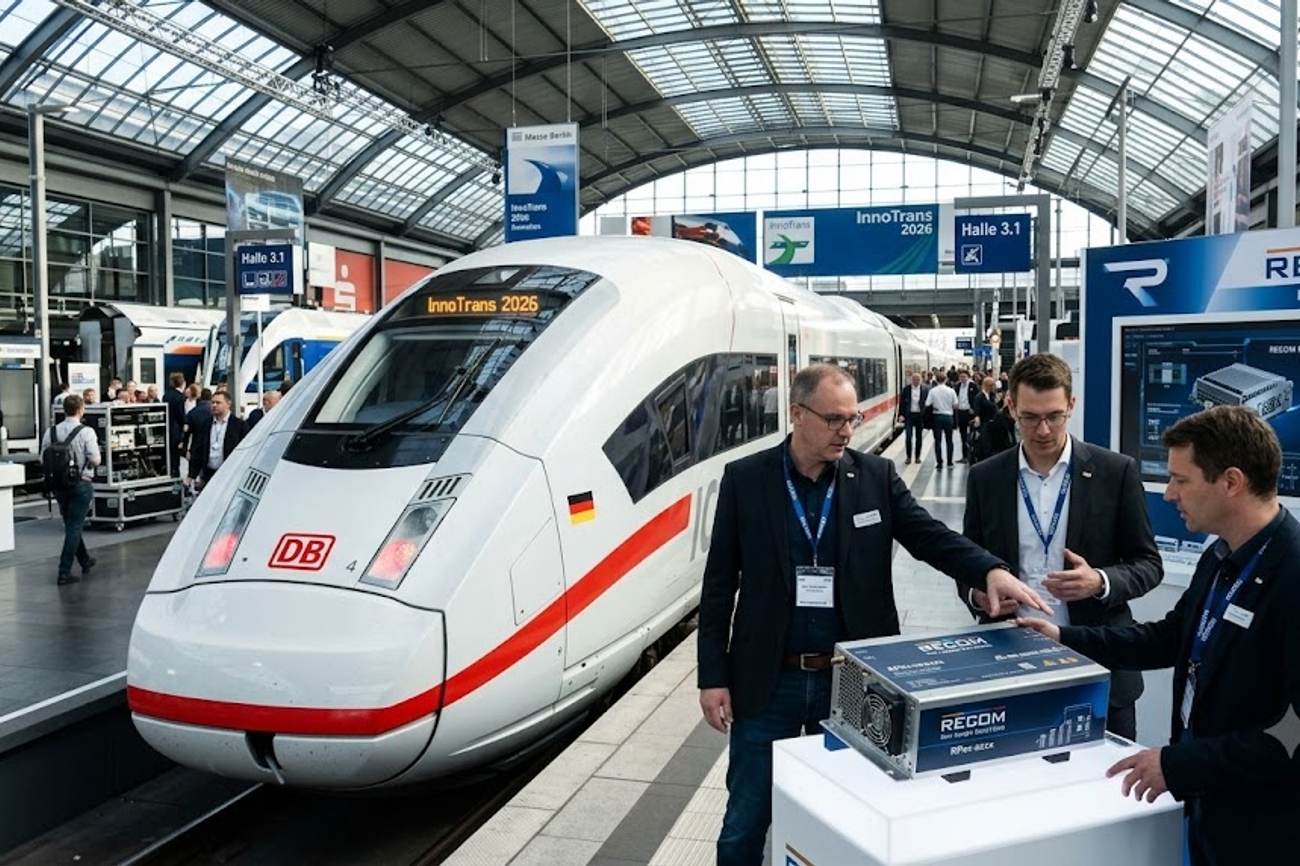
Image generated by AI
European rail investment has shifted from a primary focus on track expansion to a critical need for electrical stability, as the integration of electronic systems per carriage has increased exponentially over the last decade. This transition is evidenced by the strategic positioning of power conversion specialists at InnoTrans 2026, where the focus has moved from the visible exterior of the train to the invisible energy architecture that sustains it. While previous industry cycles prioritized speed and capacity, the current trajectory emphasizes "reliability-first" engineering to support the digitization of the European rail network.
The Power Conversion Pivot: InnoTrans 2026 Data
The upcoming InnoTrans 2026 exhibition in Berlin serves as a primary indicator of where the railway sector is allocating its technical resources. RECOM, an Austrian engineering firm based in Gmunden, has secured a strategic presence in area 17-320 to showcase power conversion and custom-built systems. This move highlights a critical gap in the current market: while many exhibitors focus on autonomous mobility and AI-driven rail, there is a systemic shortage of providers focusing on the power systems that enable these technologies to function.
The technical requirements for modern rail have evolved. The RMD series of DC/DC converters, which RECOM is highlighting, is designed to withstand extreme vibrations and temperature fluctuations—variables that have become more volatile as rail networks expand into diverse climatic zones. The data indicates that modern trains now rely on a complex web of electronic dependencies. A failure in a single power module can now cascade across multiple critical systems, making the stability of the energy source a non-negotiable safety metric.
According to data trends monitored by the International Union of Railways (UIC), the shift toward sustainable mobility in the European Union is driving a massive upgrade in existing fleets. This requires power solutions that can scale from compact converters under one watt to high-power systems reaching tens of kilowatts. The ability to provide this range of capacity is what separates legacy providers from the new wave of power engineers entering the Berlin showcase.
Comparative Context: Infrastructure vs. Intelligence
Historically, railway innovation was measured by "hard" infrastructure—the number of kilometers of high-speed rail laid or the maximum velocity of a locomotive. However, the current shift is toward "soft" infrastructure: the electrical intelligence that manages energy distribution.
The following table compares the traditional focus of rail innovation against the emerging priorities being showcased at InnoTrans 2026.
| Innovation Metric | Legacy Rail Era (2000-2015) | Modern Rail Era (2020-2030) | Shift Driver |
|---|---|---|---|
| Primary Goal | Speed & Route Expansion | System Reliability & Efficiency | Digitization of On-board Systems |
| Key Technology | Aerodynamics & Track Gauge | DC/DC Converters & Power Modules | Electronic Component Density |
| Failure Impact | Mechanical Wear/Track Failure | Power Module Surge/System Blackout | Increased Dependency on Electronics |
| Investment Focus | Civil Engineering (Bridges/Tunnels) | Electrical Engineering (Power Conversion) | EU Sustainable Mobility Mandates |
| System Focus | Locomotive Propulsion | Integrated Control Units & Passenger UX | IoT and Autonomous Rail Integration |
This shift is not merely a technical preference but a regional economic strategy. The collaboration between German market influence and Austrian precision engineering—represented by RECOM's presence in Berlin—shows a consolidated European effort to maintain a lead over Asian rail markets. By focusing on the "invisible" engineering of power conversion, Europe is addressing the volatility and instability that often plague high-tech rail expansions.
What This Means for Travelers
While the average passenger does not interact with a DC/DC converter, the data regarding power stability translates directly into the traveler's experience. The transition to more reliable power systems is designed to eliminate the "micro-failures" that currently plague rail travel.
If you are traveling through the European Union in the next 24-36 months, you can expect the following impacts based on these industry shifts:
- Reduced Technical Delays: A significant percentage of "signal failures" or "technical glitches" are actually power instabilities in control units. The deployment of the RMD series and similar high-reliability converters should lead to a year-over-year decrease in unplanned downtime.
- Enhanced On-board Services: The expansion of power capacity (up to tens of kilowatts) allows for more stable passenger displays and communication equipment. Travelers will notice fewer outages in Wi-Fi and digital information screens during peak load times.
- Improved Safety Metrics: Because braking systems and door controls are now tied to these advanced power modules, the margin for mechanical error is reduced. This is particularly relevant for those utilizing high-frequency commuter lines where door malfunctions are a primary cause of delay.
- Sustainable Routing: As the EU pushes for rail as a primary emission-reduction tool, these power innovations make rail more competitive with air travel by increasing the "on-time" reliability of long-distance corridors.
For those planning long-term travel across Germany and Austria, the integration of these technologies suggests that rail will become a more viable alternative to short-haul flights, as the reliability gap closes.
Forward Projection: The Energy-Centric Rail Network
Based on the current trajectory seen at InnoTrans 2026, the rail industry is moving toward a "Modular Energy Architecture." We are seeing a move away from centralized power systems toward distributed power conversion. This means that instead of one large power source, trains will have localized, highly efficient converters (like those produced by RECOM) at every critical junction—braking, doors, and passenger interfaces.
This evolution is essential for the next leap in rail: fully autonomous trains. Data from the International Air Transport Association (IATA) and rail counterparts suggest that for autonomous systems to be safe, they require a "zero-fail" power environment. You cannot have an AI-driven braking system if the power module is susceptible to temperature-induced failure.
We project that by 2030, the market share for "invisible" power components will grow faster than the market for the trains themselves. The focus will shift from who builds the fastest train to who provides the most stable energy foundation. This makes companies specializing in the 1-watt to 10-kilowatt range the true kingmakers of the next generation of mobility.
FAQ: Rail Power Innovation 2026
Will these power upgrades lead to higher ticket prices? Unlikely. These innovations focus on operational efficiency and reducing maintenance costs. By decreasing the frequency of technical failures and downtime, operators can actually lower their long-term overhead, which typically stabilizes or lowers ticket pricing over time.
Which regions will see these upgrades first? The Germany-Austria corridor is the primary testing ground due to the synergy between German infrastructure and Austrian engineering. Expect the most significant reliability improvements in Central European networks before they migrate to Southern and Eastern Europe.
Are these systems compatible with older trains? Yes. A major part of the InnoTrans 2026 focus is on "fleet upgrades." Power conversion modules are designed to be integrated into existing carriages to modernize their electronic capabilities without requiring the purchase of entirely new rolling stock.
How does this affect passenger safety? It increases it. By ensuring that critical systems—specifically braking and door controls—have a stable, vibration-resistant power supply, the risk of electronic failure during transit is significantly mitigated.
The future of the journey is no longer about the speed of the engine, but the stability of the electron.
#RailInnovation2026 #RECOM #EuropeanRailStability #PowerConversionTrends #InnoTrans2026 #GermanAustriaRailTech
Related Travel Guides
Disclaimer
This article is for informational and educational purposes only. It does not constitute legal, financial, or professional advice. While we strive to provide accurate and up-to-date information, travel policies, regulations, and conditions change rapidly. Always verify information with official sources before making travel decisions. Nomad Lawyer makes no representations about the accuracy, reliability, completeness, or suitability of the information provided. Readers should consult qualified professionals for advice specific to their circumstances. The views expressed in this article are those of the author and do not necessarily reflect the views of Nomad Lawyer.
Preeti Gunjan
Contributor & Community Manager
A passionate traveller and community builder. Preeti helps grow the Nomad Lawyer community, fostering engagement and bringing the reader experience to life.
Learn more about our team →