
Australia and Maldives Tourism Expansion 2026: Insider Guide to Direct Flights, Atoll Resorts, and Coral Escapes

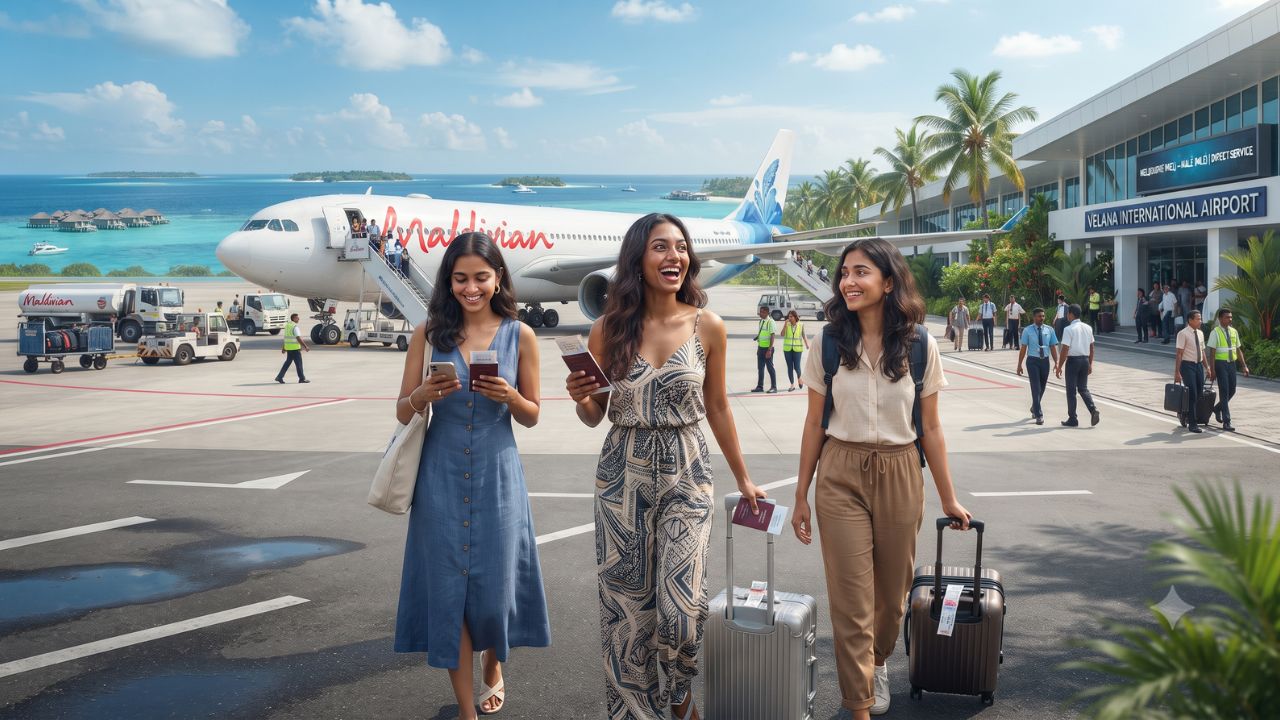
While total tourist arrivals across the Maldives contracted by 13.6 percent in the second quarter of 2026, Australian holidaymakers defied the global slump by posting an 18.4 percent year-on-year surge. Official statistical releases from the Maldives Monetary Authority document that 42,073 Australians visited the archipelago in 2025 (+17.5 percent), with quarterly arrivals climbing to 13,701 in Q2 2026 and 4,469 in July (+16.1 percent). Supported by a landmark bilateral air-services framework and the launch of the first nonstop weekly seasonal flights between Melbourne and Malé, this Indian Ocean nation is actively expanding its appeal to Australian travelers seeking secluded overwater villas, world-class diving, and sustainable marine safaris.
High-level diplomatic discussions between Maldives High Commissioner Mohamed Luveiz and Australian Travel Industry Association (ATIA) CEO Dean Long in September 2026 reflect a concerted push to capture a larger slice of Australia's massive outbound market. With the Australian Bureau of Statistics recording 12.71 million overseas departures in 2025–26—over 60.8 percent traveling strictly for leisure—the Maldives represents an increasingly accessible tropical alternative to traditional regional favorites like Indonesia, New Zealand, and Japan.
Direct Aviation Links and Strategic Market Expansion
The primary catalyst transforming travel between the two nations was the implementation of a bilateral air services arrangement in May 2026. The regulatory framework allows designated carriers from both countries to operate passenger and cargo flights to all international airports in Australia, removing historic bilateral capacity caps.
Immediately following the agreement, national carrier Maldivian inaugurated the first-ever nonstop air corridor linking Melbourne Airport (MEL) directly to Velana International Airport (MLE) in Malé using an Airbus A330-200. Eliminating multi-hour stopovers across Singapore, Kuala Lumpur, or Colombo, the weekly nonstop routing cuts total transit time by roughly nine to ten hours. The initial operations were distributed through luxury packaging partnerships with Luxury Escapes, establishing bundled resort itineraries tailored for Australian couples and multi-generational families.
On the ground in Malé, aviation infrastructure has expanded dramatically. The opening of the new Terminal 1 at Velana International Airport in July 2025 increased annual passenger processing capacity by roughly five times compared to the legacy facility. The modern terminal streamlines seaplane and speedboat transfer logistics, ensuring travelers transition effortlessly from widebody aircraft to remote outer atolls.
Destination marketing initiatives coordinated through the Visit Maldives Corporation follow major promotional roadshows across Perth, Melbourne, and Sydney, designed to support the national target of 2.5 million global arrivals in 2026 ahead of the official Visit Maldives Year 2027 campaign.
What Makes the Maldivian Atoll Experience Different
The geography of the Maldives is unique on Earth: an archipelago of 1,192 coral islands organized into 26 natural atolls spread across 90,000 square kilometers of the Indian Ocean. Unlike conventional resort destinations where hotels line shared public beaches, the Maldives pioneered the "one island, one resort" model, offering complete privacy and pristine house reefs accessible directly from private overwater sundecks.
According to official tourism data, 77.2 percent of Australian visitors select luxury private island resorts, while a growing minority opt for local island guesthouses and liveaboard dive yachts (safari boats). This operational model allows travelers to customize their experience:
- Private Island Resorts: Centered in North and South Malé Atolls, Ari Atoll, and Baa Atoll, these properties offer overwater villas, Michelin-caliber dining, and private marine biology labs.
- Local Island Guesthouses: Located in inhabited islands like Maafushi, Thulusdhoo, and Dharavandhoo, guesthouses provide immersive cultural interactions, traditional Maldivian cuisine, and budget-friendly surf expeditions.
- Liveaboard Safari Cruisers: Floating boutique yachts navigate remote channels in Huvadhoo and Addu Atolls, allowing advanced scuba divers to encounter manta rays, hammerheads, and whale sharks on three-dive daily rotations.
Visitor Insider Tips
Planning an effortless journey to the Maldives requires mastering inter-island transfers, seasonal monsoons, and immigration declarations.
- Seaplane Logistics and Daylight Constraints: Trans Maldivian Airways and Manta Air seaplanes operate strictly under daylight visual flight rules (VFR) between 6:00 AM and 4:00 PM. If your international flight arrives in Malé after 3:30 PM, book your first night at an airport transit hotel in Hulhumalé before catching your morning seaplane to the outer atolls.
- Mandatory IMUGA Declaration: All arriving international passengers must complete the online digital Traveller Declaration via the Maldives Immigration IMUGA portal within 96 hours prior to departure. The form is free and requires uploading a passport bio page and flight itinerary to generate a QR entry pass.
- Seasonal Weather Strategy: The dry northeast monsoon (Iruvai) runs from December to April, offering calm turquoise seas, clear skies, and optimum underwater visibility. The southwest monsoon (Hulhangu) from May to November brings occasional tropical squalls and lower accommodation rates, making it the peak season for world-class surfing in the North Malé Atolls and manta ray feeding aggregations in Hanifaru Bay.
- Local Island Etiquette: When staying on inhabited local islands rather than private resorts, respect Islamic cultural norms by dressing modestly in village centers (shoulders and knees covered) and swimming only at designated, partitioned "Bikini Beaches."
- Smart Currency Usage: Private island resorts quote and bill all services in US Dollars (USD) and accept major credit cards seamlessly. If visiting local inhabited islands or exploring the fish market in Malé, carry crisp US Dollar cash or exchange small amounts of Maldivian Rufiyaa (MVR).
Cultural and Environmental Context
As the lowest-lying nation on the planet, with an average ground elevation of just 1.5 meters above sea level, the Maldives exists at the frontline of global climate change. Preserving fragile coral barrier reefs, seagrass meadows, and mangrove forests is essential for the nation's physical survival.
In 2011, Baa Atoll was declared a UNESCO Biosphere Reserve, internationally celebrated for Hanifaru Bay, where seasonal plankton blooms attract hundreds of manta rays and whale sharks. Marine conservation biologists attached to private resorts and local NGOs actively manage coral propagation nurseries, sea turtle rescue clinics, and solar-power microgrids. Supporting eco-certified resorts that ban single-use plastics and desalinate their own water directly contributes to protecting this delicate marine ecosystem.
FAQ: Visiting the Maldives 2026
Do Australian citizens need a visa to enter the Maldives? No pre-arranged visa is required. A free 30-day tourist visa is granted on arrival at Velana International Airport, provided you hold a valid passport (with at least 1 month validity), return flight tickets, and confirmed accommodation bookings.
Are there direct nonstop flights from Australia to the Maldives? Maldivian operates a seasonal weekly nonstop service between Melbourne (MEL) and Malé (MLE) with an Airbus A330-200. Alternatively, travelers can connect via Singapore, Kuala Lumpur, or Colombo.
How do I travel from the airport in Malé to my resort? Transfers are arranged directly by your resort via speedboats (for nearby North and South Malé Atolls), twin-engine seaplanes (for distant outer atolls), or domestic wheeled flights to regional island airstrips.
What is the best way to combine luxury resorts with local culture? Book a split stay: spend four nights at a private island resort in Ari Atoll for marine excursions, followed by two nights at a boutique guesthouse on Thulusdhoo to experience local craft workshops and island cafe culture.
From the gentle hum of a twin-otter seaplane soaring above ring-shaped turquoise atolls to the bioluminescent glow of evening shores, the Maldives delivers a tranquil paradise that stays with travelers forever.
Related Travel Guides
Disclaimer
This article is for informational and educational purposes only. It does not constitute legal, financial, or professional advice. While we strive to provide accurate and up-to-date information, travel policies, regulations, and conditions change rapidly. Always verify information with official sources before making travel decisions. Nomad Lawyer makes no representations about the accuracy, reliability, completeness, or suitability of the information provided. Readers should consult qualified professionals for advice specific to their circumstances. The views expressed in this article are those of the author and do not necessarily reflect the views of Nomad Lawyer.
Naina Thakur
Contributor & Travel Specialist
Travel enthusiast and legal writer covering visa regulations, responsible tourism, and cultural journeys across global destinations.
Learn more about our team →