
Spring Sakura Tokyo 2026: Peak Bloom Dates & Must-Visit Spots
Spring sakura Tokyo 2026 peaks March 21–April 5. Ueno Park, Meguro River, and Chidorigafuchi lead this year's hanami forecast. Travelers report crowds, optimal viewing windows, and festival updates as bloom season unfolds across central Tokyo neighborhoods.

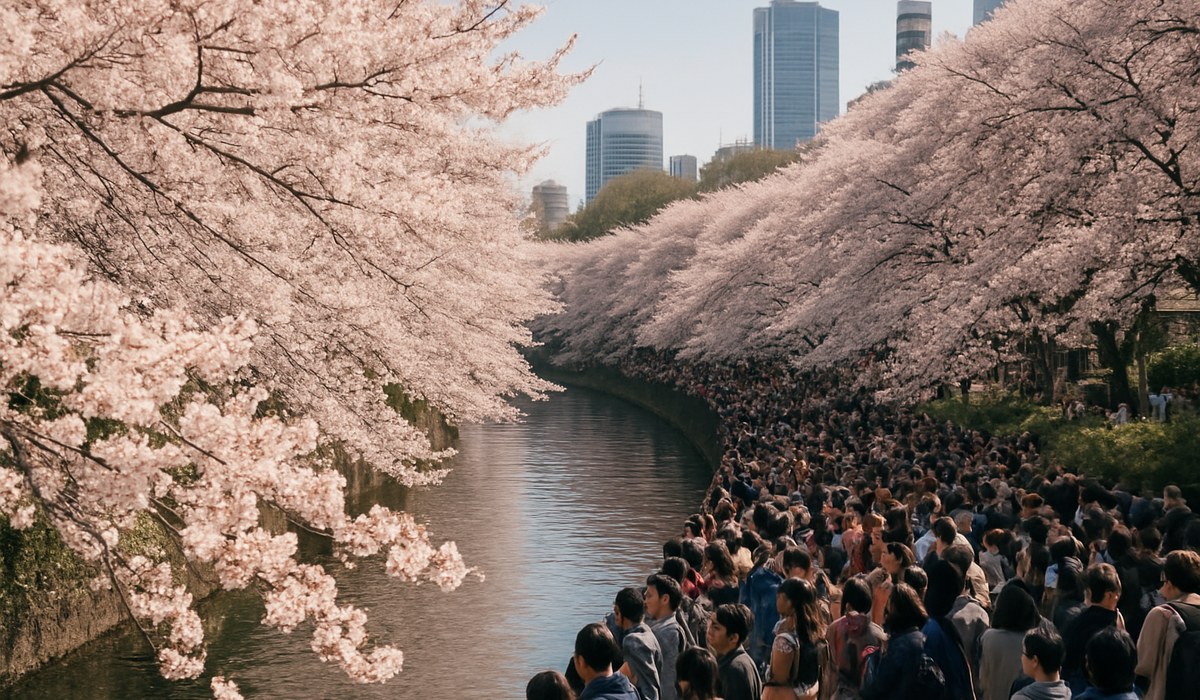
Image generated by AI
Peak Bloom Windows Lock in for Spring Sakura Tokyo 2026
Tokyo's cherry blossom season has officially arrived. Japan Meteorological Agency forecasts confirm that spring sakura Tokyo reached full bloom around March 21, matching long-term historical averages and triggering the start of peak viewing conditions across the capital. The main window for optimal petal display runs from late March through the first five days of April—a narrow but critical timeframe for travelers already in-country or planning last-minute departures to Japan.
The bloom forecast points to gradual petal fall beginning April 2, creating the celebrated "sakura snow" effect by mid-April. However, meteorological volatility means temperatures and rainfall can compress or extend this window by up to one week. Tourism authorities urge visitors to build a three-to-five-day Tokyo itinerary to capture blooms across multiple neighborhoods, since elevation and urban heat variation means trees in riverside zones and outer parks peak at slightly different times than central downtown clusters.
Ueno Park: Tokyo's Premier Hanami Festival Hub
The Ueno Cherry Blossom Festival runs mid-March through early April, anchoring spring sakura Tokyo tourism with over 1,000 blooming cherry trees framing the main promenade and temple approaches. This year's festival lineup includes evening lantern illuminations, food vendor clusters, and live cultural performances that draw office workers and international travelers from dusk through 10 p.m. nightly.
Peak crowding occurs weekends and weekday evenings (5–8 p.m.). Early-morning visits—between 6–9 a.m.—offer softer light, clearer photography angles, and manageable foot traffic around Shinobazu Pond and the approach to major temples. Ueno's central path becomes impassable during afternoon peak hours, forcing travelers to wait 20–30 minutes between arrival and entry into prime viewing zones.
Local travel guides recommend the riverbank corridors and museum-adjacent gardens as secondary viewing points within Ueno Park, providing escape routes when main promenade density peaks. Trash disposal stations and crowd-management signage have expanded across 2026 facilities, but visitors must observe strict etiquette: no loud music, restricted picnic-area staking, and careful waste disposal remain mandatory under Tokyo Metropolitan Government directives.
Meguro River: Tokyo's Photogenic Tunnel of Petals
The Meguro River corridor displays roughly 800 cherry trees forming a 4-kilometer blossom tunnel between Meguro and Naka-Meguro train stations. This riverside zone transforms into Tokyo's most visually dramatic hanami landscape, with evening lantern-lit reflections on the water creating a vivid canopy effect that dominates Instagram feeds and spring 2026 travel photography.
Weekday mornings from 7–11 a.m. offer crowd-free embankment walks from Naka-Meguro toward Ikejiri-Ohashi, ideal for travelers prioritizing photography and solitude. Evening strolls (6–9 p.m.) coincide with street-food activation, seasonal beverage vendors, and maximum petal density overhead. However, narrow walkways restrict tripod use during peak hours, and large luggage becomes impractical on crowded sections.
Night-viewing (yozakura) at Meguro River demands advance planning: arrive by 5:30 p.m. to secure embankment standing room, and expect three-to-four-person-deep crowds from 7–10 p.m. Experienced spring sakura Tokyo travelers recommend combining Meguro evening sessions with daytime visits to Chidorigafuchi (Imperial Palace moat), creating a full-day itinerary that captures both water-reflection and traditional boating experiences within one journey.
Chidorigafuchi: Imperial Palace Moat & Rowing Beneath Branches
Chidorigafuchi, the Imperial Palace's historic cherry blossom moat near Chiyoda Ward, continues as one of Tokyo's most recognizable hanami destinations for 2026. Rental rowboats glide beneath overhanging branches while travelers photograph low-angle petal canopies and stone palace ramparts framed in pink bloom. The illuminated riverside promenade operates nightly during peak bloom (late March–early April), hosting seasonal festivals and drawing both residents and international visitors.
Daytime boat rentals (9 a.m.–4 p.m.) fill quickly on weekends; advance booking through local tourism offices or hotel concierges secures slots during peak bloom. Typical rowboat sessions last 30–45 minutes and accommodate 2–4 passengers per vessel. Evening stroll access remains unrestricted, allowing travelers to photograph the illuminated moat and stone bridges without boat-rental queues.
The Chiyoda Spring Festival typically aligns with late March–early April peak bloom, introducing live performances, food stalls, and extended lighting displays until 9 p.m. Combining Chidorigafuchi daytime experiences with Meguro River evening sessions has become the unofficial 2026 gold-standard spring sakura Tokyo itinerary, allowing travelers to experience both formal palace aesthetics and casual riverside hanami culture within a single travel day.
Secondary Spots & Crowd-Avoidance Strategy
Beyond flagship destinations, Wadabori Park along the Zenpukuji River offers a localized atmosphere with far fewer international visitors. City tourism materials highlight this riverbank zone as a notable blossom spot featuring walking bridges framed in pink blooms and tree-canopy tunnel effects. Central neighborhoods including Asakusa and Hibiya scatter additional cherry-tree pockets, allowing travelers to incorporate hanami viewing into broader city sightseeing itineraries without dedicating an entire day to a single park.
Crowd-avoidance experts recommend visiting secondary spots on weekend afternoons when main destinations like Ueno and Meguro peak, or scheduling visits to flagship parks on weekday mornings (6–9 a.m.). Tokyo Metropolitan Government transit data shows that major rail hubs (Shinjuku, Shibuya, Ueno stations) experience 15–25% higher passenger loads during peak bloom hours (5–8 p.m.), making early-morning and mid-week departures strategically advantageous for travelers prioritizing both photography quality and comfort.
Booking & Flexibility: Essential 2026 Travel Tactics
Travelers planning spring sakura Tokyo departures must build itinerary flexibility into hotel and ground-transportation arrangements. Because bloom timing shifts by 5–7 days annually based on late-winter temperature patterns and early-spring rainfall, booking changeable flight dates and hotel holds—rather than fixed multi-night packages—protects against arriving after peak bloom.
Major travel platforms including Klook and local Japanese booking sites now offer sakura forecast updates linked to hotel cancellation windows, enabling travelers to adjust arrival dates as official bloom predictions refine through late March. Japan Weather Association daily forecasts publish updated bloom estimates, peak-viewing-window projections, and petal-fall timelines that become more accurate within 5–7 days of real-time conditions.
Internal travel guides on cultural seasonal events provide comprehensive hanami etiquette breakdowns and neighborhood-by-neighborhood viewing strategies beyond flagship parks.
| Destination | Peak Bloom Window | Estimated Crowd Level | Best Visit Time | Key Feature |
|---|---|---|---|---|
| Ueno Park | March 25–April 2 | Very High | 6–9 a.m. weekdays | 1,000+ trees; festival grounds; temple approach |
| Meguro River | March 23–April 1 | High (evenings) |
Disclaimer
This article is for informational and educational purposes only. It does not constitute legal, financial, or professional advice. While we strive to provide accurate and up-to-date information, travel policies, regulations, and conditions change rapidly. Always verify information with official sources before making travel decisions. Nomad Lawyer makes no representations about the accuracy, reliability, completeness, or suitability of the information provided. Readers should consult qualified professionals for advice specific to their circumstances. The views expressed in this article are those of the author and do not necessarily reflect the views of Nomad Lawyer.
Raushan Kumar
Founder & Lead Developer
Full-stack developer with 11+ years of experience and a passionate traveller. Raushan built Nomad Lawyer from the ground up with a vision to create the best travel and law experience on the web.
Learn more about our team →