Asian Aviation Gridlock: Over 7,400 Flight Delays Strike Tokyo, Delhi, and Regional Hubs

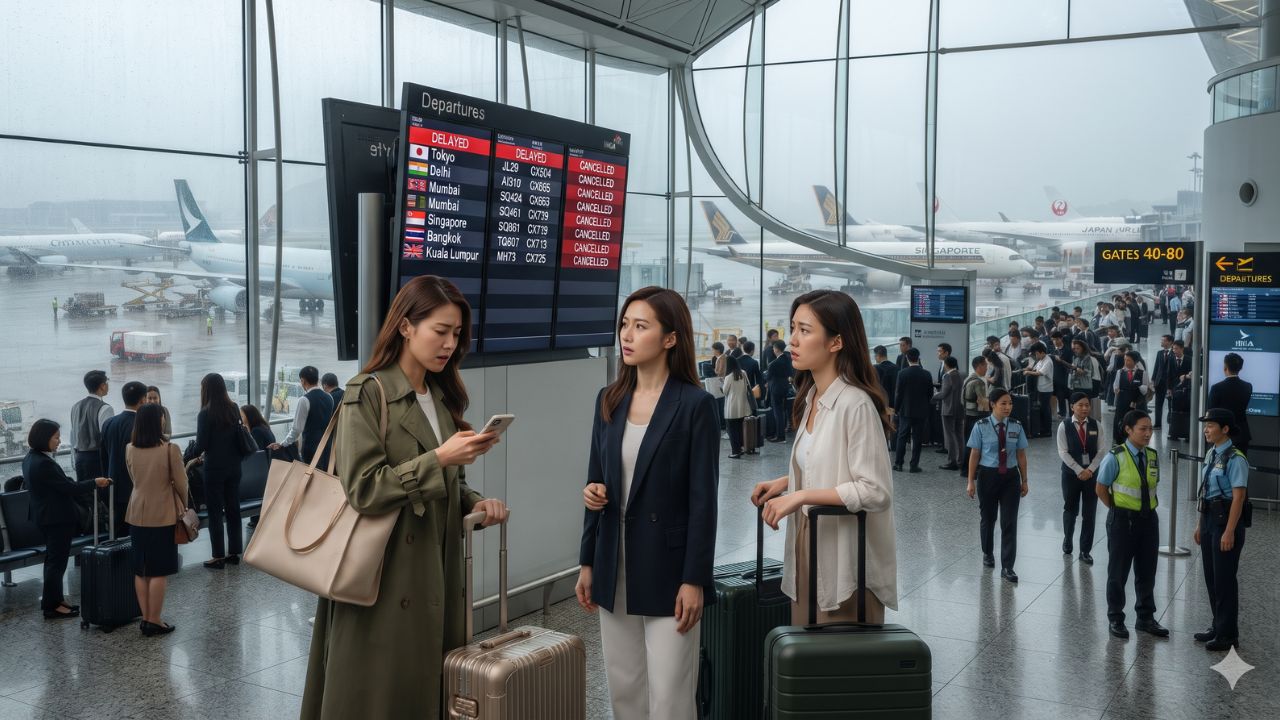
While Tokyo Haneda recorded an astonishing 697 delayed flights in a single operational cycle, Indian regional carrier SpiceJet saw more than half its entire schedule collapse, canceling 54 percent of all tracked flights amidst severe weather and visibility limits.
The synchronized wave of disruption sweeping across Asian skies reached critical levels on 21 and 22 November 2026, registering 7,469 delayed flights and 433 outright cancellations across surveyed international hubs. From early winter blizzards over northern Honshu to tropical cyclonic squalls over eastern India, seasonal meteorological fronts collided with diplomatic airspace closures and air traffic control flow restrictions, stranding tens of thousands of transit passengers.
Severe Weather Systems and Diplomatic Airspace Restrictions Across the Region
A confluence of independent operational bottlenecks triggered this continental slowdown. In eastern India, outer precipitation bands from Cyclone Akvan triggered severe visibility degradation at Birsa Munda Airport in Ranchi on Saturday, 21 November. Ground visibility dropped to approximately 1,000 meters, well below the mandatory 1,200 to 1,500-meter visual operating minimums required for standard runway procedures. Airport controllers canceled 20 scheduled passenger flights and diverted four inbound airframes connecting Ranchi to primary commercial centers including Delhi, Mumbai, Kolkata, Bengaluru, and Hyderabad.
Simultaneously, the India Meteorological Department (IMD) warned of extensive morning mist and shallow fog across the National Capital Region surrounding Delhi for Sunday, 22 November, coupled with dense fog advisories across eastern Uttar Pradesh. These visibility drops forced air traffic control at Indira Gandhi International Airport to implement increased lateral and longitudinal separation buffers between aircraft, throttling peak arrival flow.
In East Asia, security arrangements surrounding the Asia-Pacific Economic Cooperation (APEC) Summit in Shenzhen generated severe airspace compression across the Pearl River Delta. Aviation advisories issued by Jet Aviation for 11 through 22 November 2026 detailed restrictive overflight parameters, strict slot allocations, and movement caps across Shenzhen Bao'an International Airport and neighboring hubs in Guangzhou and Hong Kong.
Further east, Japanese air corridors faced intense early winter weather. Both Japan Airlines and All Nippon Airways logged acute disruptions on 21 and 22 November due to localized blizzard conditions at Akita, poor visibility at Shonai, and convective squall lines over western Honshu. Meanwhile, in Southeast Asia, the Civil Aviation Authority of the Philippines issued NOTAM B6190/26 across the Manila Flight Information Region, closing primary oceanic route M772 until 03:00 UTC on 22 November to allow aircraft to navigate around intense thunderstorm complexes.
Airport Disruption Statistics and Carrier Reliability Breakdown
A snapshot of verified aviation data captured on 21 November at 2:25 PM Eastern Time (22 November at 2:26 AM Jakarta Time) illustrates how disruption manifested differently across primary Asian hubs. Some facilities absorbed massive schedule delays while keeping cancellations near zero, whereas regional airports faced outright operational shutdowns.
| Airport Hub / Operational Facility | Country / Region | Tracked Flight Delays | Tracked Flight Cancellations | Primary Operational Stress Factor |
|---|---|---|---|---|
| Tokyo Haneda Airport (HND) | Japan | 697 | 8 | Winter weather & aircraft spacing |
| Kuala Lumpur International (KUL) | Malaysia | 460 | 1 | Severe evening thunderstorm banks |
| Shenzhen Bao'an International (SZX) | China | 365 | 5 | APEC diplomatic airspace controls |
| Delhi Indira Gandhi International (DEL) | India | 321 | 26 | Morning radiation fog & low visibility |
| Bangkok Suvarnabhumi Airport (BKK) | Thailand | 317 | 5 | Convective weather & rotational holds |
| Ho Chi Minh City Tan Son Nhat (SGN) | Vietnam | 250 | 3 | Regional airspace flow throttling |
| Manila Ninoy Aquino International (MNL) | Philippines | 210 | 11 | FIR Route M772 storm closure |
| Mumbai Chhatrapati Shivaji (BOM) | India | 198 | 26 | Cascading delays from regional weather |
| Hanoi Noi Bai International (HAN) | Vietnam | 188 | 3 | Regional flow management delays |
| New Chitose Airport (CTS) | Japan | 177 | 4 | Hokkaido snowfall & de-icing holds |
| Tokyo Narita International (NRT) | Japan | 164 | 4 | Crosswind & weather spacing |
| Singapore Changi Airport (SIN) | Singapore | 160 | 5 | Downstream arrival slot management |
| Hong Kong International (HKG) | Hong Kong SAR | 147 | 2 | Greater Bay Area airspace restrictions |
| Shanghai Pudong International (PVG) | China | 179 | 10 | Coastal fog & terminal airspace caps |
| Shanghai Hongqiao International (SHA) | China | 112 | 19 | Flow controls & aircraft repositioning |
| Ranchi Birsa Munda Airport (IXR) | India | 11 | 20 | Sub-1,000m visibility from Cyclone Akvan |
Carrier vulnerability diverged sharply across airline operating models. While full-service network carriers absorbed delays to keep passengers moving, regional fleets suffered operational gridlock. Japan Airlines experienced delays on 46 percent of its tracked departures (366 flights), while All Nippon Airways saw 47 percent of its schedule delayed (271 flights). Thai Vietjet Air logged the highest airline delay rate in the region at 56 percent (91 delayed flights against two cancellations).
In stark contrast, Indian budget carrier SpiceJet saw 52 of its scheduled flights canceled—representing a staggering 54 percent cancellation rate—with only nine flights delayed. Akasa Air recorded 35 cancellations (14 percent of operations) and 32 delays (13 percent), while market leader IndiGo recorded 430 delays (19 percent) alongside 24 cancellations (1 percent). China Eastern posted 57 cancellations (2 percent) and 215 delayed services (9 percent).
Transit Tactics for Passengers Navigating Asian Aviation Hubs
Managing tight transit connections across Asia during late November requires proactive planning and a clear understanding of regional terminal geography:
- Protect Inter-Airport Transfers in Tokyo: Passengers transferring between domestic flights at Tokyo Haneda Airport and international departures at Narita must protect their transit window. With Haneda absorbing 697 delays and de-icing backlogs building at northern origins like Akita and New Chitose, minimum transfer times of three hours are insufficient. Allocate at least five hours when booking cross-city rail connections via the Keikyu-Keisei Airport Limousine or access express lines.
- Track Aircraft Rotations Across Indian Networks: In India, fog at Delhi and cyclonic rain in Jharkhand cause severe downstream ripples. If flying on single-aisle domestic carriers like IndiGo or SpiceJet, track the physical aircraft's earlier legs rather than relying on automated airline departure boards. Identifying an inbound delay at a distant hub provides hours of warning before terminal gate agents announce a schedule pushback.
- Buffer Southeast Asian Layover Windows: With regional route closures like Manila FIR's M772 adding nautical miles and holding patterns around Bangkok Suvarnabhumi, transit passengers should avoid connection windows under 90 minutes at Suvarnabhumi, Kuala Lumpur, or Singapore Changi.
- Secure Documented Receipts for Carrier Delays: Travelers experiencing delays exceeding four hours should immediately visit airline transit desks to obtain written delay certificates. Keep digital copies of boarding passes, baggage tags, and food expense receipts, as international consumer protections and travel insurance policies require third-party verification to process claims.
Infrastructure Resilience and the Demands of Seasonal Climates
The operational stress across these 16 aviation gateways highlights the delicate balance between meteorological realities and high-density flight operations. In northern latitudes, airports like Sapporo New Chitose and Tokyo Haneda handle rapid winter onset through intensive mechanical de-icing and specialized runway sweep teams. However, when heavy snowfall coincides with terminal airspace congestion, ground crews face severe turnaround delays.
In South and Southeast Asia, tropical storm fronts intersect with seasonal agricultural burning and winter temperature inversions, creating blinding radiation fog. The transition into December marks the start of northern India's annual fog season, where visibility drops below Category III instrument landing parameters for consecutive mornings. Airlines operating thin fleet reserves often choose outright flight cancellations over prolonged aircraft holding patterns, stranding travelers in secondary cities like Ranchi. Understanding these regional patterns is essential for travelers planning business or leisure itineraries across Asia through the winter months.
Frequently Asked Questions
What caused the widespread flight disruptions across Asian airports in late November 2026?
Disruptions stemmed from a combination of adverse winter weather in Japan, dense morning fog in northern India, heavy rain and visibility drops from Cyclone Akvan in eastern India, APEC summit airspace restrictions in southern China, and Manila FIR route closures.
Which Asian airport experienced the highest number of delayed flights?
Tokyo Haneda Airport (HND) recorded the highest delays in the region, with 697 delayed flights and eight cancellations, driven by winter weather fronts, runway de-icing procedures, and strict air traffic spacing.
What should passengers do if their flight is delayed or canceled in India or Japan?
Check real-time aircraft status on flight-tracking platforms before leaving for the terminal. If a flight is canceled, contact your airline immediately for complimentary rebooking or full refunds, and obtain written delay verification at the customer service counter for insurance claims.
Navigating winter air travel across Asia successfully requires monitoring upstream aircraft movements, choosing midday connections over fog-prone dawn departures, and building generous layovers between connecting flights.
Related Travel Guides
This article is for informational purposes. Flight routes, passenger regulations, visa rules, and transit advisories are subject to change by airlines and aviation authorities. Readers are advised to verify schedules and travel documentation with relevant carriers and border agencies before departure.
Related Stories

Asia Flight Gridlock: 8,480 Delays and 473 Cancellations as Blizzard and Cyclone Akvan Strike

Canada Issues Mexico Travel Warning as New Law Mandates Proof of Child Guardianship at Hotels