Canada Issues Mexico Travel Warning as New Law Mandates Proof of Child Guardianship at Hotels

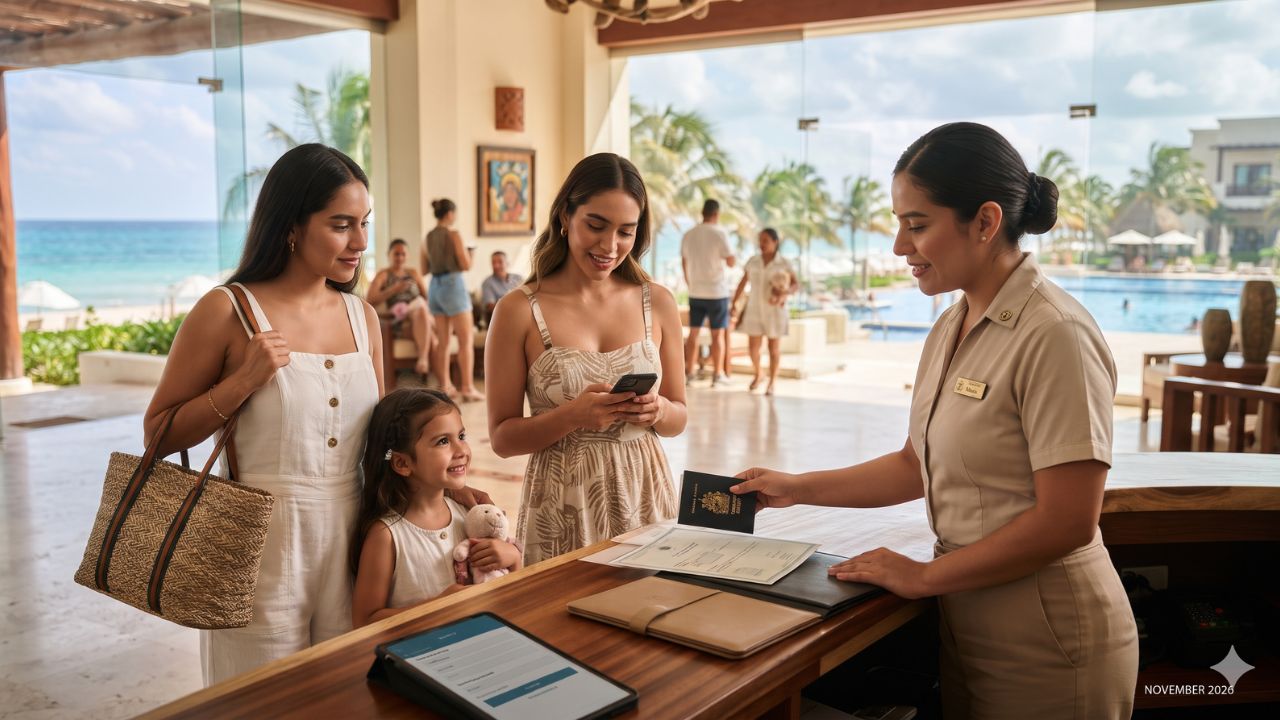
Under newly enacted federal legislation in Mexico, hotel clerks and excursion operators are now legally obligated to deny check-in and summon criminal investigators if accompanying adults fail to produce official legal proof of their relationship to traveling children.
Published in Mexico's Official Gazette, the Diario Oficial de la Federación, on 13 November 2026 and enacted into federal law on 14 November, the statutory reform amends Article 58 of the General Tourism Law (Ley General de Turismo). In response, the Government of Canada updated its official travel advisory on 18 November 2026, alerting international visitors that passing through airport immigration is no longer the final documentation hurdle for families. Hotels, all-inclusive resorts, and activity providers across Cancún, Los Cabos, Puerto Vallarta, and Mexico City must verify legal custody before delivering booked services.
Federal Enforcement of Article 58 Across Mexican Tourism Establishments
The legislative amendment fundamentally shifts child protection responsibilities from border gates directly onto private hospitality desks. The two newly added provisions to Article 58 mandate that any commercial entity providing tourism services—whether booked in person or through digital reservation channels—must take active measures to protect the safety and physical integrity of minors under 18 years of age.
Front-desk staff must inspect government-issued documentation proving parentage, legal adoption, formal guardianship, or court-awarded custody. Crucially, the statute provides zero corporate discretion: if an accompanying adult cannot establish their legal relationship to an underage traveler, the service provider is legally prohibited from checking the party into their rooms and must immediately alert local investigative authorities (autoridades investigadoras) to investigate a potential child-welfare offense.
Following this development, Global Affairs Canada revised the "Laws and Culture" section of its Mexico destination guidance. Canadian consular authorities warned that standard airline boarding passes and valid tourist passports may prove insufficient at hotel reception desks, especially when parents and children carry differing surnames, or when grandparents, extended relatives, or single parents travel without a notarized custody decree.
Verification Checklist and High-Risk Travel Zones
Understanding how local hospitality audits operate helps families prepare the proper document portfolios before departing for Mexican resort corridors.
| Category of Traveling Party | Primary Vulnerability / Risk | Mandatory Supporting Documents Required | Legal Verification Purpose |
|---|---|---|---|
| Parents with Different Surnames | Reception staff unable to match parent passport to child | • Child’s long-form birth certificate • Parent marriage certificate or name-change deed |
Confirms maternal/paternal lineage under civil registry |
| Single Parents Traveling Alone | Presumed lack of bilateral parental consent | • Notarized parental travel authorization letter • Sole custody court order or death certificate |
Proves unilateral custody or authorized temporary departure |
| Grandparents & Extended Kin | Absence of inherent legal parental authority | • Notarized consent signed by both legal parents • Copies of parents' valid passport photo pages |
Grants temporary legal guardianship for travel duration |
| Family Friends or Group Tours | Complete absence of direct biological kinship | • Formal power of attorney / notarized guardianship • Medical consent release from parents |
Authorizes emergency care and hospitality check-in |
| Exempt Urban Corridors in High-Risk States | Regional security advisories | • Palenque & Tuxtla Gutiérrez (Chiapas) • Monterrey (NL), Morelia (Michoacán) • Puerto Peñasco & tourist zones of Mazatlán |
Permitted transit corridors within restricted states |
Canada maintains a nationwide "exercise a high degree of caution" advisory across Mexico due to persistent violent crime and kidnapping threats. Furthermore, the federal government advises avoiding non-essential travel to portions of 14 Mexican states: Chiapas, Chihuahua, Colima, Guanajuato, Guerrero, Jalisco, Michoacán, Morelos, Nayarit, Nuevo León, Sinaloa, Sonora, Tamaulipas, and Zacatecas.
However, Canadian authorities specify geographic exceptions within these states. Tourists may visit established cultural and commercial nodes such as Palenque and Tuxtla Gutiérrez in Chiapas, the industrial hub of Monterrey, the colonial center of Morelia, the northern beach enclave of Puerto Peñasco, and designated tourist zones within Mazatlán, provided travelers arrive directly by air or stick to authorized highway corridors.
Front-Desk Realities at Resorts and Tour Desks
Navigating Mexican hospitality check-ins under the revised Article 58 requires a proactive mindset. Travelers arriving at international gateways like Cancún International Airport (CUN) clear National Migration Institute (INM) screening without issue, as federal border agents typically focus on entry visas, tourist cards, and passport validity.
The friction occurs upon arriving at hotel reception. Major hotel operators in Quintana Roo and Baja California Sur have integrated guardianship document scans into their standard registration software. A single mother traveling with her child whose passport bears the father's surname will face immediate delays if she carries only her personal passport.
The mandate also extends to digital and adventure operators. Boat charters in Cabo San Lucas, cenote excursions along the Riviera Maya, and regional transport shuttles booked online must verify that adults accompanying children hold legal consent. Presenting original long-form birth certificates and certified English-Spanish notarized translations prevents disputes with reception managers who face severe legal penalties and operating license suspensions for non-compliance.
Visitor Insider Tips for Family Vacations in Mexico
Families planning holidays in Mexico must adapt their preparations to meet both legal compliance and regional safety standards:
- Secure Notarized Spanish Translations: While high-end international chain resorts in Cancún or Los Cabos frequently employ bilingual reception managers who can decipher English birth certificates, independent boutique hotels in Oaxaca or Guanajuato may not. Carry certified Spanish translations of birth certificates, adoption papers, and custody decrees to prevent language misunderstandings.
- Contact Your Accommodation Directly Before Flying: Email the reservations manager of your specific hotel at least two weeks before departure. Explicitly state the names, ages, and surname relationships of all minors in your traveling party and request written confirmation of the hotel’s required documentation format. Save that email correspondence on your phone.
- Stick Exclusively to Toll Highways (Cuotas): If renting a vehicle to explore archaeological sites like Chichen Itza or Monte Albán, never travel on unpaved or secondary rural roads (carreteras libres). Always choose federal toll highways (cuotas), which feature dedicated emergency patrol assistance, regular police checkpoints, and significantly lower crime rates. Complete all intercity driving during daylight hours before 5:00 PM.
- Enroll in Consular Travel Registries: Canadian travelers should register their itineraries with the free Registration of Canadians Abroad (ROCA) portal, while U.S. citizens should enroll in the Smart Traveler Enrollment Program (STEP). In the event of localized civil unrest, roadblock protests, or severe tropical storms, consular officers use these registries to initiate direct emergency contact.
Cultural Context and Child Protection Enforcement
The aggressive tightening of Article 58 reflects Mexico's commitment to eradicating child trafficking, illegal exploitation, and cross-border custodial interference. The country's tourism industry—which represents more than eight percent of national gross domestic product—has historically operated with minimal local oversight regarding minor guests checking into private lodging.
By placing legal liability directly on private operators, the federal government aims to dismantle underground networks that exploit anonymous hotel check-ins. While the new rules create administrative hurdles for legitimate vacationing families, the initiative enjoys broad support from domestic child advocacy groups and federal law enforcement. Understanding that front-desk scrutiny is a mandatory legal protection helps international visitors view documentation requests with patience and preparation rather than frustration.
Frequently Asked Questions
What is the new Mexico law regarding children at hotels?
An amendment to Article 58 of Mexico’s General Tourism Law, effective 14 November 2026, requires all hotels and tourism businesses to verify official legal documentation proving the relationship or guardianship between adults and accompanying minors.
What happens if I cannot prove my relationship to a child at a Mexican resort?
Hospitality providers are legally required to deny service and immediately report the adult to local investigative authorities for child-welfare scrutiny.
Do grandparents need special permission to take grandchildren to Mexico?
Yes. Grandparents must carry the child’s passport, birth certificate, and a notarized consent letter signed by both biological parents granting formal travel and medical authority.
Preparing certified family documents in advance ensures your Mexican coastal holiday begins with relaxation at the pool rather than an interrogation at the front desk.
Related Travel Guides
- Odyssey of the Seas Returns to Cape Liberty: Winter 2026–27 Caribbean Cruises Without Florida Flights
- Chicago Winter Flight Expansion: American Challenges United in Ontario and Charlottesville
- The Battle for Front-Cabin Privacy: US Airlines Roll Out Enclosed Suites Across Widebody and Narrowbody Fleets
This article is for informational purposes. Flight routes, passenger regulations, visa rules, and transit advisories are subject to change by airlines and aviation authorities. Readers are advised to verify schedules and travel documentation with relevant carriers and border agencies before departure.
Related Stories
Asian Aviation Gridlock: Over 7,400 Flight Delays Strike Tokyo, Delhi, and Regional Hubs

US Holiday Travel Rush Faces Disruption Risks Following Nationwide FAA Telecommunications Outage