Asia and Middle East Flight Disruptions 2026: Mumbai to Jeddah Travel Alert

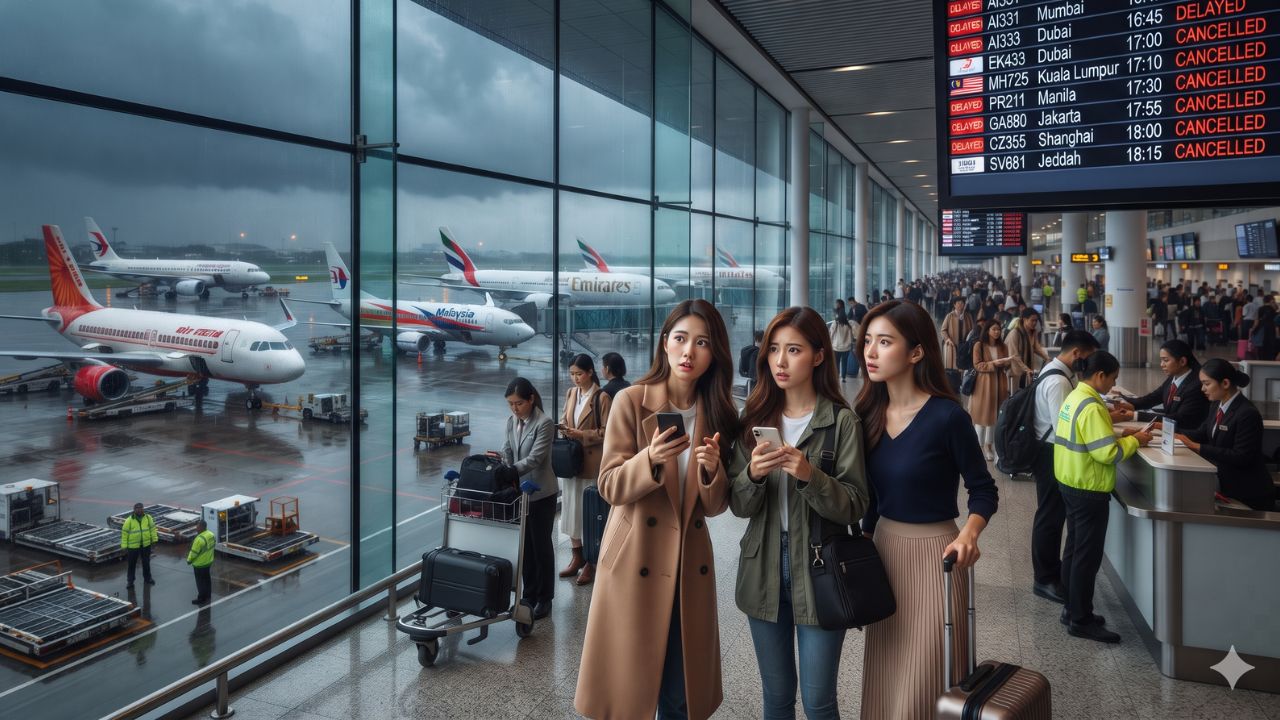
More than 3,180 flight delays and 323 cancellations rippled across Asian and Middle Eastern air corridors in a single operating window, with Mumbai logging 314 delayed services and Beijing Capital cancelling 24 departures. From South Asian gateways grappling with post-cyclone weather and seasonal fog to Gulf hubs managing shifting airspace corridors, international travelers across five time zones encountered widespread departure holds on 23 and 24 November 2026.
Operational statistics compiled by FlightAware establish that the disruption wave was concentrated across primary transit hubs in India, mainland China, Malaysia, Indonesia, the Philippines, and the Arabian Peninsula. Rather than stemming from an isolated incident, the flight snarl represents a confluence of regional climate anomalies: post-cyclonic rainfall remnants in eastern India, early winter fog along the Indo-Gangetic plains, localized thunderstorm clusters over Southeast Asia, and air-traffic route adjustments around the Persian Gulf.
Regional Shockwaves: Weather Fronts and Airspace Re-Routing
Across South Asia, the India Meteorological Department forecast shallow fog and morning mist across the National Capital Region surrounding Delhi on 24 November, alongside active thunderstorm warnings across South Interior Karnataka on 24–25 November and persistent heavy rains throughout Kerala from 24 to 26 November. These convective fronts compounded operational backlogs caused by Cyclone Akvan, which triggered flight cancellations, diversions, and impaired visibility across eastern airports including Kolkata and Ranchi between 20 and 22 November.
In Southeast Asia, Manila’s Ninoy Aquino International Airport faced restricted flight routings following an air-traffic directive on oceanic route M772 effective through 22 November, which forced aircraft into wider, fuel-heavy bypass routes. Simultaneously, severe evening thunderstorms over Kuala Lumpur International Airport on 21 November triggered holding patterns that delayed hundreds of regional turnarounds.
Further west in the Middle East, the General Authority of Civil Aviation in Saudi Arabia and regional aviation authorities handled elevated traffic diversions. Ongoing airspace sensitivities across parts of the Gulf forced international carriers to re-evaluate oceanic flight plans, adding extra holding time at mega-hubs like Dubai, Jeddah, and Doha.
Asian Aviation Disruption Metrics: Major Airports and Carriers
The operational impact clustered heavily across key transit hubs and regional carriers:
| Airport Hub | Delays | Cancellations | Impacted Airline | Delays (% Flights) | Cancellations (% Flights) |
|---|---|---|---|---|---|
| Mumbai (BOM) | 314 | 13 | IndiGo | 518 (23%) | 6 (0%) |
| Kuala Lumpur (KUL) | 292 | 4 | China Eastern | 203 (9%) | 34 (1%) |
| Delhi (DEL) | 247 | 19 | ANA | 196 (34%) | 0 (0%) |
| Manila (MNL) | 229 | 6 | JAL | 180 (22%) | 0 (0%) |
| Jakarta (CGK) | 222 | 6 | Thai Vietjet Air | 85 (54%) | 2 (1%) |
| Dubai (DXB) | 171 | 15 | PAL Express | 85 (38%) | 5 (2%) |
| Shanghai Pudong (PVG) | 159 | 7 | Philippine Airlines | 51 (40%) | 0 (0%) |
| Guangzhou Baiyun (CAN) | 141 | 4 | Akasa Air | 50 (21%) | 35 (14%) |
| Hong Kong (HKG) | 141 | 4 | Shenzhen Airlines | 49 (7%) | 14 (2%) |
| Bengaluru (BLR) | 119 | 9 | Air China | Unlisted | 39 (2%) |
| Jeddah (JED) | 102 | 10 | US-Bangla | 32 (37%) | 0 (0%) |
| Beijing Daxing (PKX) | 82 | 7 | Hainan Airlines | 27 (3%) | 20 (2%) |
| Beijing Capital (PEK) | 73 | 24 | SpiceJet | 16 (20%) | 21 (26%) |
| Kolkata (CCU) | 75 | 5 | Jetstar | 83 delays | Unlisted |
| Doha (DOH) | 70 | 4 | Cathay Pacific | 71 delays | Unlisted |
Regional airport impacts included Kunming (66 delays, 5 cancellations), Hangzhou (64 delays, 8 cancellations), Pune (55 delays, 10 cancellations), Navi Mumbai (41 delays, 5 cancellations), Xi'an (38 delays, 12 cancellations), Chengdu Shuangliu (33 delays, 10 cancellations), Kochi (23 delays, 8 cancellations), Lanzhou (21 delays, 11 cancellations), Bagdogra (17 delays, 6 cancellations), Taiyuan (16 delays, 12 cancellations), and Jammu (12 delays, 4 cancellations). Additional delayed international carriers included flydubai (63), Thai Airways (60), Etihad Airways (55), Saudia (49), and Singapore Airlines (41).
What Makes Asian Aviation Networks Uniquely Vulnerable in Late Autumn
Unlike Western air corridors with extensive point-to-point alternatives, Asian aviation relies on dense hub-and-spoke networks. A single narrowbody jet operated by IndiGo or China Eastern often flies six consecutive daily segments.
When morning fog in Delhi or convective storms in Mumbai delay an early 7:00 AM departure by 90 minutes, that aircraft carries compounding delays to Bengaluru, Kolkata, and Hyderabad. By nightfall, flight crews reach duty limits, triggering overnight cancellations.
In the Gulf, hubs like Dubai, Doha, and Jeddah operate massive transfer banks where up to 70% of passengers hold onward international tickets. Inbound delays from Southeast Asia cause missed connections to Europe, Africa, and the Americas, quickly filling airport transit hotels.
Visitor Insider Tips for Surviving Asian Transit Delays
Travelers facing tight connections across Asian hubs should take proactive precautions:
- Protect Connecting Bags in Multi-Carrier Trips: Allow at least four hours between separate tickets in Mumbai, Delhi, or Manila. Terminal transfers in Mumbai between T1 (domestic) and T2 (international) require taxi rides through city traffic.
- Avoid Early Morning Departures in Northern India: From late November through January, schedule flights through Delhi, Amritsar, or Lucknow after 11:00 AM so morning ground fog can dissipate under daylight.
- Secure Transit Lounges Early: Transit concourses at Jeddah and Dubai become crowded during major flight banks. Book lounge passes in advance to ensure resting space during extended layovers.
- Verify Interline Rebooking Protections: Low-cost carriers like Akasa Air and SpiceJet rarely offer interline transfers to rival airlines. Full-service carriers provide much broader international rerouting options during ground stops.
Cultural and Infrastructure Pressures Across Expanding Mega-Hubs
Surging middle-class travel has outpaced runway capacity across Asia. Mumbai’s single-runway operation handles over 900 movements daily. Adverse weather cuts hourly slots from 46 down to 32, creating instant ramp congestion.
Environmental shifts also compound winter delays. Northern India's winter smog traps moisture into dense fog inversions, while warming seas prolong convective storms across Southeast Asia. Factoring buffer days into your travel plans and keeping essentials in your cabin luggage are the best defenses against regional flight disruptions.
FAQ: Navigating Asian Airport Disruptions 2026
What compensation is available for delayed flights in India?
Under Directorate General of Civil Aviation (DGCA) regulations, if delays exceed 24 hours or result in overnight stays, airlines must provide free hotel accommodation and meals.
What should I do if I miss an international connection in Dubai or Jeddah?
Proceed directly to your airline's dedicated transit customer service desk. If your itinerary is booked on a single ticket, the airline must rebook you on the next available flight and provide meal vouchers.
Which Asian airline experienced the highest delays during this surge?
IndiGo recorded the highest number of delays with 518 flights (23% of its schedule), while Thai Vietjet Air saw the highest proportion with 54% of its flights delayed.
Is it safe to fly during Southeast Asian thunderstorm seasons?
Yes. Commercial airlines utilize sophisticated onboard weather radar and regional air traffic control routing to divert safely around active convective storm cells.
In the vast skies spanning Asia and the Gulf, flexibility and preparation remain every traveler's most dependable boarding pass.
Related Travel Guides
This article is for informational purposes. Flight routes, passenger regulations, visa rules, and transit advisories are subject to change by airlines and aviation authorities. Readers are advised to verify schedules and travel documentation with relevant carriers and border agencies before departure.
Related Stories
Asia Flight Gridlock: Over 4,700 Delays and 640 Cancellations Hit Bangkok, Mumbai, and Makassar
Asia Air Travel Hit by 193 Cancellations and 1,573 Delays: Mumbai, Jeddah, and Manila Lead Flight Gridlock