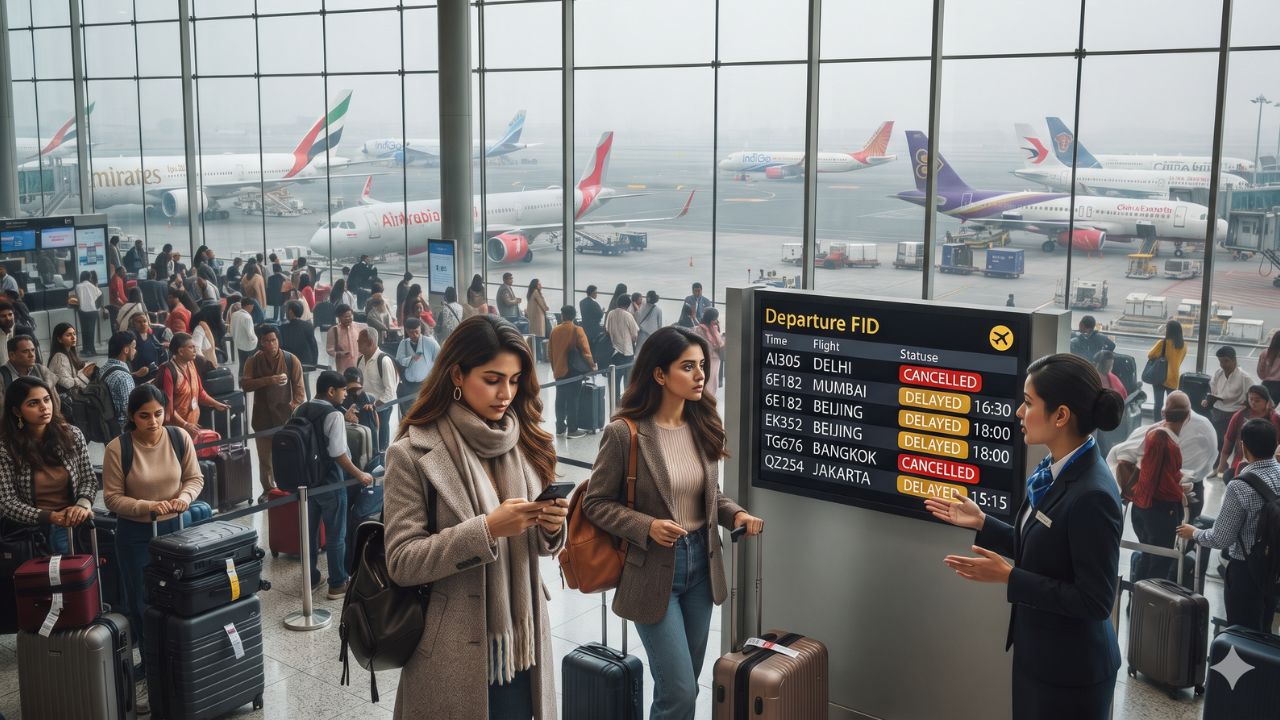
Asia Travel Alert: 341 Flight Cancellations and 4,959 Delays Hit Bangkok, Shanghai, Kuala Lumpur & Dubai


Over 4,900 delays and 341 cancellations impacted passenger schedules across major Asian and Middle Eastern flight corridors.
Air travelers navigating major hubs across East Asia, Southeast Asia, South Asia, and connecting Middle Eastern corridors experienced severe travel disruptions as heavy monsoon rainfall, adverse weather constraints, terminal congestion, and cascading aircraft schedule delays disrupted flight operations. Real-time aviation tracking data shows 341 flight cancellations and 4,959 delayed flights affecting key gateways including Bangkok, Shanghai, Beijing, Kuala Lumpur, Ho Chi Minh City, Delhi, and Dubai.
[KUALA LUMPUR] — Severe weather patterns and operational bottlenecks created massive flight disruptions across Asia on September 26–27, 2026. Verified tracking logs from flight monitoring service FlightAware recorded 341 flight cancellations and 4,959 delayed flights across major Asian and transit hubs.
The widespread disruption impacted intercontinental and regional connecting schedules. Heavy monsoon rains across Thailand, Vietnam, and Southern China combined with tight aircraft turnaround schedules, forcing major carriers to alter flight plans and leave thousands of transit passengers facing extended airport wait times.
Airport Disruption Matrix: Top Affected Hubs Across Asia & Middle East
Bangkok’s Suvarnabhumi Airport recorded the largest volume of delayed flights overall (540 delays), while Chinese hubs in Shanghai and Beijing registered high concentrations of both delays and cancellations.
| Airport Name | IATA Code | City / Country | Delayed Flights | Canceled Flights | Primary Operational Factor |
|---|---|---|---|---|---|
| Suvarnabhumi Airport | BKK | Bangkok, Thailand | 540 | 5 | Heavy monsoon rains & runway congestion |
| Shanghai Pudong Int'l | PVG | Shanghai, China | 463 | 18 | Severe weather & Eastern China airspace delays |
| Beijing Capital Int'l | PEK | Beijing, China | 335 | 25 | High traffic volume & weather restrictions |
| Hangzhou Xiaoshan Int'l | HGH | Hangzhou, China | 281 | 11 | Flow control & connecting flight delays |
| Kuala Lumpur Int'l | KUL | Kuala Lumpur, Malaysia | 266 | 4 | Regional thunderstorm activity & turnaround delays |
| Tan Son Nhat Int'l | SGN | Ho Chi Minh City, Vietnam | 251 | 6 | Monsoon squalls & apron capacity limits |
| Shanghai Hongqiao Int'l | SHA | Shanghai, China | 214 | 29 | Highest regional cancellation total; domestic backlog |
| Dubai International Airport | DXB | Dubai, UAE | 191 | 8 | Connecting flow delays from Asian corridors |
| Beijing Daxing Int'l | PKX | Beijing, China | 192 | 20 | Runway slot delays & convective weather |
| Noi Bai International Airport | HAN | Hanoi, Vietnam | 180 | 4 | Northern Vietnam weather & schedule delays |
| Indira Gandhi Int'l | DEL | Delhi, India | 176 | 15 | Air traffic congestion & weather delays |
| Jakarta Soekarno-Hatta | CGK | Jakarta, Indonesia | 169 | 16 | Regional thunderstorm activity |
Airline Performance: Disruption Impact on Major Operators
Both flag carriers and regional low-cost airlines across China, India, Southeast Asia, and the Middle East experienced operational delays. China Eastern Airlines recorded the highest numbers of both canceled (76) and delayed (465) flights.
| Airline Operator | Country / Region | Canceled Flights | Cancellation Rate (%) | Delayed Flights | Delay Rate (%) |
|---|---|---|---|---|---|
| China Eastern Airlines | China | 76 | 3% | 465 | 19% |
| Air China | China | 66 | 3% | 261 | 15% |
| IndiGo | India | 13 | 0% | 264 | 13% |
| Turkish Airlines | Türkiye | 1 | 0% | 211 | 13% |
| China Southern Airlines | China | 7 | 0% | 187 | 8% |
| Thai Airways | Thailand | 1 | 0% | 163 | 66% |
| Spring Airlines | China | 2 | 0% | 155 | 24% |
| Japan Airlines | Japan | 4 | 0% | 122 | 15% |
| Hainan Airlines | China | 2 | 0% | 116 | 15% |
| AirAsia | Malaysia | 2 | 0% | 113 | 23% |
| Vietnam Airlines | Vietnam | 6 | 1% | 102 | 26% |
| FlyDubai | UAE | 5 | 1% | 78 | 25% |
| Thai Vietjet Air | Thailand | 4 | 3% | 72 | 57% |
| Batik Air | Indonesia | 15 | 4% | 41 | 13% |
| SpiceJet | India | 10 | 17% | 24 | 42% |
Key Airline Performance Highlights
- Thai Airways: Posted the highest delay rate among major flag carriers at 66 percent (163 delayed flights out of Bangkok).
- Thai Vietjet Air: Recorded a 57 percent delay rate (72 delayed flights).
- SpiceJet: Registered the highest cancellation rate among domestic carriers at 17 percent (10 canceled flights).
Geographical Overview of Affected Regions
1. East Asia (China and Japan)
China suffered the most extensive disruption. Major hubs in Shanghai (PVG & SHA), Beijing (PEK & PKX), Hangzhou (HGH), Guangzhou (CAN), and Shenzhen (SZX) reported a combined total of over 1,800 delays and 120 cancellations as convective storm cells swept across eastern coastal provinces. In Japan, Japan Airlines (122 delays) and All Nippon Airways (78 delays) faced minor schedule knock-ons.
2. Southeast Asia (Thailand, Malaysia, Vietnam & Indonesia)
Southeast Asian gateways experienced heavy operational strain. In Thailand, Suvarnabhumi (540 delays) handled massive passenger backlogs. Kuala Lumpur International Airport in Malaysia logged 266 delays, while Vietnamese airports in Ho Chi Minh City (SGN) and Hanoi (HAN) combined for 431 delays and 10 cancellations. Indonesia's Jakarta (CGK) recorded 169 delays and 16 cancellations.
3. South Asia & Middle East Connections
Indira Gandhi International Airport in Delhi, India, recorded 176 delays and 15 cancellations, while Mumbai's Chhatrapati Shivaji Airport (BOM) reported 67 delays. In the Middle East, connecting traffic at Dubai (191 delays, 8 cancellations) and Riyadh (183 delays, 4 cancellations) felt secondary effects from inbound Asian flights arriving behind schedule.
| Region / Zone | Key Disrupted Hubs | Total Delays | Total Cancellations |
|---|---|---|---|
| China & East Asia | PVG, PEK, HGH, SHA, PKX, CAN, SZX | 1,803 Delays | 137 Cancellations |
| Southeast Asia | BKK, KUL, SGN, HAN, CGK | 1,403 Delays | 35 Cancellations |
| South Asia | DEL, BOM | 243 Delays | 19 Cancellations |
| Middle East Connections | DXB, RUH | 374 Delays | 12 Cancellations |
Passenger Guidance: Managing Flight Disruptions in Asia
- Verify Flight Status Remotely: Check real-time flight boards via airline apps before heading to major airports like Bangkok (BKK) or Shanghai (PVG).
- Contact Airline Desks for Rebooking: If a flight is canceled, contact your operating carrier immediately to secure alternative seats or hotel vouchers.
- Allow Long Transfer Windows: Ensure connection times of at least 3 hours when transferring between international flights at busy Asian hubs during monsoon seasons.
- Retain Receipts for Claims: Keep all receipts for meals, local transport, and accommodation incurred during flight delays for travel insurance reimbursement.
Frequently Asked Questions
Which Asian airport experienced the most flight delays on September 26–27, 2026?
Bangkok’s Suvarnabhumi International Airport (BKK) in Thailand recorded the highest number of delayed flights, with 540 delays and 5 cancellations.
Which airline recorded the highest number of flight cancellations in Asia?
China Eastern Airlines recorded the highest number of cancellations, with 76 canceled flights (3% cancellation rate) and 465 delayed flights.
What caused the widespread flight delays across Asian airports?
Heavy monsoon rains, severe weather constraints, airport terminal congestion, and tight aircraft rotation schedules caused cascading network delays across major Asian aviation hubs.
How were connecting flights to the Middle East affected?
Delays on inbound Asian flights created secondary knock-on delays at major Middle Eastern transfer hubs, including Dubai International (191 delays) and Riyadh (183 delays).
Related Travel Guides
This article is for informational purposes. Flight routes, passenger regulations, visa rules, and transit advisories are subject to change by airlines and aviation authorities. Readers are advised to verify schedules and travel documentation with relevant carriers and border agencies before departure.
Related Stories
Asia Aviation Crisis: Over 4,200 Flights Delayed as Fog, Cyclones, and Airspace Rules Strike Hubs
Asia Flight Alert: Over 4,700 Flights Delayed and Cancelled Across Kuala Lumpur, Mumbai, and Delhi