Asia Flight Alert: Over 4,700 Flights Delayed and Cancelled Across Kuala Lumpur, Mumbai, and Delhi

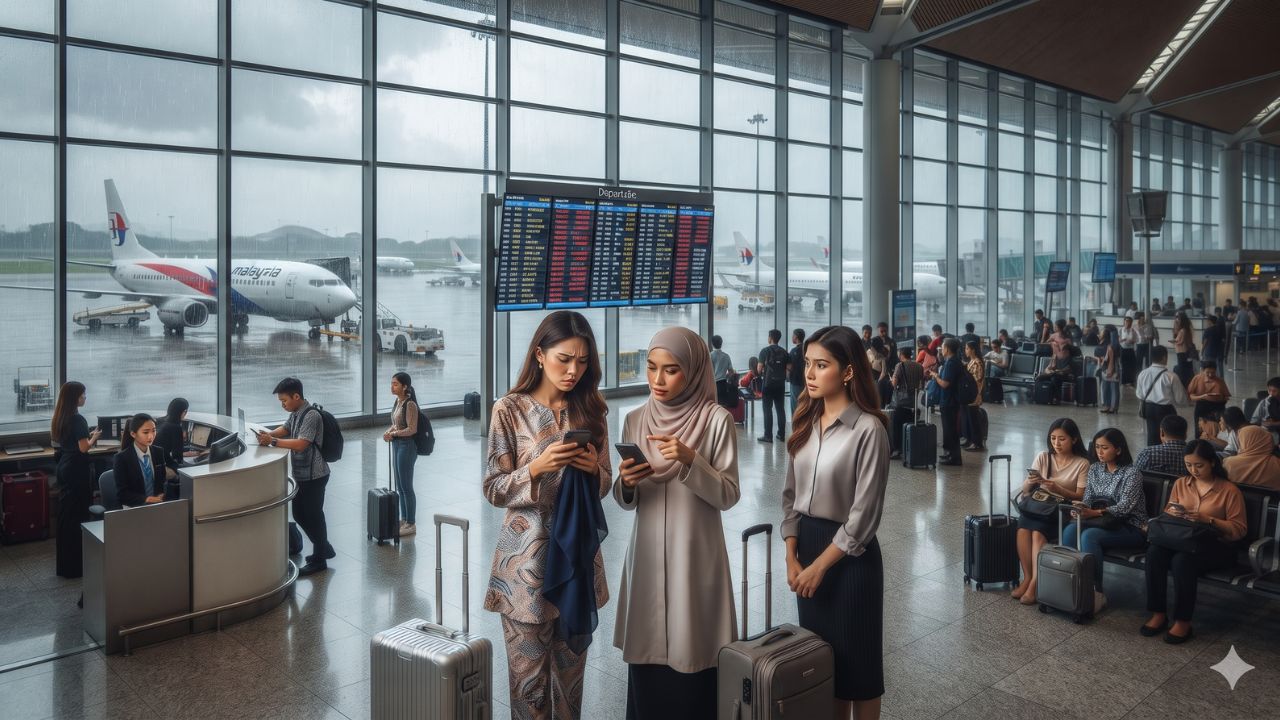
While regional budget carrier SpiceJet saw an extraordinary 49 percent of its scheduled operations cancelled in a single day, Kuala Lumpur International Airport logged 493 delays, anchoring a continent-wide disruption that grounded 497 flights and delayed 4,222 services across Asia.
A complex confluence of late-autumn meteorological volatility and geopolitical airspace restrictions created widespread gridlock across major Asian transit corridors on 17 and 18 November 2026. Data verified from international flight tracking networks at 1:39 AM IST on 18 November shows that schedule decay rippled across South Asia, Southeast Asia, China, and the Middle East. With northern Indian airports fighting dense radiation fog, southern coastlines bracing for developing Bay of Bengal cyclones, and the Pearl River Delta managing security airspace limits for the APEC Summit in Shenzhen, intercontinental travelers faced rolling delays and missed connections.
The Disruption Epicenters: Hub Airport Breakdown
The operational strain manifested differently depending on regional infrastructure and geography. Southeast Asian gateways absorbed the highest concentration of cascading delays, led by Malaysia Airports flagship hub, Kuala Lumpur International Airport (KUL), which recorded 493 delayed flights alongside 13 outright cancellations following severe thunderstorm advisories issued by MetMalaysia.
Bangkok’s Suvarnabhumi International Airport (BKK) followed with 270 delayed departures and 16 cancellations, while Singapore Changi Airport (SIN) absorbed 186 delays and three cancellations. In Indonesia, Jakarta’s Soekarno-Hatta International Airport registered 173 delays and 21 cancellations, while tourist-heavy Bali Ngurah Rai recorded 54 delays and 11 cancellations.
Indian airports emerged as the primary centers for flight cancellations. Mumbai’s Chhatrapati Shivaji Maharaj International Airport (BOM) recorded 38 cancellations and 204 delays—the highest cancellation total of any airport in the dataset. Delhi’s Indira Gandhi International Airport (DEL) logged 183 delays and 30 cancellations as seasonal winter fog rolled into the National Capital Region. Meanwhile, southern tech hub Bengaluru Kempegowda (BLR) logged 110 delays and 24 cancellations.
| Airport / Hub Gateway | Country | Flight Cancellations | Flight Delays | Primary Operational Factor |
|---|---|---|---|---|
| Kuala Lumpur (KUL) | Malaysia | 13 | 493 | Thunderstorms & cascading aircraft rotation delays |
| Bangkok Suvarnabhumi (BKK) | Thailand | 16 | 270 | Southeast Asian airway slot control congestion |
| Dubai International (DXB) | UAE | 33 | 228 | Intercontinental transit wave compression |
| Mumbai (BOM) | India | 38 | 204 | Highest cancellations; secondary turnaround bottlenecks |
| Singapore Changi (SIN) | Singapore | 3 | 186 | Regional holding patterns & ground handling sequencing |
| Delhi Indira Gandhi (DEL) | India | 30 | 183 | Dense seasonal radiation fog & CAT III visibility rules |
| Jakarta Soekarno-Hatta (CGK) | Indonesia | 21 | 173 | Heavy tropical rainfall & domestic fleet displacements |
| Shanghai Pudong (PVG) | China | 7 | 127 | Greater Bay Area / APEC airspace rerouting pressure |
| Bengaluru (BLR) | India | 24 | 110 | Bay of Bengal pre-cyclonic cloud bands & weather delays |
| Bali Denpasar (DPS) | Indonesia | 11 | 54 | Island rotation delays impacting international holidaymakers |
Chinese airports also faced ripple effects. While Shanghai Pudong recorded 127 delays and Beijing Capital logged 76 delays, civil aviation movements across southern China contended with temporary airspace closures implemented around Shenzhen and Zhuhai for the Asia-Pacific Economic Cooperation (APEC) Summit scheduled for 18–19 November. In the Middle East, Dubai International Airport reported 228 delays and 33 cancellations as inbound aircraft from South Asia missed their narrow transfer banks.
Airline Vulnerabilities: Cancellation and Delay Percentages
The data reveals extreme contrasts in how individual carriers managed the disruption. Indian low-cost carrier SpiceJet recorded the sharpest operational failure, cancelling 67 flights—representing 49 percent of its scheduled operations—while delaying another 22 flights (16 percent). Newer domestic entrant Akasa Air cancelled 35 flights (13 percent) and delayed 40 (15 percent).
Conversely, market leader IndiGo prioritized schedule preservation over punctuality, recording an enormous 418 delayed flights (18 percent of its massive daily operation) while holding cancellations to just four flights (rounded to 0 percent). In Southeast Asia, Malindo Air suffered 72 delays (42 percent) and 18 cancellations (10 percent), while Thai Vietjet Air saw 68 delays (42 percent) and 11 cancellations (6 percent).
| Operating Airline | Nationality / Base | Cancellations (Rate) | Delays (Rate) | Schedule Impact Summary |
|---|---|---|---|---|
| SpiceJet | India | 67 (49%) | 22 (16%) | Nearly half of daily schedule cancelled; acute fleet strain |
| IndiGo | India | 4 (0%) | 418 (18%) | Minimized cancellations by absorbing massive rotational delays |
| Akasa Air | India | 35 (13%) | 40 (15%) | Significant domestic schedule cuts across metro routes |
| China Eastern Airlines | China | 31 (1%) | 156 (6%) | Domestic and regional flights rerouted around airspace zones |
| Vietnam Airlines | Vietnam | 3 (0%) | 93 (22%) | Heavy delays on regional Southeast Asian trunk routes |
| Flydubai | UAE | 9 (3%) | 77 (26%) | Gulf-South Asia schedule disruption |
| Malindo Air | Malaysia | 18 (10%) | 72 (42%) | High delay percentage tied to Kuala Lumpur base congestion |
| Thai Vietjet Air | Thailand | 11 (6%) | 68 (42%) | Pervasive turnaround delays across Thai tourist gateways |
Weather Pressures: Fog in the North, Cyclones in the South
Meteorological conditions played a decisive role across the subcontinent. According to official bulletins from the India Meteorological Department (IMD), northern India entered its annual low-visibility period, with shallow-to-moderate fog blanketing Delhi on the morning of 18 November and a dense fog warning spanning 17 to 20 November. Low visibility mandates expanded aircraft separation intervals, instantly cutting runway throughput at Indira Gandhi International Airport.
Simultaneously, the IMD's cyclone tracking center issued alerts for a developing severe cyclonic system over the Bay of Bengal, forecast to bring very heavy rainfall and localized gales to coastal Tamil Nadu and Andhra Pradesh between 18 and 19 November. The impending severe weather prompted early precautionary cancellations in Chennai (5 cancellations, 45 delays) and regional fields like Kochi, Kozhikode, and Jaipur.
Visitor Insider Tips
- Rebooking and Compensation Rules in India: Under passenger charter guidelines enforced by the Directorate General of Civil Aviation (DGCA), airlines cancelling flights must provide passengers with alternate travel arrangements or a 100 percent refund. When cancellations occur without adequate notice, compensation ranging from INR 5,000 to INR 10,000 may apply depending on block flight times, provided the cause is non-weather-related.
- Navigating Kuala Lumpur Transit: If transit time between flights at KLIA is under two hours during rainy afternoon periods, request express transfer assistance upon deplaning. The aerotrain and bus shuttles between Satellite Terminal and the Main Terminal Building experience severe passenger surges during delay banks.
- Morning Fog Departure Buffer: For travelers flying out of Delhi, Lucknow, or Amritsar during late November, avoid booking connections with less than three hours of cushion. Early morning departures between 05:00 and 09:30 face the highest probability of ground-delay programs.
- Carry Essential Supplies: Keep power banks, essential prescription medications, and clean clothing in your under-seat personal bag. When ramp congestion peaks, checked luggage cannot be retrieved quickly from delayed aircraft holds.
Cultural and Environmental Context
The recurring November aviation crisis across South Asia highlights the severe environmental challenge of winter air pollution and agricultural burning combined with atmospheric temperature inversions. Dense smog and radiation fog not only present respiratory health risks for local residents but bring multi-billion-dollar transit networks to an abrupt halt.
At the same time, coastal aviation in Southeast Asia and the Bay of Bengal must constantly navigate the intensifying frequency of post-monsoon tropical depressions. Airports are increasingly adopting advanced Category III instrument landing systems and implementing precision radar routing to minimize diversions. When disruptions occur, supporting ethical passenger rights policies ensures that stranded families and budget travelers receive fair treatment rather than bearing the financial burden of regional climatic volatility.
FAQ: Asia Flight Cancellations and Delays November 2026
What caused widespread flight delays across Asia on 17–18 November 2026?
Disruptions resulted from a combination of dense winter fog in northern India, a developing Bay of Bengal cyclonic storm in southern India, MetMalaysia thunderstorm warnings, and temporary APEC airspace restrictions in southern China.
Which airport experienced the highest number of cancellations?
Mumbai’s Chhatrapati Shivaji Maharaj International Airport (BOM) reported 38 cancellations, the highest individual airport total in the region.
Which airline had the highest percentage of cancelled flights?
SpiceJet cancelled 49 percent of its scheduled operations (67 flights), representing the highest cancellation rate among major Asian carriers.
Are passengers entitled to refunds for weather-related flight cancellations?
Yes. Under international and DGCA civil aviation regulations, airlines must provide a full cash refund or free rebooking if a flight is cancelled, regardless of whether the cause is weather or technical.
Related Travel Guides
- Air France AF702 Declares Emergency and Diverts to Paris
- US Airports Expand 2027 Nonstop Flights Across Major Hubs
- Hyatt and Delta Unveil Cross-Loyalty Rewards and Flight Perks Guide
By monitoring real-time weather advisories and knowing their statutory compensation rights, travelers can successfully navigate sudden delays across Asia's busiest transit corridors.
This article is for informational purposes. Flight routes, passenger regulations, visa rules, and transit advisories are subject to change by airlines and aviation authorities. Readers are advised to verify schedules and travel documentation with relevant carriers and border agencies before departure.
Related Stories
Malaysia Enters Northeast Monsoon Season as AirAsia Issues Urgent KLIA Terminal 2 Travel Advisory

Asia Aviation Gridlock: 4,461 Delays and 365 Flight Cancellations Hit Mumbai, Tokyo, Dubai, and Regional Hubs