
Typhoon Dolphin and Monsoon Rains Trigger Mass Flight Cancellations Across Asia in 2026
Typhoon Dolphin and seasonal monsoon flooding have caused thousands of flight cancellations and delays across China, Japan, and the Philippines, disrupting major Asian aviation hubs.

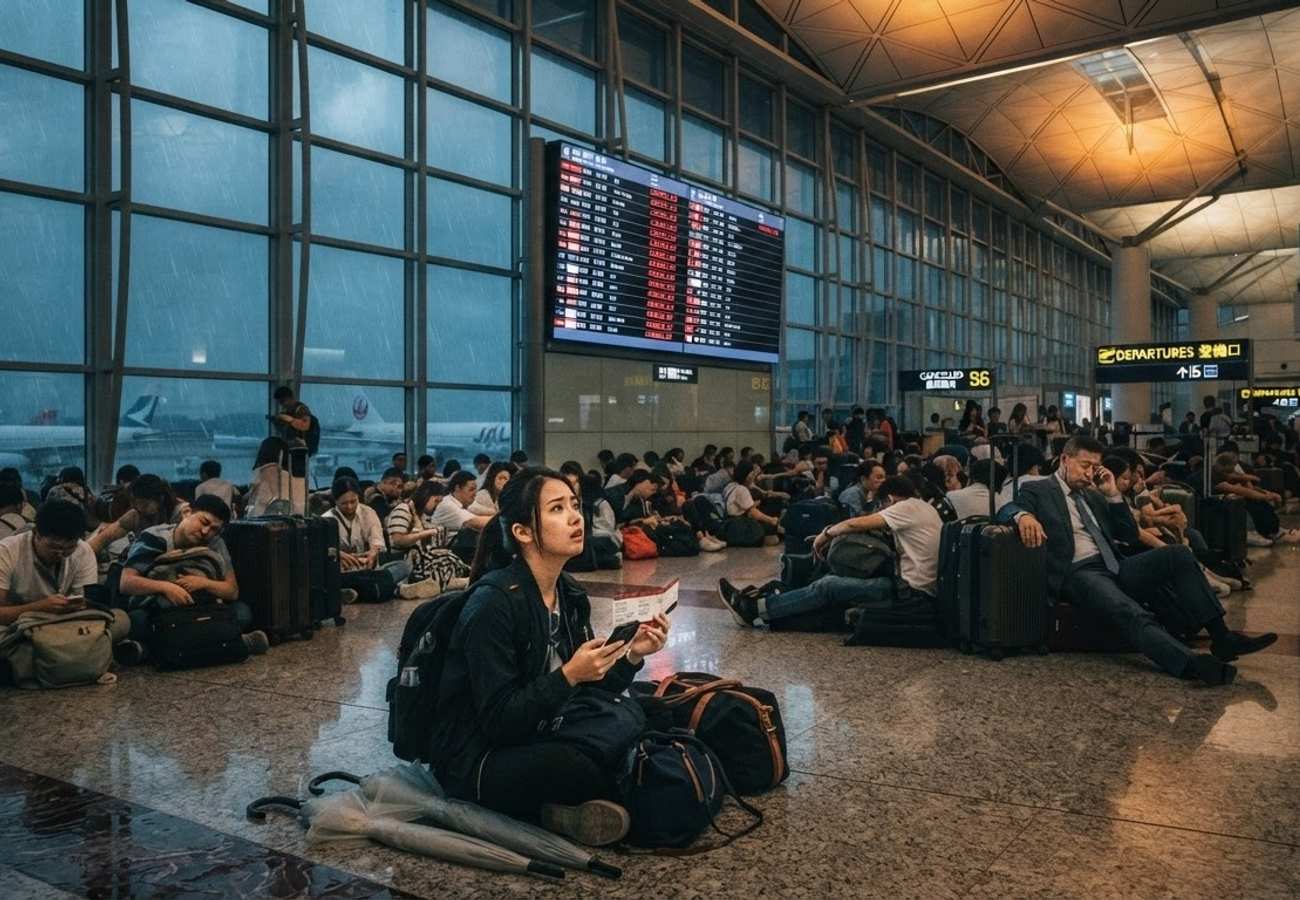
Image generated by AI
Severe weather systems and technical failures have paralyzed air corridors from East Asia to the Pacific. Thousands of passengers are currently stranded as Typhoon Dolphin and seasonal monsoons collide with fragile airline operational capacities.
The Asian aviation network is currently facing a systemic breakdown caused by a combination of extreme meteorological events and internal carrier failures. From the coastal hubs of China to the archipelago of the Philippines, the synchronization of flight schedules has been shattered, leaving travelers to navigate a patchwork of cancellations and rolling delays.
Typhoon Dolphin Paralyzes China and Japan Airspace
The primary catalyst for the current chaos is Typhoon Dolphin, which has inflicted heavy losses on flight schedules across East Asia. The storm's impact was most acute in Shanghai, where the region's primary gateways—Hongqiao and Pudong airports—recorded more than 1,300 canceled flights in a single 24-hour window.
On one specific Monday, Shanghai saw over 900 flights scrapped, representing approximately 40% of the total scheduled operations. This collapse was driven by sustained high winds, torrential rainfall, and localized flooding that rendered ground operations unsafe.
The disruption migrated north and east, hitting Japan with significant force. In early August, national reports confirmed more than 500 domestic and international flight cancellations as the storm approached southwestern prefectures. While flights eventually resumed, the "ripple effect" of aircraft repositioning and crew scheduling conflicts caused lingering delays for several days.
Taiwan also implemented preemptive measures. Airlines operating out of Taipei and Taoyuan adjusted or canceled routes to Okinawa and other nearby destinations to avoid the storm's outer rainbands.
Manila Hub Struggles With Monsoon Flooding
While typhoons dominate the headlines in the north, the Philippines is battling seasonal monsoon rains that have compromised the reliability of Ninoy Aquino International Airport (NAIA). Throughout August, a cycle of poor visibility and gusty crosswinds has led to frequent diversions and cancellations.
The impact is most severe on short-haul and domestic routes connecting Manila with cities in Luzon and the Visayas. The combination of low cloud ceilings and intense thunderstorms has forced pilots into extended holding patterns and go-arounds, further straining runway capacity.
Infrastructure vulnerability remains a key issue. Low-lying coastal cities like Manila are prone to flash flooding, which quickly overwhelms drainage systems and disrupts ground handling. This has resulted in congested departure halls and prolonged wait times for passengers attempting to secure rebookings during narrow weather windows.
Technical Failures Exacerbate Weather Disruptions
The crisis is not solely meteorological. Operational fragility within individual airlines has added a layer of complexity to the recovery efforts.
- India: A domestic flight from Delhi to Pune was delayed on the tarmac due to a failure in the aircraft's air conditioning system. Passengers reported sweltering cabin temperatures before the flight was eventually canceled and reassigned.
- South Pacific: A widebody aircraft technical failure led to the cancellation of a high-profile Paris–Bangkok–Nouméa rotation. This created a bottleneck in Bangkok, a critical transit point for travelers moving between Europe and Asia.
These incidents highlight a lack of "slack" in the current aviation system. With many carriers operating near pre-pandemic capacity, there are few spare aircraft or crew members available to fill gaps when a single plane is grounded for maintenance.
Impact on Global Hubs and Logistics
The disruption has extended beyond passenger terminals into the broader logistics and transit network. Data indicates that major shipping ports in Shanghai and Ningbo temporarily halted operations, and air freighter services were curtailed alongside passenger flights.
The secondary effects are now being felt in the Gulf and other East Asian hubs. Travelers transiting through the Middle East to reach North America or Europe have reported missed connections, as flights arriving from storm-hit cities in China and Japan arrive hours behind schedule.
Recovery from such a concentrated wave of disruptions typically takes several days. Airlines must not only reposition aircraft but also reset crew rosters to comply with strict duty-time regulations.
Summary of Regional Disruptions
| Region/City | Primary Cause | Impact Metric | Key Affected Routes |
|---|---|---|---|
| Shanghai (PVG/SHA) | Typhoon Dolphin | 1,300+ flights canceled (single day) | Eastern China Coast |
| Japan (SW Prefectures) | Typhoon Dolphin | 500+ flights canceled | Domestic & International |
| Manila (NAIA) | Monsoon/Flooding | Dozens of daily cancellations | Luzon & Visayas Short-haul |
| Taipei/Taoyuan | Storm Rainbands | Schedule adjustments/Cancellations | Taipei $\rightarrow$ Okinawa |
| Delhi $\rightarrow$ Pune | Technical (AC Failure) | Flight Cancellation | Domestic India |
| Bangkok Hub | Widebody Tech Issue | Missed connections | Paris $\rightarrow$ Bangkok $\rightarrow$ Nouméa |
Key Takeaways
- Systemic Fragility: The combination of Typhoon Dolphin and monsoons reveals how limited fleet redundancy is in 2026.
- Hub Vulnerability: Shanghai and Manila remain high-risk points during the summer storm season due to infrastructure and weather patterns.
- Logistics Chain: The disruption affected both passenger aviation and maritime shipping in the Shanghai/Ningbo corridor.
- Recovery Lag: Even after weather clears, "knock-on" effects regarding crew duty limits and aircraft repositioning cause multi-day delays.
FAQ
Why are flights still delayed after the storm has passed? Airlines must reposition aircraft and crews that were displaced during the storm. Additionally, crew members may have exceeded their legal duty-time limits, requiring mandatory rest periods before they can fly again.
How does monsoon rain affect flights differently than a typhoon? Typhoons usually cause mass preemptive cancellations due to extreme winds. Monsoons typically cause "rolling delays" and diversions due to poor visibility and flash flooding on the runways.
What should I do if my connection in Bangkok or Shanghai is missed? Check for charter replacement capacity and request hotel/meal vouchers from the carrier, as many airlines are currently providing these for weather-related disruptions.
The intersection of climate volatility and lean operational margins continues to redefine the risks of Asian summer travel.
Related Travel Guides
Disclaimer
This article is for informational and educational purposes only. It does not constitute legal, financial, or professional advice. While we strive to provide accurate and up-to-date information, travel policies, regulations, and conditions change rapidly. Always verify information with official sources before making travel decisions. Nomad Lawyer makes no representations about the accuracy, reliability, completeness, or suitability of the information provided. Readers should consult qualified professionals for advice specific to their circumstances. The views expressed in this article are those of the author and do not necessarily reflect the views of Nomad Lawyer.
Preeti Gunjan
Contributor & Community Manager
A passionate traveller and community builder. Preeti helps grow the Nomad Lawyer community, fostering engagement and bringing the reader experience to life.
Learn more about our team →