Asia Air Travel Hit by 371 Cancellations and 3,663 Flight Delays: Bangkok, Mumbai, and Shanghai Lead Gridlock

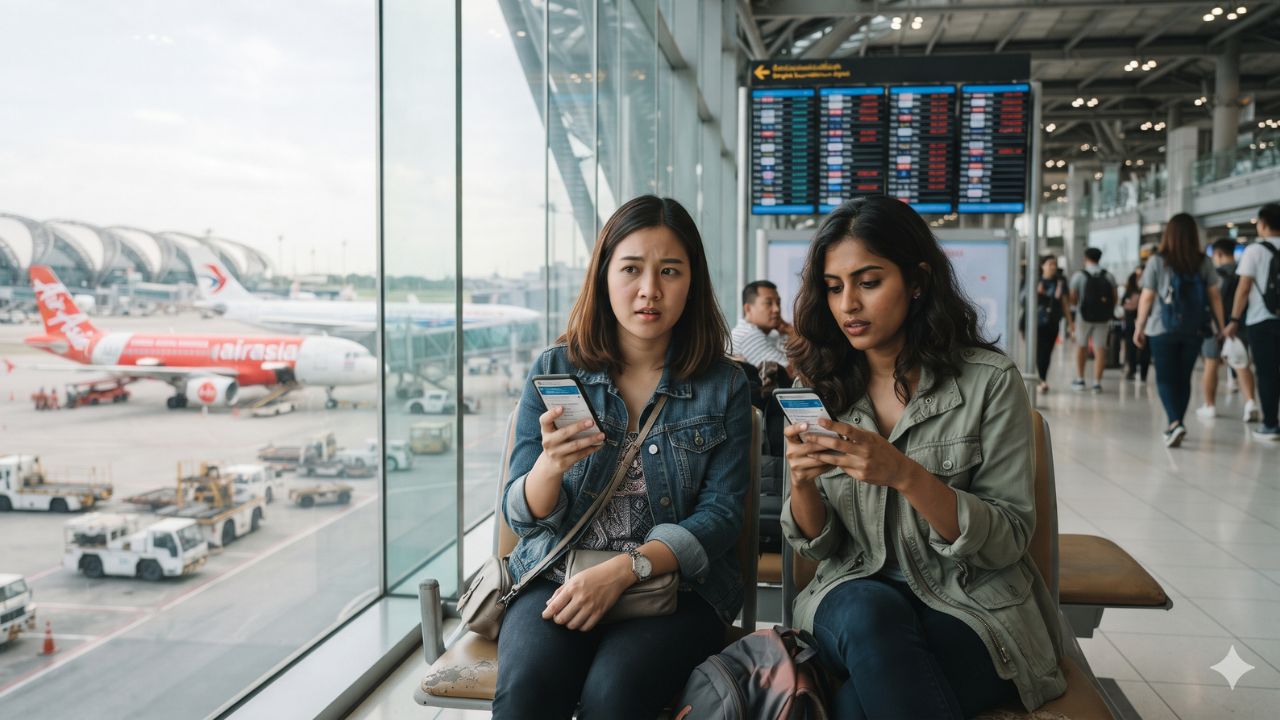
While early November traditionally heralds the opening of Southeast Asia's dry winter travel season, a sudden operational breakdown rippled across the Asia-Pacific aviation network on 1 November 2026, triggering 371 cancellations and 3,663 flight delays in a single day. Real-time tracking data compiled by FlightAware as of 31 October at 4:31 pm US Eastern Time (4:32 am Philippine Time on 1 November) revealed widespread disruption at critical regional crossroads. Thailand’s main gateway, Bangkok Suvarnabhumi Airport, led the continent with 337 delayed flights, while India's Chhatrapati Shivaji Maharaj International Airport in Mumbai recorded 237 delays and 14 outright groundings. With regional airlines including India's Akasa Air suffering a 15 percent cancellation rate and Bhutan's flag carrier Drukair seeing 58 percent of its flights delayed, travelers encountered severe gate congestion, missed international connections, and unexpected terminal holds from Tokyo to Dubai.
Trans-Asian Air Traffic Snarl: Over 4,000 Flights Disrupted Across Core Gateways
The coordinated review of aviation records, reported by Indranil Mukherjee and verified by analyst Paramita Sarkar, reveals how operational shocks in primary hubs propagate quickly across interconnected trans-Asian flight corridors. In Southeast Asia, Tourism Authority of Thailand gateway Bangkok Suvarnabhumi (BKK) absorbed 337 delays and three cancellations, straining passenger holding lounges and regional connection banks. Malaysia’s Tourism Malaysia hub Kuala Lumpur International Airport (KUL) reported 201 delays and five cancellations, while Indonesia’s Soekarno-Hatta International Airport in Jakarta (CGK) logged 178 delays and 18 cancellations. Across the South China Sea, Manila’s Ninoy Aquino International Airport (MNL) matched Jakarta's delay count with 178 delays alongside 13 cancellations.
In India, air transport infrastructure faced heavy operational pressure across multiple metropolitan centers. Mumbai (BOM) absorbed 237 delays and 14 cancellations, while Indira Gandhi International Airport in Delhi (DEL) recorded 162 delays and 12 cancellations according to Incredible India transport monitors. Regional facilities absorbed compounding friction: Bengaluru's Kempegowda (BLR) registered 77 delays and 10 cancellations, the newly operational Navi Mumbai International recorded 25 delays and 10 cancellations, Cochin (COK) logged 24 delays and eight cancellations, and Pune reported 16 delays and seven cancellations.
Across East Asia and the Middle East, China’s megahubs faced broad schedule adjustments. Shanghai Pudong (PVG) registered 213 delays and seven cancellations, while domestic sister hub Shanghai Hongqiao (SHA) absorbed 103 delays and eight cancellations. Southern export centers Guangzhou Baiyun (CAN) and Shenzhen Bao'an (SZX) logged 136 and 129 delays respectively, while Beijing Capital (PEK) recorded 113 delays and nine cancellations. Further west, Dubai International Airport (DXB) handled 197 delays and four cancellations, while Riyadh’s King Khalid International Airport (RUH) in Saudi Arabia logged 23 cancellations and 15 delays.
| Commercial Airport Hub | Metropolitan Region / Country | Recorded Flight Delays | Recorded Cancellations | Operational Network Impact |
|---|---|---|---|---|
| Bangkok Suvarnabhumi (BKK) | Bangkok, Thailand | 337 delays | 3 cancellations | Highest delay count in Asia; snarls Southeast Asian connections. |
| Mumbai Chhatrapati Shivaji (BOM) | Mumbai, India | 237 delays | 14 cancellations | Strains financial capital trunk routes and domestic transfers. |
| Shanghai Pudong (PVG) | Shanghai, China | 213 delays | 7 cancellations | Paces transpacific and East Asian international arrival banks. |
| Kuala Lumpur International (KUL) | Kuala Lumpur, Malaysia | 201 delays | 5 cancellations | Feeder hold across low-cost and ASEAN regional trunk services. |
| Dubai International (DXB) | Dubai, United Arab Emirates | 197 delays | 4 cancellations | Mid-continent transit spacing across global long-haul banks. |
| Jakarta Soekarno-Hatta (CGK) | Jakarta, Indonesia | 178 delays | 18 cancellations | Highest cancellation count in Southeast Asia; island links cut. |
| Manila Ninoy Aquino (MNL) | Manila, Philippines | 178 delays | 13 cancellations | Domestic archipelagic connections and transpacific links slowed. |
| Delhi Indira Gandhi (DEL) | New Delhi, India | 162 delays | 12 cancellations | Northern Indian airway metering and international departures held. |
| Guangzhou Baiyun (CAN) | Guangzhou, China | 136 delays | 9 cancellations | Pearl River Delta manufacturing and regional transit pacing. |
| Tokyo Narita (NRT) | Tokyo, Japan | 134 delays | 4 cancellations | Japanese international gateway departure and arrival spacing. |
| Shenzhen Bao’an (SZX) | Shenzhen, China | 129 delays | 13 cancellations | Southern Chinese commercial flights and commuter shuttles slowed. |
| Beijing Capital (PEK) | Beijing, China | 113 delays | 9 cancellations | Capital airway flow control and northern regional route holds. |
| Shanghai Hongqiao (SHA) | Shanghai, China | 103 delays | 8 cancellations | High-frequency domestic business shuttles delayed across eastern China. |
| Bengaluru Kempegowda (BLR) | Bengaluru, India | 77 delays | 10 cancellations | Tech corridor business routes and southern feeder links affected. |
| Xi’an Xianyang (XIY) | Xi’an, China | 74 delays | 16 cancellations | Inland Silk Road hub cancels regional and tourist connections. |
| Beijing Daxing (PKX) | Beijing, China | 63 delays | 8 cancellations | Domestic sky corridors paced into modern mega-terminal. |
| Wuhan Tianhe (WUH) | Wuhan, China | 39 delays | 6 cancellations | Central Chinese transit connections and regional feeder services. |
| Navi Mumbai International | Navi Mumbai, India | 25 delays | 10 cancellations | Secondary Mumbai metropolitan gateway absorbs route realignments. |
| Cochin International (COK) | Kochi, Kerala, India | 24 delays | 8 cancellations | Gulf migrant worker corridors and Kerala tourism flights trimmed. |
| Riyadh King Khalid (RUH) | Riyadh, Saudi Arabia | 15 delays | 23 cancellations | Highest cancellation volume in Middle East; regional flights cut. |
| Pune Airport | Pune, Maharashtra, India | 16 delays | 7 cancellations | Regional western Indian commuter links face aircraft rotations. |
Across 44 tracked airlines, a separate airline dataset recorded 2,340 delays and 264 cancellations, highlighting uneven schedule strain:
| Operating Airline | Recorded Delays | Delay Rate (%) | Recorded Cancellations | Cancellation Rate (%) | Fleet & Market Profile |
|---|---|---|---|---|---|
| China Eastern Airlines | 292 delays | 12% | 24 cancellations | 1% | Major Chinese state carrier operating extensive domestic network. |
| IndiGo | 255 delays | 11% | 1 cancellation | <1% | India's largest carrier; absorbed massive domestic delay volume. |
| All Nippon Airways (ANA) | 150 delays | 26% | 1 cancellation | 0% | Japanese flag carrier with heavy domestic and transpacific schedule. |
| Air China | 101 delays | 6% | 7 cancellations | 0% | Chinese national carrier centered at Beijing Capital and Chengdu. |
| Jetstar | 99 delays | 26% | 3 cancellations | 0% | Low-cost carrier operating across Australia, Japan, and Southeast Asia. |
| AirAsia (Malaysia) | 82 delays | 15% | 11 cancellations | 2% | Southeast Asia's leading budget airline centered at KLIA2. |
| Saudia | 79 delays | 18% | 17 cancellations | 3% | Saudi flag carrier managing extensive domestic and regional flights. |
| Shenzhen Airlines | 74 delays | 10% | 18 cancellations | 2% | Star Alliance member focused on southern Chinese economic zones. |
| Philippine Airlines | 67 delays | 46% | 12 cancellations | 8% | Philippine flag carrier; nearly half of tracked operations delayed. |
| Air Arabia | 65 delays | 27% | 3 cancellations | 1% | Middle Eastern low-cost carrier connecting Gulf to South Asia. |
| XiamenAir | 52 delays | 8% | 8 cancellations | 1% | SkyTeam carrier operating out of Fujian across coastal corridors. |
| Hainan Airlines | 46 delays | 6% | 10 cancellations | 1% | Leading private Chinese carrier with domestic and long-haul links. |
| SpiceJet | 44 delays | 46% | 15 cancellations | 15% | Indian budget carrier hit by severe schedule-wide cancellations. |
| Akasa Air | 41 delays | 16% | 38 cancellations | 15% | Fast-growing Indian carrier recording highest cancellation total. |
| Tianjin Airlines | 38 delays | 13% | 13 cancellations | 4% | Regional Chinese operator flying northern and inland routes. |
| Batik Air (Indonesia) | 35 delays | 12% | 11 cancellations | 3% | Lion Air Group hybrid carrier connecting Indonesian archipelagos. |
| Jetstar Japan | 35 delays | 36% | 4 cancellations | 4% | Japanese low-cost domestic specialist based at Tokyo Narita. |
| Bangkok Airways | 32 delays | 27% | 3 cancellations | 2% | Boutique carrier linking Bangkok to Koh Samui, Phuket, and Siem Reap. |
| SriLankan Airlines | 32 delays | 46% | 2 cancellations | 2% | Island flag carrier linking Colombo to South and Southeast Asia. |
| PAL Express | 29 delays | 13% | 2 cancellations | 0% | Regional domestic feeder for Philippine Airlines. |
| Uzbekistan Airways | 27 delays | 31% | 6 cancellations | 6% | Central Asian carrier linking Tashkent to East Asia and the Gulf. |
| Drukair | 18 delays | 58% | 6 cancellations | 19% | Royal Bhutan Airlines; highest proportional disruption in dataset. |
| Gulf Air | 14 delays | 9% | 7 cancellations | 4% | Bahrain national carrier operating Gulf and South Asian sectors. |
What Makes Navigating Asia's Major Megahubs Experientially Unique During Delays
Experiencing flight disruptions in Asian megahubs differs dramatically from Western transit hubs due to the sheer architectural scale and specialized transit infrastructure of these facilities. Bangkok Suvarnabhumi Airport (BKK), designed with one of the world's largest single-building passenger terminals, features concourses stretching more than a kilometer from end to end. When 337 flights fall behind schedule, walking between Concourse A and Concourse G can take over twenty minutes. Travelers rebooked onto departures at the newer Satellite Terminal 1 (SAT-1) must board the underground Automated People Mover (APM) train, which whisks passengers between the main complex and satellite gates in three minutes. To escape noisy gate clusters, experienced travelers head to the quiet mezzanine garden zones on the third floor of Concourse D or utilize the open-air relaxation lounges near Concourse B.
In India, Chhatrapati Shivaji Maharaj International Airport (BOM) in Mumbai operates on a land-constrained dual-runway layout where cross-runway intersections require air traffic controllers to sequence domestic and international arrivals with split-second precision. When 237 delays strike, Terminal 2 (T2)—celebrated for its three-kilometer-long Jaya He GVK New Museum art wall displaying thousands of traditional Indian artifacts—transforms into a busy transit hall. Rebooking domestic connections often involves navigating terminal shuttle transfers between Terminal 1 in Santacruz and Terminal 2 in Sahar, requiring at least 30 to 45 minutes on city roads.
In Malaysia, Kuala Lumpur International Airport (KUL) is divided between the main terminal (KLIA Terminal 1) and the dedicated budget airline complex (KLIA Terminal 2). During widespread ground delays, the KLIA Aerotrain replacement bus shuttles run continuously between the main building and satellite gates. For travelers stranded with layovers stretching beyond four hours, the high-speed KLIA Ekspres rail link departs directly from the terminal basement, transporting passengers to KL Sentral in downtown Kuala Lumpur in just 28 minutes for an authentic hawker meal in Brickfields before heading back to the gate.
Visitor Insider Tips: Terminal Navigation, Rebooking Strategies, and Local Transit Escapes
- Bypass Bangkok Taxi Queues with the Airport Rail Link: If an extended flight delay strands you at Suvarnabhumi during daylight hours, skip the lengthy ground transport queues on the first floor. Take the elevator down to the basement level and board the Airport Rail Link. Trains depart every 10 to 15 minutes, reaching Makkasan station (connecting to the MRT Blue Line) in 22 minutes and Phaya Thai (connecting to the BTS Skytrain) in 26 minutes for less than 45 Thai Baht.
- Utilize Airside Transit Hotels for Extended Layover Rest: Avoid clearing immigration and re-entering security during long night delays. At Bangkok (BKK), the Miracle Transit Hotel on the fourth floor of Concourse G offers hourly rooms post-security. Similarly, KLIA features the Sama-Sama Express inside the satellite concourse, allowing travelers to sleep, shower, and recharge electronics without retrieving checked baggage.
- Leverage Airline Web Channels Over Airport Counters: When carriers like Akasa Air or SpiceJet cancel flights in India, airport ticket counters quickly become overwhelmed. Use the airline’s WhatsApp automated service or mobile website to request free rescheduling onto the next available flight. In India, travelers enrolled in the DigiYatra biometric facial recognition program can re-enter departure security through dedicated biometric e-gates without paper boarding pass queues.
- Beat Shanghai Airport Highway Gridlock via Maglev: At Shanghai Pudong (PVG), if you face a multi-hour delay and need to meet colleagues or secure a downtown hotel, avoid express highway bottlenecks. Board the Shanghai Maglev train at Pudong Airport station. The magnetic levitation train hits speeds of 300 to 430 km/h, reaching Longyang Road Metro Station in central Pudong in just seven minutes and twenty seconds.
- Document Flight Disruptions for Travel Insurance Claims: Always request an official "Flight Delay Certificate" or "Notice of Cancellation" directly from airline gate staff before leaving the secure area. Independent travel insurance policies and premium credit card protections across Asia typically require written carrier verification stating the specific flight number and timestamp to approve hotel accommodation reimbursements.
Cultural and Environmental Context: Regional Capacity Strains and Passenger Protection Gaps
The 3,663 delays recorded across Asia spotlight the intense growing pains of the world's fastest-expanding aviation market. Over the past decade, economic growth across Southeast Asia, India, and China has democratized air travel, enabling hundreds of millions of first-time travelers to take to the skies. However, airspace management modernization has struggled to keep pace with rapid airline fleet deliveries. Unlike Europe’s unified Eurocontrol or the contiguous radar network of the United States, Asian airspace remains fragmented among dozens of national military and civil jurisdictions, each enforcing strict flight corridors, sovereign altitude restrictions, and buffer zones that force airliners into circuitous routing around tropical thunderstorm cells.
In addition, passenger compensation regulations vary sharply across the continent. While the Directorate General of Civil Aviation (DGCA) in India enforces specific passenger charters mandating free meals and refreshments for delays exceeding two hours, low-cost carriers often face operational bottlenecks when attempting to deliver catering to thousands of stranded passengers simultaneously. In Southeast Asia, statutory compensation rules differ widely between nations, leaving travelers reliant on individual airline contract clauses.
From an ecological perspective, ground delays and airborne holding patterns across tropical Asian airspace create significant environmental costs. Dozens of wide-body aircraft circling in holding stacks over the Gulf of Thailand or the Arabian Sea burn substantial volumes of aviation fuel, releasing avoidable carbon emissions. Addressing these structural challenges requires regional cooperation through ASEAN open skies frameworks, collaborative air traffic flow management, and accelerated investment in sustainable ground transit that links city centers directly to airport gates.
FAQ: Visiting and Transiting Asian Airports 2026
How many flights were disrupted across Asian airports on 1 November 2026?
FlightAware recorded 371 flight cancellations and 3,663 delays across Asian hubs, with Bangkok, Mumbai, and Shanghai experiencing the highest volume of disruptions.
Which Asian airline recorded the highest percentage of cancellations?
Bhutan's Drukair recorded a 19% cancellation rate, while Indian carriers Akasa Air and SpiceJet each recorded a 15% cancellation rate across their tracked flights.
How do I travel quickly from Bangkok Suvarnabhumi Airport to the city center?
The Airport Rail Link departs from the basement level of Suvarnabhumi, reaching central Bangkok (Makkasan and Phaya Thai stations) in approximately 25 minutes for under 45 Baht.
Can I get a refund if my flight is cancelled at an Indian airport?
Yes. Under DGCA regulations, passengers whose flights are cancelled by the airline are entitled to a full refund or free rebooking on an alternate flight.
[Across Asia's vast skies, patience, swift digital rebooking, and the speed of high-speed airport trains remain every smart traveler's greatest advantage.]
Related Travel Guides
The Insider Guide to Bangkok Suvarnabhumi Rail Links, KLIA Layover Hacks, and Mumbai Airport T2, According To Reddit (Coming Soon)
This article is for informational purposes. Flight routes, passenger regulations, visa rules, and transit advisories are subject to change by airlines and aviation authorities. Readers are advised to verify schedules and travel documentation with relevant carriers and border agencies before departure.
Related Stories

Singapore and Manila Flights Face Disruptions as Philippine Airlines Revises November Schedules for ASEAN Summit
US Air Travel Snarled by 1,510 Flight Delays and 71 Cancellations: Dallas, Seattle, and LAX Lead Nationwide Disruption