
Arkansas Music Week 2026 Expands Fayetteville Cultural Footprint with 102 Events
Arkansas Music Week 2026 transforms Fayetteville into a city-wide stage from August 23 to 30, featuring 103 artists across 25 venues to boost the Northwest Arkansas creative economy.

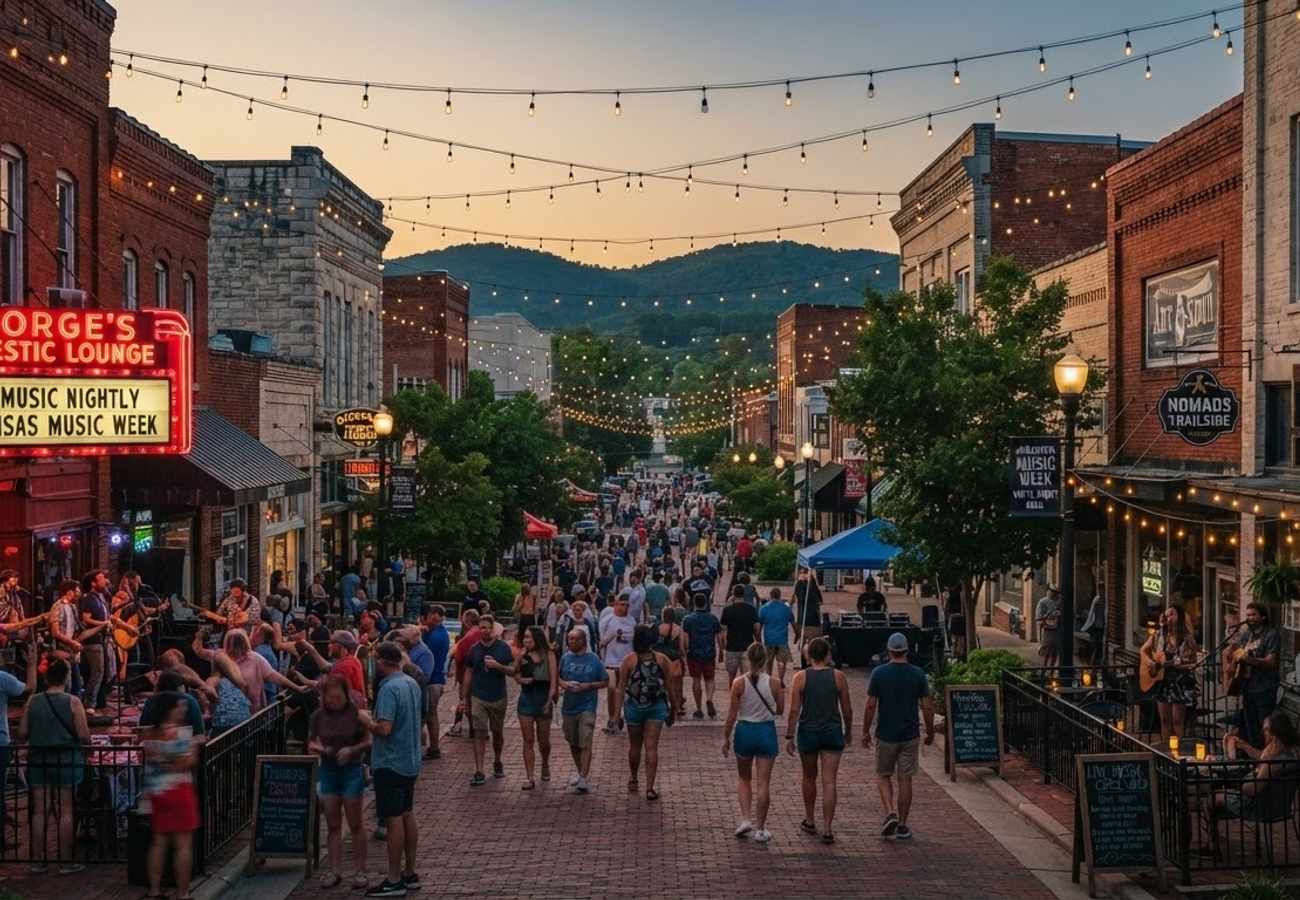
Image generated by AI
Arkansas Music Week is converting Fayetteville into a decentralized live stage from 23 to 30 August 2026. This eight-day cultural activation integrates music, local commerce, and community engagement across the city's urban core.
Unlike traditional festivals confined to a single stadium or park, Arkansas Music Week utilizes a distributed model. This approach allows visitors to transition seamlessly between live performances, art galleries, cafes, and hotel venues, effectively turning the city's streets into the primary artery of the event. Now in its second year, the 2026 iteration signals a rapid scaling of the event's influence within Northwest Arkansas.
The event is a collaborative effort presented by the Arkansas Music Experience, Experience Fayetteville, and the Downtown Fayetteville Coalition. The primary objective is threefold: providing platforms for musicians, introducing audiences to emerging artists, and increasing foot traffic for local hospitality venues.
2026 Event Scale and Expansion
The growth of the festival is evident in the final programming numbers. Initial promotional plans projected 75 events and 22 venues; however, the actual rollout has exceeded these targets.
- Total Events: 102
- Total Artists: 103
- Participating Venues: 25
- Duration: 8 Days (23–30 August)
This expansion reflects a strong response from the local music community and an increased willingness from venue owners to integrate into the festival framework.
Decentralized Venue Integration
The festival's operational strategy focuses on the downtown Fayetteville and Dickson Street corridors. By avoiding a gated perimeter, the event encourages organic exploration of the city's nightlife and retail sectors.
Key participating venues include:
- George’s Majestic Lounge: The city's oldest and longest-running live music venue, serving as a historical anchor for the week.
- Hospitality Hubs: Moxy Fayetteville and Stonebreaker Hotel.
- Community & Art Spaces: Six Twelve Coffeehouse, Ozark Folkways, Nature Backs, and Mount Sequoyah.
- Performance Halls: Kingfish and Roger’s Recreation Hall.
Diversified Programming Beyond Concerts
The 2026 schedule extends beyond standard live sets to include a broad spectrum of creative and professional activity. Genre representation includes rock, punk, folk, metal, and DJ sets, supplemented by:
- Educational Outreach: The School of Rock Summer Series at George’s Majestic Lounge, featuring youth musicians from Fayetteville and Bentonville.
- Historical Curation: The Levon Helm exhibition at the Alexander Gallery of the Walton Arts Center, linking current trends to Arkansas's musical heritage.
- Interactive Sessions: Open mics, songwriter workshops, and industry talks.
- Showcase Series: "Songwright Dickson Street," a seven-day original music showcase hosted at Roger’s Recreation Hall.
Economic and Professional Infrastructure
A critical component of Arkansas Music Week is the focus on the "music economy." The festival serves as a networking hub for the professionals who sustain the industry behind the scenes.
On 25 August, a free music-industry meetup at George’s Majestic Lounge facilitated connections between promoters, photographers, publicists, sound engineers, and recording studio teams. Robert Locke, a festival organizer, noted that the scale of the event grew significantly after Experience Fayetteville established a community fund to support venues and promoters. According to Locke, participating venues have doubled and the number of events has tripled compared to the inaugural year.
Logistics for Travelers
For visitors, the festival offers a low-barrier entry point into Fayetteville's culture. Many activities are free, while specific headliners or workshops require tickets. The distributed nature of the events means that tourist spending is spread across a wider array of local businesses—from boutique hotels to independent coffee shops—rather than being concentrated in one venue.
Event Summary Data
| Metric | 2026 Figure | Initial Projection |
|---|---|---|
| Total Events | 102 | 75+ |
| Participating Artists | 103 | Not Specified |
| Active Venues | 25 | 22 |
| Event Duration | 8 Days | 8 Days |
Why This Matters: Industry Analysis
From a logistical perspective, the "city-as-a-venue" model is a strategic move to mitigate the risks associated with traditional festivals. By distributing the crowd across 25 different locations, organizers reduce the strain on local infrastructure and eliminate the need for massive temporary parking and security installations.
For the traveler, this means the "festival experience" is integrated into the urban exploration. Instead of spending 12 hours in a field, a visitor spends 12 hours in the city. This maximizes "Information Gain" for the tourist—they discover a new hotel, a new cafe, and a new artist in a single afternoon.
From an economic standpoint, the creation of a community fund for promoters is the most significant development. It shifts the event from a mere "calendar date" to a sustainable economic ecosystem. By subsidizing the risk for smaller venues, the city ensures that the financial benefits of the music week reach the grassroots level, not just the major headliners.
Forward Outlook
The rapid tripling of events between Year 1 and Year 2 suggests that Arkansas Music Week is on a trajectory to become a primary anchor for Northwest Arkansas's late-summer tourism. Expect future iterations to expand beyond the Dickson Street corridor into other Fayetteville neighborhoods. As the industry meetup model proves successful, the festival will likely evolve into a formal "Music Summit," attracting national promoters and A&R scouts to the region.
Fayetteville is no longer just hosting a festival; it is engineering a sustainable creative economy.
Related Travel Guides
Disclaimer
This article is for informational and educational purposes only. It does not constitute legal, financial, or professional advice. While we strive to provide accurate and up-to-date information, travel policies, regulations, and conditions change rapidly. Always verify information with official sources before making travel decisions. Nomad Lawyer makes no representations about the accuracy, reliability, completeness, or suitability of the information provided. Readers should consult qualified professionals for advice specific to their circumstances. The views expressed in this article are those of the author and do not necessarily reflect the views of Nomad Lawyer.
Preeti Gunjan
Contributor & Community Manager
A passionate traveller and community builder. Preeti helps grow the Nomad Lawyer community, fostering engagement and bringing the reader experience to life.
Learn more about our team →