
American, Southwest, and Major Airlines Add Special Flights Exceeding 50,000 Seats as Sports Travel Demand Swells
American, Southwest, and Major Airlines Add Special Flights Exceeding 50,000 Seats as Sports Travel Demand Swells

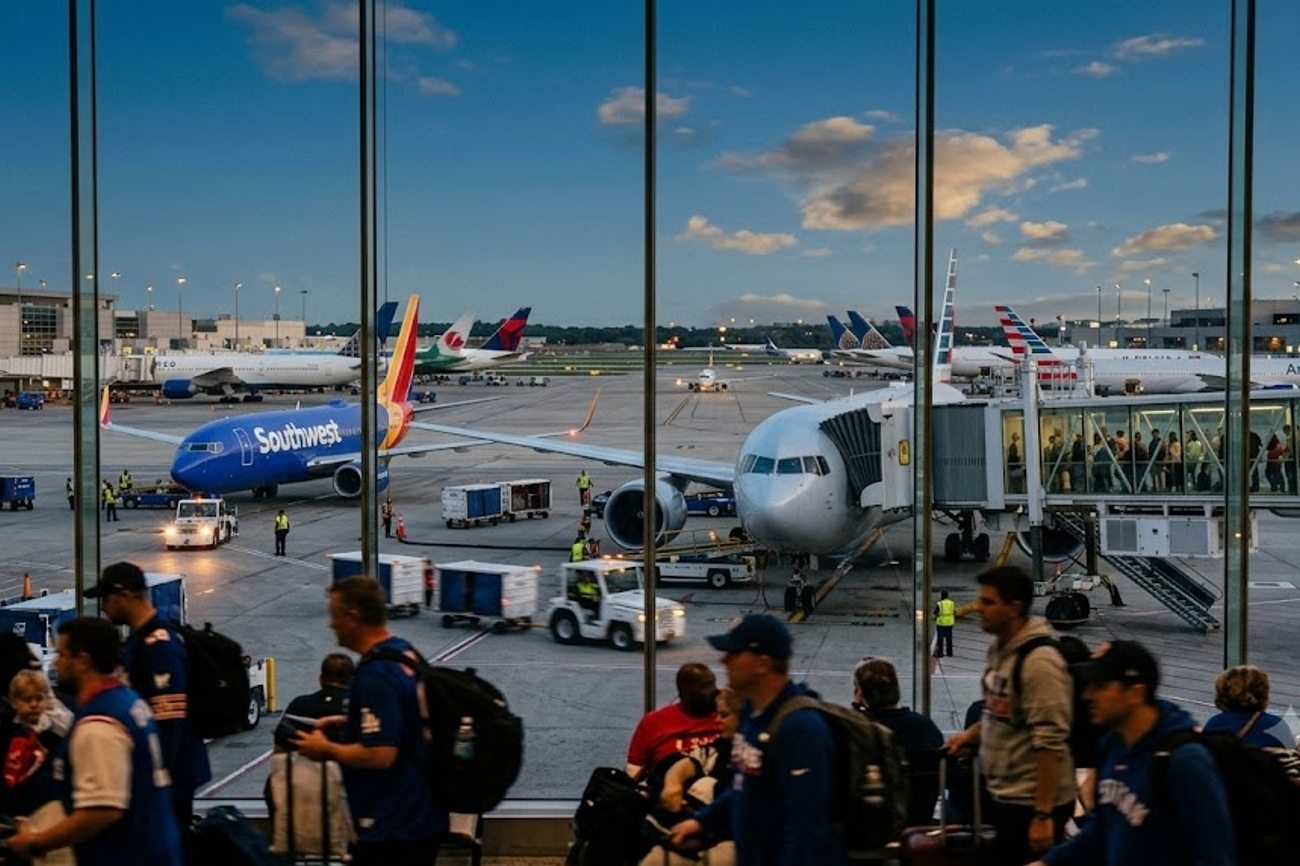
Image generated by AI
[Dallas, September 14, 2026] — Major carriers including American Airlines and Southwest Airlines are deploying more than 50,000 additional seats to accommodate a massive surge in sports-related travel demand. This aggressive capacity expansion comes as global sporting events, most notably the preparations for the FIFA World Cup 2026, force airlines to overhaul traditional scheduling to meet highly concentrated passenger spikes.
The strategic shift moves aviation planning away from general leisure trends toward event-specific logistics. Because sports fans travel based on fixed match dates rather than flexible vacation windows, carriers are implementing temporary route adjustments, deploying larger aircraft, and launching specialized charter operations to capture revenue from high-spending sports tourists.
The Catalyst for Capacity Expansion
The primary driver of this aviation surge is the predictability of sports-driven migration. Unlike standard tourism, sporting events create "predictable waves" where millions of passengers move between specific city pairs within narrow timeframes. This concentration allows airlines to optimize load factors by adding targeted capacity rather than broad network increases.
The economic incentive is significant. Industry data indicates that sports travelers typically outspend ordinary visitors on premium accommodation, airfare, and local services. Consequently, airlines are treating these events as high-yield opportunities, integrating loyalty program incentives with increased flight frequencies to secure market share.
Market Impact and Route Specifications
The expansion is distributed across several major carriers, with varying strategies depending on the sport and the geographic region.
| Airline | Primary Event Focus | Capacity/Flight Increase | Strategic Implementation |
|---|---|---|---|
| American Airlines | FIFA World Cup 2026 | 27,000 additional seats | Expanded 12 new and existing routes across North America |
| Southwest Airlines | Super Bowl 2025 | 31 additional nonstop flights | Targeted connectivity: Kansas City and Philadelphia to New Orleans |
| Delta Air Lines | Pro Football 2025 | 37 additional flights | Larger aircraft deployed across 12 primary football markets |
| Delta Air Lines | College Football 2025 | 40+ additional flights | Increased frequency to 25 specific college towns |
| United Airlines | FIFA World Cup 2026 | Network-wide expansion | Global connectivity scaling for tournament host cities |
| Qantas | NFL International | Special charter flights | Dedicated team and event-related logistics |
| Akasa Air | IPL Cricket | Supporter-focused flights | Increased domestic capacity for Indian cricket fans |
| Aerolíneas Argentinas | Football Events | Targeted services | Enhanced connectivity for major match fixtures |
What This Means for Travelers
For the average passenger, this surge in capacity is a double-edged sword. While the addition of 50,000+ seats reduces the risk of total sell-outs, the concentrated nature of this demand typically leads to extreme price volatility.
Booking Logistics Travelers heading to host cities during these windows should expect "event pricing." Even with the American Airlines expansion of 27,000 seats, demand often exceeds supply during peak match days. Passengers are advised to book flights immediately upon the release of official match schedules.
Airport Congestion The influx of fans will place immense pressure on ground operations. Travelers should anticipate longer security queues and boarding delays at major hubs. Coordination with Southwest Airlines and other carriers suggests that "fan-heavy" routes will experience higher-than-normal congestion.
Premium Availability There is a noted push toward luxury travel. American Airlines, for instance, is leveraging a system-wide inventory of 1.45 million premium seats to attract high-net-worth sports fans who prioritize comfort over cost during international transit.
The FIFA World Cup 2026 Logistics Roadmap
The most significant aviation challenge in recent history is the upcoming FIFA World Cup 2026, hosted across the United States, Canada, and Mexico. This tripartite hosting model requires an unprecedented level of coordination between the Federal Aviation Administration (FAA) and international regulators to manage cross-border passenger flows.
American Airlines is leading the response by focusing on 12 specific routes to facilitate movement between host cities. Their strategy involves not just adding seats, but utilizing loyalty programs to reward frequent flyers who are traveling for the tournament.
Beyond the North American market, the trend is global. Qantas is utilizing charter operations for NFL games in Australia, and Akasa Air is scaling domestic flights for the Indian Premier League (IPL). This indicates a permanent shift in how airlines view the "sports calendar" as a primary driver of annual revenue.
FAQ: Sports Travel 2025-2026
Will flight prices drop now that more seats are available? Not necessarily. While capacity is increasing, the demand for sports events is inelastic. Airlines often use these additional seats to maintain stability rather than lower prices, meaning fares will likely remain high during peak event dates.
How early should I book flights for the 2026 World Cup? Book as soon as the match schedules are finalized. With millions of fans moving between the US, Canada, and Mexico, the 27,000 additional seats provided by carriers like American Airlines will fill rapidly.
Are there special flights for teams and officials? Yes. Carriers like Qantas and Delta frequently operate specialized charter flights for professional teams and tournament officials to ensure security and scheduling precision, which are separate from public commercial bookings.
Will these extra flights affect non-sports travelers? Yes. Expect increased airport crowding and potential "displacement" where non-event travelers may find fewer available seats on popular routes during major tournament weekends.
The intersection of global athletics and aviation is no longer seasonal—it is a primary business strategy.
#AmericanAirlines #SouthwestAirlines #FIFAWorldCup2026 #NFLInternational #SportsTourism2026 #AviationCapacity
Related Travel Guides
- UK Airport Disruption: Holafly Expert Shares Essential Advice for Travellers Facing Delays and Cancellations
- United Airlines Boosts US Travel Links With Japan and More in Major 2026 International Expansion: All You Need to Know
- USA Travel Breakthrough as Frontier Opens First Orlando Routes to South America and Colombia
Disclaimer
This article is for informational and educational purposes only. It does not constitute legal, financial, or professional advice. While we strive to provide accurate and up-to-date information, travel policies, regulations, and conditions change rapidly. Always verify information with official sources before making travel decisions. Nomad Lawyer makes no representations about the accuracy, reliability, completeness, or suitability of the information provided. Readers should consult qualified professionals for advice specific to their circumstances. The views expressed in this article are those of the author and do not necessarily reflect the views of Nomad Lawyer.
Kunal K Choudhary
Co-Founder & Contributor
A passionate traveller and tech enthusiast. Kunal contributes to the vision and growth of Nomad Lawyer, bringing fresh perspectives and driving the community forward.
Learn more about our team →