
American Airlines Reverses Course on Seat-Back Screens for New A321XLR and Boeing 787-9 Fleet in 2026
American Airlines is abandoning its 'bring-your-own-device' strategy by restoring seat-back entertainment screens to its new narrowbody and widebody aircraft to better compete for premium travelers.

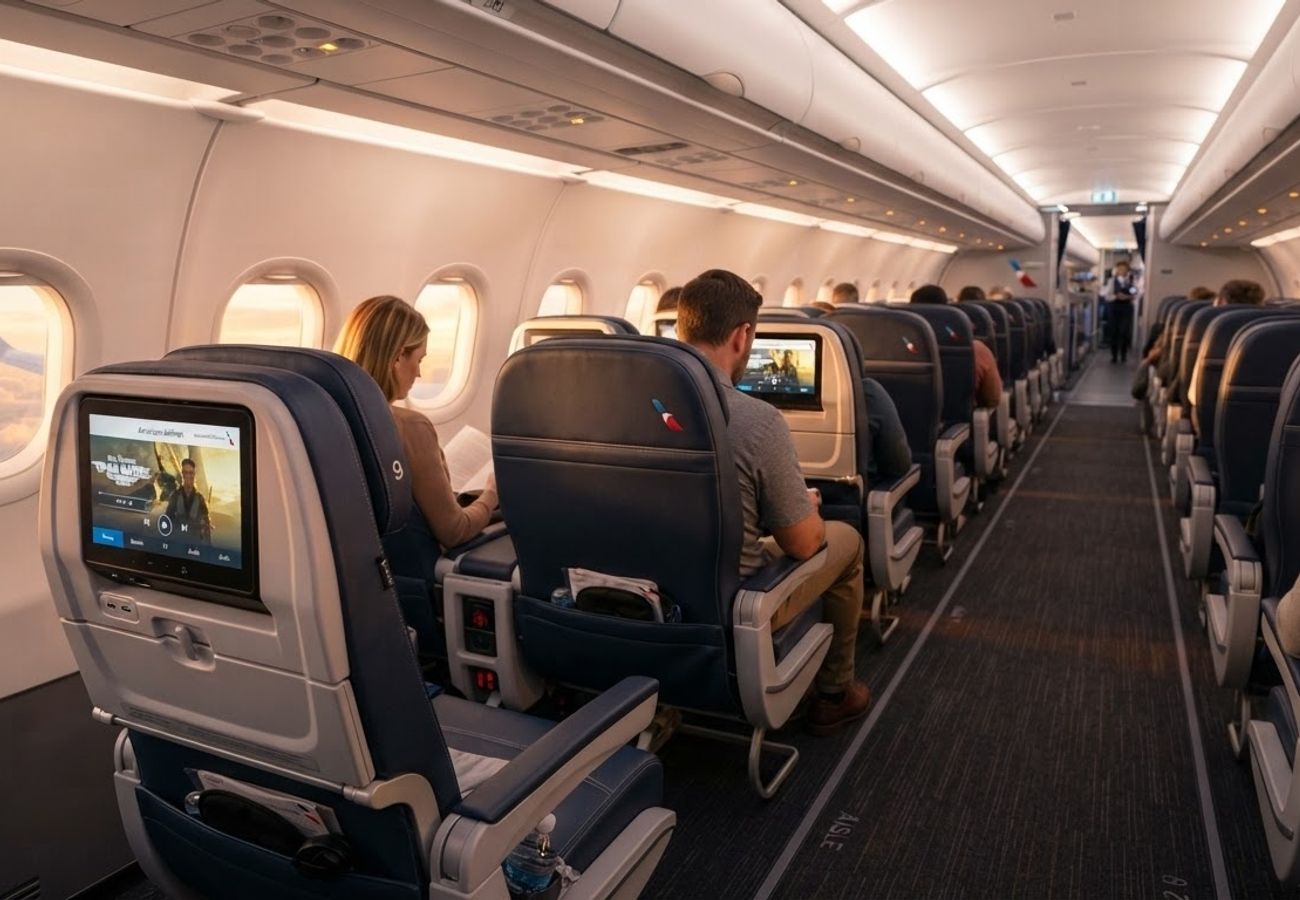
Image generated by AI
American Airlines is abandoning its long-standing reliance on passenger-owned devices by reintegrating seat-back entertainment screens into key portions of its fleet. This strategic pivot targets premium-tier travelers and marks a total reversal of a decade-long trend toward screen-free narrowbody cabins.
For years, American Airlines operated as a distinct outlier among major U.S. carriers. While competitors doubled down on embedded hardware, American aggressively pursued a "bring-your-own-device" (BYOD) philosophy. The airline systematically removed screens from its domestic narrowbody aircraft, including Airbus A319s and specific transcontinental A321 variants, replacing them with device holders and promoting onboard streaming via personal smartphones, tablets, and laptops.
This cost-saving measure aimed to reduce aircraft weight and maintenance overhead. However, as the gap between American's lean interiors and the high-definition, built-in experiences offered by rivals widened, the carrier faced increasing pressure. Industry reports suggest that the lack of embedded screens became a liability when competing for high-yield passengers who expect a seamless, luxury experience regardless of the aircraft size.
Integration of Screens in Airbus A321XLR and Boeing 787-9
The shift in strategy is most evident in the airline's newest aircraft acquisitions. The Airbus A321XLR, designed for long-haul narrowbody operations, is being delivered with individual monitors for every passenger. This includes the main cabin, ensuring that the "widebody experience" extends to single-aisle jets. These new systems are equipped with Bluetooth audio connectivity and multiple charging ports, specifically targeting high-demand routes such as New York to Los Angeles.
Simultaneously, the latest Boeing 787-9 deliveries are featuring upgraded entertainment technology. By equipping both the long-range narrowbody A321XLR and the widebody 787-9 with advanced screens, American is signaling that physical hardware is once again a central pillar of its passenger experience. While a comprehensive retrofit schedule for the existing narrowbody fleet has not been publicly released, the inclusion of screens in new orders proves that the BYOD-only era is ending.
Competitive Dynamics in the U.S. Aviation Market
The decision to return to seat-back monitors is a direct response to the current competitive landscape. In the U.S. market, where flight schedules and pricing are often nearly identical across major carriers, cabin technology has become a primary differentiator.
Industry observers note that while American introduced high-end touches like lie-flat suites in premium cabins, the absence of screens in the main cabin created a perceived "product gap." By restoring these amenities, American can reposition its brand to align with peers who market entertainment as an integral part of the journey.
Interestingly, American is not abandoning connectivity entirely. The airline continues to offer free onboard streaming, suggesting a hybrid approach where built-in screens and personal devices complement one another rather than serving as mutually exclusive options.
Enhanced Passenger Experience and Technical Trade-offs
For the traveler, this reversal solves several practical pain points. Relying solely on personal devices often leads to battery depletion on long-haul flights and restricts the user's ability to multitask. A dedicated seat-back monitor allows passengers to keep their phones and laptops free for work or communication while enjoying movies, live TV, and moving maps on a larger, high-resolution display.
The updated hardware is designed for the modern traveler, featuring:
- High-Resolution Displays: Sharper visuals compared to older legacy screens.
- Bluetooth Integration: Reducing the need for wired headphones and cable clutter.
- Universal Power: Integration of USB-C outlets to support faster charging for multiple devices.
From an operational standpoint, this move introduces new challenges. Embedded screens increase the overall weight of the aircraft, which can impact fuel efficiency, and they require a more rigorous maintenance schedule than a streaming-only setup. However, the airline believes the benefit of increased passenger satisfaction and the ability to attract premium demand outweighs these logistical costs.
Future Fleet Strategy and Market Testing
The deployment of screens on the A321XLR and Boeing 787-9 serves as a live test case for the rest of the fleet. With hundreds of narrowbody aircraft currently in service or on order, American's final interior specifications will define its brand image for the next decade.
As single-aisle aircraft are increasingly used for "long-thin" routes—missions previously reserved for widebodies—the importance of onboard comfort and entertainment grows. On these extended flights, the lack of a screen is more noticeable and more frustrating for the passenger. By monitoring feedback from the A321XLR and 787-9 flights, American will determine if a full-fleet retrofit of narrowbodies is financially viable and necessary to maintain market share.
The return of the screen marks the end of a bold experiment in minimalism, proving that for the modern flyer, convenience still outweighs the freedom of a device-led cabin.
Related Travel Guides
Disclaimer
This article is for informational and educational purposes only. It does not constitute legal, financial, or professional advice. While we strive to provide accurate and up-to-date information, travel policies, regulations, and conditions change rapidly. Always verify information with official sources before making travel decisions. Nomad Lawyer makes no representations about the accuracy, reliability, completeness, or suitability of the information provided. Readers should consult qualified professionals for advice specific to their circumstances. The views expressed in this article are those of the author and do not necessarily reflect the views of Nomad Lawyer.
Preeti Gunjan
Contributor & Community Manager
A passionate traveller and community builder. Preeti helps grow the Nomad Lawyer community, fostering engagement and bringing the reader experience to life.
Learn more about our team →