
FAA Warns of Weekend Ground Stops and Delays at Chicago O'Hare International Airport in August 2026
Chicago O'Hare International Airport faces potential FAA ground stops and severe delays this weekend as the National Weather Service forecasts heavy thunderstorms and flooding.

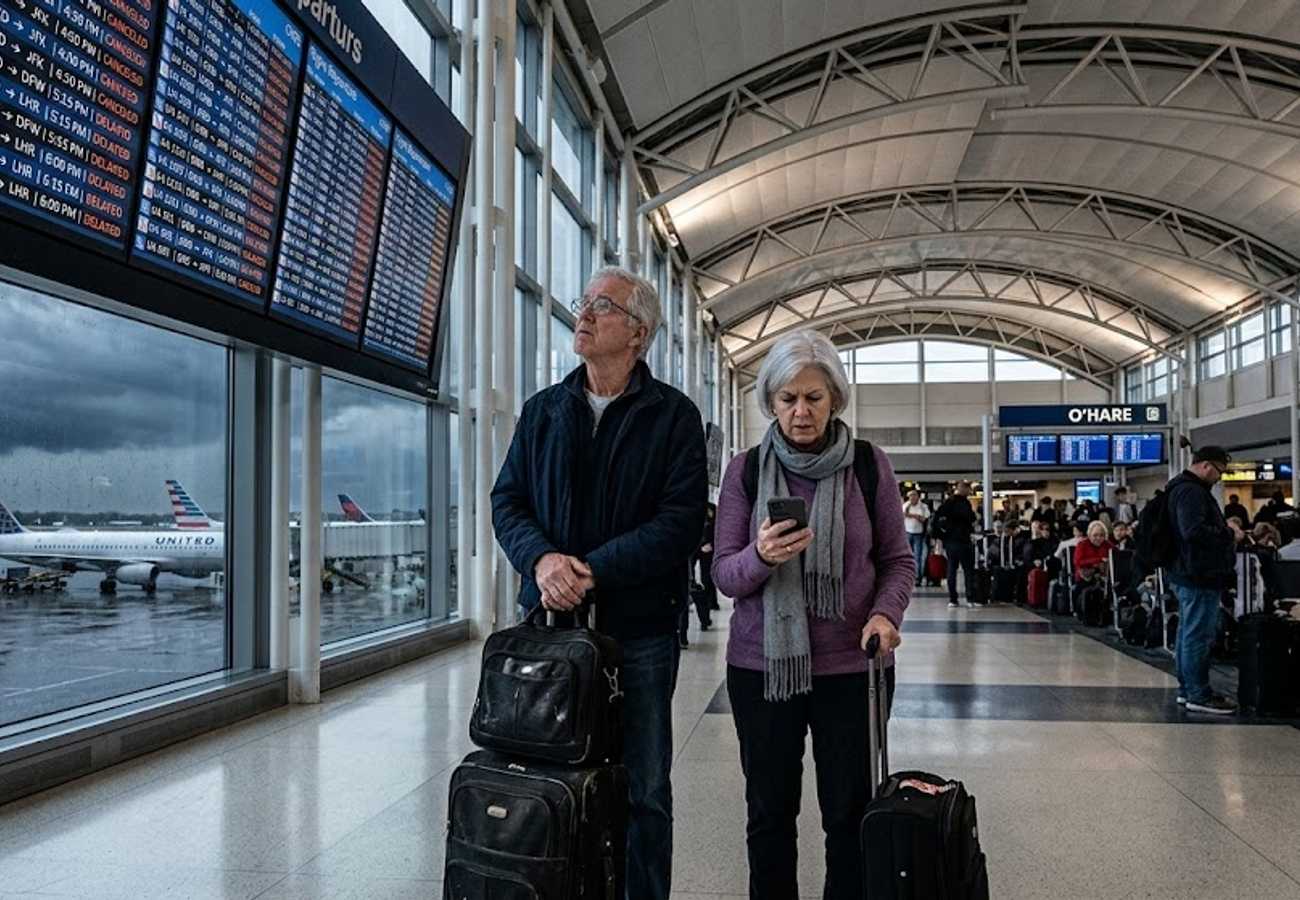
Image generated by AI
The National Weather Service has issued a Hazardous Weather Outlook for Chicago O'Hare International Airport, warning of severe thunderstorms and localized flooding that could trigger FAA ground stops through Saturday, August 1, 2026.
The Core Transit Update
Chicago O'Hare International Airport (ORD) is bracing for significant flight disruptions as severe weather moves into the Midwest. The National Weather Service (NWS) has published a Hazardous Weather Outlook alert for the ORD area, cautioning pilots and airlines about imminent thunderstorms and potential flooding expected to impact operations through Friday, July 31, and Saturday, August 1.
According to FlightAware data recorded on Friday, July 31, at 6 AM EST, ORD reported only one cancellation and 28 delays, representing just 2% of all departures. However, this relative calm is expected to break by late afternoon. The NWS forecasts showers and a likely thunderstorm after 4 p.m. local time on Friday. Travelers arriving or departing in the morning and early afternoon will probably avoid the worst of the weather, but conditions will deteriorate rapidly in the evening. The NWS predicts a 100% chance of precipitation on Friday night, with rainfall totals expected to reach between three-quarters and one inch.
"There will be a chance of thunderstorms this afternoon and tonight. A few of these storms may approach severe limits southwest of a Rochelle to Kankakee line. Heavy rain may lead to localized flooding," the NWS Hazardous Weather Outlook states.
Rainfall is expected to persist through Saturday. The NWS anticipates "showers and possibly a thunderstorm," with an 80% chance of precipitation. Weather conditions are forecast to improve by Sunday, August 2, with favorable flying weather expected to last through Tuesday night.
At the time of publishing, the FAA had not yet listed ORD for any active ground stops or delays in its Air Traffic Control Command Center list. Despite this, aviation authorities and airlines are preparing for the high probability of ground stops. This would mark the second time in a single week that ORD faces major disruption due to heavy rain and severe weather.
Recent National Airspace Disruptions
The potential weekend ground stops at O'Hare follow a period of intense national airspace disruption. On Monday, July 27, ORD experienced the highest number of cancellations in the United States due to thunderstorms, with over 1,000 flights canceled for both departures and arrivals. The FAA reported that a ground delay at ORD resulted in an average delay of 438 minutes.
The disruption was not isolated to Chicago. Throughout the day on July 27, 1,737 flights were canceled within, into, or out of the U.S. The FAA issued ground stops at five major U.S. hubs due to a combination of severe weather and air traffic control staffing issues.
Ground stops continued into the early morning of Tuesday, July 28, affecting departures from Newark Liberty International Airport (EWR), John F. Kennedy International Airport (JFK), and LaGuardia Airport (LGA). By the end of the day, the FAA had issued complete stops on flights at 13 different airports across the country.
FAA Ground Stops: Affected Hubs On July 28
| Airport Code | Airport Name |
|---|---|
| SNA | John Wayne Airport |
| BOS | Boston Logan International Airport |
| BWI | Baltimore/Washington International Thurgood Marshall Airport |
| CDW | Essex County Airport |
| DCA | Ronald Reagan Washington National Airport |
| DEN | Denver International Airport |
| EWR | Newark Liberty International Airport |
| IAD | Washington Dulles International Airport |
| JFK | John F. Kennedy International Airport |
| LGA | LaGuardia Airport |
| MMU | Morristown Municipal Airport |
| PHL | Philadelphia International Airport |
| TEB | Teterboro Airport |
According to FlightAware data, these FAA mandates led to 2,538 cancellations and 8,434 delays across the national aviation network. While multiple airports were affected, severe weather does not impact all hubs equally.
Infrastructure Impact Assessment
Airports with the highest rates of weather-related delays often share a common characteristic: they operate close to or at maximum capacity for large portions of the day. According to FAA data, the New York City area—which includes Newark Liberty International Airport and LaGuardia Airport—experiences the worst weather-related delays in the country. In 2022, the region reported a total of 30,000 delays exceeding 15 minutes.
Las Vegas, Chicago, and Boston also suffer heavily from severe weather disruptions. In 2022, Harry Reid International Airport in Las Vegas experienced nearly 8,000 delays. Chicago O'Hare International Airport recorded over 5,000 delays, while Boston Logan International Airport saw nearly 5,000 delays.
The FAA website explains this phenomenon: "If an airport has excess capacity, many delayed planes can be shifted to non-weather periods without overloading the system. However, airports with the most weather delays also tend to operate close to capacity for large parts of the day. System-impacting weather, combined with excess demand, means that delayed flights may have to wait hours to land or depart."
Because ORD operates near capacity, the incoming storm system will likely create a cascading effect. When ground stops are lifted, the influx of delayed aircraft will compete for limited departure slots, extending recovery times well beyond the actual weather event.
Navigating O'Hare: A Traveler Logistics Guide
From a ground-level perspective, the best way to navigate this weekend's potential disruption at Chicago O'Hare is through proactive schedule management and an understanding of airport operations during severe weather.
Booking Connections and Layovers If you are traveling through ORD this weekend, tight connections are a significant liability. When booking or rebooking, ensure a minimum layover of 3 hours for domestic connections and 4 hours for international connections. O'Hare's massive footprint means that switching terminals requires time, and during weather delays, gates change frequently. If your connection is at risk, airline agents will prioritize passengers with longer, safer layover windows.
Digital Transit Policies and Customs Navigation For international arrivals at Terminal 5, rely on digital transit policies to bypass physical queues, which will be disproportionately long during weather delays. Utilize the Mobile Passport Control (MPC) app or ensure your Global Entry credentials are up to date. While systems like Digi Yatra or ETIAS are specific to other regions, the U.S. equivalent of digital border expedience is MPC, which allows you to bypass the standard customs declaration lines.
Ground Transportation Contingencies Heavy rainfall forecasted between three-quarters and one inch will likely cause localized flooding on surface streets surrounding the airport. The Chicago Transit Authority (CTA) Blue Line remains the most reliable ground transportation option during severe weather, as it operates on an independent rail right-of-way. Rideshare services and rental car facilities will experience severe bottlenecks. If you must drive, monitor the Illinois Department of Transportation's traffic maps for real-time flooding reports on the Kennedy Expressway (I-90/94).
Proactive Rebooking Do not wait at the gate for a cancellation. If the NWS forecast holds and thunderstorms begin after 4 p.m. on Friday, use your airline's official mobile app to monitor aircraft inbound to your gate. If your inbound aircraft is delayed at its origin, you can often rebook to a later flight or a different routing via the app before the rush of stranded passengers overwhelms customer service desks.
Preparation and digital agility are the most effective tools against the cascading delays of severe weather systems.
Related Travel Guides
Disclaimer
This article is for informational and educational purposes only. It does not constitute legal, financial, or professional advice. While we strive to provide accurate and up-to-date information, travel policies, regulations, and conditions change rapidly. Always verify information with official sources before making travel decisions. Nomad Lawyer makes no representations about the accuracy, reliability, completeness, or suitability of the information provided. Readers should consult qualified professionals for advice specific to their circumstances. The views expressed in this article are those of the author and do not necessarily reflect the views of Nomad Lawyer.
Raushan Kumar
Founder & Lead Developer
Full-stack developer with 11+ years of experience and a passionate traveller. Raushan built Nomad Lawyer from the ground up with a vision to create the best travel and law experience on the web.
Learn more about our team →