US Aviation Crisis: FAA Nationwide Shutdown Sparks Push for $30.1 Billion Modern Skies Act

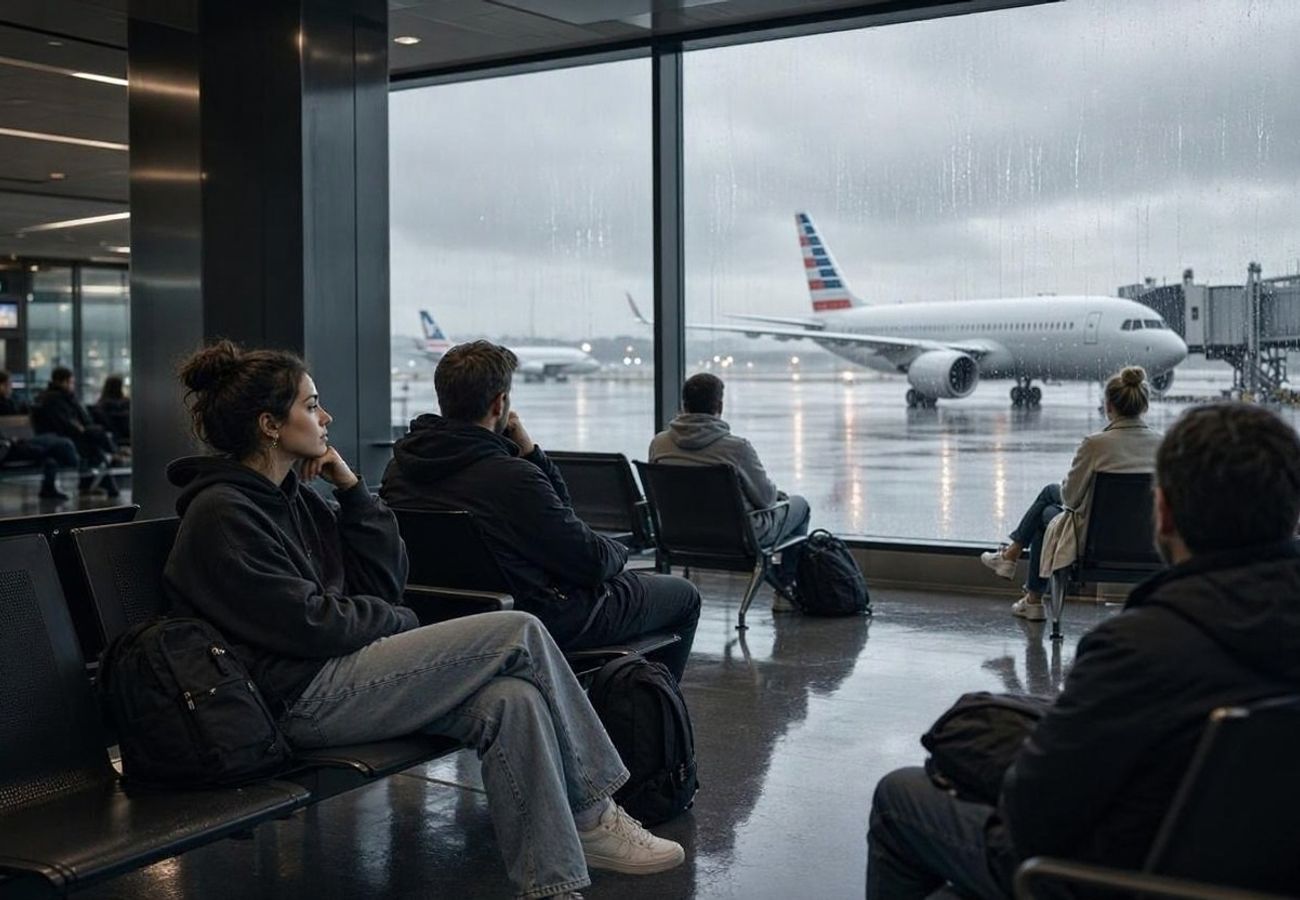
Image generated by AI
[Washington, November 15, 2026] — A nationwide aviation shutdown on November 13, 2026, has exposed critical vulnerabilities in the United States air traffic control system, prompting the US Travel Association to demand the immediate passage of the Modern Skies Act. The emergency ground stop, triggered by a systemic communications failure, paralyzed domestic air travel and has now shifted the focus to a massive federal funding request to prevent future collapses.
The crisis began at approximately 3:36 pm Eastern Time on Friday when the Federal Aviation Administration (FAA) experienced severe instability across its communications and radar networks. This technical failure forced an immediate suspension of all departures across the country, leaving thousands of passengers stranded and creating a ripple effect that extended into Saturday's flight schedules.
Hardware Failure Triggers National Ground Stop
The immediate cause of the shutdown was the failure of overloaded switches and routers within the air traffic control infrastructure. According to the United States Department of Transportation, the instability primarily impacted legacy communications equipment, while newer internet-protocol (IP) systems remained operational. This disparity highlights a dangerous gap between aging hardware and modern technology.
At the peak of the crisis, more than 3,500 aircraft were already in the air. While the FAA prevented new departures from entering the system, airborne flights were permitted to continue to their destinations using established safety protocols. The ground stop remained in effect for over four hours, finally lifting at 8:15 pm Eastern Time.
Scope of Flight Disruptions
The four-hour freeze resulted in massive operational chaos. While the ground stop was temporary, the recovery process was hindered by crew timing restrictions and aircraft repositioning requirements.
Aviation Impact Data: November 13-14, 2026
| Metric | Reported Figure | Source/Detail |
|---|---|---|
| Total Cancellations (Friday) | ~10,000 | Flightradar24 / Reuters |
| Total Delayed Flights | 9,000+ | FAA/Tracking Data |
| Saturday Cancellations | 1,300+ | Preliminary Estimates |
| Delta Air Lines Cancellations | 2,200+ | Reuters |
| American Airlines Cancellations | 2,200+ | Reuters |
| United Airlines Cancellations | 1,800+ | Reuters |
| Airborne Aircraft during Stop | 3,500+ | US DOT |
What This Means for Travelers
For passengers currently booking or traveling within the US, this event signals a period of heightened instability. The failure of "legacy" systems means that certain hubs or routes relying on older equipment are more susceptible to these outages.
Immediate Passenger Impacts:
- Increased Delay Risk: Even after a system restart, the "ripple effect" of crew displacements means flights may remain unstable for several days following a ground stop.
- Connection Fragility: Travelers with tight connections at major hubs are at higher risk, as a single delayed aircraft often serves multiple subsequent legs.
- Rebooking Bottlenecks: With over 10,000 cancellations in a single window, airline customer service channels are likely to experience extreme wait times.
The $30.1 Billion Modernization Plan
In the wake of the collapse, Transportation Secretary Sean Duffy and OMB Director Russell Vought have renewed a request for $30.1 billion to overhaul the national aviation network. This follows a previous $12.5 billion allocation in 2025, which officials now admit was insufficient for a total system upgrade.
The proposed $30.1 billion budget is divided into three primary pillars:
- Control Tower Replacement: $10 billion to replace obsolete towers.
- Telecom Upgrades: $10 billion for modern telecommunications and data reliability.
- General Infrastructure: $10 billion for broader airport and facility improvements.
The Modern Skies Act, introduced by Senator Eric Schmitt, is the legislative vehicle intended to codify these investments. The US Travel Association warns that without this act, the economic impact on tourism, business travel, and regional connectivity will continue to mount.
FAQ: US Aviation Crisis 2026
What caused the November 13 ground stop? The shutdown was caused by overloaded switches and routers in the FAA's legacy communications equipment, leading to unstable radar and data information for air traffic controllers.
Am I entitled to compensation for a cancelled flight? Under US law, airlines are not required to provide compensation for delays or cancellations caused by "acts of God" or government-mandated ground stops. However, passengers are entitled to refunds if they choose not to travel.
How does the Modern Skies Act help passengers? The Act seeks to replace aging 20th-century hardware with resilient, IP-based systems, reducing the likelihood of single-point-of-failure events that cause nationwide ground stops.
Which airlines were hit the hardest? Delta Air Lines and American Airlines saw the highest volume of cancellations, both exceeding 2,200 flights, followed by United Airlines with approximately 1,800.
Aviation safety relies on technology that is no longer fit for purpose.
Related Travel Guides
This article is for informational purposes. Flight routes, passenger regulations, visa rules, and transit advisories are subject to change by airlines and aviation authorities. Readers are advised to verify schedules and travel documentation with relevant carriers and border agencies before departure.
Related Stories
FAA Predicts Sunday Recovery After Nationwide US Aviation Shutdown Disrupted 4,100 Flights in 2026
AI-Driven Flight Routing Cuts Contrail Warming by 60% as US and Global Carriers Shift Altitude Strategy in 2026