
American Airlines Flight AA1795 New York to Chicago Diverts to Milwaukee Due to Weather 2026
American Airlines Flight AA1795 diverted to Milwaukee Mitchell International Airport on August 9, 2026, after severe weather and congestion at Chicago O'Hare forced a safety-first landing.

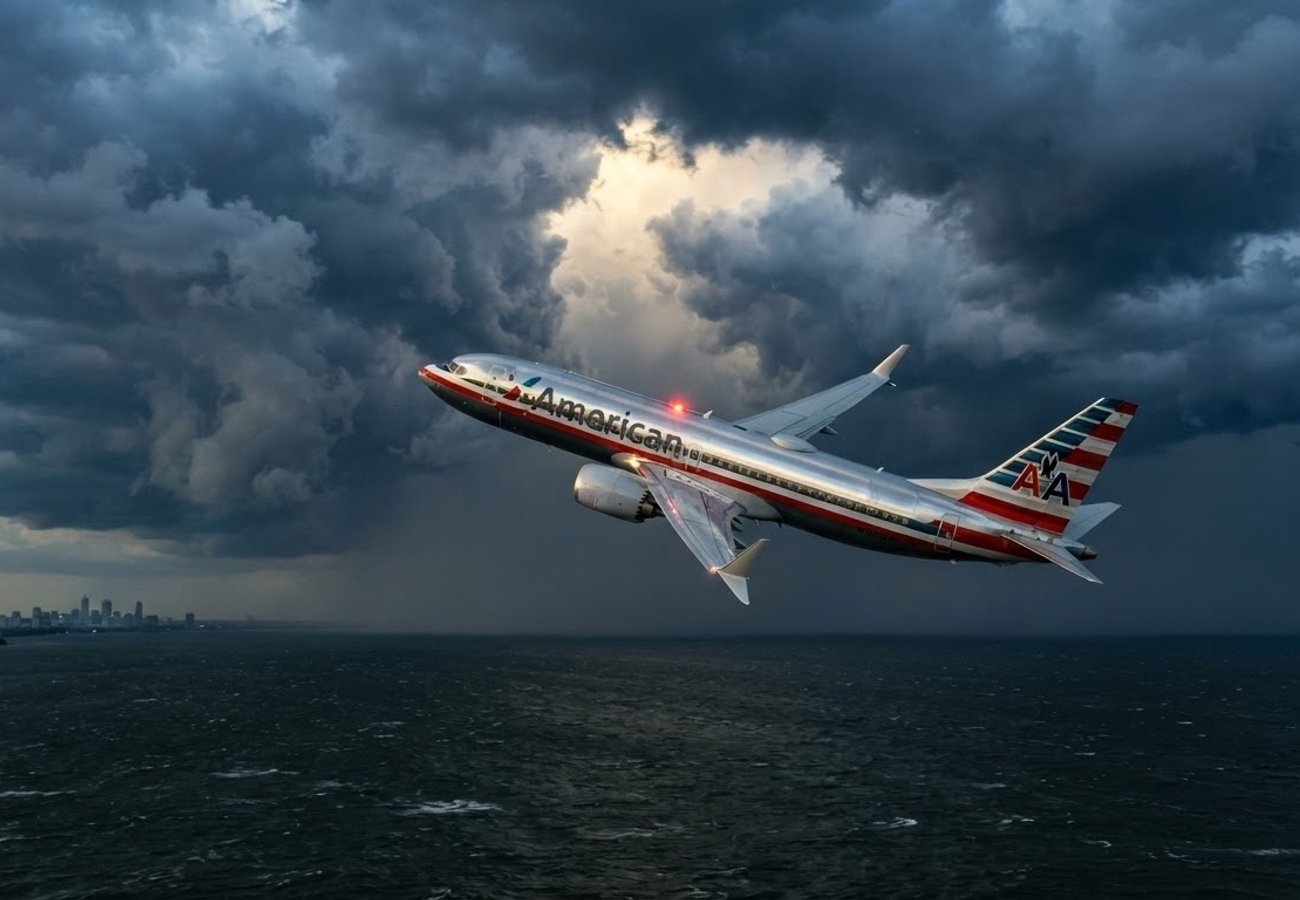
Image generated by AI
Severe weather and air traffic saturation at Chicago O'Hare International Airport forced American Airlines Flight AA1795 to divert to Milwaukee on August 9, 2026, impacting passengers traveling from New York.
Diversion Incident Overview
On August 9, 2026, American Airlines flight AA1795, traveling from New York (LGA) to Chicago (ORD), was forced to divert to Milwaukee Mitchell International Airport (MKE). The flight was operated by a Boeing 737 MAX 8, registration N317UW.
The diversion was triggered by a combination of severe summer convective weather over Lake Michigan and significant air traffic congestion at Chicago O'Hare. These conditions forced aircraft into extended holding patterns, necessitating a landing at a secondary facility to maintain mandatory safety fuel reserves.
Flight and Airport Impact Breakdown
- Flight Number: AA1795
- Route: New York (LGA) $\rightarrow$ Chicago (ORD)
- Diversion Point: Milwaukee Mitchell International Airport (MKE)
- Aircraft Model: Boeing 737 MAX 8 (Technical Equipment Code: B38M)
- Registration: N317UW
- Date of Incident: August 9, 2026
- Primary Causes: Adverse weather conditions and O'Hare arrival corridor saturation.
Aviation Safety and Operational Analysis
Flight tracking systems and operational data indicate that diversions along the New York-Chicago corridor are typically governed by strict Federal Aviation Administration (FAA) fuel regulations. Commercial aircraft must carry enough fuel to reach their destination, fly to a pre-selected alternate airport, and maintain an additional 45 minutes of flight time.
When holding patterns over northeastern Illinois extend to the point where these reserves are threatened, captains must divert. Milwaukee Mitchell International Airport is the primary alternate for O'Hare due to its location approximately 67 nautical miles north of the hub. Its dual runways and advanced instrument landing systems allow it to accommodate narrowbody jets like the Boeing 737 MAX 8 efficiently.
The Boeing 737 MAX 8 (N317UW) utilizes integrated flight management systems that provide real-time telemetry to ground dispatchers. This allows the airline to coordinate ground services and refueling in Milwaukee before the aircraft even touches down, transforming a potential emergency into a routine operational maneuver.
Passenger Rights and Advisory
For the affected passenger, a diversion does not automatically trigger monetary compensation, but it does activate specific carrier obligations. Our analysis of U.S. Department of Transportation (DOT) guidelines and airline policies suggests the following:
Duty of Care and Rebooking When a flight is diverted, the airline is responsible for transporting passengers to their final destination. For passengers on AA1795, this meant either a short "hop" from Milwaukee to Chicago once O'Hare cleared or ground transportation.
Compensation Eligibility Under current DOT guidelines, weather-related diversions are generally classified as "extraordinary circumstances" or "acts of God," meaning cash compensation is typically not mandated. However, passengers are entitled to:
- Rebooking: Immediate placement on the next available flight to the destination.
- Communication: Timely updates regarding the cause of the diversion and estimated time of departure.
Actionable Steps for Diverted Passengers If you find yourself diverted to an alternate airport:
- Document Everything: Save screenshots of delay notifications and keep receipts for any out-of-pocket expenses (food, water) incurred during the wait.
- Check the Contract of Carriage: Review the American Airlines Contract of Carriage to see if specific amenities are provided for diversions exceeding a certain time threshold.
- Request a Statement: Ask for a formal written statement regarding the diversion cause, which is necessary for any subsequent travel insurance claims.
Industry Analyst View
This incident highlights the fragility of the Midwest aviation corridor during peak summer months. The reliance on Milwaukee as a "relief valve" for O'Hare is a systemic necessity. As air traffic volume increases, the frequency of these "fuel-boundary diversions" is likely to rise, placing more pressure on secondary airports to handle sudden surges in narrowbody traffic.
The seamless integration of the Boeing 737 MAX 8's telemetry with ground command centers demonstrates how modern avionics reduce the risk of fuel-critical emergencies, ensuring that safety overrides schedule adherence without compromising passenger security.
Prioritizing safety over itinerary remains the gold standard of aviation operational integrity.
Related Travel Guides
Disclaimer
This article is for informational and educational purposes only. It does not constitute legal, financial, or professional advice. While we strive to provide accurate and up-to-date information, travel policies, regulations, and conditions change rapidly. Always verify information with official sources before making travel decisions. Nomad Lawyer makes no representations about the accuracy, reliability, completeness, or suitability of the information provided. Readers should consult qualified professionals for advice specific to their circumstances. The views expressed in this article are those of the author and do not necessarily reflect the views of Nomad Lawyer.
Preeti Gunjan
Contributor & Community Manager
A passionate traveller and community builder. Preeti helps grow the Nomad Lawyer community, fostering engagement and bringing the reader experience to life.
Learn more about our team →