
Delhi Repositions as Year-Round Destination Through Agoda Partnership
Delhi's new Agoda partnership signals a major shift from transit hub to standalone destination, leveraging heritage, festivals, and spiritual circuits to attract global travelers year-round.

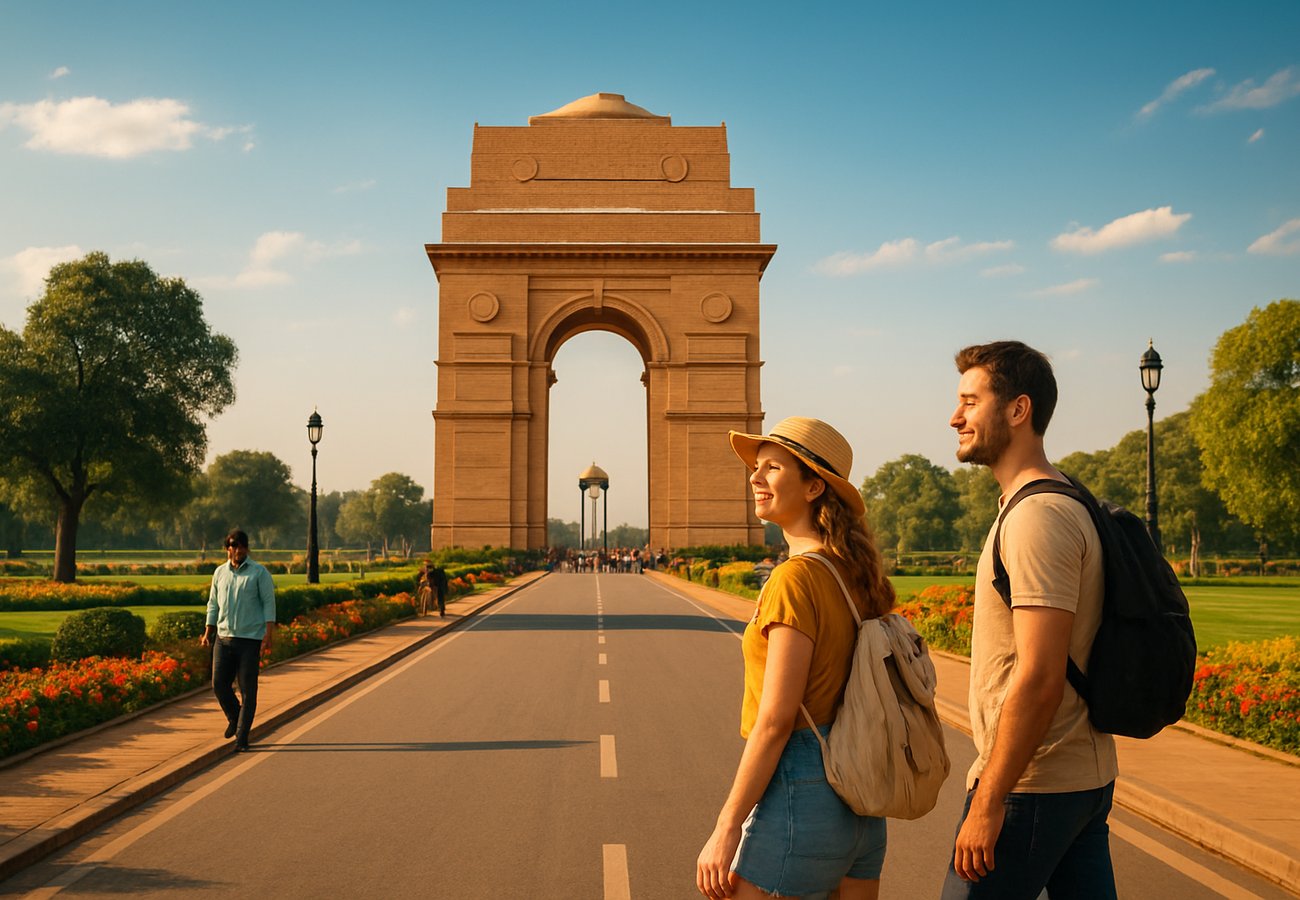
Image generated by AI
For decades, Delhi has operated as a gateway—a city where international travelers land, snap a few photos, and rush onward to Agra, Rajasthan, or the Himalayas. That narrative is changing.
On May 2, 2026, at The Ashok Hotel in New Delhi, the Government of NCT of Delhi, the Delhi Tourism and Transportation Development Corporation (DTTDC), and Agoda signed a transformative Memorandum of Understanding during the Tourism Stakeholders Conference titled "From Transit to Destination." The message was unmistakable: Delhi is no longer content being a pit stop.
This partnership addresses a fundamental shift in global travel behavior. Modern travelers—armed with smartphones and access to curated travel platforms—increasingly seek destinations that offer layered experiences: history, local food culture, spiritual depth, sustainable practices, and year-round appeal. Delhi has all of this. What it lacked was visibility on the platforms where international visitors plan their journeys.
Why Delhi's Repositioning Matters Now
The timing reveals strategic clarity. International tourism is fragmenting away from mass-market destinations toward deeper, more authentic city experiences. Travelers today want immersion, not itineraries. They want stories, not selfies. They want to understand a place, not just pass through it.
Delhi carries the memory of empires, the pulse of modern India, and the infrastructure to support meaningful stays. Museums, heritage walking circuits, spiritual landmarks (temples, mosques, gurdwaras, churches), vibrant markets, and thriving neighborhoods all exist within the capital. Yet without coordinated digital positioning, these assets remained invisible to global search algorithms and travel planners.
Reddit: "I always thought Delhi was just the airport I changed planes at. Didn't realize there was actually a whole city worth exploring there." — r/travel
That's precisely the perception this partnership aims to shatter.
The Agoda Advantage: Digital Reach at Scale
Agoda, one of Asia's largest travel platforms, operates across 230 countries and territories with over 3.2 million accommodations listed. More critically for Delhi, Agoda shapes how travelers discover destinations. When someone searches "cultural cities in India" or "heritage destinations Asia," Agoda's algorithms determine visibility.
Under the new arrangement, Agoda will run targeted digital marketing campaigns across its global network highlighting Delhi's signature tourism products:
- Museum Trail (cultural institutions and art collections)
- Spiritual Circuits (diverse faith traditions and meditation spaces)
- Heritage Walks (old city lanes, architectural narratives, historical districts)
- Festival Calendar (year-round cultural events with local participation)
- Curated thematic routes developed by DTTDC
This isn't passive listing. It's active repositioning. Travelers browsing accommodations in Delhi will now see bundled experiences, seasonal festivals, and thematic packages designed to extend stays and deepen engagement.
Heritage and Culture: The Economic Engine
Delhi's tourism economy hinges on its ability to monetize its layered identity. The Museum Trail alone encompasses institutions like the National Museum, National Gallery of Modern Art, and numerous specialized collections. Heritage circuits wind through districts like Old Delhi, New Delhi's colonial architecture, and Mughal-era neighborhoods.
These assets historically attracted pockets of visitors. Now, with coordinated promotion, they become systematic draw points. Museums attract families, students, international culture-seekers, and history enthusiasts. Heritage experiences spread visitor density across the city—reducing congestion at single hotspots while expanding revenue distribution to neighborhood hotels, restaurants, guides, and artisans.
More visitors staying longer means direct economic multiplier effects: occupied hotel rooms, restaurant bookings, transportation services, and craft purchases that ripple through local economies.
Spiritual Tourism and the Festival Calendar
What distinguishes Delhi from other heritage destinations is its religious and cultural diversity—and the continuous festival calendar that emerges from it. Temples, mosques, churches, gurdwaras, and meditation spaces create appeal across multiple travel segments. Festivals like Diwali, Holi, Eid, Christmas, and Baisakhi inject color, music, food, craft demonstrations, and authentic participation into the visitor experience.
These aren't tourist-facing spectacles. They're living cultural events that happen to welcome guests. This authenticity is precisely what contemporary travelers seek. By promoting Delhi's spiritual circuits and festival calendar through Agoda's platform, the partnership can attract visitors who specifically value emotional and cultural connection—travelers who stay longer, spend more, and return.
Sustainability: The Often-Forgotten Element
Promotion without capacity-building creates problems. More visitors without better management strains heritage sites, overwhelms local services, and breeds resentment.
The partnership includes a sustainability and training component. Through Agoda's Sustainable Tourism Academy, local stakeholders—hoteliers, guides, restaurant owners, transport operators, artisans—gain access to knowledge-sharing initiatives on inclusive tourism practices, environmental stewardship, and guest engagement. This matters because Delhi's tourism future depends on managing growth responsibly.
A city can attract millions of visitors per year or thousands of deeply engaged travelers. The former generates quick revenue; the latter builds sustainable livelihoods. This partnership leans toward the latter model.
From Gateway to Destination
The central ambition is structural repositioning. Delhi wants travelers researching "best cultural cities in Asia" or "heritage destinations in India" to see Delhi not as a transit point but as a destination worthy of a week-long stay or even a seasonal residence.
Consider the knock-on effects: longer stays mean higher hotel occupancy across seasons (not just peak months). Higher occupancy means more jobs for housekeeping, service, guide work, and hospitality management. More visitors interested in food culture means revenue for restaurants and street food enterprises. Interest in crafts supports artisans. Interest in spirituality supports temple-adjacent economies, meditation centers, and wellness tourism.
This is tourism economics with distributional benefits—the opposite of extractive tourism that funnels revenue to international hotel chains and tour operators.
What This Means for Travelers
For visitors planning trips to India, this partnership delivers practical value. Agoda's marketing will surface curated Delhi experiences that don't appear in generic guidebooks. Visitors will discover package deals bundling accommodations with museum passes, heritage walking tours, festival participation, and local meal experiences. This reduces travel friction—the cognitive and logistical burden of planning complex itineraries in unfamiliar cities.
For digital nomads and long-term travelers (the core audience of nomadlawyer.org), this matters. Delhi offers cost-effective accommodation, high-quality food, abundant cultural content, and strong internet infrastructure. Better digital positioning means discovering these advantages becomes easier.
The Regulatory and Governance Layer
The involvement of the Government of NCT of Delhi signals institutional commitment. Tourism doesn't happen through private partnerships alone—it requires city-level infrastructure investment, traffic management, public space maintenance, and regulatory frameworks that support hospitality businesses.
By positioning this through official government channels, the partnership gains credibility with international travel platforms and investors. It also ensures that growth follows planned development rather than organic chaos.
What Happens Next
The partnership moves from symbolic signing to operational execution in phases. Agoda begins digital marketing campaigns within weeks. DTTDC rolls out stakeholder training and product development simultaneously. Within 12 months, Delhi's digital footprint in Agoda searches should show measurable shifts—higher visibility, increased booking velocity, and longer average stay lengths.
Success will be measured not in total arrivals but in engagement depth: visitor spend, stay duration, repeat visits, and local economic distribution.
The Broader Strategic Picture
This partnership reflects India's broader tourism strategy post-2024. Rather than competing on volume (attracting maximum visitors), cities are competing on value (attracting high-spending, longer-staying, culturally engaged travelers). This preference for quality-over-quantity travel creates space for mid-sized cities and major cities to differentiate.
Delhi's advantages are substantial: direct international flights, English proficiency, diverse neighborhoods, affordable costs, and unparalleled density of heritage sites. With digital visibility on major platforms, these advantages become actionable for global travelers.
The from-transit-to-destination narrative will take years to materialize fully. But the machinery is now in place. Delhi has the assets, the partnerships, and the institutional commitment. What was missing—global digital positioning—has been addressed.
Delhi's tourism reinvention is underway. Travelers booking through Agoda over the next 12 months will notice the difference.
Related Travel Guides
Airbus A380 Dwarfs Boeing 747: How the Modern Super-Jumbo Compares to Aviation's Iconic Queen
British Airways Doubles Daily Flights to Bengaluru, Capitalizing on Gulf Hub Disruptions
Disclaimer
This article is for informational and educational purposes only. It does not constitute legal, financial, or professional advice. While we strive to provide accurate and up-to-date information, travel policies, regulations, and conditions change rapidly. Always verify information with official sources before making travel decisions. Nomad Lawyer makes no representations about the accuracy, reliability, completeness, or suitability of the information provided. Readers should consult qualified professionals for advice specific to their circumstances. The views expressed in this article are those of the author and do not necessarily reflect the views of Nomad Lawyer.
Kunal K Choudhary
Co-Founder & Contributor
A passionate traveller and tech enthusiast. Kunal contributes to the vision and growth of Nomad Lawyer, bringing fresh perspectives and driving the community forward.
Learn more about our team →