
Ambergris Caye vs Caye Caulker: Choosing the Best Base for Belize Barrier Reef Trips in 2026
A comprehensive logistics comparison between Ambergris Caye and Caye Caulker for snorkelers and divers accessing the Belize Barrier Reef, Hol Chan, and the Great Blue Hole.
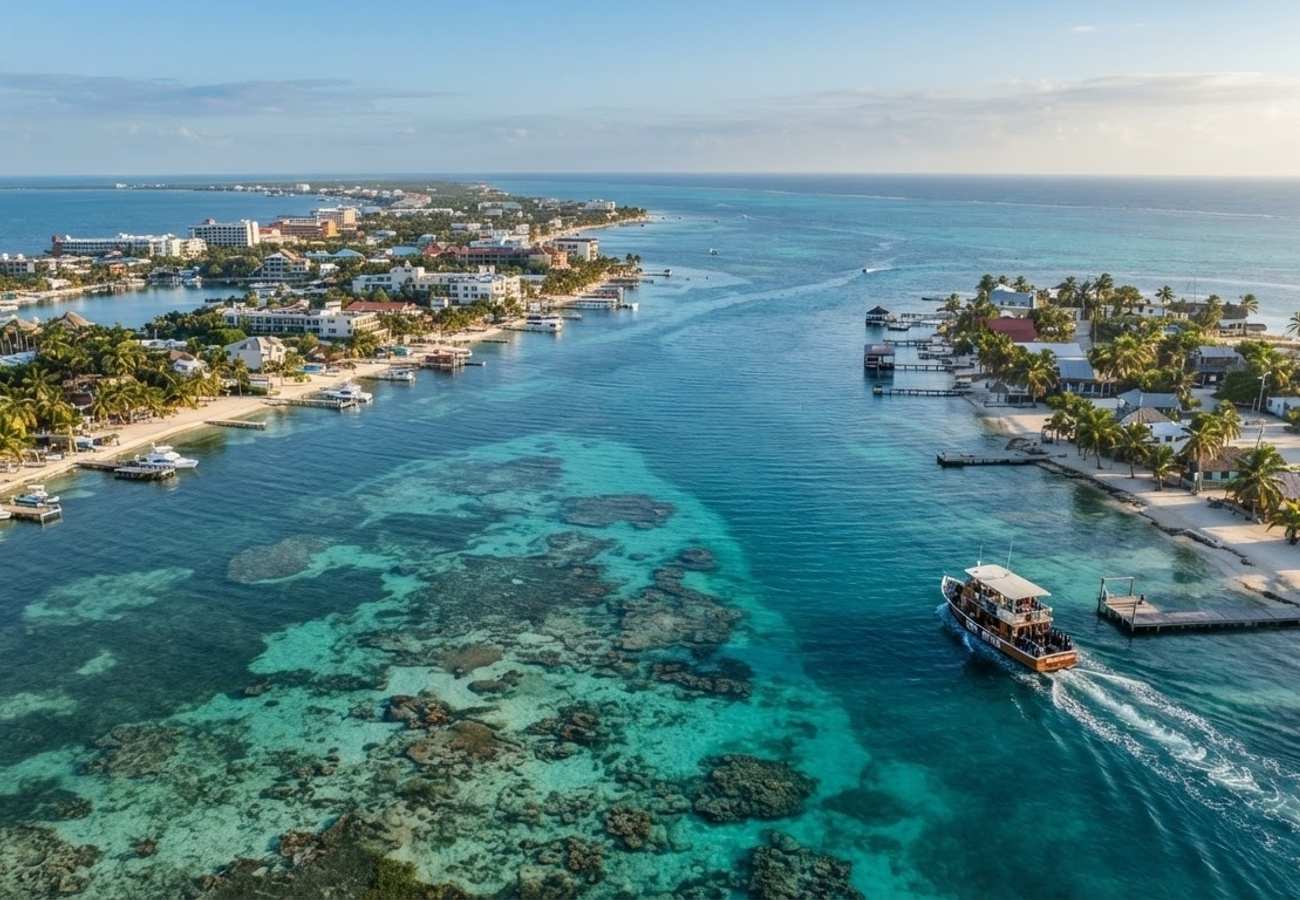
Image generated by AI
The decision between Ambergris Caye and Caye Caulker is not about the reef itself, but about the logistics of access, operator density, and the pace of island life.
Reef Geography and Access Points
The Belize Barrier Reef runs in a near-continuous line off both Ambergris Caye and Caye Caulker. For the majority of travelers, the underwater experience is identical regardless of the home base. Hol Chan Marine Reserve and Shark Ray Alley are the primary targets for most excursions; these sites are reached in similar boat times from either island, with boats from San Pedro (Ambergris Caye) and Caye Caulker frequently utilizing the same moorings.
The coral channels, turtle grass, and marine biodiversity remain consistent across both departure points. Consequently, the choice of island is a matter of infrastructure preference, budget, and desired group size rather than biological diversity.
Transit Times and Route Specifications
While both islands provide access to the same protected areas, the departure rhythms differ. Ambergris Caye typically caters to early risers and high-volume tourism, while Caye Caulker operates on a more relaxed schedule.
| Destination | Departure Point | Estimated Boat Time | Typical Departure Window |
|---|---|---|---|
| Hol Chan Marine Reserve | San Pedro (Ambergris) | 15–25 Minutes | 7:30 AM – 8:30 AM |
| Hol Chan Marine Reserve | Caye Caulker | 25–40 Minutes | 10:30 AM |
| Shark Ray Alley | San Pedro (Ambergris) | 20–30 Minutes | 8:30 AM – 9:00 AM |
| Shark Ray Alley | Caye Caulker | 30–45 Minutes | Mid-Morning |
| Great Blue Hole | Both Islands | 2.5–3 Hours | 5:30 AM – 6:00 AM |
Operator Density and Service Models
Ambergris Caye: The Industrial Hub
San Pedro serves as the primary engine for Belizean dive tourism. The waterfront is densely packed with PADI and SSI centers, ranging from large-scale resort-linked operations to small family businesses. This volume provides unmatched flexibility:
- Equipment: High-end shops offer aluminum 80s, steel 100s, nitrox, and technical diving certifications.
- Capacity: Large fleets can accommodate mixed groups (divers and snorkelers) on the same vessel.
- Frequency: Higher volume of daily departures to outer atolls.
Caye Caulker: The Boutique Experience
Caye Caulker operates with fewer providers, which generally results in smaller group ratios.
- Group Size: Snorkel groups are often capped at approximately 10 guests.
- Guiding: A higher emphasis on hands-on, instructor-led clusters.
- Trade-off: Less redundancy; if a trip is cancelled due to weather, there are fewer alternative operators to pivot to on short notice.
Outer Atoll and Blue Hole Logistics
Expeditions to the Great Blue Hole are typically structured as three-dive itineraries including the Half Moon Caye Wall and a third site such as the Aquarium or Long Caye.
From a logistics standpoint, the distance to the atoll is roughly the same from both islands. However, Ambergris Caye’s superior marina infrastructure allows for more frequent scheduled trips during the high season. Divers seeking multi-day packages or custom charters to Turneffe Atoll generally find more options in San Pedro due to the sheer volume of available Nitrox-equipped vessels.
Traveler Logistics Guide: Navigating the Reef
From a ground-level perspective, the best way to navigate these options depends on your specific transit priorities:
1. For the "First-on-Site" Traveler: If your goal is to reach Hol Chan before the crowds, base yourself in San Pedro on Ambergris Caye. The fleet is larger, and 7:30 AM departures are common.
2. For the Slow-Traveler: Caye Caulker is the optimal choice for those who prefer a 10:30 AM departure. The island’s "Go Slow" motto extends to its transit schedules, making it ideal for those avoiding the early-morning rush.
3. Booking Private Charters: Private charters are widely available on Ambergris Caye. For couples or families, renting a private center-console or small catamaran allows for a customized itinerary (e.g., combining Mexico Rocks with tarpon feeding). Expect to pay in the high hundreds of US dollars for full-day private charters.
4. Digital Transit and Customs: Ensure all dive certifications (PADI/SSI) are available digitally. When moving between the islands via water taxi, keep digital copies of your passport and entry documents accessible, as checks can occur during inter-island transit.
Infrastructure Impact Assessment
The disparity in infrastructure between the two islands creates a bifurcated tourism economy. Ambergris Caye acts as the regional logistics hub, driving the majority of the economic throughput for the Belize Barrier Reef. Its ability to scale operations for large groups makes it the anchor for international tourism.
Caye Caulker, conversely, preserves a low-impact model. By limiting boat sizes and operator density, it prevents the "megaboat energy" often found in San Pedro, maintaining a sustainable balance between tourism and environmental preservation. For the regional connectivity of Belize, both are essential: one provides the scale and professional technical diving infrastructure, while the other offers a sustainable, low-density alternative.
The choice depends on whether you prefer the efficiency of a hub or the intimacy of a village.
Related Travel Guides
Disclaimer
This article is for informational and educational purposes only. It does not constitute legal, financial, or professional advice. While we strive to provide accurate and up-to-date information, travel policies, regulations, and conditions change rapidly. Always verify information with official sources before making travel decisions. Nomad Lawyer makes no representations about the accuracy, reliability, completeness, or suitability of the information provided. Readers should consult qualified professionals for advice specific to their circumstances. The views expressed in this article are those of the author and do not necessarily reflect the views of Nomad Lawyer.