Alaska Luxury Cruise 2026 Boom: Glacier Bay and Inside Passage Passenger Data Analysis

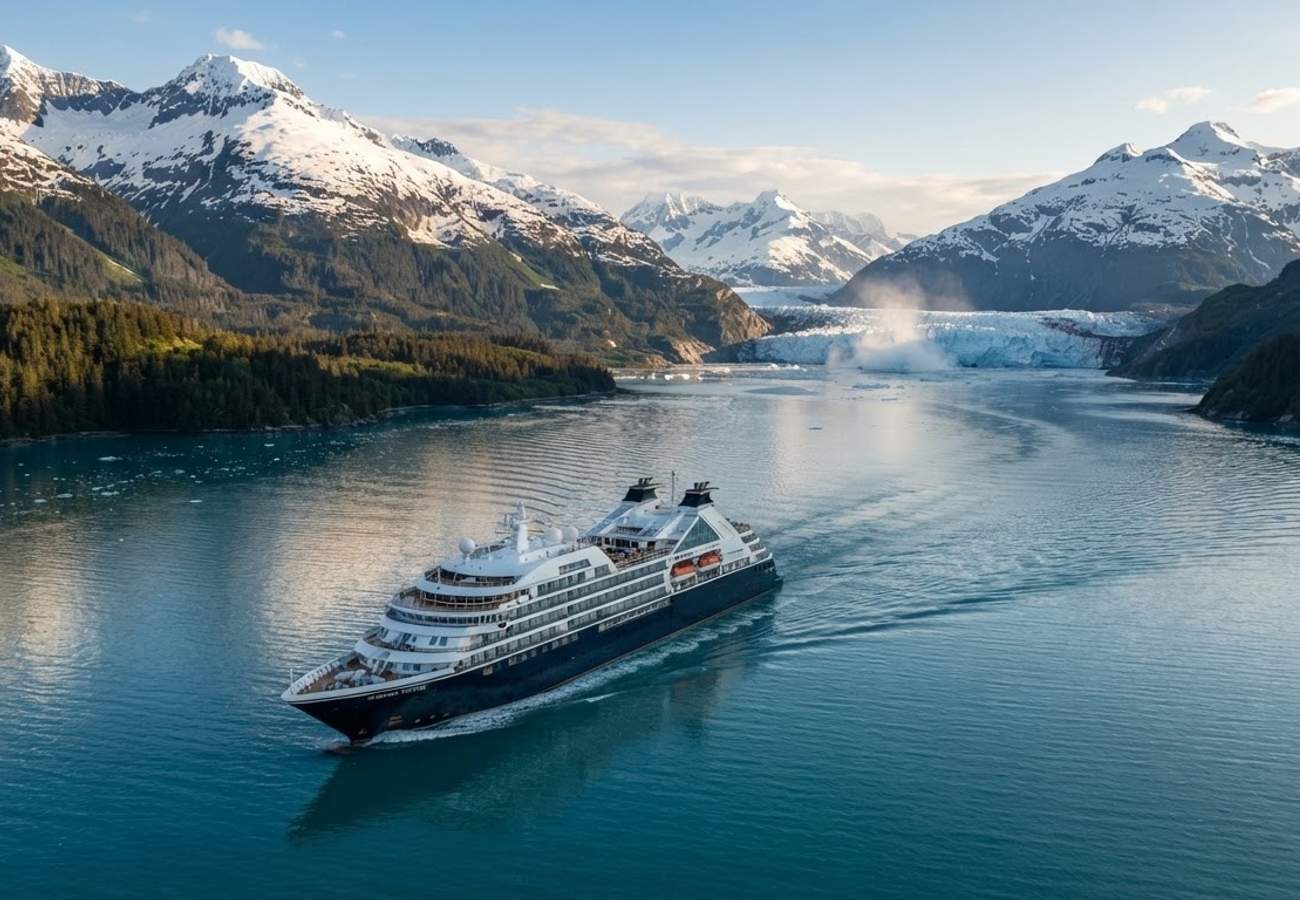
Image generated by AI
Alaska’s premium cruise sector is experiencing a massive surge for the 2026 season, with Glacier Bay and major Inside Passage hubs recording passenger volumes that consistently exceed pre-pandemic benchmarks.
The State of Alaska Cruise Tourism: 2021-2025 Analysis
Our analysis of official Alaska government data indicates a powerful recovery in cruise tourism, characterized by a shift toward both high-volume traditional cruising and niche luxury expeditions. After recording zero cruise passengers in 2020, the industry has scaled rapidly.
The total number of tracked cruise passengers across Alaska communities shows a steady upward trajectory:
- 2021: 383,800
- 2022: 4,074,019
- 2023: 6,026,743
- 2024: 6,285,105
- 2025: 6,162,573
The 2025 volume represents a figure approximately 16 times higher than the 2021 baseline, although state authorities note that reporting limitations in 2022 may affect direct longitudinal comparisons.
Hub Impact: Million-Passenger Destinations
The concentration of cruise traffic remains centered on a few primary gateways. Juneau, Ketchikan, and Skagway continue to dominate the Inside Passage landscape.
Juneau: The Tourism Giant
Juneau remains the primary driver of Alaska's cruise economy. Passenger traffic grew from 124,600 in 2021 to 1,712,600 in 2025—a 13.7-fold increase.
Ketchikan: The Cultural Gateway
Ketchikan has shown similar resilience, with 2025 figures reaching 1,524,200 passengers. Local official statistics specifically estimate 1,469,898 passengers across 648 ship stops involving 48 different vessels.
Skagway: The Growth Leader
Skagway recorded the strongest growth among the top three ports between 2023 and 2025, with volumes rising from 1,195,100 to 1,358,500, marking an increase of approximately 13.7 percent.
Glacier Bay and Premium Expedition Trends
Glacier Bay serves as the epicenter for the 2026 luxury boom due to its strictly managed environmental access. National Park Service data shows that Glacier Bay received an estimated 736,282 visitors in 2024, a new visitation record. Over 90 percent of these visitors arrived via cruise ship.
State data specifically tracked 677,100 cruise passengers in 2023 and 702,200 in 2024, a 3.7 percent increase.
Comparative Passenger Volume (2021-2025)
| Destination | 2021 | 2022 | 2023 | 2024 | 2025 |
|---|---|---|---|---|---|
| Juneau | 124,600 | 1,179,324 | 1,669,500 | 1,732,000 | 1,712,600 |
| Ketchikan | 102,600 | 1,005,249 | 1,497,200 | 1,497,700 | 1,524,200 |
| Skagway | 73,200 | 704,298 | 1,195,100 | 1,257,000 | 1,358,500 |
| Sitka | 33,500 | 379,278 | 588,400 | 602,600 | 582,800 |
| Hoonah/Icy Strait | 49,900 | 436,624 | 484,200 | 541,200 | 502,100 |
| Whittier | — | 132,908 | 223,500 | 240,800 | 296,300 |
Passenger Rights & Advisory: Navigating 2026 Disruptions
With the massive influx of passengers, the risk of logistical bottlenecks and itinerary changes increases. For the affected passenger, this means understanding the distinction between "scheduled" and "actual" port calls.
Rebooking and Compensation Rights: Our analysis of aviation and maritime policies suggests that passengers on luxury expeditions should pay close attention to "Force Majeure" clauses in their contracts. Because Glacier Bay is subject to strict National Park Service weather and environmental restrictions, a missed port call may not always trigger a refund.
- For Cruise Contracts: Check if your booking is under a "guaranteed" or "planned" itinerary. If a port is skipped due to operational failure (rather than weather), you may be entitled to a proportional credit of the daily cruise fare.
- For Flight Connections: Passengers flying into Vancouver or Seattle to board these cruises should be aware of DOT guidelines regarding flight delays. If a flight delay causes a missed embarkation, the airline is generally not responsible for the cruise cost, but may provide compensation for the flight delay itself.
Industry Analyst View: The Bifurcation of the Market
The 2026 data indicates a clear bifurcation of the Alaska market. While giants like Princess Cruises (180 departures on eight ships in 2026) and Holland America continue to drive volume, there is a growing appetite for "expedition-style" luxury.
Operators like Seabourn are targeting the ultra-premium segment with seven- and eight-day voyages focusing on Hubbard Glacier, Tracy Arm, and Endicott Arm. This shift allows smaller vessels to access narrower waterways and remote communities such as Cordova, Klawock, and Saint Paul, which are inaccessible to mega-ships.
Seasonal Traffic Distribution
Flight and port tracking systems show that activity is overwhelmingly concentrated in the warmer months:
- April: Early-season services commence.
- May – August: Peak-season traffic.
- September: Significant late-season activity.
- October – March: Conventional cruise activity sharply declines.
The balance between mass-market volume and luxury exclusivity will define the sustainability of Alaska's tourism corridor through 2026.
Related Travel Guides
This article is for informational purposes. Flight routes, passenger regulations, visa rules, and transit advisories are subject to change by airlines and aviation authorities. Readers are advised to verify schedules and travel documentation with relevant carriers and border agencies before departure.
Related Stories

The Hidden Economics of Ultra-Luxury World Cruises: Inside the Six-Figure Voyages Dominating High-Net-Worth Travel

The Hidden Economics of Ultra-Luxury World Cruises: Why 2026 Voyages Cost Over £100,000 Per Person