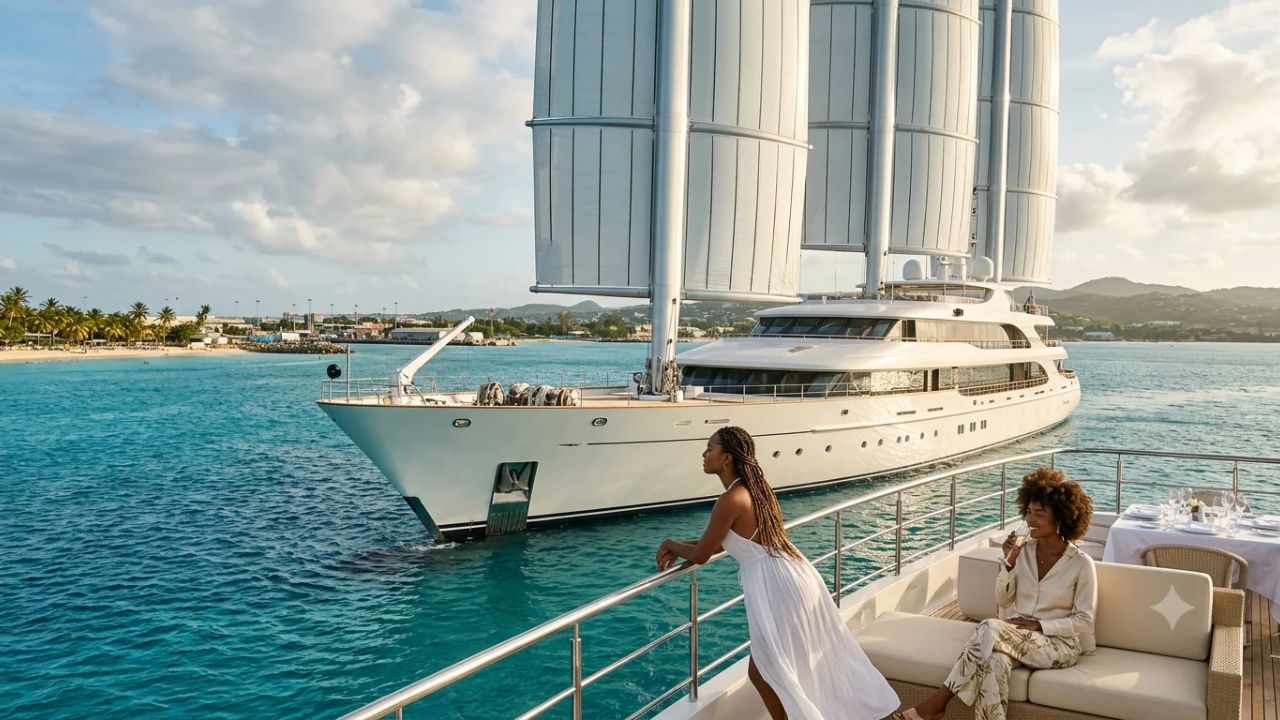
The Hidden Economics of Ultra-Luxury World Cruises: Inside the Six-Figure Voyages Dominating High-Net-Worth Travel

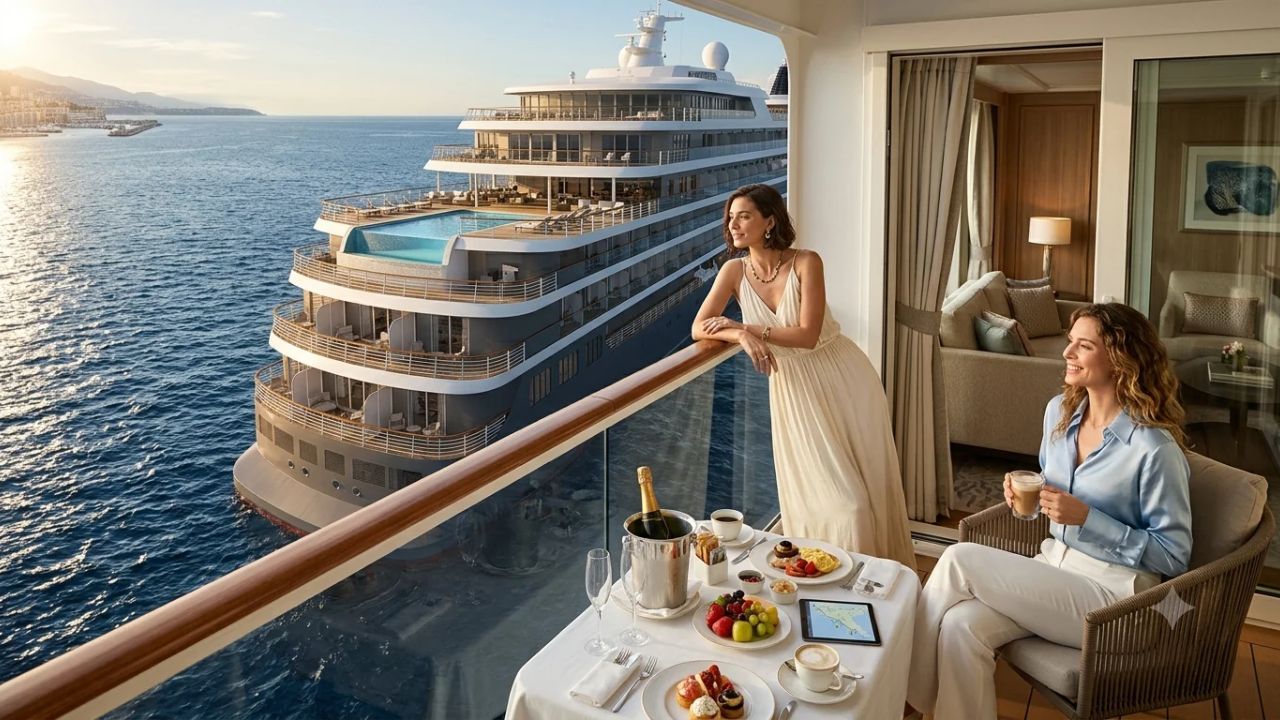
NORFOLK, November 4, 2026 — The global market for ultra-luxury world cruises has experienced an extraordinary economic transformation throughout 2026, transitioning from a niche retirement indulgence into the most coveted asset class in experiential leisure travel. Driven by an expanding international demographic of ultra-high-net-worth individuals, premier maritime operators—including Regent Seven Seas Cruises, Silversea Cruises, Crystal Cruises, Seabourn, and boutique entrants such as The Ritz-Carlton Yacht Collection and Four Seasons Yachts—are reporting unprecedented demand for multi-month global odysseys. Despite base ticket prices commanding between eighty-eight thousand and one hundred and forty-nine thousand pounds per person, with flagship owner suites eclipsing eight hundred thousand pounds, multi-month voyages spanning 130 to 180 nights are selling out eighteen months ahead of departure, establishing multi-year waitlists across international embarkation ports.
This surge in lavish maritime travel reflects a profound re-evaluation of high-end leisure economics. Discerning global travelers are increasingly rejecting the physical fatigue, logistical friction, and fragmented cost structures of extensive overland travel in favor of self-contained, five-star floating sanctuaries. By bundling private aviation, bespoke shoreside cultural access, Michelin-caliber gastronomy, and personalized white-glove service into a single upfront transaction, ultra-luxury lines have established a financially competitive model that challenges the cost assumptions of traditional five-star land itineraries. As maritime shipyards commit over 5.8 billion pounds toward next-generation polar-class and hybrid-propulsion luxury vessels, the ultra-luxury cruise sector is reshaping destination economies from the historic harbors of the American eastern seaboard to remote archipelagos across the South Pacific.
GLOBAL MARITIME SECTOR OPERATIONAL BENCHMARKS
| Operating Metric | Mainstream Mega-Ships | Premium Cruise Lines | Ultra-Luxury Vessels |
|---|---|---|---|
| Daily Per-Diem (Per Person) | £150 - £250 | £250 - £450 | £600 - £2,200+ |
| Passenger-to-Crew Ratio | 3.0:1 - 4.0:1 | 2.0:1 - 2.5:1 | 0.8:1 - 1.0:1 |
| Space-per-Guest (GRT/Pax) | 35 - 42 GRT | 45 - 55 GRT | 70 - 105+ GRT |
| Suite Balcony Saturation | 55% - 70% of Cabins | 75% - 85% of Cabins | 95% - 100% Suites |
| Specialty Dining Surcharges | A la Carte / Per Cover | Selected Inclusions | 100% All-Inclusive |
| Booking Lead Window | 3 - 6 Months Ahead | 6 - 9 Months Ahead | 12 - 18 Months Ahead |
| Satellite LEO Bandwidth | Tiered Paid Packages | Basic Allowance | High-Speed Unlimited |
The Six-Figure Ticket: Deconstructing the All-Inclusive Per-Diem Pricing Spectrum
Evaluating the economics of an ultra-luxury world cruise begins with understanding the pricing chasm separating mainstream mass-market cruising from the elite top tier. In the contemporary commercial cruise market, contemporary mega-ships carrying four to six thousand guests price baseline staterooms between one hundred and fifty and two hundred and fifty pounds per guest, per day. However, this entry-level tariff functions primarily as an admission ticket to a heavily monetized floating ecosystem, where specialty restaurants, beverage packages, fitness classes, internet access, shore excursions, and mandatory daily gratuities quickly double the realized out-of-pocket spend.
In contrast, ultra-luxury operators enforce uncompromising all-inclusive pricing architecture, commanding daily per-diem rates ranging from six hundred to more than two thousand pounds per person. On extended global grand voyages—such as Regent Seven Seas Cruises' 154-night global circumnavigations or Oceania Cruises' 180-day around-the-world odysseys—ticket pricing encompasses round-trip international business-class airfare, private door-to-port chauffeured transfers, comprehensive visa procurement, unlimited laundry services, open bars featuring vintage champagnes and allocated Grand Cru wines, and all gratuities.
                    TOTAL MONETIZATION VS TRUE ALL-INCLUSIVE

       [ Mainstream Commercial Model ]               [ Ultra-Luxury Integrated Model ]
       Base Fare + Ancillary Add-Ons                 Single Comprehensive Upfront Asset
  +------------------------------------+       +-------------------------------------------+
  | - Base cabin passage only          |       | - Round-trip business-class flights       |
  | - Paid specialty dining covers     | ====> | - Unlimited curated shore excursions      |
  | - Premium drink package surcharges |       | - Michelin-inspired dining & fine wines   |
  | - Tiered Wi-Fi and daily tips fees |       | - Dedicated butler & 1:1 service ratio    |
  | - Volatile final settlement bill   |       | - Fixed financial insulation from shocks  |
  +------------------------------------+       +-------------------------------------------+
Rather than burdening guests with continuous on-board transactions, the ultra-luxury model treats the cruise ticket as an integrated financial asset. By fixing the complete expenditure at the point of contract, travelers are fully insulated against foreign currency volatility, destination-specific sales taxes, and inflationary surges in local ground transportation across fifty distinct sovereign nations. For high-net-worth clients whose primary objective is peace of mind, eliminating the cognitive load of micro-transactions throughout a five-month journey constitutes an essential element of the luxury proposition.
The pricing spectrum within the ultra-luxury segment itself is stratified according to square footage, architectural placement, and bespoke amenities. While standard veranda suites of 350 to 450 square feet command baseline fares starting around eighty-five thousand pounds per guest for a full global loop, palatial owner's suites measuring three to four thousand square feet—equipped with custom hand-carved pianos, private in-suite spas, and personal chauffeured limousines at every port—routinely exceed eight hundred thousand pounds per couple. Remarkably, cruise executives confirm that these ultra-premium signature suites are consistently the first inventory categories to sell out when forward itineraries open for booking.
Space Ratios and Service Architecture: The Operational Physics of Ultra-Luxury Cruising
The operational core of ultra-luxury maritime travel rests on two quantifiable engineering and human resource metrics: the passenger-to-crew ratio and the space-per-passenger ratio. These mathematical proportions dictate the physical feeling of uncrowded serenity that distinguishes luxury vessels from commercial passenger liners.
In mainstream cruising, mega-vessels designed to maximize passenger density operate at passenger-to-crew ratios ranging between 3.0:1 and 4.0:1. In practical terms, this requires a single service employee to handle three to four guests across dining, housekeeping, and entertainment divisions, inevitably creating queues at embarkation, crowded pool decks, and scheduled dining seatings. In sharp contrast, ultra-luxury vessels maintain ratios approaching parity, typically holding between 0.8:1 and 1.0:1. On ships carrying five hundred guests, an equivalent complement of four hundred and fifty to five hundred crew members ensures near-constant personal attentiveness.
SPACE AND SERVICE DENSITY COMPARISON MATRIX
| Entity / Facility | Delays | Cancellations | Details |
|---|---|---|---|
| Vessel Category | Typical Capacity | Passenger-to-Crew Ratio | Space Ratio (GRT/Pax) |
| Megaship Contemporary | 5,000 - 6,500 Guests | 3.2:1 to 3.8:1 | 36 - 40 GRT per Guest |
| Premium Mid-Sized Liner | 1,800 - 2,500 Guests | 2.1:1 to 2.4:1 | 48 - 54 GRT per Guest |
| Ultra-Luxury Expedition | 200 - 350 Guests | 0.9:1 to 1.1:1 | 85 - 105 GRT per Guest |
| Ultra-Luxury Flagship | 450 - 750 Guests | 0.8:1 to 1.0:1 | 72 - 90 GRT per Guest |
This staffing concentration enables dedicated butler service across top-tier suite categories. Trained under traditional European guild standards, these butlers manage everything from unpacking extensive multi-climate wardrobes to organizing private in-suite cocktail receptions and coordinating bespoke onshore excursions. In dining rooms, the one-to-one service architecture eliminates fixed dining times and assigned seating; guests arrive at their discretion at any specialized dining venue, confident that their seating preferences and dietary requirements are already known to the maître d'hôtel.
Parallel to human service density is the architectural space-per-passenger ratio, calculated by dividing a vessel’s gross registered tonnage (GRT)—an internal volumetric measurement—by its total passenger capacity. While modern commercial mega-ships register space ratios between thirty-five and forty GRT per guest, elite luxury lines deliver seventy to well over one hundred GRT per passenger.
       VOLUMETRIC SPACE RATIO PER PASSENGER (GRT PER GUEST)

       Mega-Liner:      [====] 38 GRT
       Premium Liner:   [======] 52 GRT
       Luxury Flagship: [==========] 78 GRT
       Ultra-Expedition:[============] 98 GRT
To achieve this generous spatial volume, naval architects construct vessels on hull dimensions historically engineered to accommodate one thousand to twelve hundred passengers, deliberately capping the interior capacity at four hundred to seven hundred guests. This spatial generosity eliminates physical bottlenecks, yielding expansive open teak pool decks without reserved lounge chairs, multi-level atriums free of commercial retail stalls, and spacious staterooms where private outdoor verandas constitute standard baseline features rather than expensive upgrades.
The 130-Day Economic Audit: Ultra-Luxury World Cruise vs. Five-Star Land Odyssey
A persistent question among high-net-worth consumers is whether an ultra-luxury world cruise represents an efficient allocation of capital when compared to an equivalent bespoke land itinerary. To examine this question objectively, hospitality economists benchmark a standardized 130-day global itinerary for a traveling couple, comparing an all-inclusive world cruise suite against five-star land-based travel across thirty international destinations.
On land, maintaining a comparable standard of hospitality requires booking premier suites across legendary hotel brands such as Four Seasons, Ritz-Carlton, Rosewood, and Aman. Across a 130-night duration, luxury hotel room tariffs easily accumulate between one hundred and thirty thousand and three hundred and twenty-five thousand pounds, especially when navigating seasonal peak rates in premier cultural capitals like Tokyo, Paris, Sydney, and Singapore.
130-DAY GLOBAL EXPEDITION: FINANCIAL AUDIT FOR A COUPLE
| Entity / Route | Metrics | Operational Status |
|---|---|---|
| Expenditure Category | Five-Star Land-Based Journey | Ultra-Luxury World Cruise |
| Luxury Suite Accommodations | £130,000 - £325,000 | £160,000 - £220,000 |
| Intercontinental Business Flights | £35,000 - £60,000 | Included in Base Fare |
| Ground Transfers & Private Chauff. | £15,000 - £25,000 | Included in Base Fare |
| Fine Dining, Sommelier & Spirits | £65,000 - £90,000 | Included in Base Fare |
| Private Shore Tours & Experiences | £30,000 - £55,000 | Included in Base Fare |
| Gratuities, Taxes & Porterage | £12,000 - £18,000 | Included in Base Fare |
| Logistics, Visas & Excess Baggage | £5,000 - £8,000 | Included in Base Fare |
| Total Estimated Financial Outlay | £292,000 - £581,000 | £160,000 - £220,000 |
Beyond baseline lodging, land-based global transit introduces staggering transport costs. Scheduling dozens of international business-class flight segments, private airport transfers, high-speed rail connections, and inter-city chauffeur services adds thirty-five to sixty thousand pounds to the overall budget. Daily fine dining, sommelier wine pairings, and private daily cultural guides across four continents contribute an additional ninety-five to one hundred and forty-five thousand pounds, pushing the cumulative land expenditure to between two hundred and ninety-two thousand and five hundred and eighty-one thousand pounds per couple.
In contrast, an ultra-luxury world cruise covering an equivalent 130-day itinerary bundles accommodation, global transit, Michelin-inspired dining, open bars, and hundreds of curated shore excursions into a consolidated fare of one hundred and sixty thousand to two hundred and twenty thousand pounds. The cruise option yields immediate monetary savings ranging from forty to over sixty percent.
       130-DAY COMPARATIVE EXPENDITURE PROFILE (PER COUPLE)

       Land Odyssey: [====================================] £436,500 (Midpoint)
       World Cruise: [==================] £190,000 (Midpoint)

       * Net Direct Capital Savings: ~£246,500 (56% Cost Advantage)
Beyond direct monetary savings, the maritime model eliminates the immense physical and cognitive friction of overland journeys. On a world cruise, travelers unpack their luggage exactly once, transforming their suite into a floating private residence that journeys smoothly between continents. Travelers bypass the exhaustion of navigating thirty distinct airport terminals, security queues, baggage reclaims, and customs checkpoints. This friction-free environment preserves physical vitality and mental tranquility, delivering what affluent travelers regard as the ultimate luxury: unhurried, uninterrupted time.
The 2026 Global Wealth Shift: Younger Executives, LEO Broadband, and Floating Boardrooms
The customer demographics anchoring the ultra-luxury cruise sector have shifted dramatically throughout 2026. Historically, extended multi-month world voyages were almost exclusively patronized by retirees in their seventies and eighties with the time and financial flexibility to leave home for half a year. Over recent seasons, however, the average age of global world cruise passengers has fallen significantly, driven by a growing contingent of affluent executives, venture capitalists, and digital entrepreneurs aged forty-five to sixty.
This evolution is directly linked to the global expansion of ultra-high-net-worth individuals, which grew by nearly seven percent across North America, Western Europe, and Asia in 2026. Many of these contemporary wealth creators are not retired; instead, they operate borderless enterprises capable of remote execution. What previously prevented this active demographic from embarking on multi-month voyages was the unreliability of maritime satellite telecommunications.
MARITIME PASSENGER DEMOGRAPHIC EVOLUTION
| Entity / Facility | Delays | Cancellations | Details |
|---|---|---|---|
| Demographic Variable | Historical 2015-2019 | Contemporary 2026 Profile | Strategic Implication |
| Average Traveler Age | 72 - 78 Years Old | 54 - 64 Years Old | Multi-Generational Mix |
| Occupational Status | 92% Fully Retired | 46% Actively Working Remote | Digital Infrastructure |
| Satellite Tech On Board | Slow Geostationary | High-Speed LEO (Starlink) | Real-Time Enterprise |
| Onboard Workspace Needs | Library Reading Desks | Dedicated Private Boardrooms | Executive Connectivity |
| Booking Horizons | 6 - 9 Months Out | 14 - 18 Months Out | Long-Term Waitlists |
To capture this lucrative market segment, luxury cruise operators invested upwards of fifteen million pounds per vessel to install low-Earth-orbit (LEO) satellite broadband arrays, such as Starlink and OneWeb networks. Delivering gigabit download speeds, low latency, and global coverage across open ocean transits, this infrastructure has turned luxury suites into functional satellite corporate offices.
Luxury vessels now feature soundproof private boardrooms equipped with secure video conferencing facilities, high-speed fiber-optic printing hubs, and dedicated administrative support staff. Executives conduct global business meetings, execute corporate acquisitions, and monitor real-time investment portfolios from their private verandas while crossing the Indian Ocean, subsequently rejoining their families for evening dinners. By removing professional constraints, ultra-luxury cruise lines have unlocked an affluent, high-spending demographic that previously favored private mega-yacht charters or secluded countryside villa estates.
The £5.8 Billion Shipbuilding Boom: Polar Hulls, Dynamic Positioning, and Green Propulsion
The soaring commercial yields of world cruises have triggered an unprecedented shipbuilding boom in the ultra-luxury maritime sector. International maritime shipping data reveals that leading luxury cruise corporations have committed over 5.8 billion pounds toward specialized vessel construction, with more than nine polar-class and hybrid-propulsion mega-yachts scheduled for shipyard delivery between 2026 and 2028.
Rather than replicating the massive four-thousand-passenger hulls favored by mass-market operators, shipyards in Italy, France, Germany, and Norway are constructing intimate boutique vessels accommodating between two hundred and six hundred guests. These vessels command premium per-diem rates averaging one thousand two hundred and fifty pounds per day, backed by cutting-edge marine engineering designed for environmental compliance and navigational precision.
       GLOBAL ULTRA-LUXURY SHIPBUILDING CAPITAL ALLOCATION (£5.8B)

       +-------------------------------+
       | Ultra-Luxury Order Book: £5.8B|
       | (Deliveries Scheduled 2026-28)|
       +---------------+---------------+
                       |
       +---------------+---------------+
       |                               |
       v                               v
+-----------------------------+ +-----------------------------+
| Marine Engineering & Hulls  | | Environmental Compliance    |
| - Polar-Class PC6 Hulls     | | - Battery-Hybrid Propulsion |
| - Dynamic Positioning (DP2) | | - Liquefied Natural Gas     |
| - Hydrodynamic Drag Reduction| | - Cold-Ironing Shore Power  |
+-----------------------------+ +-----------------------------+
A primary technological innovation across the 2026 newbuild fleet is the integration of dynamic positioning (DP2) systems. Utilizing computer-controlled azipod thrusters synchronized with satellite positioning data, luxury vessels maintain precise navigational positions in sensitive marine sanctuaries without dropping heavy iron anchors. This technology protects fragile coral reefs, seagrass meadows, and benthic ecosystems in delicate archipelagos across the South Pacific and Caribbean, satisfying stringent International Maritime Organization (IMO) marine protection mandates.
To address carbon emissions and local port air quality, next-generation vessels incorporate dual-fuel liquefied natural gas (LNG) engines, large-scale battery hybrid storage banks, and cold-ironing shore power connectivity. Advanced waste-heat recovery loops capture thermal energy from exhaust systems to heat onboard domestic water supplies and thermal spas, reducing overall fuel consumption by up to fifteen percent per nautical mile. Naval architects project that this specialized fleet construction boom will generate over 1.2 billion pounds in secondary economic output across international maritime supply chains by the conclusion of 2026.
Floating Haute Cuisine and Michelin Economics: Provisioning Across Fifty Global Ports
Gastronomy represents one of the most substantial operating cost centers on an ultra-luxury world cruise, commanding millions of pounds annually in fine food procurement, vintage wine cellaring, and culinary talent acquisition. Unlike commercial mass-market ships that rely heavily on standardized central prep kitchens, high-capacity buffets, and frozen ingredients, luxury liners operate decentralized fine-dining restaurants that rival land-based Michelin-starred establishments.
The culinary logistics of a 150-day world cruise require extraordinary coordination. To provision luxury vessels across fifty distinct international ports of call, cruise operators deploy dedicated supply-chain logistics teams that coordinate air-freighted delicacies, temperature-controlled container shipments, and local dockside foraging. Fresh black truffles from Umbria, line-caught Atlantic turbot, artisanal cheeses from Normandy, and seasonal tropical produce from regional island markets are integrated into daily menus curated by world-renowned master chefs.
CULINARY LOGISTICS & PROVISIONING ARCHITECTURE
| Entity / Facility | Delays | Cancellations | Details |
|---|---|---|---|
| Operational Dimension | Mass-Market Liners | Ultra-Luxury World Vessels | Passenger Experience |
| Menu Creation Model | Standardized Central | Acclaimed Chef Partnerships | Bespoke Nightly Menus |
| Wine Cellar Allocation | Surcharge per Bottle | Included Grand Cru Vintages | Sommelier Guidance |
| Ingredient Sourcing | Bulk Container Depot | Dockside Foraging & Flights | Fresh Local Provenance |
| Culinary Shore Tours | Generic Bus Excursion | Private Vineyard Tastings | Exclusive Food Access |
| In-Suite Dining Delivery | Basic Room Service | Multi-Course Butler Plating | Course-by-Course Luxury |
Wine programs aboard ultra-luxury world cruises represent significant capital investments. Ships feature custom-built, climate-controlled onboard wine vaults holding tens of thousands of bottles, encompassing premier cru Bordeaux, allocated Napa Valley Cabernet Sauvignons, and vintage champagnes poured freely without supplementary charges. Onboard sommeliers conduct daily tastings and orchestrate regional culinary pairings that reflect the ship's geographic itinerary.
Beyond shipboard dining, culinary shore excursions have evolved into immersive cultural expeditions. Rather than passive sightseeing, guests join executive chefs on morning visits to local fish auctions in Tokyo, organic spice plantations in Grenada, or olive oil estates in Tuscany. These excursions culminate in hands-on cooking masterclasses within dedicated onboard culinary arts kitchens, allowing travelers to deconstruct regional foodways with expert guidance.
[!NOTE] Signature specialty dining venues aboard ultra-luxury world cruises operate on an open-seating basis with zero cover charges. However, private chef-table tastings and sommelier cellar dinners require early reservations upon initial embarkation due to strict table capacity limits.
Medical Longevity and Seabound Wellness: The Rise of Preventative Maritime Health
The integration of advanced health optimization and longevity medicine has emerged as a transformative operational trend across ultra-luxury world cruises in 2026. Affluent travelers spending months at sea view extended voyages not merely as vacations, but as opportunities for complete physiological rejuvenation, prompting cruise operators to construct clinical-grade wellness sanctuaries.
Modern luxury flagships feature extensive hydrotherapy thermal suites, whole-body cryotherapy chambers operating at minus one hundred and ten degrees Celsius, infrared saunas, and salt-inhalation chambers. More significantly, luxury operators have partnered with renowned international medical wellness institutes to place licensed longevity physicians, functional medicine doctors, and clinical nutritionists on board extended grand voyages.
       HOLISTIC LONGEVITY AND MARITIME WELLNESS SUITE

       +-------------------------------+
       | Baseline Health Evaluation    |
       | - Genetic Biomarker Screening |
       | - Epigenetic Biological Age   |
       +---------------+---------------+
                       |
       +---------------+---------------+
       | Custom Health Protocols       |
       | - Whole-Body Cryotherapy      |
       | - Targeted IV Micronutrients  |
       | - Restorative Hydrotherapy    |
       +---------------+---------------+
                       |
       +---------------+---------------+
       | Daily Lifestyle Optimization  |
       | - Personalized Organic Menus  |
       | - Functional Movement Classes |
       | - Circadian Light Regulation  |
       +-------------------------------+
Upon embarkation, passengers can complete comprehensive health evaluations, encompassing genetic biomarker screening, biological age testing, and cellular inflammation profiles. Based on these diagnostics, onboard medical teams formulate personalized health protocols combining targeted intravenous micronutrient therapies, customized cardiovascular movement regimens led by elite trainers, and tailored nutritional menus prepared by shipboard chefs.
Onshore, wellness programming extends into restorative wellness retreats. Guests participate in private sunrise yoga sessions overlooking ancient archaeological sanctuaries, soak in geothermal hot springs in remote Japanese coastal towns, and practice guided mindfulness meditations within secluded mountain monasteries. By bundling comprehensive longevity and preventative healthcare into the base voyage, ultra-luxury lines provide unmatched value for health-conscious globetrotters seeking to return home physically revitalized.
Geopolitical Agility, Private Aviation Integration, and Dynamic Yield Architecture
Managing multi-month global world cruises through complex geopolitical landscapes requires advanced risk management and logistical agility. Throughout 2026, cruise operators have allocated substantial operating budgets toward real-time satellite intelligence, maritime cybersecurity defense networks, and specialized security personnel deployed on extended voyages.
When regional conflicts, severe weather anomalies, or port strikes threaten scheduled itineraries, luxury operators execute swift rerouting maneuvers to preserve passenger comfort and security. Rerouting an ultra-luxury vessel involves complex contingency logistics, including securing emergency dockings at high-demand boutique ports, arranging private charter transport, and rebooking hundreds of exclusive shore excursions across sovereign borders. The financial capacity of luxury lines to absorb these contingency expenses without compromising service standards justifies a significant portion of their premium per-diem pricing.
RISK MANAGEMENT AND TRANSIT INTEGRATION ARCHITECTURE
| Entity / Facility | Delays | Cancellations | Details |
|---|---|---|---|
| Strategic Dimension | Operational Framework | Deployment Scale | Value Proposition |
| Dynamic Rerouting | Real-Time Satellite | Global Itinerary Flexibility | Zero Compromise Safety |
| Private Jet Alliances | Charter Partnerships | Dedicated Long-Haul Flights | Friction-Free Transit |
| VIP Airport Ground Care | Tarmac Chauffeurs | Private VIP Terminal Access | Direct Luggage Transfer |
| Dynamic Revenue Yield | Advanced Data Models | 18-Month Forward Inventory | Long-Term Price Power |
To eliminate international air travel friction, premier cruise lines coordinate direct partnerships with private jet operators and commercial airlines. Long-haul flight segments are frequently operated as private chartered widebody flights, transporting passengers directly from major financial centers to remote embarkation harbors such as Papeete, Ushuaia, or Cape Town.
These seamless air-to-sea transit programs encompass private terminal access, tarmac baggage transfers, and expedited customs clearances. Luggage collected from a guest’s primary residence is transported directly to their shipboard stateroom, eliminating the risk of lost luggage during complex intercontinental transfers. By removing transit friction, cruise operators ensure that elite guests arrive at their voyage refreshed and relaxed.
Underpinning this operational architecture is sophisticated revenue yield management. Unlike mass-market travel sectors that slash prices through last-minute discount channels to fill unsold cabins, ultra-luxury cruise lines enforce strict pricing discipline backed by high advance reservation volumes. With over seventy-five percent of suites booked eighteen months prior to departure and average ticket prices advancing 8.5 percent year-on-year, the ultra-luxury world cruise sector has established itself as an inflation-resistant commercial powerhouse. By harmonizing architectural spaciousness, culinary excellence, seamless global logistics, and bespoke cultural access, ultra-luxury world cruises have redefined the frontier of modern high-net-worth leisure travel.
Key Strategic Takeaways of the Ultra-Luxury World Cruise Sector
- Unprecedented Forward Demand: Extended grand voyages spanning 130 to 180 nights are selling out 18 months ahead of departure, commanding base fares of £88,000 to £149,000 and top suites over £800,000.
- Compelling Land Cost Comparison: A 130-day ultra-luxury world cruise (£160,000–£220,000 per couple) delivers a 40 to 60 percent financial saving compared to an equivalent five-star global land itinerary (£292,000–£581,000).
- Superior Operational Physics: Elite lines operate with near 1:1 passenger-to-crew ratios and 70 to 105+ GRT of volumetric space per guest, eliminating queues, crowds, and waiting times.
- Demographic Modernization: Influx of remote executives and tech entrepreneurs aged 45 to 60, enabled by £15M+ investments per ship in high-speed low-Earth-orbit satellite broadband (Starlink).
- The £5.8 Billion Newbuild Boom: Global shipyards are constructing over nine polar-class, hybrid-propulsion mega-yachts featuring dynamic positioning (DP2) thrusters that safeguard fragile marine ecosystems.
- Medical Longevity & Clinical Wellness: Ships feature whole-body cryotherapy, epigenetic biological age testing, and licensed longevity physicians offering preventative healthcare at sea.
- Friction-Free Aviation Logistics: Bundled business-class and private chartered flights, tarmac luggage delivery, and seamless VIP embarkations eliminate the exhaustion of multi-country border crossings.
Related Travel Guides and Analysis
This article is for informational purposes. Flight routes, passenger regulations, visa rules, and transit advisories are subject to change by airlines and aviation authorities. Readers are advised to verify schedules and travel documentation with relevant carriers and border agencies before departure.
Related Stories
The Hidden Economics of Ultra-Luxury World Cruises: Why 2026 Voyages Cost Over £100,000 Per Person
California and Florida Lead Shift to All-Inclusive Luxury Cruises with Eight Premium Operators for 2027