
Alaska Airlines Boeing 737 MAX 10 Fleet Expansion Guide 2027

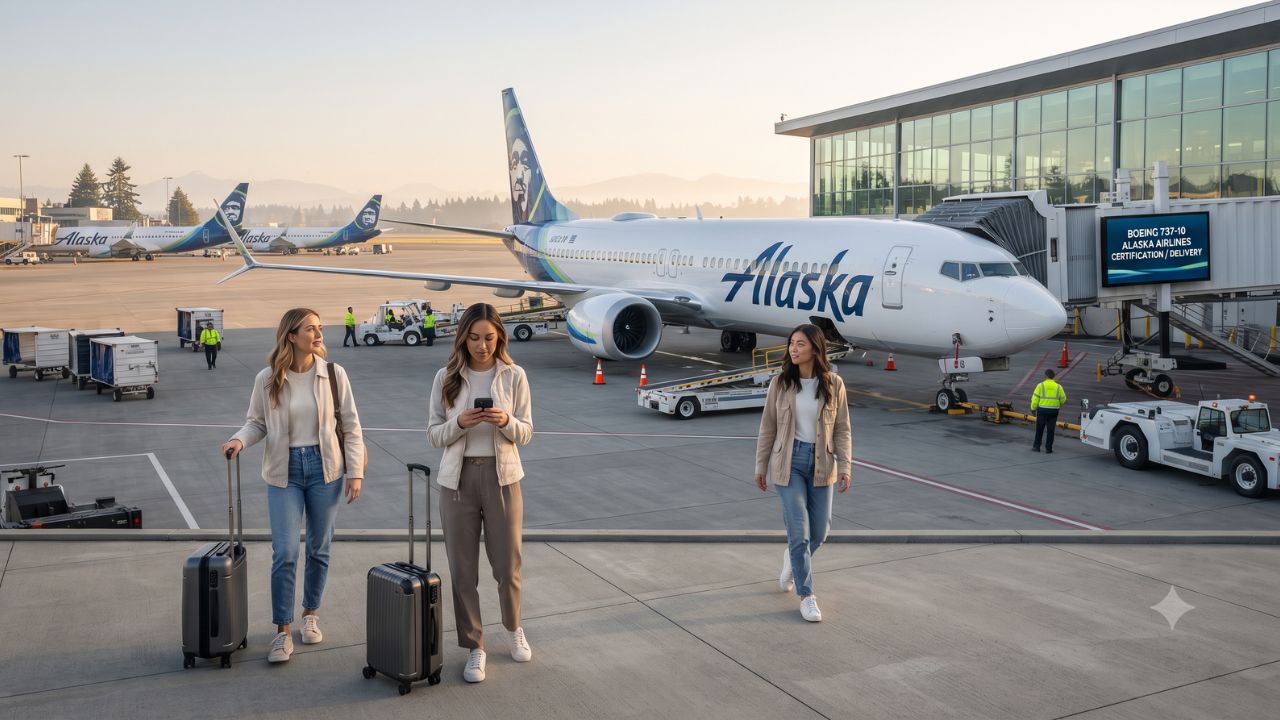
Logging 976 dedicated test flights and over 2,060 airborne hours during one of the most exhaustive safety evaluation regimes in commercial aviation history, Boeing’s largest single-aisle jetliner is entering its final regulatory approval phase. With the Federal Aviation Administration targeting 737-10 type certification by the close of September 2026, Alaska Airlines is locking in fleet plans to introduce 52 of the stretched aircraft into passenger service by 2028, with initial commercial operations scheduled between April and mid-May 2027.
The milestone represents the operational realization of the largest aircraft procurement in Alaska Air Group’s history, announced in January 2026. Comprising 105 firm orders for the Boeing 737-10, five Boeing 787 widebodies, and options for 35 additional MAX 10 airframes, the fleet transformation positions the carrier to expand seat capacity across slot-constrained transcontinental corridors—including nonstop trunk routes linking Seattle, Portland, and San Francisco with Boston Logan and New York—without adding congested runway movements.
Up-Gauging Transcontinental Skyways: Fleet Scaling Without Adding Runway Slots
Deploying the 737-10 addresses a fundamental constraint across American aviation: airport capacity ceilings. High-density coastal gateways such as Boston Logan, New York JFK, and Newark Liberty operate near peak air traffic saturation, making the acquisition of additional takeoff and landing slots nearly impossible.
By up-gauging aircraft gauge rather than adding frequencies, Alaska Airlines extracts higher passenger volume from existing departure banks. Capable of carrying up to 230 travelers in high-density layouts and between 185 and 210 seats in standard two-class passenger configurations, the MAX 10 delivers a noticeable step up over Alaska’s current 178-seat 737-9 MAX and 159-to-161-seat 737-8 MAX fleets.
With an engineered maximum takeoff weight of 89,760 kilograms and a nonstop flight range of 3,100 nautical miles (5,740 kilometers), the jet easily covers transcontinental routes from the Pacific Northwest to the Atlantic Seaboard with full payload reserves. Following initial delivery in spring 2027, the carrier will induct 22 aircraft throughout 2027 and 30 throughout 2028. Alaska Chief Operating Officer Jason Berry confirmed that internal airline certification of pilot head-up display systems will proceed immediately upon FAA type approval to ensure readiness for spring passenger service.
What Makes the Pacific Northwest Aviation Corridor Different
The Pacific Northwest is the historic birthplace of American jet aviation and the spiritual homeland of commercial aircraft manufacturing. Centered around Puget Sound, the region combines deep aerospace engineering roots with a distinct outdoor-oriented travel ethos.
At Alaska Airlines’ primary hub, Seattle-Tacoma International Airport (SEA), travelers encounter an airport atmosphere shaped by regional identity. Terminal concourses feature floor-to-ceiling glass walls framing views of Mount Rainier, live acoustic performances by local Pacific Northwest musicians, and culinary concepts highlighting wild Copper River salmon, Puget Sound oysters, and specialty micro-roasters.
Beyond the terminal gates, the Pacific Northwest serves as an unparalleled nature gateway. Within a two-hour radius of Seattle or Portland, travelers transition from high-tech urban corridors to the temperate rainforests of Olympic National Park, the volcanic alpine meadows of Mount Rainier, and the fertile viticultural valleys of the Columbia River Gorge.
Visitor Insider Tips
Navigating West Coast air travel and planning transcontinental journeys on Alaska Airlines requires practical knowledge of aircraft seat maps, airport transit links, and regional seasonal travel patterns. Consider these field-tested guidelines:
- Seat Selection on Transcontinental Flights: When booking future routes operated by the 737-10, monitor Alaska’s seat maps carefully during booking. Look for Premium Class rows (typically rows 6 through 10), which offer up to four extra inches of legroom, complimentary regional craft beer and West Coast wine, and early overhead bin access.
- Rapid Transit Connections at Sea-Tac: Avoid expensive highway ride-hailing fares and Interstate 5 traffic jams when landing in Seattle. Sound Transit’s 1 Line light rail station connects directly to the fourth floor of the airport parking garage via a covered pedestrian bridge, delivering travelers to downtown Seattle in 36 minutes for under four dollars.
- Connecting Through West Coast Hubs: If connecting onward to Hawaii or Alaska from New York or Boston, allow at least a 60-minute transit buffer at Seattle-Tacoma or Portland International Airport (PDX). Both airports feature single-terminal secure concourse designs that allow passengers to walk between all gates without re-clearing TSA security checkpoints.
- Regional Dining and Local Sourcing: Take advantage of Alaska Airlines’ onboard dining partnerships, which feature regionally sourced Pacific Northwest products such as Tillamook cheese plates, Seattle-roasted coffees, and craft beverages. Pre-order fresh meals via the mobile app up to 24 hours prior to departure to secure your choice.
- Official Visitor Resources and Park Permits: If your trip includes exploring protected wilderness areas in Washington or Oregon, check trail permits, road closures, and ferry timetables via Visit Seattle and the National Park Service official portals before departure.
Cultural and Environmental Context
The arrival of the Boeing 737-10 coincides with an era of transformation for Alaska Air Group following its corporate integration with Hawaiian Airlines under a single operating certificate. The combined network unites transpacific island routes with North American transcontinental corridors, projecting a consolidated fleet of 475 aircraft by 2030 and more than 550 by 2035.
Environmental sustainability remains central to this fleet transition. Modern single-aisle aircraft like the MAX 10 utilize advanced CFM International LEAP-1B engines and aerodynamic split-scimitar winglets, delivering double-digit reductions in fuel consumption and carbon emissions per seat compared to previous generation narrowbodies. This efficiency allows airlines to retire older airframes while lowering the environmental footprint of long-range domestic flying.
At the community level, Alaska Airlines works with regional conservation initiatives across the Pacific Northwest and Hawaii to protect marine ecosystems, support regenerative tourism practices, and accelerate the commercial supply of sustainable aviation fuel (SAF) derived from agricultural waste. Aligning commercial aviation growth with responsible environmental stewardship ensures the preservation of fragile wilderness areas across the Pacific Rim.
FAQ: Alaska Airlines Boeing 737 MAX 10 2027
When will the Boeing 737 MAX 10 enter passenger service with Alaska Airlines?
Alaska Airlines plans to launch scheduled commercial passenger services with the Boeing 737-10 between April and mid-May 2027, following initial spring deliveries.
How many Boeing 737-10 aircraft will Alaska Airlines receive?
The airline has 105 firm orders and options for 35 additional aircraft, with 22 deliveries scheduled in 2027 and 30 scheduled in 2028.
Which routes will feature the new 737-10 aircraft first?
The aircraft will primarily be deployed on high-demand, slot-constrained transcontinental trunk routes connecting West Coast hubs with Boston Logan and New York airports.
How many passengers can the Alaska Airlines 737-10 carry?
While maximum single-class capacity reaches 230 passengers, Alaska’s typical two-class passenger layout will accommodate between 185 and 210 travelers.
Related Travel Guides
- Emirates Manchester Airport Terminal 2 Luxury Lounge Guide 2026
- Western Sydney Airport Uber Rideshare Ground Transport Guide 2026
- Air Canada Vancouver Singapore Route Closure Travel Guide 2027
As Boeing's stretched flagship prepares for takeoff, the skies connecting the Pacific Northwest with the Atlantic coast enter a more spacious, high-efficiency era.
Disclaimer
This article is for informational and educational purposes only. It does not constitute legal, financial, or professional advice. While we strive to provide accurate and up-to-date information, travel policies, regulations, and conditions change rapidly. Always verify information with official sources before making travel decisions. Nomad Lawyer makes no representations about the accuracy, reliability, completeness, or suitability of the information provided. Readers should consult qualified professionals for advice specific to their circumstances. The views expressed in this article are those of the author and do not necessarily reflect the views of Nomad Lawyer.
Raushan Kumar
Founder & Lead Developer
Full-stack developer with 11+ years of experience and a passionate traveller. Raushan built Nomad Lawyer from the ground up with a vision to create the best travel and law experience on the web.
Learn more about our team →