
The Airplane Seat Recline Conflict: How Shrinking Seat Pitch Fuel Passenger Tension in 2026
As airline cabins continue to shrink, the simple act of reclining an economy seat has evolved from a comfort feature into a major source of passenger conflict and equipment damage.

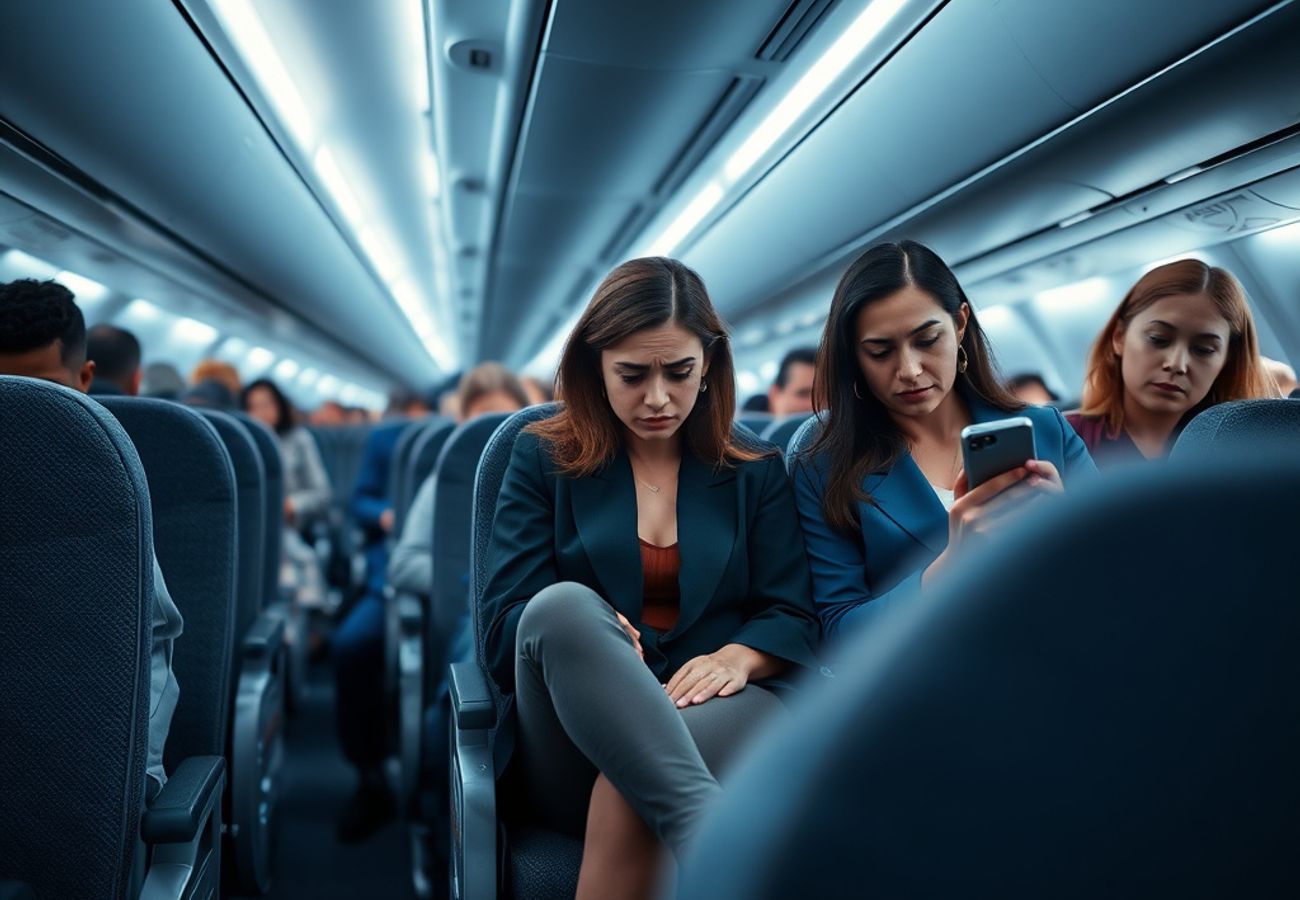
Image generated by AI
The modern economy cabin has transformed a standard comfort feature—the reclining seat—into one of the most contentious aspects of air travel. While airlines design seats to tilt backward, the diminishing physical space in today's cabins means that one passenger's relaxation often results in another's restriction.
This tension is not merely about a few inches of plastic and fabric. It is a symptom of a broader trend in aviation: the steady reduction of personal space. When a seat reclines without warning, it can disrupt a passenger's workspace, pin knees against a seatback, or even cause physical damage to electronics.
The Mathematics of the Shrinking Cabin
The core of the conflict lies in "seat pitch," the measurement from one point on a seat to the same point on the seat directly in front. Historically, economy cabins offered a more generous pitch of 34 to 35 inches.
Current industry standards have seen a significant decline. Most economy cabins now operate between 30 and 32 inches. In the most extreme cases, ultra-low-cost carriers have reduced this distance to as little as 28 inches.
Because the cabin is a fixed environment, any movement backward by a front-row passenger is a direct seizure of the rear passenger's available territory. This creates a zero-sum game where comfort for one person necessitates discomfort for another.
Quantifying the Impact of the Recline
The physical consequences of reclining vary significantly based on the carrier type and the specific aircraft configuration. For tall travelers, a full recline can eliminate nearly all remaining knee room, while for business travelers, it can trap laptops between the tray table and the seatback.
The following data outlines how different carrier models impact the passenger experience:
| Carrier Type | Average Seat Pitch | Inches Lost To Recline | Approximate Remaining Space | Knee-Zone Verdict |
|---|---|---|---|---|
| Legacy carriers (Delta, United, American) | 30–32 inches | 2–3 inches | About 28 inches | Tight but manageable if reclined gently |
| Low-cost carriers (JetBlue, Southwest) | 31–32 inches | About 2 inches | About 29–30 inches | Slightly more forgiving |
| Ultra-low-cost (Spirit, Frontier) | 28 inches | None (many seats don't recline) | 28 inches | No recline conflicts, but minimal space |
| International long-haul | 31–33 inches | 3–5 inches | About 27–28 inches | Highest risk for laptop and tray table conflicts |
Beyond mere discomfort, there are financial risks. Sudden reclines have been reported to crack laptop screens when devices are open on tray tables, turning a breach of etiquette into a costly hardware failure.
The Psychology of Personal Space
Air travel is a high-stress experience characterized by a loss of autonomy. Passengers navigate security checkpoints and crowded terminals, only to be placed in a confined space for several hours.
In this environment, the few square inches surrounding a passenger become their only remaining zone of control. When a seat reclines unexpectedly, it is often perceived as an "unprovoked attack" because it violates that final boundary of personal privacy and physical agency.
The debate generally splits into two philosophical camps:
- The Rights-Based View: Reclining is a built-in feature of the ticket purchase and is therefore an entitlement.
- The Empathy-Based View: Exercising that right is unacceptable if it causes demonstrable discomfort to a fellow traveler.
Industry and Passenger Perspectives
The aviation industry maintains that these configurations are safe. A spokesperson for Airlines for America (A4A) stated that safety is the primary focus and that the Federal Aviation Administration (FAA) affirms all U.S. carriers meet or exceed federal safety standards regarding seat size and configurations.
However, frequent flyers have developed their own unwritten codes of conduct to mitigate conflict:
- The Domino Effect: Some suggest reclining only if the person in front has already done so, or if the passenger behind is a child.
- The Mealtime Rule: A common etiquette standard is to return the seat to an upright position during meal and drink services to allow the passenger behind to use their tray table effectively.
- The Communication Strategy: Rather than reclining abruptly, some travelers recommend asking the passenger behind or reclining only slightly to balance comfort with courtesy.
- The Sleep Window: On overnight long-haul flights, reclining is generally more accepted during designated sleeping hours when the cabin is dimmed.
Ultimately, the friction is a result of airline engineering. As carriers maximize seat density to increase profitability, the physical proximity of passengers ensures that minor movements trigger major emotional responses.
The battle for the last two inches of legroom continues to define the modern flying experience.
Related Travel Guides
Disclaimer
This article is for informational and educational purposes only. It does not constitute legal, financial, or professional advice. While we strive to provide accurate and up-to-date information, travel policies, regulations, and conditions change rapidly. Always verify information with official sources before making travel decisions. Nomad Lawyer makes no representations about the accuracy, reliability, completeness, or suitability of the information provided. Readers should consult qualified professionals for advice specific to their circumstances. The views expressed in this article are those of the author and do not necessarily reflect the views of Nomad Lawyer.
Raushan Kumar
Founder & Lead Developer
Full-stack developer with 11+ years of experience and a passionate traveller. Raushan built Nomad Lawyer from the ground up with a vision to create the best travel and law experience on the web.
Learn more about our team →