
Amtrak Opens $250 Million Seattle Maintenance Hub to Power Airo Fleet Expansion in 2026
Amtrak's new 95,000-square-foot Seattle facility reduces maintenance downtime for the new Airo trainsets, streamlining rail connectivity across the Pacific Northwest corridor.

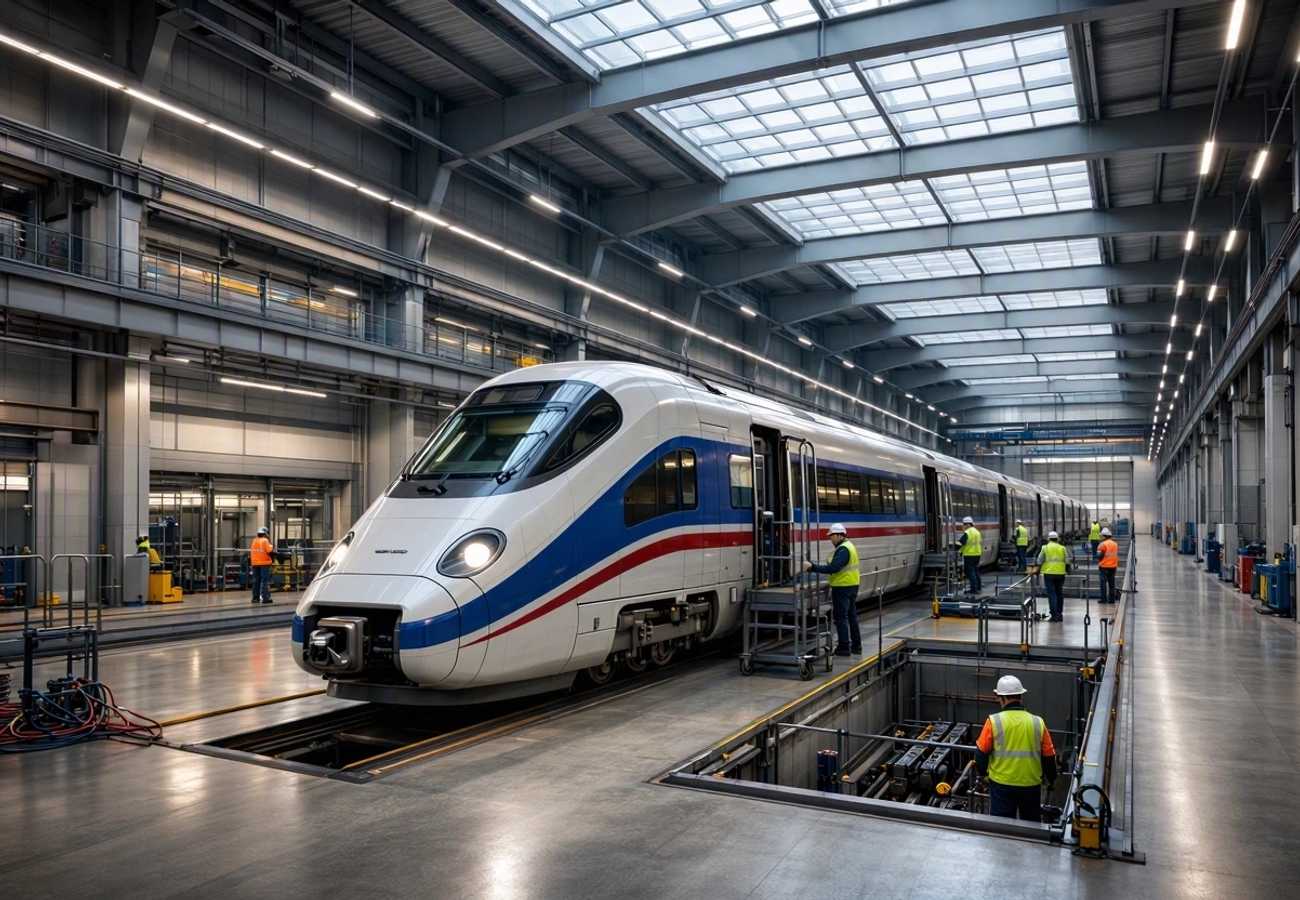
Image generated by AI
A $50 million construction saving on a new $250 million maintenance complex signals a rare instance of high-scale infrastructure efficiency for Amtrak. Completed in October 2026, this 95,000-square-foot facility in Seattle is not merely a garage for locomotives; it is the operational backbone required to sustain the rollout of the next-generation Amtrak Airo fleet across the Pacific Northwest.
The Infrastructure Shift in Seattle
The transition from legacy railcar maintenance to integrated trainset servicing represents a fundamental change in how Amtrak manages its assets. Traditionally, individual coaches were shunted separately to various service points, a process that consumed significant time and operational manpower. The new Seattle complex eliminates this friction by allowing technicians to inspect and repair entire trainsets as a single unit.
Spanning approximately 700 feet in length, the facility features three dedicated maintenance tracks. This layout is specifically engineered to accommodate the integrated nature of the Airo fleet, ensuring that the synergy between the locomotive and passenger cars is maintained throughout the servicing cycle.
Technical Specifications and Regional Reach
The facility's design integrates heavy-duty industrial tools necessary for modern rolling stock, including a split rail system and a drop table for heavy component replacement. To ensure worker safety and efficiency, the site is equipped with an overhead bridge crane, a monorail crane, and a comprehensive fall-protection lifeline system.
The impact of this investment extends far beyond the city limits of Seattle, directly supporting the Washington State Department of Transportation goals for the Cascades corridor.
Cascades Corridor Operational Data
| Metric | Detail |
|---|---|
| Total Corridor Length | 467 miles |
| Washington State Segment | 300 miles |
| Oregon State Segment | 134 miles |
| British Columbia Segment | 33 miles |
| Primary Hubs | Vancouver, Seattle, Portland, Eugene |
| Airo Fleet Order | 8 trainsets, 2 locomotives, 1 spare cab car |
| Airo Capacity | 300+ seats per trainset |
Expert Analysis: The Logistics of Reliability
For travelers booking routes between Vancouver, Seattle, and Portland, the opening of this facility does not immediately translate to lower fares or more frequent departures. Instead, the direct consequence is a reduction in "equipment unavailability"—the primary cause of sudden cancellations or the substitution of modern trains with older, less comfortable rolling stock.
The pricing pressure in the Pacific Northwest rail market is often tied to the reliability of the fleet. By reducing the time a train spends in the shop, Amtrak increases its "fleet readiness." When a railway can guarantee that its most modern assets (the Airo sets) are available for their scheduled runs, it stabilizes the passenger experience.
The introduction of the Airo fleet on September 30, 2026, marked the first time this technology entered commercial service in the U.S. These trains feature USB-C charging, touchless restrooms, and panoramic windows. However, these high-tech amenities require specialized electronic and mechanical upkeep that legacy facilities could not provide. The Seattle hub is the "insurance policy" that ensures these luxury features remain operational over the long term.
Key Takeaways
- Budget Efficiency: The project was delivered for $250 million, coming in 16.7% under its implied $300 million budget.
- Operational Speed: The ability to service full trainsets in one location reduces the logistical overhead of moving individual cars.
- Fleet Modernization: The facility supports 8 new Airo trainsets, which offer 300+ seats and enhanced accessibility features.
- Cross-Border Impact: The infrastructure strengthens the 467-mile link connecting Washington, Oregon, and British Columbia.
- Service Timeline: While the first sets launched in late September 2026, full fleet replacement is expected through early 2027.
FAQ: Amtrak Seattle Facility 2026
Will the new Seattle facility lead to cheaper train tickets? No. Amtrak has not announced any ticket price reductions linked to the $50 million construction savings. The investment is focused on operational reliability and fleet maintenance rather than fare subsidies.
What are the benefits of the new Airo trains for passengers? Airo trains provide a modernized experience with ergonomic seating, USB-C ports, complimentary Wi-Fi, and improved accessibility, including automated steps and touchless controls in six spacious restrooms.
Does this facility mean more frequent trains to Vancouver or Portland? Not directly. The facility improves the maintenance of existing and new trains, but adding new routes or increasing frequency depends on separate funding and operational planning.
Which cities are served by the Cascades corridor supported by this hub? The corridor connects major hubs including Vancouver (BC), Seattle, Portland, and Eugene, as well as various smaller communities along the 467-mile route.
The shift toward integrated trainset maintenance marks the end of the "individual car" era for the Pacific Northwest.
Related Travel Guides
Disclaimer
This article is for informational and educational purposes only. It does not constitute legal, financial, or professional advice. While we strive to provide accurate and up-to-date information, travel policies, regulations, and conditions change rapidly. Always verify information with official sources before making travel decisions. Nomad Lawyer makes no representations about the accuracy, reliability, completeness, or suitability of the information provided. Readers should consult qualified professionals for advice specific to their circumstances. The views expressed in this article are those of the author and do not necessarily reflect the views of Nomad Lawyer.
Naina Thakur
Contributor & Travel Specialist
Travel enthusiast and legal writer covering visa regulations, responsible tourism, and cultural journeys across global destinations.
Learn more about our team →