
Alaska Airlines Expands European Network With New Nonstop Seattle Flights to Athens and Paris in 2027
Alaska Airlines is launching Boeing 787-9 nonstop service from Seattle to Athens and Paris starting in May 2027, marking a major expansion of its long-haul international strategy.

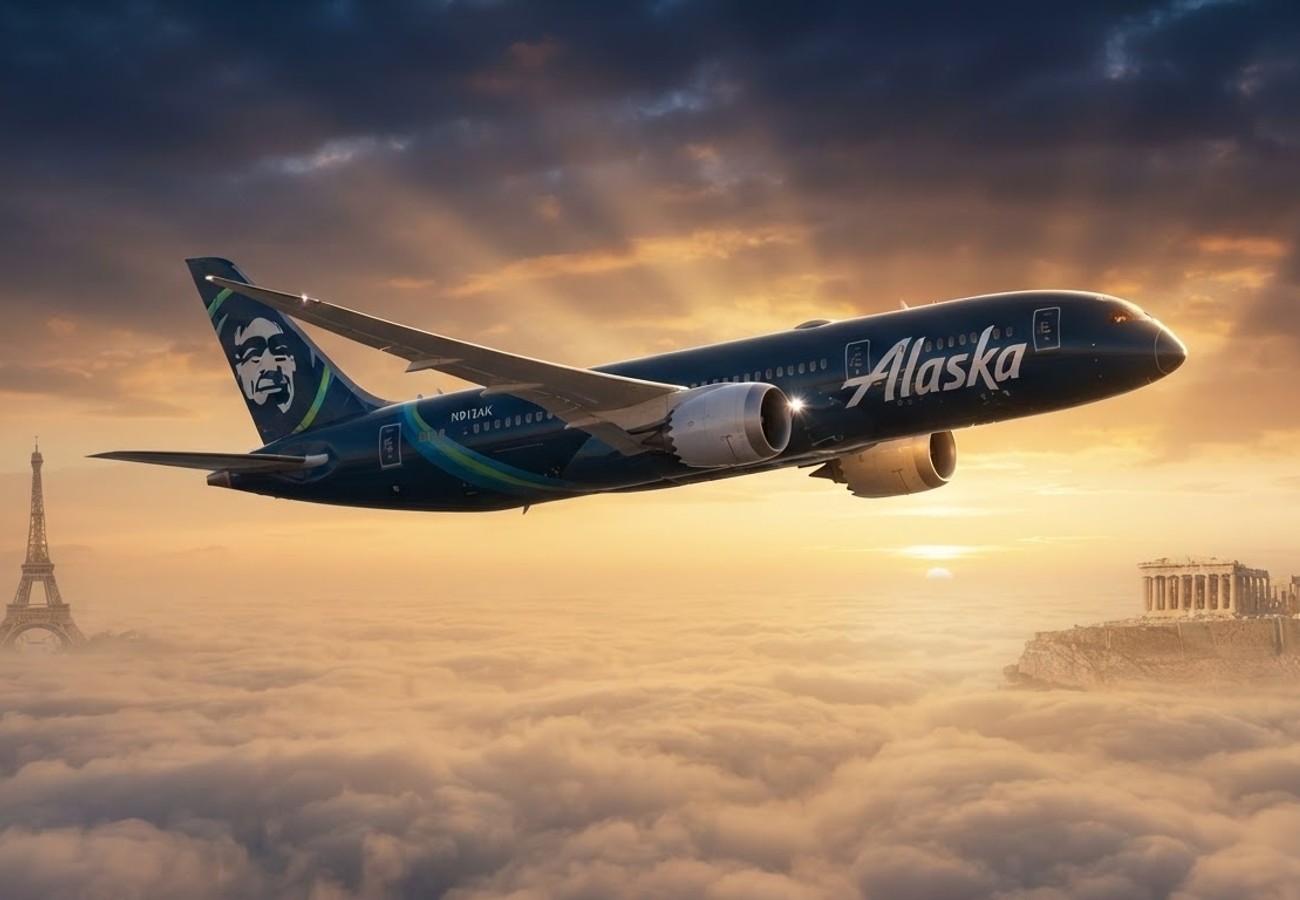
Image generated by AI
Alaska Airlines is set to transform Seattle into a premier transatlantic hub by launching new nonstop services to Athens and Paris starting in May 2027. These routes, operated by the Boeing 787-9 Dreamliner, signal a aggressive push into the long-haul market to capture high-yield leisure and business traffic.
The move represents a strategic pivot for the carrier, transitioning from a predominantly domestic and short-haul operator into a global player. By leveraging its stronghold in the Pacific Northwest, the airline is positioning Seattle Tacoma International Airport (SEA) as a critical gateway for travelers heading to the Mediterranean and Western Europe.
New Nonstop Connections to Athens and Paris
Industry reports and official carrier announcements confirm that Alaska Airlines will introduce seasonal nonstop service to two of Europe's most coveted destinations. These routes are designed to provide West Coast travelers with more direct options, reducing reliance on East Coast or European hubs.
The flight to Athens is scheduled to commence on May 12, 2027. This service will operate three times per week through October. Notably, this will be the first-ever nonstop link between Seattle and the Greek capital. Furthermore, during the summer peak, it is expected to be the only nonstop flight connecting Athens to the entire U.S. West Coast, creating a streamlined pipeline for cruise passengers and tourists visiting the eastern Mediterranean.
Simultaneously, the route to Paris Charles de Gaulle (CDG) is slated for a May 25, 2027 launch. This corridor will see a higher frequency of five weekly flights during its inaugural summer season. While Paris is already a high-volume market for Seattle, the introduction of Alaska-branded metal allows the airline to capture loyalty and revenue that previously flowed to joint-venture partners.
Both routes are currently designated as seasonal, aligning with the historical surge in transatlantic demand between May and October. This timing coincides with the peak of the Alaska cruise season, allowing the airline to capture inbound European traffic heading toward the Pacific Northwest.
Boeing 787-9 Dreamliner Fleet Integration
The backbone of this expansion is the Boeing 787-9, a widebody aircraft specifically chosen for its fuel efficiency and passenger comfort on ultra-long-haul sectors. The airline is building a dedicated subfleet of these jets to support a broader goal: establishing at least a dozen long-haul destinations by the end of the decade.
To compete with established global carriers, Alaska is debuting a revamped long-haul cabin configuration. The 787-9s will feature:
- Lie-flat seating in the premium front cabin for overnight comfort.
- Updated Premium Class sections designed for high-yield business travelers.
- Refreshed Economy cabins to maintain competitiveness on price-sensitive leisure routes.
This hardware upgrade is a necessary step for the airline to match the service standards of its oneworld alliance partners and meet the expectations of passengers on 10+ hour flights.
Strategic Hub Dynamics at Seattle Tacoma International
By centralizing these operations at Seattle Tacoma International Airport, the airline is employing a "hub-and-spoke" model on a global scale. The strategy involves feeding these transoceanic flights with passengers from a vast domestic network spanning California, Oregon, Washington, and the state of Alaska.
This approach allows the carrier to maximize load factors by aggregating travelers from secondary cities who would otherwise have to navigate multiple transfers. The European push complements previous expansions into Asia, including partnership-operated flights to Seoul Incheon and Tokyo Narita via Hawaiian Airlines. With the addition of Athens and Paris—alongside existing plans for Rome—the airline is effectively encircling the globe from its Seattle base.
Market Competition and Route Analysis
The entry into the Paris market places Alaska Airlines in direct competition with heavyweights like Delta and Air France. Because Paris is one of Seattle's busiest long-haul destinations, the market is saturated. However, industry observers suggest that Alaska's strong regional brand loyalty and the integration of its rewards program may allow it to carve out a sustainable niche.
The Athens route offers a more distinct competitive advantage. Currently, travelers from the West Coast must stop in cities like London, Frankfurt, or New York to reach Greece. By eliminating the layover, Alaska creates a unique value proposition for independent vacationers and cruise-goers, potentially shifting the flow of traffic away from traditional European hubs.
| Route | Launch Date | Frequency | Aircraft | Seasonality |
|---|---|---|---|---|
| Seattle (SEA) $\rightarrow$ Athens (ATH) | May 12, 2027 | 3x Weekly | Boeing 787-9 | Seasonal (May-Oct) |
| Seattle (SEA) $\rightarrow$ Paris (CDG) | May 25, 2027 | 5x Weekly | Boeing 787-9 | Seasonal (May-Oct) |
Loyalty Integration and the oneworld Advantage
A critical component of this expansion is the synergy with the Atmos Rewards program and the oneworld alliance. The airline is using these high-profile destinations to drive credit card spend and loyalty engagement outside its traditional West Coast heartland.
For the frequent flyer, this means:
- Enhanced Redemption: The ability to use points for aspirational trips to iconic European capitals.
- Seamless Connectivity: Upon landing in Paris or Athens, passengers can connect to a vast network of partner airlines serving North Africa, the Middle East, and secondary European cities.
- Accrual Opportunities: Earning miles on long-haul sectors that were previously only available via partner bookings.
Why This Matters: The Traveler's Perspective
For the modern traveler, this expansion is more than just new flight numbers; it is a significant reduction in travel friction. The removal of a mandatory stopover for Athens flights can shave several hours off a journey and eliminate the risk of missed connections in crowded hubs like Heathrow or Schiphol.
From a logistical standpoint, this creates a "one-stop shop" for residents of the Pacific Northwest. A traveler from a smaller city in Idaho or Montana can now fly into Seattle and depart for Greece or France on a single ticket, using a single loyalty program, and experiencing a consistent brand of service. Furthermore, the introduction of more capacity on the Seattle-Paris route is likely to exert downward pressure on fares, benefiting budget-conscious travelers during the summer rush.
Alaska Airlines is no longer just a regional powerhouse; it is evolving into a global gateway.
Related Travel Guides
Disclaimer
This article is for informational and educational purposes only. It does not constitute legal, financial, or professional advice. While we strive to provide accurate and up-to-date information, travel policies, regulations, and conditions change rapidly. Always verify information with official sources before making travel decisions. Nomad Lawyer makes no representations about the accuracy, reliability, completeness, or suitability of the information provided. Readers should consult qualified professionals for advice specific to their circumstances. The views expressed in this article are those of the author and do not necessarily reflect the views of Nomad Lawyer.
Raushan Kumar
Founder & Lead Developer
Full-stack developer with 11+ years of experience and a passionate traveller. Raushan built Nomad Lawyer from the ground up with a vision to create the best travel and law experience on the web.
Learn more about our team →