AirAsia Secures Historic 17th Consecutive World’s Best Low Cost Airline Title at Skytrax Awards

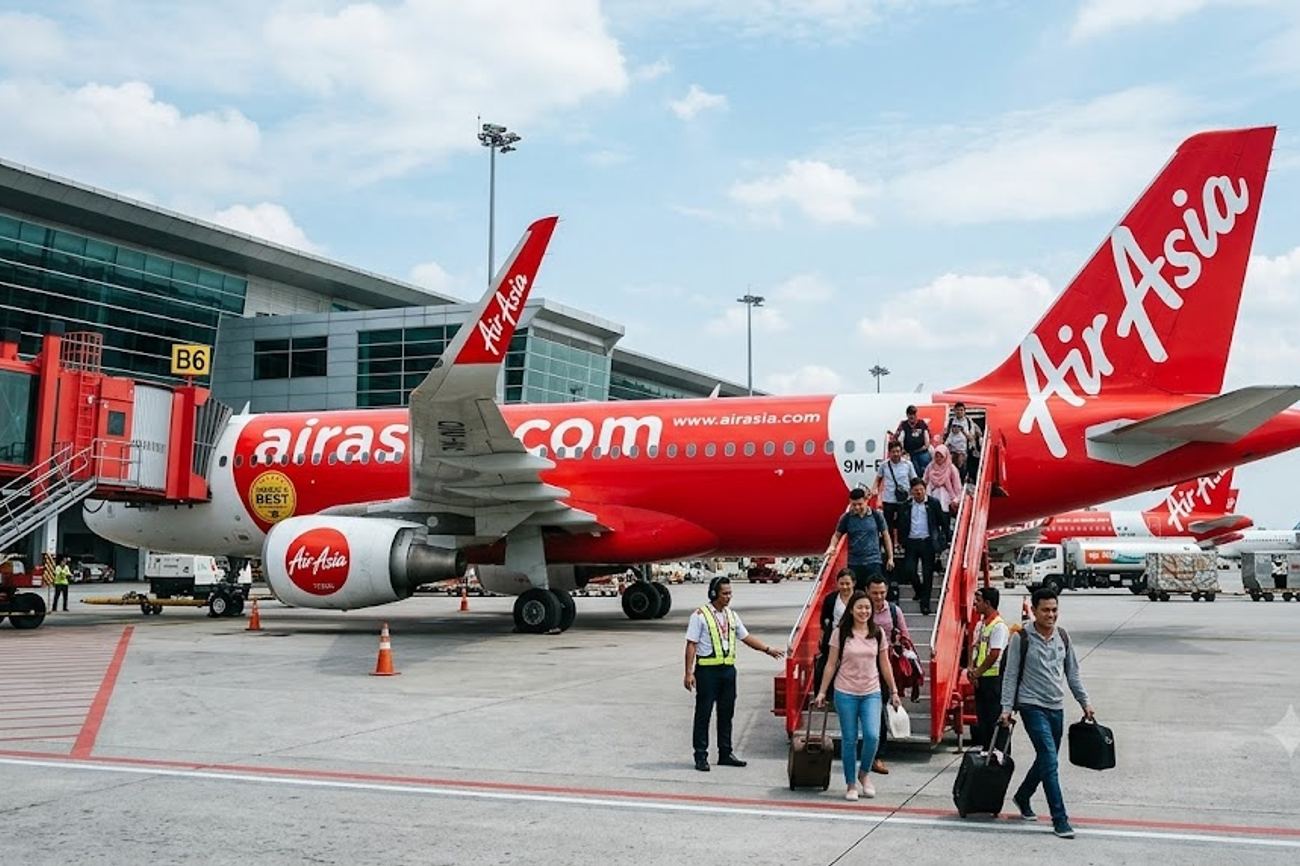
Image generated by AI
855 million guests have flown with AirAsia over the last 25 years, a scale of operation that underscores the carrier's role in the democratization of flight across the Asia-Pacific region. This massive passenger volume provides the statistical backbone for the airline's most recent industry milestone: securing the title of World’s Best Low Cost Airline at the 2026 Skytrax World Airline Awards. By winning this specific category for the 17th consecutive year, the carrier has moved beyond mere market presence to establish a near-monopoly on passenger perception within the budget sector.
The Mechanics of the Skytrax Validation
The significance of this award lies in its methodology, which differs fundamentally from industry accolades based on corporate submissions or closed-door panels. The Skytrax rankings are derived from the World Airline Survey, an independent mechanism that aggregates raw feedback from international travelers. Because airlines do not pay entry or registration fees to be considered, the result is a data-driven reflection of the passenger experience rather than a marketing exercise.
For a carrier like AirAsia, maintaining this streak for 17 years is an anomaly in an industry characterized by volatile fuel prices, shifting regulatory environments, and aggressive new entrants. The award functions as a proxy for consumer trust, signaling that despite the lean operational model inherent to low-cost carriers (LCCs), the airline has managed to sustain a level of service that passengers find acceptable or superior relative to its price point. This is particularly relevant as the airline celebrates its 25th anniversary, marking a transition from a disruptive startup to a regional pillar of aviation infrastructure.
Operational Scale and Market Penetration
The growth of AirAsia over a quarter-century illustrates a broader shift in how Asia connects. By prioritizing high-frequency, low-fare routes, the airline has effectively lowered the barrier to entry for millions of first-time flyers. This strategy has not only increased leisure travel but has acted as a catalyst for regional economic integration, allowing business movement between secondary cities that were previously ignored by full-service legacy carriers.
The following table outlines the core pillars of the airline's current market position as reflected in the 2026 recognition:
| Metric | Detail | Impact on Market |
|---|---|---|
| Total Passengers | 855 Million+ | Massive data set for operational optimization |
| Award Streak | 17 Consecutive Years | High brand equity and passenger loyalty |
| Operational Age | 25 Years | Deep institutional knowledge of Asian airspace |
| Award Basis | Independent World Airline Survey | Validation via external passenger sentiment |
The airline's ability to scale while maintaining this award suggests a successful implementation of the "no-frills" model, where cost-cutting does not translate to a perceived collapse in reliability. In an era where the International Air Transport Association (IATA) frequently highlights the thin margins of the LCC sector, AirAsia's consistency suggests a highly refined cost-to-service ratio.
Expert Analysis: The LCC Loyalty Paradox
The 17-year winning streak at the Skytrax awards reveals a fascinating psychological trend in aviation: the LCC Loyalty Paradox. Typically, budget travelers are viewed as purely transactional—switching carriers based on a $10 difference in fare. However, AirAsia’s repeated success indicates that they have successfully shifted the passenger's mindset from "cheapest available" to "trusted budget provider."
AirAsia has maintained its dominance in the budget travel sector by securing the World’s Best Low Cost Airline title for the 17th consecutive year. Passengers can manage bookings and explore current flight schedules directly through the AirAsia official portal.
For travelers booking routes within Southeast Asia, the direct consequence of this dominance is a stabilized expectation of service. When a carrier wins the same award for nearly two decades, it creates a "safe bet" mentality. This reduces the perceived risk for the traveler, who knows exactly what the experience will be, even if it lacks the luxury of a full-service carrier.
The pricing pressure this creates for competitors is immense. New entrants cannot simply compete on price; they must now compete against a brand that has been validated by millions of peers over 17 years. To break this cycle, competitors would need to offer not just lower fares, but a fundamentally different value proposition—such as superior digital integration or better ancillary services—because AirAsia has already captured the "value-for-money" psychological territory.
Furthermore, this recognition comes at a time of extreme volatility in global aviation. With geopolitical tensions affecting flight paths and economic shifts impacting disposable income, the budget sector is the most sensitive to change. AirAsia's ability to retain the top spot suggests that their operational model is resilient enough to absorb these shocks without degrading the passenger experience to a point that triggers a drop in survey scores.
Key Takeaways
- Unprecedented Consistency: AirAsia has held the World’s Best Low Cost Airline title for 17 straight years, a level of stability rarely seen in the budget aviation sector.
- Massive Reach: The airline has transported over 855 million passengers since its inception 25 years ago, fundamentally altering travel accessibility in Asia.
- Independent Validation: The Skytrax award is based on the World Airline Survey, meaning the recognition is driven by actual passenger feedback rather than industry nominations.
- Regional Catalyst: The carrier's growth has directly supported tourism and business connectivity by linking secondary cities and reducing fare barriers.
- Resilience in Volatility: Maintaining top rankings amidst current global economic and geopolitical instability indicates a robust and adaptable operational framework.
FAQ: AirAsia Service and Awards 2026
What makes the Skytrax World Airline Awards different from other aviation prizes? Unlike many awards that rely on airline applications or expert panels, Skytrax uses the World Airline Survey. This gathers independent data from millions of passengers globally, making it a reflection of actual customer satisfaction rather than corporate marketing.
This achievement underscores the airline's role in boosting regional connectivity and accessibility across Southeast Asia. Travelers utilizing these routes often coordinate their visits through the Tourism Malaysia official site to explore key destinations.
How has AirAsia impacted travel in Asia over the last 25 years? By implementing a low-cost carrier model, AirAsia has made flying affordable for millions. This has increased regional connectivity, boosted tourism in previously inaccessible areas, and allowed more people to travel for business and leisure.
Does the "World's Best Low Cost Airline" award mean it is the best airline overall? No. This award specifically evaluates the "Low Cost" category. It measures how well an airline delivers value and service relative to its budget pricing, rather than comparing it to full-service luxury carriers.
Why is passenger trust important for budget airlines? In the LCC sector, margins are thin and competition is high. High passenger trust, as evidenced by the Skytrax awards, creates brand loyalty that prevents customers from switching to competitors based solely on minor price differences.
The democratization of the skies is no longer a goal—for AirAsia, it is a 25-year proven track record.
Tags: AirAsia, Skytrax 2026, Asia-Pacific Aviation, Low-Cost Carrier Market, World Airline Survey
Related Travel Guides
- Flights Cancelled Sweep Through Asia with 241 Cancellations and 4,331 Delays Affecting Aleppo, Hanoi and More Airports
- Los Angeles Air Travel Expands as Delta Adds Monterey, Philadelphia and More Flights to Boston, Seattle and Houston: What You Need to Know
- Air Canada Strengthens North American Aviation Leadership With Back-to-Back Skytrax Recognition
This article is for informational purposes. Flight routes, passenger regulations, visa rules, and transit advisories are subject to change by airlines and aviation authorities. Readers are advised to verify schedules and travel documentation with relevant carriers and border agencies before departure.
Related Stories
India Launches International Digi Yatra Biometric Trials at 7 Major Airports for 2027 Expansion

Avoiding Major Hubs: Using Portsmouth and Regional US Airports for Winter Travel 2026-27