
Turkish Airlines A330 Emergency Evacuation in Kathmandu: 288 Passengers Safely Exit Burning Aircraft
Breaking airline news and aviation industry updates for 2026.

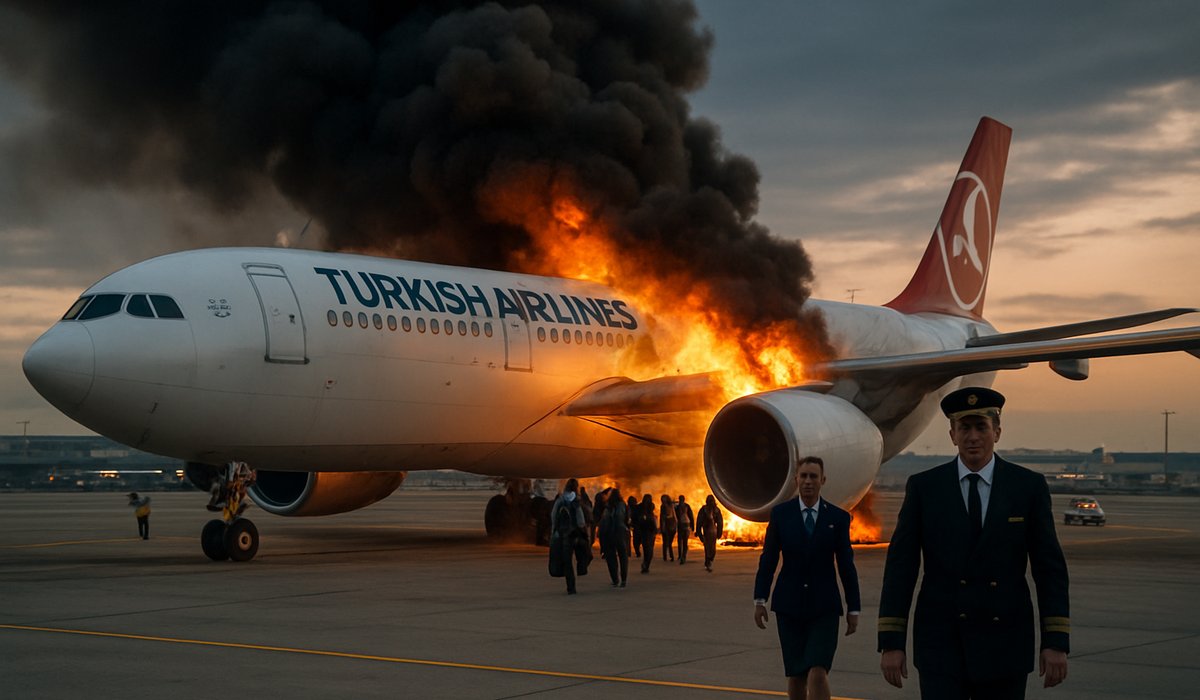
Image generated by AI
Turkish Airlines A330 Emergency Evacuation in Kathmandu: 288 Passengers Safely Exit Burning Aircraft
A landing gear fire forces rapid emergency response at Nepal's busiest airport, raising fresh questions about aircraft maintenance protocols
The Incident Unfolds
Turkish Airlines executed a rapid emergency evacuation of 288 passengers and crew members after one of its wide-body aircraft caught fire upon landing in Kathmandu on Monday. Flight TK726, an Airbus A330 operating the Istanbul-to-Kathmandu route, encountered a critical landing gear malfunction that ignited flames and thick smoke as the aircraft taxied along the runway at Tribhuvan International Airport.
Cabin crew deployed emergency evacuation procedures immediately following touchdown, activating inflatable evacuation slides to facilitate a swift departure from the stricken aircraft. Airport emergency services mobilized rapidly to address the landing gear fire, establishing a perimeter around the burning aircraft as evacuation operations concluded. Despite the severity of the mechanical failure, all 288 occupants—comprising passengers and operational crew—evacuated without injury.
Swift Response Prevents Catastrophe
The incident highlights the critical importance of rapid emergency response protocols in civil aviation. Turkish Airlines' crew demonstrated textbook procedure execution, activating emergency systems the moment landing gear complications became apparent during taxi operations. Airport firefighting teams at Tribhuvan, Nepal's primary international gateway, arrived promptly to suppress the landing gear fire before it could compromise aircraft structural integrity or spread to fuel systems.
Nepal's Civil Aviation Authority has launched an immediate investigation into the root cause of the landing gear failure. Preliminary observations suggest the tire malfunction on the aircraft's right landing gear assembly triggered the fire, though comprehensive technical analysis remains ongoing.
Aviation Safety Implications
This incident underscores ongoing scrutiny within the global aviation industry regarding aircraft maintenance standards and component reliability. While modern commercial aircraft undergo rigorous pre-flight inspections, unexpected mechanical failures continue to occur, particularly with complex systems like landing gear assemblies that endure intense pressure during takeoffs and landings.
Turkish Airlines, one of Europe's largest carriers by passenger volume, maintains a substantial fleet of Airbus A330 wide-body jets serving long-haul international routes. The carrier has implemented industry-standard maintenance protocols across its operations, though individual component failures can emerge despite comprehensive safety measures.
Operational Recovery
Following the emergency evacuation and fire suppression, the damaged A330 remained grounded pending damage assessment and investigation completion. Turkish Airlines arranged alternate transportation for affected passengers to complete their journeys, minimizing disruption to their travel plans.
Tribhuvan International Airport, which handles approximately 5 million annual passengers, resumed normal operations following the incident, with no secondary complications reported.
Frequently Asked Questions
What caused the Turkish Airlines A330 landing gear fire? Preliminary investigations indicate the fire originated in the right landing gear tire assembly during landing and taxi operations. Full technical analysis is ongoing.
Were any passengers injured in the evacuation? No injuries were reported. All 288 passengers and crew members evacuated safely using emergency slides.
How does aircraft landing gear maintenance prevent such incidents? Airlines conduct pre-flight inspections, periodic maintenance checks, and component replacements according to manufacturer specifications, though unexpected mechanical failures can still occur.
What happens to passengers when emergency evacuations occur? Airlines typically provide alternative transportation, accommodation if needed, and compensation according to applicable aviation regulations and carrier policies.
How common are landing gear fires in commercial aviation? Landing gear incidents remain relatively rare in modern commercial aviation due to rigorous maintenance standards, though they represent critical emergency scenarios requiring immediate response protocols.
Related Travel Guides
Flight Delay Compensation Guide 2026
Understanding Airline Route Changes
Airport Security Process Updated (2026)
External Resources
Disclaimer
This article is for informational and educational purposes only. It does not constitute legal, financial, or professional advice. While we strive to provide accurate and up-to-date information, travel policies, regulations, and conditions change rapidly. Always verify information with official sources before making travel decisions. Nomad Lawyer makes no representations about the accuracy, reliability, completeness, or suitability of the information provided. Readers should consult qualified professionals for advice specific to their circumstances. The views expressed in this article are those of the author and do not necessarily reflect the views of Nomad Lawyer.
Preeti Gunjan
Contributor & Community Manager
A passionate traveller and community builder. Preeti helps grow the Nomad Lawyer community, fostering engagement and bringing the reader experience to life.
Learn more about our team →