
Aircraft Military United: 5 USAF Giants Exceeding Commercial Jet Size
The US Air Force operates five colossal aircraft military united that dwarf standard commercial jets. In 2026, these massive military transport and bomber platforms showcase America's unmatched aerial logistics capabilities.

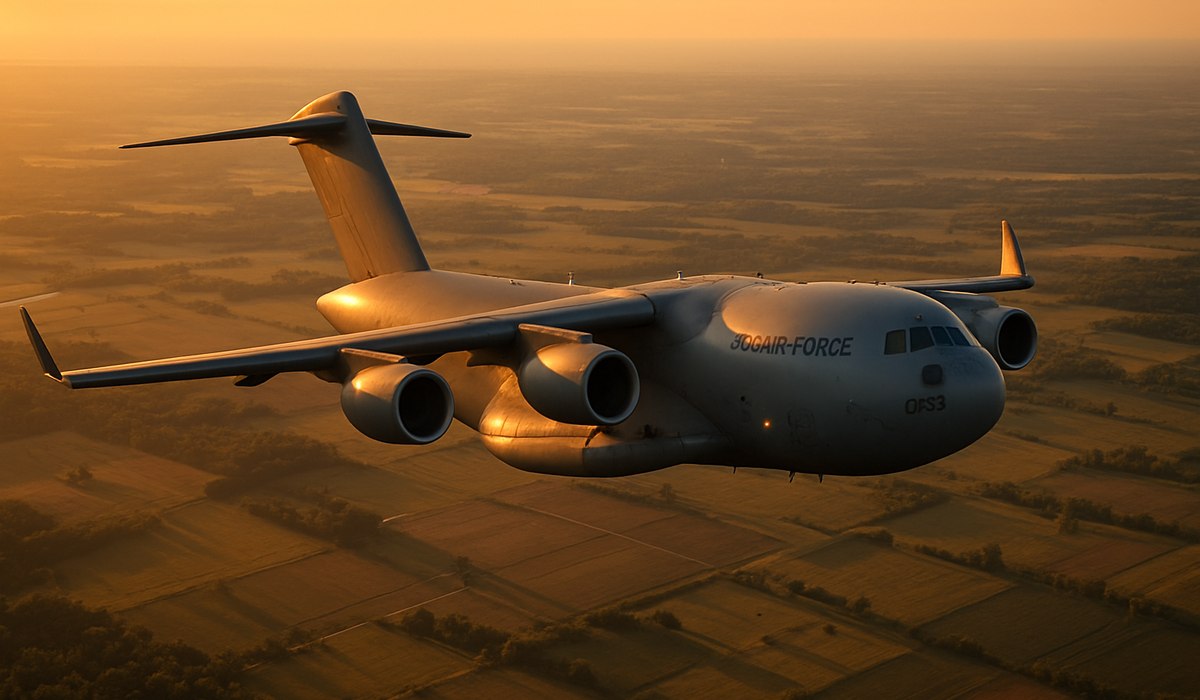
Image generated by AI
The US Air Force's Massive Aerial Fleet Takes Center Stage
The United States Air Force operates five extraordinary aircraft military united that exceed the dimensions of standard commercial jetliners, demonstrating the military's unparalleled logistical reach across global operations. While the civil Airbus A380 remains the world's largest passenger aircraft, the USAF's specialized military platforms—including dedicated cargo haulers and strategic bombers—significantly surpass commercial aviation standards in sheer scale and payload capacity. These colossal machines represent decades of aerospace engineering designed specifically for military transport, strategic deployment, and humanitarian missions that commercial airlines simply cannot accommodate.
The C-5 Galaxy: America's Largest Military Cargo Aircraft
The Lockheed C-5 Galaxy stands as the United States' premier strategic airlift platform and the largest military transport aircraft in active USAF service. This behemoth measures 247.8 feet in length with a wingspan stretching 222.9 feet, making it substantially larger than the Boeing 747 Jumbo and comparable to the Airbus A380 in overall dimensions. The C-5 Galaxy can carry up to 270,000 pounds of cargo, including fully assembled military vehicles, helicopters, and humanitarian relief supplies destined for disaster zones worldwide.
First deployed in 1970, the Galaxy remains irreplaceable for strategic airlift missions. The aircraft's pressurized cargo hold accommodates outsized loads that commercial carriers cannot manage. Modern upgrades in 2026 continue enhancing the Galaxy's avionics and engine efficiency, ensuring this aircraft military united remains operational well into the 2040s. The USAF maintains a fleet of 54 C-5 aircraft across multiple bases, each capable of intercontinental range without refueling. Visit the official USAF fact sheet for technical specifications and operational details.
Military Bombers and Transport Planes Exceeding Commercial Dimensions
Beyond cargo specialists, the USAF operates several bomber platforms with dimensions rivaling or surpassing commercial aircraft. The B-52 Stratofortress, operational since 1955, features a 185-foot wingspan and 159-foot fuselage. While shorter than the C-5 Galaxy, the B-52's structural footprint places it among aviation's architectural marvels.
The C-17 Globemaster III represents the second-largest military transport in the inventory, measuring 174 feet long with a 169-foot wingspan. Though slightly smaller than the C-5, the C-17 offers superior runway performance and tactical flexibility. Additionally, military versions of the Boeing 747, including the E-4B Nightwatch (airborne command center), demonstrate how aircraft military united civilian designs into specialized military platforms.
The KC-135 Stratotanker, derived from the 707 jetliner, achieved legendary status refueling strategic bombers since 1957. These aircraft military united demonstrate engineering solutions that bridge commercial innovation and military requirements across generations of aviation advancement.
How US Military Aircraft Compare to Global Giants
Comparing military aircraft reveals striking scale disparities. The C-5 Galaxy's 380,000-pound maximum takeoff weight dwarfs the Boeing 777's 775,000-pound capacity—when considering cargo volume rather than weight limits, the Galaxy's advantage becomes apparent. The aircraft military united in USAF service collectively move more tonnage annually than all commercial cargo carriers combined.
Internationally, the Russian Antonov An-124 Ruslan stands among the world's largest military transports, though limited production numbers restrict its global impact. Ukraine's loss of the legendary Antonov An-225 Mriya removed aviation's largest dedicated cargo platform, elevating US aircraft military united capabilities as critical infrastructure for global logistics.
The Airbus A380, carrying 853 passengers maximum, focuses on capacity density rather than outsized cargo. The aircraft military united by the USAF simply operate under different operational mandates—strategic reach, payload flexibility, and independence from commercial airport infrastructure define military requirements that commercial carriers cannot match.
Strategic Importance of Oversized Military Aviation
Military aircraft military united assets extend far beyond domestic operations. These platforms enable rapid humanitarian response, disaster relief airlift, and strategic deterrence across global regions. The C-5 Galaxy's ability to transport fully assembled medical facilities to remote locations saved countless lives in pandemic response scenarios.
Strategic airlift capacity underpins national defense doctrine. The aircraft military united inventory allows military commanders to project power globally within 48-hour response windows. This rapid deployment capability influenced geopolitical stability decisions throughout 2026, particularly regarding international crisis response.
Climate change and infrastructure degradation increasingly demand civilian-unsuitable airfield operations. Military transport aircraft operate from unprepared surfaces, austere forward locations, and damaged runways where commercial carriers cannot function. This strategic flexibility ensures the aircraft military united platforms remain indispensable to national security posture and humanitarian interventions for decades ahead.
Traveler Action Checklist
If you encounter flight disruptions or wish to understand how military operations impact civilian airspace:
-
Check FlightAware in real-time — Visit FlightAware to monitor civilian flight delays caused by military airlift operations affecting shared airspace corridors.
-
Review FAA guidance — The Federal Aviation Administration publishes notices regarding military exercise airspace restrictions affecting commercial routes.
-
Monitor DOT consumer rights — The US Department of Transportation provides passenger compensation guidelines if military operations cause significant commercial flight delays.
-
Contact your airline immediately — Request rebooking options or compensation information if military traffic causes your flight delay exceeding three hours.
-
Document all communications — Keep records of delay notifications, compensation offers, and airline correspondence for potential DOT complaint filing.
-
Follow recovery updates — Check official USAF announcements for extended airspace closures affecting commercial aviation schedules.
Key Data: USAF Aircraft Dimensions vs. Commercial Standards
| Aircraft | Length | Wingspan | Max Takeoff Weight | Cargo Capacity |
|---|---|---|---|---|
| C-5 Galaxy | 247.8 ft | 222.9 ft | 840,000 lbs | 270,000 lbs |
| Boeing 747-400 | 231.8 ft | 211.4 ft | 833,000 lbs | 124,432 lbs |
| C-17 Globemaster | 174.0 ft | 169.8 ft | 585,000 lbs | 170,900 lbs |
| Airbus A380 | 239.5 ft | 261.8 ft | 1,267,000 lbs | 27,000 lbs |
| B-52 Stratofortress | 159.0 ft | 185.0 ft | 488,000 lbs | 70,000 lbs |
| KC-135 Stratotanker | 136.3 ft | 139.8 ft | 322,500 lbs | 83,000 lbs |
What This Means for Travelers
Understanding aircraft military united operations illuminates why certain airspace restrictions affect commercial flights during peak travel seasons. Military transport missions routinely corridor through busy commercial zones, particularly near strategic bases along the Eastern Seaboard and Pacific regions.
Practical implications for leisure and business travelers include potential flight delays during military exercise windows, particularly spring and fall when training rotations intensify. Airlines increasingly coordinate departure windows with military airlift schedules, occasionally adding 30-90 minutes to gate-to-pushback times.
Passengers connecting through major hubs near military installations—including Atlanta, San Francisco, Denver, and Washington DC—face elevated disruption risks during elevated
Disclaimer
This article is for informational and educational purposes only. It does not constitute legal, financial, or professional advice. While we strive to provide accurate and up-to-date information, travel policies, regulations, and conditions change rapidly. Always verify information with official sources before making travel decisions. Nomad Lawyer makes no representations about the accuracy, reliability, completeness, or suitability of the information provided. Readers should consult qualified professionals for advice specific to their circumstances. The views expressed in this article are those of the author and do not necessarily reflect the views of Nomad Lawyer.
Preeti Gunjan
Contributor & Community Manager
A passionate traveller and community builder. Preeti helps grow the Nomad Lawyer community, fostering engagement and bringing the reader experience to life.
Learn more about our team →