
Delta Air Lines Flight Delays Sweep USA: Weight and Balance Automation Glitch Disrupts Pre-Thanksgiving Travel Across Major Hubs

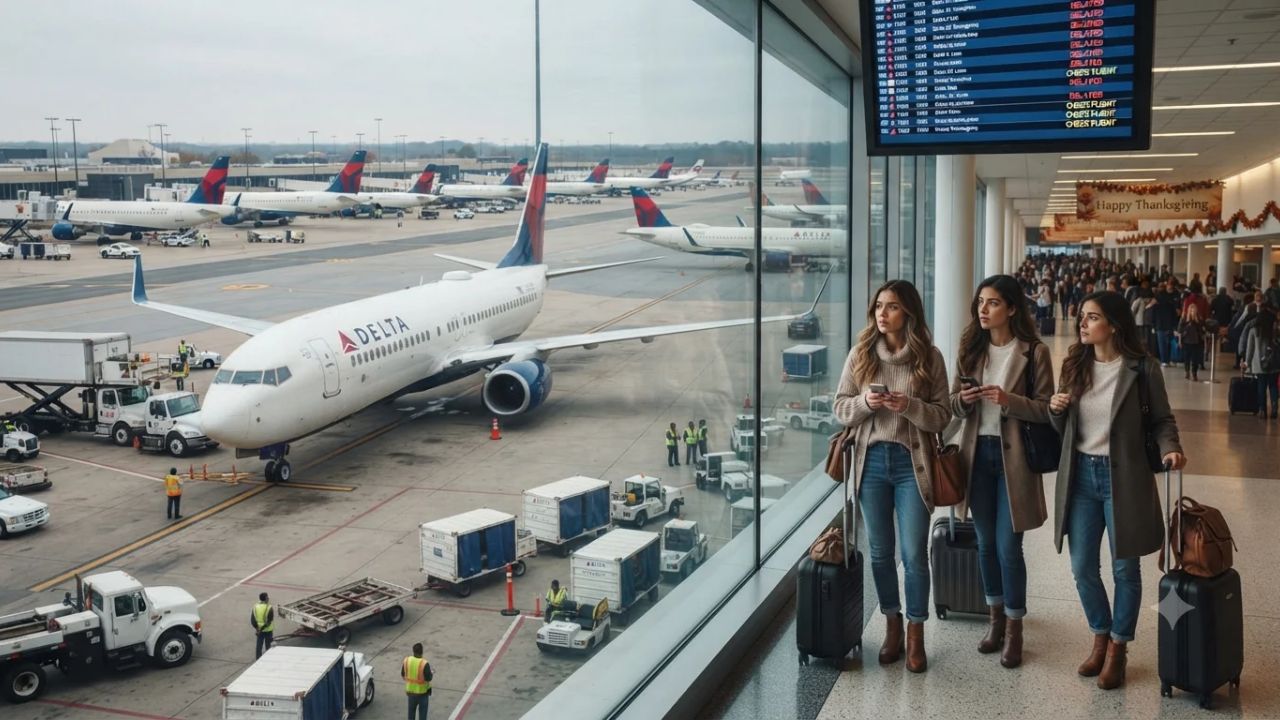
Holiday air travel across the United States suffered widespread disruption on Sunday, 22 November 2026, as a critical technical malfunction in Delta Air Lines’ automated aircraft weight and balance calculation systems triggered cascading delays across the carrier’s domestic and international network. The IT breakdown occurred just four days prior to Thanksgiving Day (26 November 2026), coinciding with the start of one of the busiest travel weeks of the year. With automated load-planning software offline, the Atlanta-based airline was forced to revert to time-consuming manual calculations to verify center-of-gravity and takeoff weight limits, halting departures at major airports nationwide. According to real-time aviation tracking data from FlightAware, nearly 48% of all scheduled Delta flights were delayed by midday Sunday, while the carrier’s primary global fortress hub, Hartsfield-Jackson Atlanta International Airport (ATL), reported 38% departure delays and 36% arrival delays across all operations. The Federal Aviation Administration (FAA) confirmed that national air traffic control systems remained fully operational, classifying the disruption as an internal airline software event that highlights the growing vulnerability of commercial aviation infrastructure to technology bottlenecks during peak holiday surges.
The timing of Delta’s automation failure could hardly have been more challenging for American vacationers and holiday travelers. With millions of families embarking on cross-country journeys to celebrate Thanksgiving, airline load factors across the domestic system were already operating near 100% capacity, leaving virtually zero open seats on subsequent flights to absorb displaced passengers. In commercial aviation, an aircraft cannot legally or safely depart the gate without precise, certified weight and balance documentation ensuring the center of gravity falls within strict aerodynamic tolerances. When automated dispatch software fails, ground dispatchers and flight crews must manually tally passenger weights, checked baggage counts, cargo pallet distributions, and fuel loads using physical paper charts—a process that extends typical 45-minute aircraft turns into two-hour gate holds. As delays mounted throughout Sunday afternoon, flight crews faced mandatory FAA duty-time limits, triggering secondary staffing shortages and aircraft repositioning challenges that rippled into Monday’s schedules.
========================================================================================
DELTA AIR LINES SYSTEM OUTAGE & DELAY SCORECARD: 22 NOVEMBER 2026
========================================================================================
Operational Metric       Reported Status / Figure     Operational Context & Source
----------------------------------------------------------------------------------------
Primary Incident Date    Sunday, 22 November 2026     Midday Operational Assessment
Root Technical Cause     Automated Weight & Balance   Proprietary Flight Dispatch Failure;
                         Computer System Malfunction  Required Reversion to Manual Load Sheets
National Delay Impact    48% of Delta Flights Delayed FlightAware Nationwide Fleet Data
Atlanta (ATL) Departures 38% Delayed Across Airport   Hartsfield-Jackson Fortress Hub
Atlanta (ATL) Arrivals   36% Delayed Across Airport   Ground Congestion & Gate Holds
Federal System Status    100% Fully Operational       FAA Confirmed No ATC Network Fault
DOT Delay Classification Controllable Airline DisruptionMandates Airline Customer Care Vouchers
Secondary Hub Exposure   DTW, MSP, SLC, JFK, BOS, LAX Network-Wide Connecting Bottlenecks
Holiday Travel Context   4 Days Prior to Thanksgiving Peak Annual Holiday Passenger Volume
Operating Carrier        Delta Air Lines (DAL / DL)   SkyTeam Alliance Global Carrier
========================================================================================
Sources: FlightAware Real-Time Tracking, Delta Air Lines Operations, & FAA Alerts, Nov 2026.
========================================================================================
The Root Cause: Why Aircraft Weight and Balance Automation is Vital
To understand why a glitch in a single software application could paralyze nearly half of Delta Air Lines' fleet, travelers must understand the physics and regulatory mandates governing commercial aircraft dispatch.
========================================================================================
AIRCRAFT WEIGHT & BALANCE: CRITICAL AERODYNAMIC PARAMETERS
========================================================================================
Operational Vector       Physical Definition & Role   Consequence of Calculation Error
----------------------------------------------------------------------------------------
Maximum Takeoff Weight   Certified structural weight  Structural airframe failure, engine
(MTOW)                   limit including fuel/payload strain, inadequate climb gradient
Center of Gravity (CG)   Focal balance point along theLoss of aerodynamic pitch control;
                         aircraft longitudinal axis   inability to rotate during takeoff
Trim Tab Settings        Mechanical stabilizer angle  Uncommanded nose-up stall or heavy
                         derived from CG calculation  nose-down pitch on runway rollout
Fuel Burn Distribution   Shifting fuel load between   In-flight balance instability; center-of-
                         center and wing tanks        gravity drifting out of safe envelope
Payload Distribution     Placement of checked bags,   Improper weight placement preventing
                         cargo pallets, and seated paxsafe rotation at takeoff speed (Vr)
========================================================================================
The Physics of Center of Gravity and Lift
Every commercial jet—from a regional Embraer E175 to an international Airbus A350-900—must operate within a strictly defined balance envelope. If an aircraft is loaded with too much weight in the aft cargo hold, its center of gravity moves too far back, risking an aerodynamic stall during takeoff rotation. Conversely, if excessive weight is placed forward, the elevators cannot generate sufficient downward force to raise the nose off the runway at rotation speed ($V_r$).
Automation vs. Manual Reversion
Under standard operating procedures, Delta’s automated dispatch system calculates load sheets in milliseconds:
- Instantaneous Automated Data Gathering: The computer system automatically pulls passenger seating data from boarding passes, checks actual baggage counts from ramp scanners, measures fuel density from hydrometer inputs, and calculates exact trim settings.
- Flight Deck Transmission: The resulting load sheet is digitally transmitted directly to the pilots via the Aircraft Communications Addressing and Reporting System (ACARS), allowing immediate pre-flight review and electronic sign-off.
- The Manual Reversion Bottleneck: When the automated system collapsed on 22 November, operations reverted to manual procedures. Dispatchers in Delta’s Operations and Customer Center (OCC) in Atlanta had to manually calculate passenger weights based on standardized FAA averages, distribute baggage weights across individual cargo bins, compute moment arms, and manually relay certified paperwork to gate agents and cockpit crews. A process that typically takes seconds suddenly required 20 to 40 minutes per flight.
Regulatory Mandates: FAA Part 121 Requirements
Under Title 14 of the Code of Federal Regulations (FAR Part 121.665), no commercial airline flight can legally push back from the gate without an authorized, signed load manifest and dispatch release. Pilots face severe federal enforcement action and loss of licensing if they take off with unverified or uncertified weight calculations. Safety protocols dictated that aircraft remain parked at gates until every manual figure was verified.
========================================================================================
DISPATCH WORKFLOW COMPARISON: AUTOMATED VS. MANUAL LOAD PLANNING
========================================================================================
Operational Stage     Automated Workflow (Normal)     Manual Workflow (Contingency)
----------------------------------------------------------------------------------------
Data Ingestion        Sub-second automated pull from  Ramp personnel manually tally
                      scanners and seat maps          bags and cargo containers
Weight Calculation    Algorithms compute weight and   Dispatcher calculates values on
                      center of gravity in seconds    paper charts or local spreadsheets
Cockpit Delivery      Transmitted digitally via ACARS Printed on paper by gate agent or
                      data-link into flight computer  read verbally over radio frequencies
Pilot Verification    Electronic cross-check and      Manual mathematical verification;
                      digital sign-off (1–2 minutes)  manual FMC data entry (15–30 mins)
Total Turnaround Time No operational delay            Adds 30 to 60+ minutes per departure
========================================================================================
Hub-by-Hub Disruption Analysis: Atlanta and the Network Ripple
The epicentre of Sunday’s operational crisis was Hartsfield-Jackson Atlanta International Airport (ATL), Delta’s primary global fortress hub and the world’s busiest passenger airport.
========================================================================================
DELTA AIR LINES HUB EXPOSURE SCORECARD: 22 NOVEMBER 2026
========================================================================================
Hub Airport           Hub Role & Daily Movements       Impact & Vulnerability Factors
----------------------------------------------------------------------------------------
Atlanta (ATL)         World's largest airline hub;     38% departures delayed; 36% arrivals
                      Over 1,000 daily Delta flights   delayed; severe gate hold congestion
Minneapolis (MSP)     Upper Midwest fortress hub;      Heavy regional feeder delays; missed
                      Over 350 daily departures        transcontinental connection banks
Detroit (DTW)         Major Midwest & European gateway;Aircraft out of position; delayed
                      Over 380 daily departures        inbound turns from East Coast
Salt Lake City (SLC)  Western hub & ski transfer base; Downstream schedule compression;
                      Over 250 daily departures        mountain flight curfew challenges
New York (JFK / LGA)  Dual trans-Atlantic & business   Airspace congestion compounded by
                      gateways; tight gate slots       manual dispatch holdbacks
Los Angeles (LAX)     Trans-Pacific & West Coast hub;  Late-arriving aircraft delaying
                      Major long-haul departure bank   overnight international departures
========================================================================================
The Crisis at Hartsfield-Jackson Atlanta (ATL)
Delta operates a complex bank-and-hub structure in Atlanta, scheduling tight waves of arriving flights that disembark passengers who then cross concourses (A, B, C, D, E, F, and T) to catch connecting departures within 45 to 75 minutes:
- Departure Gate Gridlock: When departing aircraft could not obtain manual load sheets, they remained parked at gates long after boarding was complete.
- Tarmac Stacking: Arriving flights carrying thousands of passengers touched down on runways 8L/26R, 9R/27L, and 10/28, but had no open gates to park at. Scores of aircraft sat on taxiways for over an hour with passengers onboard, waiting for delayed departures to push back.
- Missed Connection Banks: With 38% of outbound flights delayed, thousands of transit travelers missed their connecting flights, overwhelming Delta customer service desks and Sky Club customer service counters across the concourses.
The Cascading Domino Effect: Crew Duty Limits
Commercial aviation disruptions are rarely confined to the initial technical fault. As departure delays stretched past the two-hour mark, Delta faced the secondary challenge of FAA Part 117 Flight Duty Period (FDP) limitations:
- Pilots and flight attendants are legally prohibited from exceeding strict daily working hour caps.
- Once a flight crew "times out" due to extended ground delays, they cannot legally operate the aircraft, even if the weight and balance paperwork is completed.
- Delta’s crew scheduling department had to scramble reserve flight crews from crew bases in Atlanta, Detroit, and Minneapolis, but the sheer volume of delayed flights rapidly depleted available reserve pools.
========================================================================================
HOURLY EVOLUTION OF THE DELTA IT BREAKDOWN (SUNDAY, 22 NOVEMBER 2026)
========================================================================================
Time Window (EST)     Operational System Status & Network Impact
----------------------------------------------------------------------------------------
05:30 am – 07:00 am   Initial automated dispatch queries begin failing in Atlanta OCC;
                      early morning bank departures encounter system timeouts.
07:30 am – 09:30 am   Delta IT declares severe software outage; operations executive
                      triggers mandatory switch to manual weight and balance protocols.
10:00 am – 12:30 pm   Gate holds multiply; FlightAware records national delay rate
                      climbing past 40%; Atlanta taxiways experience aircraft queues.
01:00 pm – 03:30 pm   Peak disruption window: 48% fleetwide delay rate; crew duty time
                      expirations begin causing selective flight cancellations.
04:00 pm – 07:00 pm   IT engineering teams implement system restoration patches;
                      gradual resumption of automated load sheet processing begins.
07:30 pm – Midnight   Recovery phase; managing delayed evening arrival banks and
                      repositioning stranded flight crews for Monday morning ops.
========================================================================================
Systemic Fragility: A Troublesome Month for American Aviation Technology
Delta’s weight and balance failure was not an isolated technological event. November 2026 proved to be an exceptionally challenging month for the United States commercial aviation system, exposing the deep interconnectedness and fragility of modern airline infrastructure.
========================================================================================
MAJOR US AVIATION TECHNOLOGY DISRUPTIONS: NOVEMBER 2026 TIMELINE
========================================================================================
Incident Milestone    Impacted Organization       Nature of Fault & Operational Fallout
----------------------------------------------------------------------------------------
Early November 2026   Federal Aviation            Telecommunications network failure;
                      Administration (FAA)        Triggered nationwide 4-hour ground stop;
                                                  Longest national ground stop in 25 years.
Mid-November 2026     United Airlines             Internal technology reservation and
                                                  dispatch outage; delayed hundreds of
                                                  flights across Denver, Chicago, and Newark.
22 November 2026      Delta Air Lines             Proprietary weight & balance automation
                                                  malfunction; delayed 48% of fleet on
                                                  pre-Thanksgiving holiday weekend.
========================================================================================
The FAA’s Clarification: Isolated Proprietary Failure
Immediately following reports of Delta’s nationwide delays, public speculation questioned whether the Federal Aviation Administration’s air traffic systems were experiencing another breakdown following the historic early-November telecommunications crash. The FAA moved quickly to issue a public statement confirming that national air traffic control systems, radar feeds, and runway navigation aids were operating without interruption. The breakdown was strictly internal to Delta’s proprietary flight preparation architecture.
Why Legacy Airline Systems Are Vulnerable
Modern global airlines operate on complex computing environments where cutting-edge customer mobile applications interface with decades-old legacy mainframe systems (such as Sabre or specialized load-planning modules). During normal operations, these systems handle millions of database transactions reliably without interruption. However, during pre-holiday capacity surges, database query queues can experience severe lockups:
- High Concurrency Strain: Hundreds of dispatchers and thousands of gate agents pinging weight-and-balance calculation servers simultaneously can trigger cascading timeouts.
- Failover Failures: If automated redundancy failovers do not execute cleanly, the entire calculation pipeline freezes, leaving airline managers with no alternative other than reverting to manual human processing.
Thanksgiving Holiday Travel Pressure: The Mathematics of Capacity
The timing of the outage amplified its impact exponentially. Thanksgiving in the United States represents the single highest-density travel period on the calendar.
========================================================================================
THANKSGIVING TRAVEL INTENSITY: PASSENGER VOLUME & SEAT REALITIES
========================================================================================
Travel Factor         Statistical Reality (2026)   Operational Consequence for Stranded Pax
----------------------------------------------------------------------------------------
Total Holiday Flyers  Estimated 30+ Million Flyers  Unprecedented demand across all US hubs
                      over the 10-day period       between 20 Nov and 29 Nov 2026.
Average Load Factor   Exceeding 94% – 98% across   Subsequent flights have virtually zero
                      major domestic routes        empty seats to accommodate delayed flyers.
Peak Departure Days   Sunday 22 Nov, Wednesday 25  Any schedule disruption quickly cascades
                      Nov, and Sunday 29 Nov       into multi-day passenger displacement.
Hotel Room Scarcity   Atlanta, Detroit, and New    Stranded travelers encounter sold-out
                      York airport hotels booked   airport properties and elevated rates.
Rental Car Shortages  Severe fleet utilization at  Stranded passengers seeking to drive
                      major airport hubs           face high rates or no vehicle availability.
========================================================================================
The Mathematical Impossible of Holiday Rebooking
During off-peak periods in February or September, an airline experiencing a 40% delay rate can typically rebook displaced passengers onto later flights that same afternoon or evening, as average load factors hover around 80%.
During Thanksgiving week, however, average load factors exceed 95%:
- If an afternoon flight from Atlanta to Chicago or New York is delayed by three hours and 40 connecting passengers miss their evening flights, there are simply no empty seats available on subsequent flights that day.
- A delay of two or three hours on Sunday afternoon can easily result in a traveler being stranded at a connecting hub until Monday evening or Tuesday morning, consuming precious holiday time with family.
Passenger Rights, DOT Mandates, and Airline Obligations
Because Delta Air Lines’ disruption was officially classified as a controllable delay (originating from an internal IT failure rather than severe weather or FAA air traffic control restrictions), passengers are entitled to specific consumer protections under U.S. Department of Transportation (DOT) regulations.
========================================================================================
DOT PASSENGER RIGHTS DIRECTORY: CONTROLLABLE AIRLINE DISRUPTIONS
========================================================================================
Passenger Entitlement Standard Carrier Obligation (Delta Air Lines Customer Commitment)
----------------------------------------------------------------------------------------
Meal & Refreshment    Mandatory meal voucher or reasonable food reimbursement when a
Vouchers              controllable flight delay reaches or exceeds 3 hours.
Complimentary Hotel   Complimentary hotel accommodation and ground transport vouchers
Accommodations        for passengers stranded overnight due to controllable delays.
Free Rebooking on     Rebooking passengers at no additional cost on the next available
Own Fleet             Delta flight with open seats.
Rebooking on Partner  Rebooking passengers on partner airlines (e.g., SkyTeam) or
or Competitor Flights competing carriers when Delta cannot provide timely transport.
Cash Refunds for      Under 2024/2026 DOT rules, passengers are legally entitled to an
Cancelled/Delayed Pax automatic, full cash refund if their flight is cancelled or
                      significantly delayed (>3 hrs domestic) and they choose not to travel.
Checked Baggage Delay Reimbursement of checked bag fee if baggage is not delivered
Fee Refunds           within 12 hours of domestic arrival, plus reasonable bag expenses.
========================================================================================
1. Mandatory Meal and Hotel Vouchers
Under Delta’s binding customer service plan filed with the DOT:
- When a flight delay caused by airline technical issues exceeds three hours, gate agents must issue digital or printed meal vouchers valid at airport dining concessions.
- If a delay results in an unscheduled overnight stay at a connecting hub (such as Atlanta, Detroit, or Minneapolis), Delta is obligated to provide complimentary hotel lodging and ground shuttle transportation.
2. The 2024 DOT Automatic Cash Refund Mandate
Under landmark DOT passenger protection rules finalized in 2024 and fully enforced in 2026:
- If a domestic flight is delayed by three hours or more, or an international flight is delayed by six hours or more, and the passenger chooses not to take the delayed flight, the airline must provide a full refund in original payment form (cash/credit card) within seven business days.
- Airlines are strictly prohibited from forcing passengers to accept travel vouchers or frequent flyer miles in lieu of a cash refund.
========================================================================================
HOW TO SECURE DELTA DELAY COMPENSATION & EXPENSE REIMBURSEMENT
========================================================================================
Action Step           Operational Procedure & Documentation Guide
----------------------------------------------------------------------------------------
1. Document EverythingPhotograph gate flight-status display boards; capture screenshots
                      of delay notifications inside the Fly Delta mobile app.
2. Request Digital    Approach a gate agent or Sky Club representative to request digital
   Vouchers           meal and hotel vouchers sent directly via SMS or email link.
3. Keep Itemized      If airline vouchers are unavailable due to long queues, retain all
   Itemized Receipts  itemized receipts for modest hotel stays, meals, and taxi rides.
4. Submit Claims Via  Submit reimbursement claims post-travel directly through the official
   Delta Reimbursement"Submit a Claim" portal on delta.com/reimbursement.
5. Credit Card Perks  Check your credit card travel insurance benefits (e.g., Chase,
                      Amex) which often provide up to $500 in delay coverage after 6 hrs.
========================================================================================
Actionable Traveler Strategies: Navigating Airline Delays
For holidaymakers caught in systemwide airline breakdowns, proactive strategies can mean the difference between spending the night on an airport terminal floor and reaching Thanksgiving dinner on time.
========================================================================================
PASSENGER ACTION CHECKLIST: STRATEGIES DURING AIRLINE TECH GLITCHES
========================================================================================
Strategy Area         Proactive Operational Step
----------------------------------------------------------------------------------------
Mobile App Agility    Use the "Fly Delta" mobile application to modify itineraries
                      digitally before reaching the back of airport customer service lines.
Multi-Channel Contact Simultaneously call Delta customer service phone lines while using
                      Delta's SMS text chat and messaging Twitter/X (@Delta) support.
International Phone   When US phone lines experience 2-hour hold times, call Delta’s
Line Workaround       international support desks (e.g., UK, Australia, Singapore).
Gate Agent Engagement Speak calmly to gate agents; polite passengers requesting specific
                      alternative flight numbers are far more likely to be rebooked.
Alternative Hubs      Ask dispatchers to route you through alternative connecting cities
                      (e.g., routing through Salt Lake City instead of congested Atlanta).
Checked Bag Awareness Keep all vital medications, infant supplies, chargers, and change
                      of clothes in your personal carry-on bag at all times.
========================================================================================
The International Calling Hack
During major domestic meltdowns, Delta’s domestic toll-free telephone queues frequently experience hold times exceeding 90 to 120 minutes. A proven travel tactic is to use Skype, Google Voice, or a mobile plan to call Delta’s international reservation desks:
- United Kingdom Desk: (+44) 800-414-767
- Australia Desk: (+61) 1800-144-940 These English-speaking international desks access the identical global passenger reservation database, but frequently answer incoming calls within three to five minutes because daytime in the U.S. corresponds to evening or early morning overseas.
Navigating Same-Day Standby and Alternate Routing
If your primary flight is severely delayed, monitor the seat maps of alternative flights departing to nearby regional airports:
- If heading to New York, look for open seats into LaGuardia (LGA), JFK, or Newark (EWR).
- If heading to South Florida, consider flights into Fort Lauderdale (FLL), Miami (MIA), or West Palm Beach (PBI), utilizing regional rail links like Brightline or Tri-Rail to reach your final destination.
Frequently Asked Questions
What caused Delta Air Lines’ nationwide flight delays on 22 November 2026?
The delays were caused by a mechanical and computerized software failure in Delta’s automated aircraft weight and balance system, which calculates load distribution, center of gravity, and trim settings required for safe takeoff.
What percentage of Delta flights were affected?
According to FlightAware tracking data, approximately 48% of all scheduled Delta flights were delayed across the United States by midday Sunday.
How was Hartsfield-Jackson Atlanta International Airport affected?
At Delta’s primary global hub in Atlanta, approximately 38% of departing flights and 36% of arriving flights were delayed across the airport, creating gate hold gridlock and taxiway queues.
Did the technical outage affect FAA national air traffic control systems?
No. The Federal Aviation Administration confirmed that all national air traffic control radar and communication systems remained fully operational; the disruption was strictly an internal airline technology breakdown.
Why does a weight and balance calculation failure halt flight departures?
Federal aviation regulations prohibit any commercial aircraft from taking off without verified, certified weight and balance documentation. An improper center of gravity can cause aerodynamic stalls or prevent the aircraft from rotating off the runway during takeoff.
What did Delta do to continue flight operations during the glitch?
Delta reverted to manual load sheet calculation procedures, requiring flight dispatchers and gate crews to manually compute and verify passenger, cargo, and fuel weights on paper, which significantly slowed down departure preparations.
Are passengers entitled to meal and hotel vouchers for this disruption?
Yes. Because this was a controllable airline disruption caused by an internal IT failure, Delta’s customer service commitments and DOT rules require the airline to provide meal vouchers for delays exceeding three hours and complimentary hotel lodging for overnight delays.
Can passengers receive a full cash refund if they choose not to travel?
Yes. Under Department of Transportation rules, if a domestic flight is delayed by three hours or more and the passenger chooses not to travel, they are legally entitled to a full cash refund to their original payment method.
How does this disruption affect Thanksgiving holiday travel?
With the outage occurring on Sunday, 22 November—just four days before Thanksgiving—aircraft and flight crews were displaced across the country, creating scheduling friction during a week when flights were already operating at near 100% capacity.
What should travelers do if their Delta flight is delayed?
Travelers should use the Fly Delta mobile app for automated rebooking, request digital meal/hotel vouchers from gate agents, monitor partner airline connections, and call international support desks if domestic phone lines have long wait times.
Strategic Outlook: Hardening Commercial Aviation IT for Peak Holiday Surges
Delta Air Lines’ November 2026 disruption serves as a stark reminder that modern commercial aviation is as dependent on digital infrastructure as it is on jet fuel and turbine engines. While airlines have invested billions of dollars in fuel-efficient aircraft, modern terminal gates, and premium passenger lounges, proprietary flight dispatch software remains a critical operational chokepoint.
As holiday travel demand continues to rise, the commercial aviation sector faces mounting pressure from federal regulators and consumer protection agencies to build fault-tolerant, redundant IT architectures. Transitioning legacy dispatch systems to cloud-native platforms with automated, zero-downtime failover capabilities is no longer an optional technological upgrade; it is an operational imperative. For travelers navigating the high-stakes holiday travel calendar, the events of 22 November demonstrate that understanding passenger rights, maintaining mobile agility, and preparing for unexpected disruptions are essential skills for modern air travel.
Related Travel Guides
- Sweden’s Arctic Night Train Launches 2,156-Kilometer Route: Malmö and Stockholm to Kiruna, Abisko, and Narvik Railway Guide
- PortMiami Smashes Global Maritime Record with 10.5 Million Cruise Passengers in Fiscal Year 2026
- Queensland Summer Travel Guide 2026: Comparing Gold Coast Beaches, Brisbane Urban Escapes, and Whitsunday Reef Retreats
- McAlester Festival of Trees and Lights Launches McWinter Wonderland 2026
This article is for informational purposes. Flight routes, passenger regulations, visa rules, and transit advisories are subject to change by airlines and aviation authorities. Readers are advised to verify schedules and travel documentation with relevant carriers and border agencies before departure.
Related Stories
US Aviation Chaos: Orlando Leads 2,840 Delays and 108 Cancellations on November 20 2026
American Airlines, Delta, and United Lead 10 US Carriers in 2027 APEX Passenger Experience Awards
