
Yunnan Jiangxi Wind Farm: Southwest China's New Green Energy Landmark
The Jiangxi Wind Farm in Yunnan Province combines renewable energy infrastructure with traditional farming, creating a unique green tourism destination.
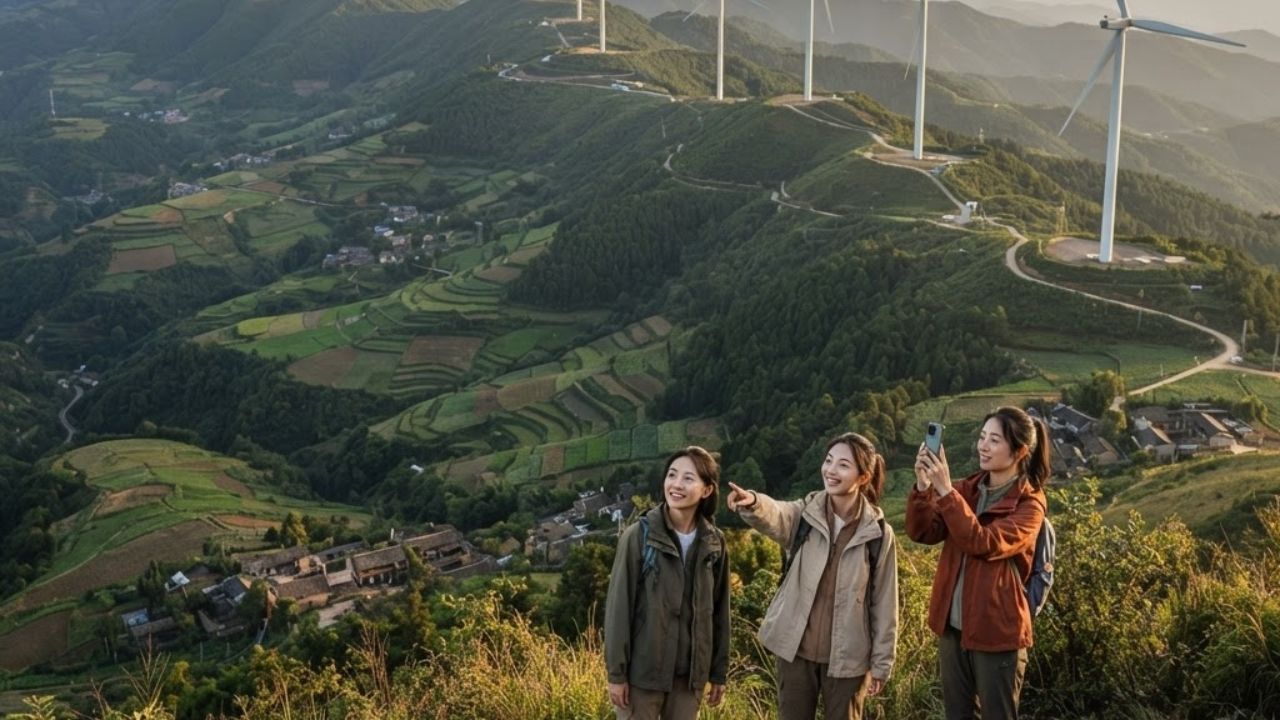
Image generated by AI
Integrating modern wind turbines with traditional terraced agricultural fields, Yunnan’s newly developed Jiangxi Wind Farm has become a prominent green energy landmark and sustainable travel destination.
Situated across the high-altitude mountain ridges of southwestern China's Yunnan province, the clean energy project demonstrates how renewable infrastructure can co-exist harmoniously with rural communities. The towering turbines rise above green hillsides and valley farmlands, providing a visual demonstration of the region's low-carbon energy transition. For travelers interested in modern innovation, the wind farm offers a unique perspective on China's green development, combining engineering achievements with the natural beauty of the regional terrain.
The Local Trend Revealed: Technology and Rural Integration
The development of the Jiangxi Wind Farm reflects a growing interest in green energy tourism, where travelers seek out destinations that showcase environmental sustainability and digital innovation. According to reports from the Yunnan Provincial Department of Culture and Tourism and the National Energy Administration of China (NEA), the project is designed to maximize wind power generation along elevated mountain passes while minimizing disruptions to surrounding agricultural fields. Below the turbines, local farmers continue to cultivate fields, establishing a functional bridge between traditional farming and modern technology.
The geological and meteorological conditions of southwestern China make Yunnan a prime location for green energy projects. Sitting on tectonic faults with rich geothermal activity, the province also benefits from high-altitude wind corridors created by the Tibetan Plateau. However, erecting wind turbines on steep karst ridges requires advanced civil engineering. Heavy turbine blades and towers must be transported up narrow mountain switchbacks, and foundations must be anchored into limestone formations. The digital systems deployed at the Jiangxi Wind Farm coordinate with the regional power grid to balance electricity supply, ensuring that fluctuating wind speeds do not disrupt the power supply to municipal centers like Kunming.
The following table provides the operational specifications and regional features of the Jiangxi Wind Farm:
| Project Parameter | Technical Specification | Regional Integration Feature | Primary Environmental Role |
|---|---|---|---|
| Primary Energy Source | Wind and Geothermal | Elevated mountain ridge systems | Increase clean electricity generation |
| Surrounding Land Use | Active agricultural fields | Farmland shared with local villages | Support community farming continuity |
| Operational Control | Smart monitoring systems | Digital data analysis interfaces | Ensure safety and real-time output tracking |
| Target Community | Ethnic minority villages | Local heritage and trade integration | Support rural development initiatives |
| Visitor Access Points | Designated ridge viewpoints | Connecting roads from valley settlements | Promote low-impact eco-tourism walks |
Cultural and Environmental Value: Supporting Mountain Communities
For the visitor, the real impact is the opportunity to experience a sustainable travel model that actively supports local heritage. The development of clean energy infrastructure has improved access roads to remote mountain villages, many of which are home to ethnic minority populations such as the Yi, Bai, and Hani people. This improved access allows travelers to visit local communities directly, buying agricultural goods and dining at family-run guesthouses.
The region is close to the famous Honghe Hani Rice Terraces, a UNESCO World Heritage site that demonstrates sustainable land management. At the Jiangxi Wind Farm, this heritage is respected by integrating clean energy without disturbing the agricultural terracing below. The Yi and Hani farming communities utilize these terraces to cultivate red rice and rear fish, using traditional irrigation networks that have functioned for over a thousand years. By replacing the need for coal-fired power stations in the province, the wind farm helps reduce acid rain and air pollution, protecting the delicate mountain ecosystems and the biodiversity of Yunnan's nature reserves.
By keeping the surrounding agricultural lands active, the wind farm preserves traditional farming methods. Travelers support this community-first model by hiring local guides and participating in educational tours that explain the connection between the wind turbines, weather patterns, and the regional water cycle. This approach ensures that tourism spending benefits local families directly, helping preserve cultural traditions while promoting clean energy education.
Visitor Insider Tips: Navigating Yunnan's Wind Farm Regions
Exploring the mountain wind farms of Yunnan requires careful preparation and respect for local customs:
- Optimal Travel Windows: Plan visits during the spring months of March to May or the autumn window of September to November. During these periods, the weather is mild, and the skies are clear, offering visibility across the mountain ridges. Avoid traveling during major national holidays, such as Golden Week in October, to bypass transport congestion.
- Cultural Etiquette: When visiting local ethnic minority villages, respect local customs. Always ask for permission before entering family homes or taking photographs of residents. Do not step on the threshold of traditional wooden doorways, as this is considered disrespectful in local cultures.
- Sampling Regional Dining: Try Guoqiao Mixian (Crossing the Bridge Noodles), a traditional Yunnan dish featuring hot broth, fresh rice noodles, and local vegetables. During the summer and autumn months, ask for local wild mushroom hotpot, which features mushrooms sourced directly from the surrounding mountain forests.
- Under-the-Radar Spot: Hike the trails connecting the lower farming valleys to the elevated wind turbine viewpoints. This walk provides panoramic views of the terraced fields and allows you to observe how the local community uses the land below the turbines.
Tourism Outlook: Sustainable Energy and Regional Development
The long-term outlook for Yunnan's wind farm regions is highly promising, driven by the expansion of China's high-speed rail network. Improved rail connections from Kunming allow travelers to reach remote prefectures quickly and sustainably. By showcasing the integration of clean energy and rural development, Yunnan serves as a model for sustainable tourism, demonstrating how modern engineering can protect the natural environment while supporting local economies.
Key Takeaways
- Clean Energy Landmark: The Jiangxi Wind Farm combines modern wind turbines with traditional terraced farming on Yunnan's mountain ridges.
- Digital Grid Management: Operators utilize smart digital systems to monitor wind speed, turbine output, and power grid synchronization.
- Cultural Integration: The project respects local ethnic minority heritage (Yi and Hani peoples) while improving infrastructure roads to remote villages.
- Eco-Tourism Focus: Travelers can explore the scenic vistas while supporting local family guesthouses and environmental education tours.
FAQ
Where is the Jiangxi Wind Farm located?
The wind farm is situated in the high-altitude mountainous region of southwestern Yunnan Province, China.
What are the main cultural groups in the wind farm region?
The surrounding valleys and villages are home to several ethnic minority communities, including the Yi, Bai, and Hani peoples.
What is the best season to visit Yunnan's wind farms?
The shoulder seasons of spring (March to May) and autumn (September to November) offer clear skies and mild weather, ideal for ridge walks.
Related Travel Guides
Singapore Airlines and Navan Launch Direct NDC Technology Connection
Hainan Airlines Launches New Haikou to Penang Direct Flights
Disclaimer
This article is for informational and educational purposes only. It does not constitute legal, financial, or professional advice. While we strive to provide accurate and up-to-date information, travel policies, regulations, and conditions change rapidly. Always verify information with official sources before making travel decisions. Nomad Lawyer makes no representations about the accuracy, reliability, completeness, or suitability of the information provided. Readers should consult qualified professionals for advice specific to their circumstances. The views expressed in this article are those of the author and do not necessarily reflect the views of Nomad Lawyer.