
Yellowstone Travel Safety: NPS Issues Alerts Over Geothermal & Wildlife Hazards
The National Park Service (NPS) has issued safety alerts for Yellowstone, detailing mandatory wildlife distances and geothermal zones.
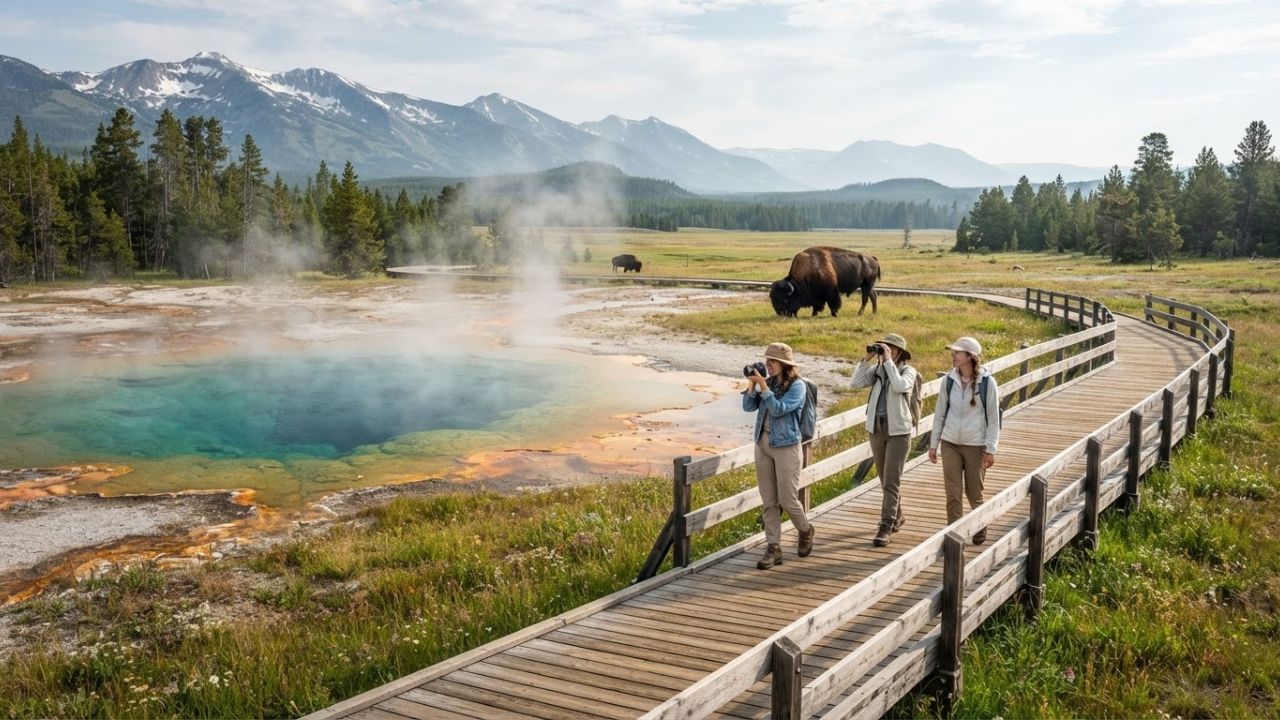
Image generated by AI
Prompting safety warnings from the National Park Service (NPS), increasing incidents at Yellowstone have highlighted the dangers of entering restricted geothermal zones and approaching wildlife.
The Core Transit Update
Regional trail routes and transit boardwalks inside Yellowstone National Park—spanning sections of Wyoming, Montana, and Idaho—are undergoing stricter monitoring. The NPS has issued fresh directives to manage the volume of visitors who approach wild animals or step off marked paths.
To prevent injuries, the NPS has reiterated its mandatory distance limits: visitors must stay at least 25 yards (23 meters) away from large grazing animals, including bison, elk, deer, moose, coyotes, and bighorn sheep, and at least 100 yards (91 meters) away from predatory species like bears, wolves, and cougars. Geothermal features, which are heated by one of the world's largest active volcanic systems, present severe burn risks, making it mandatory to stay on designated wooden boardwalks.
Wildlife Distances & Geothermal Safety Zones
Planning an outdoor excursion through the Rocky Mountains requires verifying trail closures and understanding wildlife encounter guidelines. The following tables outline the NPS distance rules and geothermal safety directives.
| Target Wildlife Category | Stated Safe Distance (US Yards) | Stated Safe Distance (Metric) | Primary Species Examples Included |
|---|---|---|---|
| Large Grazing Animals | At least 25 yards | At least 23 meters | Bison, elk, deer, moose, coyotes, bighorn sheep |
| Predatory Wildlife | At least 100 yards | At least 91 meters | Bears, wolves, cougars |
National Park Service (NPS) wildlife viewing distance rules in Yellowstone.
| Geothermal Feature Type | Primary Associated Risk | Required Transit Protocol for Visitors |
|---|---|---|
| Hot Springs & Geysers | Boiling water, thermal burns | Remain strictly on designated wooden boardwalks |
| Mud Pots & Acidic Pools | Thin crust, geothermal ground collapse | Remain on marked trails; do not cross borders |
Yellowstone geothermal features safety guidelines.
Traveler Logistics Guide
From a ground-level perspective, the best way to navigate this is to download the official NPS offline park maps before entering the reserve gates, as cellular coverage is highly restricted across the park's millions of acres of wilderness, leaving travelers without active GPS or communication lines. Checking road construction updates is recommended.
To plan your outdoor trip:
- Allow Safe Connecting Windows: Yellowstone covers an immense geographical footprint. Allow at least 90 minutes of driving time between major geyser basins to avoid rushing on narrow park roads.
- Observe Bison Warning Signs: Bison are responsible for more injuries in the park than any other animal. Never attempt to touch, feed, or surround these animals; use camera zoom lenses instead of walking closer.
- Observe Boardwalk Boundaries: Geothermal crusts are fragile and thin. Stepping off boardwalks can lead to severe thermal burns from underlying boiling pools.
- Pack Essential Supplies: Ensure your vehicle is stocked with emergency water, warm clothing, and bear spray. Know how to release the safety lock on your bear spray canister before starting hikes.
Infrastructure Impact Assessment
The maintenance of wooden boardwalks and the implementation of targeted wildlife corridors protect the park's fragile hydrothermal basins from irreversible erosion.
By directing foot traffic away from sensitive soil crusts, the NPS guidelines preserve the natural flow of thermal vents, safeguard local wildlife migration routes, and ensure that the economic benefits of park tourism support sustainable wilderness conservation.
Related Travel Guides
Air Canada Sells 25% Aeroplan Stake for C$2.5 Billion to Blackstone Consortium
Shravani Mela 2026 Deoghar Travel Tips and Logistics Guide
10 Best Travel Tips for Exploring Yellowstone Safely, Avoiding Bison Encounters, and Navigating Geothermal Boardwalks, According to Reddit
Disclaimer
This article is for informational and educational purposes only. It does not constitute legal, financial, or professional advice. While we strive to provide accurate and up-to-date information, travel policies, regulations, and conditions change rapidly. Always verify information with official sources before making travel decisions. Nomad Lawyer makes no representations about the accuracy, reliability, completeness, or suitability of the information provided. Readers should consult qualified professionals for advice specific to their circumstances. The views expressed in this article are those of the author and do not necessarily reflect the views of Nomad Lawyer.