
Sydney Airport Gridlock 2026: Why Air Traffic Control is Only Part of the Delay Crisis
Recent disruptions at Sydney Airport reveal a complex intersection of ATC staffing shortages, rigid movement caps, and airline scheduling pressures affecting thousands of travelers in 2026.

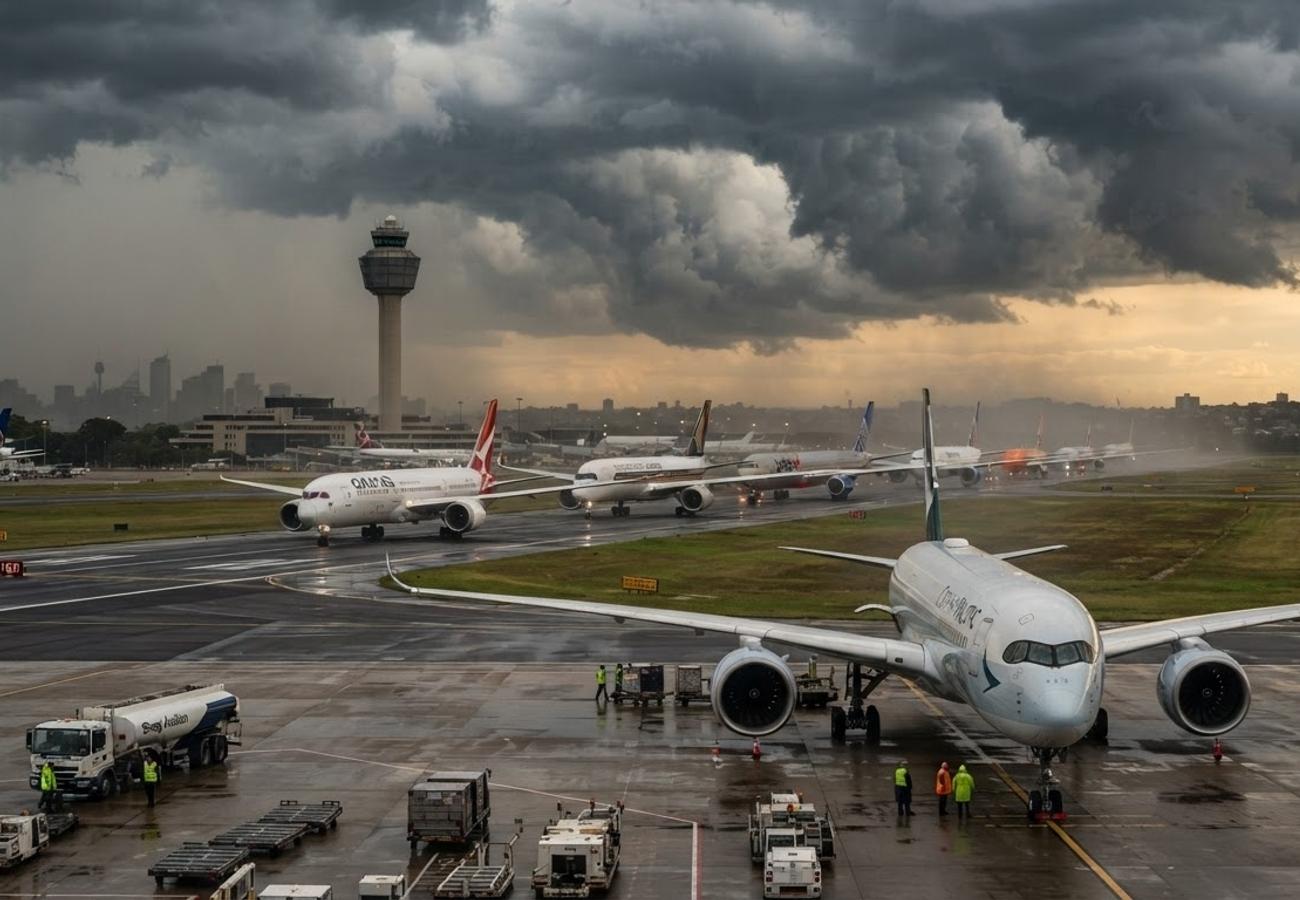
Image generated by AI
Recent gridlock at Sydney Airport has shifted public focus toward air traffic control (ATC) staffing, yet data reveals that weather, airline resourcing, and legacy regulatory rules are equally responsible for the chaos.
The Local Trend Revealed: Beyond the Control Tower
For the casual traveler, a long queue on the tarmac usually points to a single culprit: the air traffic controller. However, the operational reality at Sydney Airport in 2026 is far more nuanced. While staffing shortages in the control tower and terminal control unit have indeed forced tighter limits on aircraft movements—leading to widespread schedule disruptions in early August 2026—these are often the final trigger rather than the sole cause.
The current crisis is a "perfect storm" of human resource gaps and systemic rigidity. A July safety report from the national transport safety investigator highlighted a "staffing crisis" where training for the reconfigured terminal airspace—essential for the integration of the upcoming Western Sydney International Airport—was being compressed. This pressure was underscored by a recent ground incident involving Jetstar and Qatar Airways aircraft, which resulted in a ground controller and tug operator being stood down pending investigation.
Despite these high-profile failures, Airservices Australia network overviews indicate a surprising trend: the proportion of ground delays directly attributed to air traffic management has actually fallen compared to the post-pandemic recovery period, even as passenger volumes hit new peaks.
Cultural & Environmental Value: The Cost of Efficiency
The real impact for the visitor is the result of "tightly banked" scheduling. To maximize fleet efficiency, airlines schedule flights with almost zero margin for error. When a minor event occurs—such as lightning strikes near the airfield that prevent ramp workers from loading baggage—the entire system collapses. In these instances, passengers experience lengthy tarmac waits, yet no formal ATC delay is recorded because the bottleneck was ground-handling labor, not airspace management.
Furthermore, Sydney's unique regulatory environment creates a "recovery trap." The airport operates under a legislated night curfew and a strict movement cap that limits take-offs and landings per rolling hour. When storms or low cloud cover slow the arrival rate, the hourly cap prevents airlines from "catching up" once the weather clears. This means a two-hour storm can result in a six-hour delay ripple effect, as aircraft must wait for a specific slot within the movement limit to become available.
Visitor Insider Tips
Navigating Sydney Airport during peak disruption requires a strategic approach to avoid the worst of the gridlock.
- The "Slot" Strategy: Avoid booking the first flight of the morning or the last flight before the curfew. These are the most vulnerable to "knock-on" delays from the previous day or strict curfew cut-offs.
- Weather Monitoring: Keep a close eye on local Bureau of Meteorology (BOM) alerts for lightning. Even if your flight is "on time" on the board, lightning prevents ground crews from working the ramp, which often leads to unexpected tarmac delays.
- Compensation Literacy: Understand the distinction between "airline control" and "external factors." If a delay is caused by crew rostering or aircraft maintenance, you have stronger grounds for financial redress. If it is listed as "Air Traffic Flow Management" or "Weather," airlines are generally not liable for compensation.
- Alternative Hubs: For domestic transfers, consider checking if regional hubs offer more flexibility during peak holiday windows to avoid the Sydney bottleneck.
Tourism Outlook
The long-term reliability of Sydney as a global gateway depends on more than just hiring more controllers. Pilot groups and industry analysts argue that the current "slot hoarding" practice—where airlines retain historic departure slots despite poor on-time performance—must be addressed. Without a total overhaul of the scheduling framework and the successful launch of Western Sydney International Airport to offload pressure, the pattern of rolling delays is likely to persist.
For the traveler, the shift toward more transparent delay attribution data is a positive step. By understanding whether a delay is a result of systemic ATC failure or a specific airline's poor resource management, passengers can make more informed choices about which carriers to trust during peak travel seasons.
The road to a seamless Sydney sky requires fixing the system, not just staffing the tower.
Related Travel Guides
Disclaimer
This article is for informational and educational purposes only. It does not constitute legal, financial, or professional advice. While we strive to provide accurate and up-to-date information, travel policies, regulations, and conditions change rapidly. Always verify information with official sources before making travel decisions. Nomad Lawyer makes no representations about the accuracy, reliability, completeness, or suitability of the information provided. Readers should consult qualified professionals for advice specific to their circumstances. The views expressed in this article are those of the author and do not necessarily reflect the views of Nomad Lawyer.
Raushan Kumar
Founder & Lead Developer
Full-stack developer with 11+ years of experience and a passionate traveller. Raushan built Nomad Lawyer from the ground up with a vision to create the best travel and law experience on the web.
Learn more about our team →