
WestJet Cargo Partners with AVIAREPS: Unlocking India's Global Trade Corridors

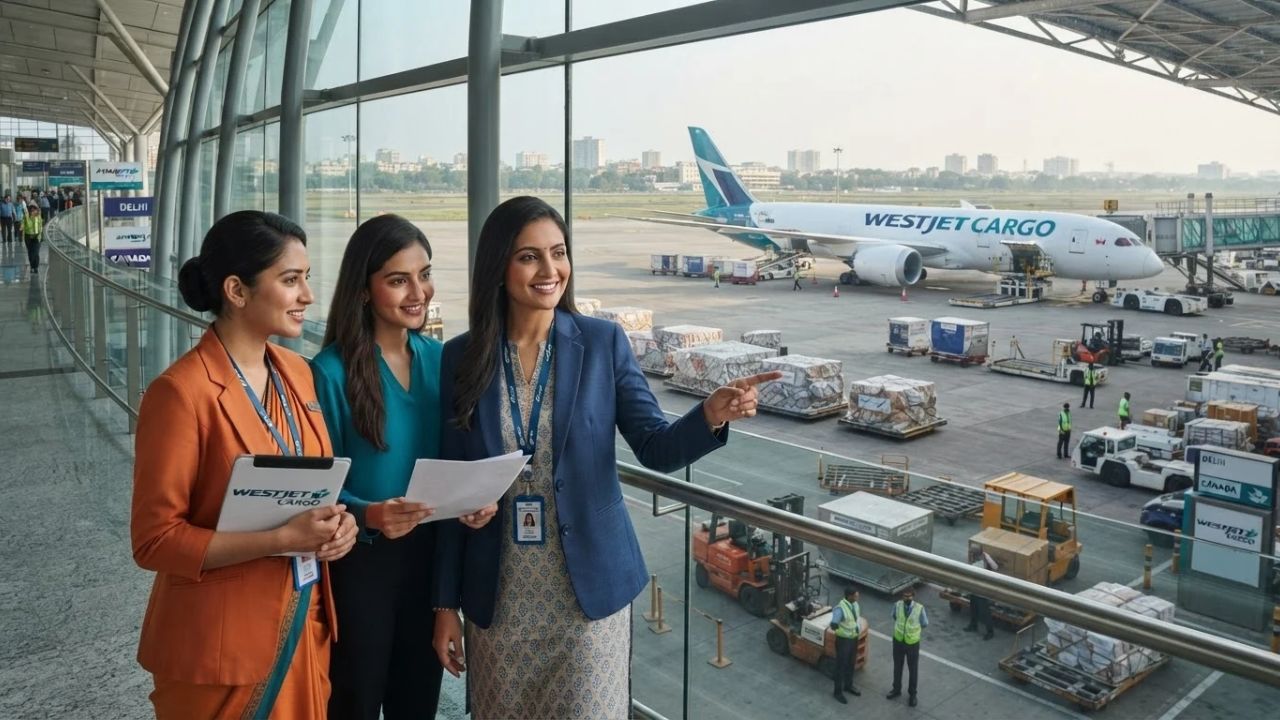
While transatlantic and transpacific passengers focus on cabin legroom and baggage claims, the belly holds beneath their seats quietly anchor one of the most lucrative commercial arteries in global aviation. On September 15, 2026, Canadian carrier WestJet Cargo officially appointed AVIAREPS as its nationwide General Sales Agent (GSA) across India, establishing a comprehensive platform to channel Indian pharmaceuticals, high-tech electronics, and agricultural exports into North American markets.
Walking past the bustling cargo terminals of Mumbai’s Sahar complex or Hyderabad’s Rajiv Gandhi International Airport late at night reveals a world of feverish, timed precision. Temperature-controlled active containers hum with cold-chain vaccines bound for Toronto and Calgary, while pallets of precision machinery and fresh regional produce are measured, screened, and packed for long intercontinental flights. WestJet Cargo’s decision to establish a dedicated nationwide commercial interface reflects the growing economic weight of India's multi-regional export economy.
The Northern Bridge: Structuring WestJet Cargo’s Pan-India Presence
Air freight between India and North America has historically required complex interline coordination across European or Middle Eastern hubs. To secure a direct commercial pipeline into India’s vast freight-forwarding community, WestJet Cargo opted for an established global aviation representation firm with deep local roots. Under the agreement finalized in September 2026, AVIAREPS assumes nationwide responsibility for customer engagement, cargo sales support, and market development across the country.
However, India’s air freight sector cannot be effectively managed as a monolithic entity. The supply chains of northern industrial corridors differ drastically from the pharmaceutical hubs of the Deccan Plateau or the maritime-agricultural export belts of the western coastline. Recognizing this geographic complexity, WestJet Cargo established a dual-layered representation architecture:
- AVIAREPS oversees nationwide commercial strategy, acting as the primary liaison for major international freight forwarders, cargo agents, and logistics integrators.
- Airline Services International (ASI), coordinating closely with Rainbow Aviation Private Limited, takes direct responsibility for dedicated regional economic powerhouses: Maharashtra, Gujarat, Telangana, and Goa.
This targeted structure ensures that local cargo agents in Ahmedabad’s chemical districts, Hyderabad’s Genome Valley, and Pune’s automotive clusters have immediate access to regional specialists who understand localized customs clearances and specialized commodity packaging. By combining national coverage with focused regional representation, the Canadian airline provides Indian exporters with direct commercial channels to move time-critical shipments into North America.
What Makes India’s Multi-Tier Cargo Ecosystem Different
Unlike smaller nations where air freight concentrates around a single capital gateway, India’s cargo movement is decentralized across distinct industrial regions, each regulated under standards overseen by the Directorate General of Civil Aviation.
In Telangana, Hyderabad has established itself as the vaccine and biotechnology capital of South Asia. The export of active pharmaceutical ingredients (APIs), biologics, and temperature-sensitive oncology medications requires specialized "cool dollies" and continuous temperature-monitoring sensors from factory floor to aircraft hold. A single temperature deviation during transit can invalidate shipments worth millions of dollars.
In Gujarat and Maharashtra, the export focus shifts toward precision industrial engineering, automotive replacement parts, high-end consumer textiles, and gems and jewelry. The manufacturing belt stretching from Surat and Vadodara to Pune relies on rapid air cargo links to meet just-in-time delivery schedules across overseas assembly plants.
In Goa and the Konkan coast, specialized agricultural exports take precedence. Seasonal perishables, organic seafood, and exotic produce must reach North American markets within 48 to 72 hours of harvesting to retain shelf value.
By building localized partnerships with AVIAREPS, ASI, and Rainbow Aviation Private Limited, WestJet Cargo positions itself to capture high-yield, time-sensitive freight. While this GSA appointment is fundamentally a commercial sales mandate rather than an immediate deployment of dedicated freighter airframes, it establishes the groundwork necessary to evaluate future scheduled flight frequencies between Canadian gateways and Indian airports.
Visitor Insider Tips
For business travelers, trade specialists, and adventurous visitors exploring India's premier commercial and industrial centers, navigating these urban gateways requires local insight.
First, plan your movements around airport logistics bottlenecks. The highway approaches surrounding Mumbai's Chhatrapati Shivaji Maharaj International Airport (BOM) along the Western Express Highway experience extreme heavy-vehicle congestion between 20:00 and 01:00, when long-haul cargo trucks arrive at air-freight staging areas. If catching an international flight during these night banks, allow at least three and a half hours for airport transit.
Second, experience authentic regional cuisine within airport trade districts. In Hyderabad, skip generic terminal cafes and take a short taxi ride to Shamshabad town near Rajiv Gandhi International Airport for authentic slow-cooked mutton biryani served with spicy mirchi ka salan. In Mumbai, step into the historic bakeries and Irani cafes near Vile Parle East for fresh bun maska and spiced chai before clearing security.
Third, utilize regional express connectivity. When traveling between the manufacturing hubs of Gujarat and Mumbai, choose the Vande Bharat Express or premium Tejas Express trains rather than short-haul flights. These high-speed rail links offer central city-to-city transit between Ahmedabad, Surat, and Mumbai Central in under five hours, avoiding suburban airport traffic entirely.
Fourth, respect local business etiquette during commercial meetings. Professional interactions across Maharashtra and Gujarat blend formal corporate presentations with warm hospitality. Always accept the offered cup of tea or filtered water before commencing contract negotiations, and present your business card with both hands as a gesture of mutual respect.
Cultural and Environmental Context
The growth of air cargo and bilateral trade between Canada and India is intrinsically linked to profound human and cultural connections. Canada is home to one of the largest Indian diaspora communities in the world, with deep roots spanning Punjab, Gujarat, and South India. This cultural bridge fuels continuous consumer demand for authentic Indian spices, regional handicrafts, ceremonial attire, and indigenous wellness products.
Across India, industrial manufacturing coexists with centuries-old artisan traditions recognized by UNESCO World Heritage. From the historic textile-weaving enclaves of Ahmedabad to the architectural treasures of Champaner-Pavagadh, regional communities take immense pride in exporting goods that reflect their cultural heritage. Modern logistics initiatives supported by Incredible India empower traditional craft communities and small-scale entrepreneurs to access international distribution channels without abandoning their ancestral towns.
From an environmental standpoint, optimizing cargo carriage inside the belly holds of scheduled commercial flights represents one of the most fuel-efficient methods of moving international goods. By maximizing lower-deck belly capacity on existing passenger routes rather than operating half-empty dedicated cargo planes, airlines dramatically reduce carbon emissions per ton-kilometer. Modern widebody aircraft, such as the Boeing 787 Dreamliner operated on long-haul sectors, utilize composite airframes and fuel-efficient engines that consume significantly less fuel while delivering vital medical supplies and goods across continents.
FAQ: Air Cargo and Travel Between Canada and India 2026
What role does AVIAREPS serve for WestJet Cargo in India? AVIAREPS acts as WestJet Cargo's nationwide General Sales Agent (GSA), managing cargo sales support, freight-forwarder customer engagement, and commercial market development across India's domestic logistics sector.
Which Indian states have specialized regional cargo representation under WestJet Cargo? Airline Services International (ASI), working alongside Rainbow Aviation Private Limited, manages dedicated regional cargo operations across four vital economic states: Maharashtra, Gujarat, Telangana, and Goa.
What are the primary air cargo commodities exported from India to Canada? High-priority air freight exports include temperature-sensitive pharmaceuticals and vaccines, advanced electronics, automotive engineering parts, perishables, textiles, and handcrafted artisan goods requiring expedited, reliable intercontinental delivery.
How does belly-hold cargo differ from dedicated freighter aircraft? Belly-hold cargo utilizes the excess lower-deck storage capacity of scheduled passenger flights. This approach maximizes aircraft fuel efficiency, lowers carbon emissions per shipment, and provides regular, predictable flight frequencies for time-critical goods.
Behind every international flight lies a web of shared commerce, where human wanderlust and global industry travel together beneath the same wings.
Related Travel Guides
Disclaimer
This article is for informational and educational purposes only. It does not constitute legal, financial, or professional advice. While we strive to provide accurate and up-to-date information, travel policies, regulations, and conditions change rapidly. Always verify information with official sources before making travel decisions. Nomad Lawyer makes no representations about the accuracy, reliability, completeness, or suitability of the information provided. Readers should consult qualified professionals for advice specific to their circumstances. The views expressed in this article are those of the author and do not necessarily reflect the views of Nomad Lawyer.
Raushan Kumar
Founder & Lead Developer
Full-stack developer with 11+ years of experience and a passionate traveller. Raushan built Nomad Lawyer from the ground up with a vision to create the best travel and law experience on the web.
Learn more about our team →