
Western Union for Travelers: Costs, Exchange Rates, and Emergency Cash Guides 2026
A comprehensive analysis of using Western Union for international travel in 2026, detailing hidden exchange rate margins, emergency cash pickup strategies, and cost comparisons.

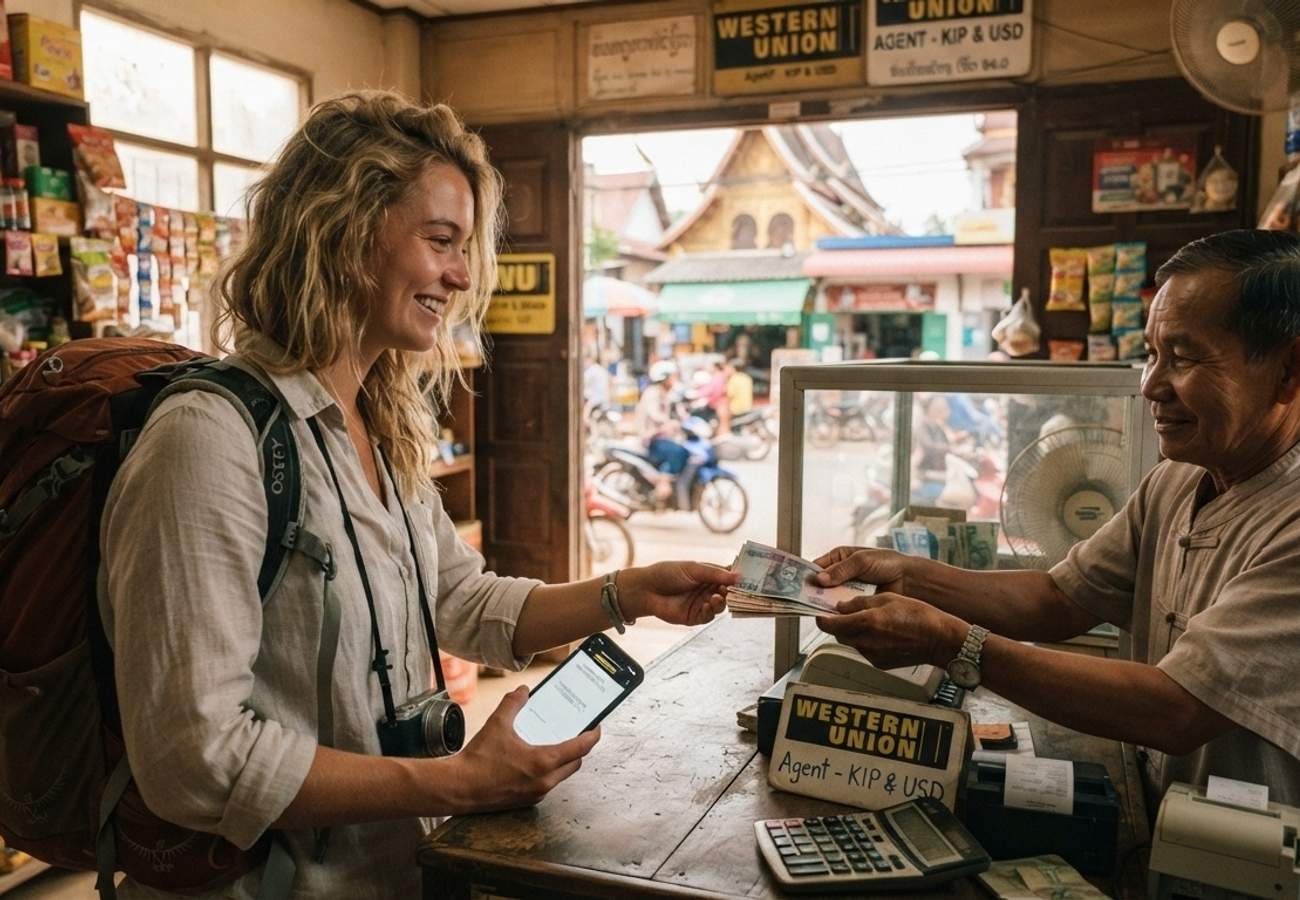
Image generated by AI
For many international travelers, Western Union is the ultimate financial safety net—a way to access liquidity when banks fail or cards are stolen. However, the convenience of a yellow sign in a remote village often comes with hidden costs that can erode a travel budget if not managed correctly.
Western Union operates as a massive private financial network rather than a traditional bank. By connecting hundreds of thousands of partner locations—ranging from post offices in rural France to convenience stores in Bangkok—it allows funds to move within its own proprietary system. This architecture is why cash pickup is often nearly instantaneous, bypassing the slow clearing houses of the global banking system.
For the modern nomad or tourist, the service provides three primary delivery channels: cash pickup, direct bank deposits, and mobile wallet transfers. While the company has modernized with a robust app and website, the core utility remains the same: moving value from one point in the network to another, often in local currency.
The Mechanics of a Global Transfer
A Western Union transaction is defined by three variables: the funding source, the delivery method, and the total cost. To illustrate, consider a traveler in New York sending 300 EUR to a contact in Paris for a hostel deposit.
The sender selects the destination and amount via the app. The system then calculates the USD equivalent, the specific transfer fee, and the applied exchange rate. The sender chooses a payout method—either a bank IBAN for a deposit or a full legal name (matching a passport) for cash pickup.
Once the payment is processed via debit card or bank account, the system generates a Money Transfer Control Number (MTCN). This unique code is the key to the funds; the recipient presents the MTCN and a valid ID at an agent location to receive the cash.
Speed and Timing Variables
The velocity of a transfer depends heavily on the corridor and the payment method:
- Instantaneous: Debit card transfers from the US to major hubs in the Philippines or Mexico are often available in minutes.
- Delayed: Bank deposits from Germany to India may take several hours or until the next business day.
- Banking Hours: Transfers initiated on a Friday night in the US may face delays until Monday due to the underlying banking cycles.
High-Value Use Cases for International Travelers
While not a primary spending tool, Western Union is indispensable in four specific travel scenarios:
1. The Lost-Card Emergency When an ATM in Chiang Mai swallows a debit card and the home bank cannot ship a replacement to Thailand, Western Union is the fastest solution. A family member can send funds via the app, allowing the traveler to collect Thai baht from a local 7-Eleven or bank branch within minutes.
2. Arbitraging Exchange Rates In volatile economies, such as Argentina, the "official" bank rate can be significantly worse than the rates offered through Western Union. Some long-term travelers send money to themselves, finding that the pesos received via cash pickup offer more purchasing power than a standard ATM withdrawal.
3. Bridging the Digital Divide In regions like rural Morocco or the Philippines, guesthouses and local suppliers often lack card terminals or international banking capabilities. A transfer to a local post office or market town agent allows travelers to secure bookings or pay vendors in cash.
4. Strategic Budgeting To mitigate the risk of theft or loss, some travelers avoid carrying large sums of cash through Central America. Instead, they leave funds in a secure home account and send themselves smaller increments (e.g., $300–$400) as they move between Guatemala, Honduras, and Costa Rica.
Deconstructing the Total Cost
The most common mistake travelers make is looking only at the "transfer fee." The actual cost is a combination of the explicit fee and the exchange rate margin.
The exchange rate margin is the difference between the mid-market rate (the one seen on Google or currency converters) and the rate Western Union provides. If the mid-market rate is 1.05 USD to 1 EUR, but Western Union offers 1.02 USD, there is a 3% hidden margin.
Example Cost Breakdown (Estimated 2026 Figures):
- Principal Amount: $500 USD to Spain (EUR)
- Mid-Market Rate: 1.05
- WU Rate: 1.02 (approx. 3% margin)
- Hidden Margin Cost: ~$15.00
- Explicit Transfer Fee: $4.99
- Total Effective Cost: ~$19.99
Comparison of Transfer Methods
| Method | Speed | Cost Profile | Best For |
|---|---|---|---|
| Cash Pickup | Minutes | Higher fees / Variable rates | Emergencies, cash-only regions |
| Bank Deposit | Hours to Days | Lower fees / Better rates | Planned payments, landlords |
| Mobile Wallet | Near Instant | Moderate fees | Tech-forward regions (Asia/Africa) |
Key Takeaways for Travelers
- Check the Mid-Market Rate: Always compare the Western Union rate against a neutral converter to see the hidden margin.
- Use the MTCN Securely: Never share the Money Transfer Control Number with anyone except the intended recipient.
- Verify Legal Names: For cash pickup, the recipient's name must exactly match their government-issued passport.
- Prioritize Bank Deposits for Cost: If speed isn't the primary concern, bank deposits generally offer lower fees than cash pickups.
Frequently Asked Questions
Can I send money to myself? Yes. Many travelers send funds to their own name for pickup in a foreign country to avoid carrying large amounts of cash or to take advantage of specific local exchange rates.
What happens if the recipient doesn't have a passport? Western Union requires government-issued photo identification for cash pickups. If the recipient cannot provide a matching ID, the funds cannot be released.
Is Western Union safer than carrying cash? Generally, yes. It reduces the risk of total loss due to theft or loss during transit, as funds are only released upon presentation of a valid ID and the MTCN.
Navigating international finance requires a balance of speed and cost—know when to pay for the convenience of the yellow sign and when to wait for the bank.
Related Travel Guides
Disclaimer
This article is for informational and educational purposes only. It does not constitute legal, financial, or professional advice. While we strive to provide accurate and up-to-date information, travel policies, regulations, and conditions change rapidly. Always verify information with official sources before making travel decisions. Nomad Lawyer makes no representations about the accuracy, reliability, completeness, or suitability of the information provided. Readers should consult qualified professionals for advice specific to their circumstances. The views expressed in this article are those of the author and do not necessarily reflect the views of Nomad Lawyer.
Preeti Gunjan
Contributor & Community Manager
A passionate traveller and community builder. Preeti helps grow the Nomad Lawyer community, fostering engagement and bringing the reader experience to life.
Learn more about our team →