Wellington Station, Shropshire Upgrade Gains Approval for New Lifts and Footbridge Transforming UK Rail Travel

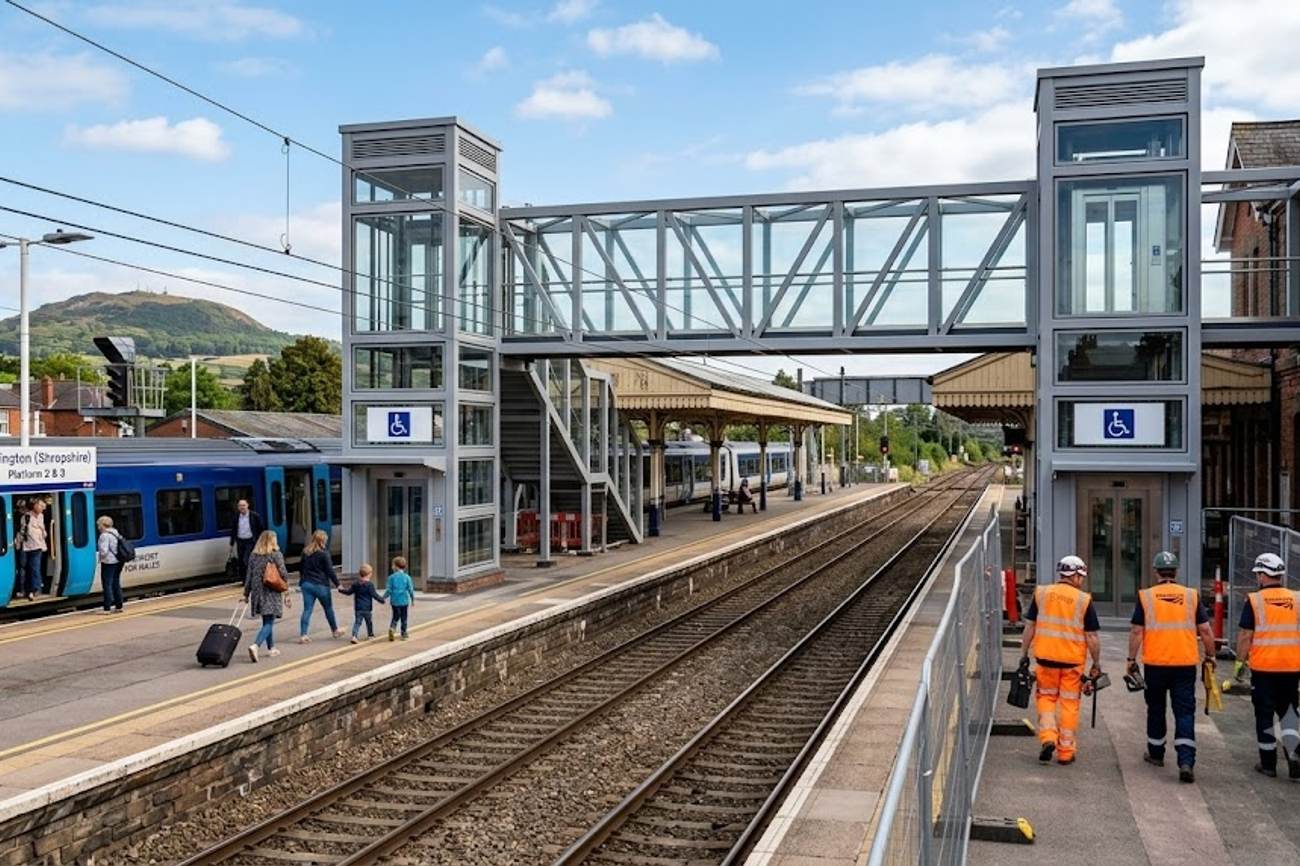
Image generated by AI
[Wellington, Shropshire] — Network Rail has commenced a comprehensive accessibility overhaul of Wellington Station, featuring the installation of a new footbridge and passenger lifts to eliminate existing physical barriers between platforms.
The infrastructure project replaces an outdated footbridge that currently requires passengers to use stairs, creating significant navigation challenges for those with limited mobility. By introducing a fully step-free route, the upgrade aims to modernize one of Shropshire's primary rail links, ensuring that the station meets current inclusivity standards for a diverse range of commuters and tourists.
The Infrastructure Trigger
The primary driver for this intervention is the failure of the existing station architecture to meet modern accessibility requirements. Under the current configuration, platform transfers are dependent on stair use, which effectively isolates certain areas of the station from passengers who cannot navigate steps.
Network Rail has determined that the existing structure is beyond the point of simple modification. Consequently, the project involves the complete removal of the old footbridge and the construction of a new, inclusive design. This new system integrates high-capacity passenger lifts, allowing wheelchair users, the elderly, and families with strollers to move independently between platforms without requiring staff assistance.
Affected Travelers, Key Stakeholders and Regional Positioning
The upgrades impact a broad spectrum of rail users operating within the Shropshire regional network. The following groups will see immediate changes to their transit experience:
- Passengers with Reduced Mobility (PRM): Wheelchair users and those with permanent or temporary mobility impairments will gain full, independent access to all platforms.
- Families and Caregivers: Travelers with strollers or young children will no longer face the physical strain of stair navigation.
- Elderly Travelers: Seniors will benefit from reduced physical exertion and increased safety during platform transfers.
- Leisure and Business Tourists: Visitors arriving in Shropshire with heavy luggage will experience a more streamlined transition from the train to local transport.
- Daily Commuters: The modernization of the station environment is expected to reduce congestion and improve the overall flow of passenger traffic during peak hours.
Practical Traveler Advisory and Strategic Insights
For the average passenger, this project translates to a shift from "assisted travel" to "independent travel." Currently, passengers unable to use stairs must often coordinate with station staff or plan journeys around specific platform arrivals to avoid barriers.
Passenger Impact Breakdown:
- Booking Confidence: Travelers with disabilities can now book rail travel to Wellington with the certainty that they can navigate the hub without relying on the availability of manual assistance.
- Reduced Transit Stress: The removal of stairs eliminates a primary "friction point" in the journey, reducing the anxiety associated with tight connection windows or navigating crowded stairs with luggage.
- Improved First Impressions: As a gateway to Shropshire's historic sites, the modernized station removes the "accessibility gap" that often exists between a high-quality destination and a low-quality arrival point.
- Sustainability Shift: By making the rail experience more comfortable and inclusive, the project encourages a shift from private car usage to lower-carbon rail travel for visiting the region.
Regional Connectivity and Economic Outlook
The upgrade to Wellington Station is not an isolated construction project but part of a strategic effort to bolster the economic viability of Shropshire. The Department for Transport (DfT) has long emphasized the necessity of inclusive infrastructure to drive regional growth.
Because Wellington serves as a critical node for those visiting the county's cultural attractions and countryside, the station's accessibility directly impacts the "last mile" of the tourist experience. When transport hubs are inclusive, the surrounding local economy—including hotels, cafes, and museums—sees an increase in footfall from demographics that previously avoided the area due to transport hurdles.
This project aligns with broader trends seen across the Office of Rail and Road (ORR), where the focus has shifted toward "universal design." This philosophy dictates that infrastructure should be usable by all people, regardless of age or ability, without the need for adaptation.
The Future of Shropshire Rail
Following the completion of the footbridge and lift installation, Wellington Station will function as a model for regional hub modernization. The project sets a precedent for other smaller stations in the Shropshire area that may still rely on legacy infrastructure.
The long-term goal is to create a seamless, accessible corridor that connects major urban centers to rural Shropshire. As the UK rail sector continues to prioritize the removal of physical barriers, the Wellington upgrade serves as a critical link in a larger chain of accessibility improvements intended to make rail the primary choice for sustainable, inclusive tourism.
FAQ: Wellington Station Accessibility 2024
Will the station remain open during the footbridge construction? Yes, the station remains operational. However, passengers are advised to check for temporary platform changes or diverted foot-traffic patterns via Network Rail updates.
Do I need to book assistance while the new lifts are being installed? Until the new lifts are fully commissioned, passengers requiring step-free access should continue to book assistance in advance to ensure a smooth transition between platforms.
How does this upgrade help tourists visiting Shropshire? The upgrade removes the physical barrier of stairs, making it significantly easier for elderly visitors and those with disabilities to reach regional attractions via rail.
Is this part of a larger UK-wide initiative? Yes, this is part of a broader movement across the British rail sector to modernize legacy stations and ensure all passengers have independent, step-free access to rail services.
Bridging the gap between legacy infrastructure and modern inclusivity.
Related Travel Guides
- UK Tourism Connectivity Rises As LNER Introduces Multilingual Onboard Travel Technology
- UK Tourism Connectivity Gets A Digital Boost As LNER Launches Seven Language Travel Portal Across London, York, Newcastle And Edinburgh Routes
- LNER Launches Multilingual Digital Portal for International Passengers on East Coast Main Line 2026
This article is for informational purposes. Flight routes, passenger regulations, visa rules, and transit advisories are subject to change by airlines and aviation authorities. Readers are advised to verify schedules and travel documentation with relevant carriers and border agencies before departure.
Related Stories

France Expands Winter Rail Travel: SNCF Deploys New OUIGO Routes and Over 336,000 Extra TGV Seats for Christmas Markets and Ski Resorts