France Launches Fifth-Generation TGV Nouvelle Génération as Alstom’s 320 km/h Avelia Horizon Debuts on Paris–Marseille Corridor

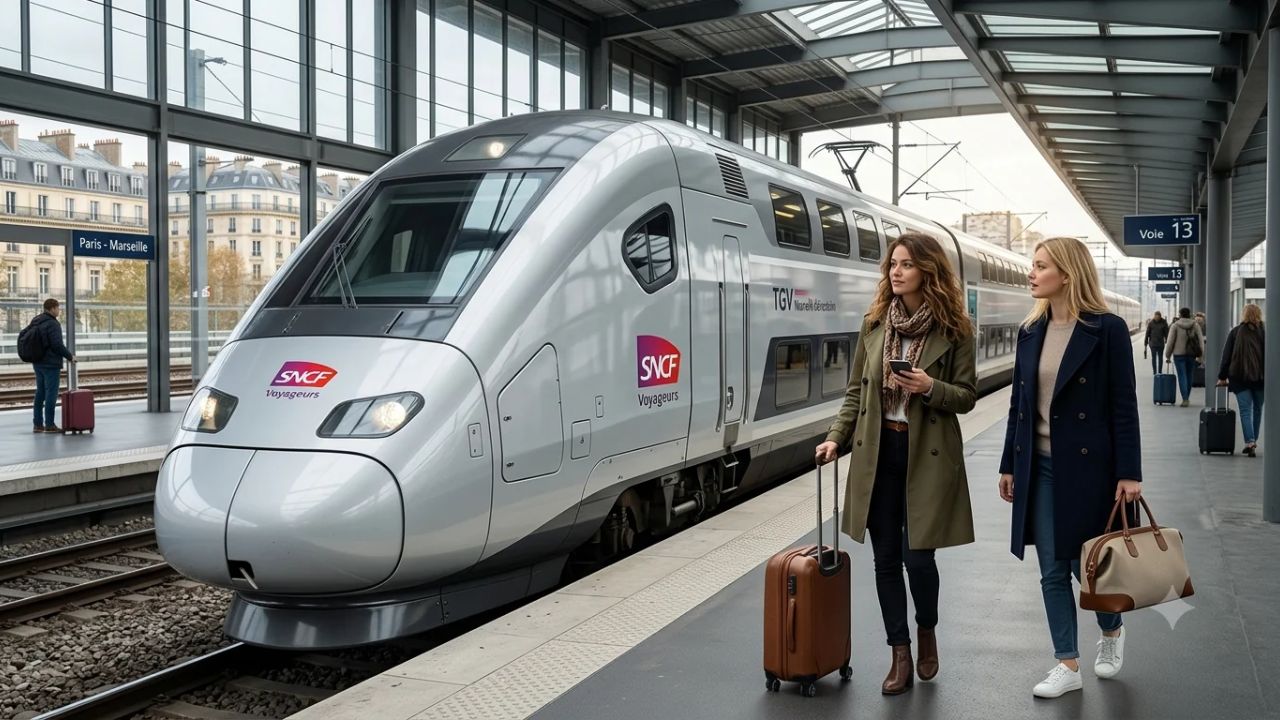
PARIS — France has officially inaugurated a transformative era in high-speed rail mobility, as SNCF Voyageurs entered its fifth-generation high-speed trainset, the TGV Nouvelle Génération, into revenue passenger service on 6 November 2026. Developed through a decadelong technological partnership with French rolling stock manufacturer Alstom under the industrial Avelia Horizon platform, the inaugural six commercial trainsets commenced operations along the premier Paris Gare de Lyon to Marseille Saint-Charles corridor. Capable of operating at sustained speeds of up to 320 kilometres per hour, the double-deck trainsets introduce an innovative articulated architecture that expands passenger capacity to 573 seats while slashing total energy consumption by 20 percent compared to preceding fleet generations.
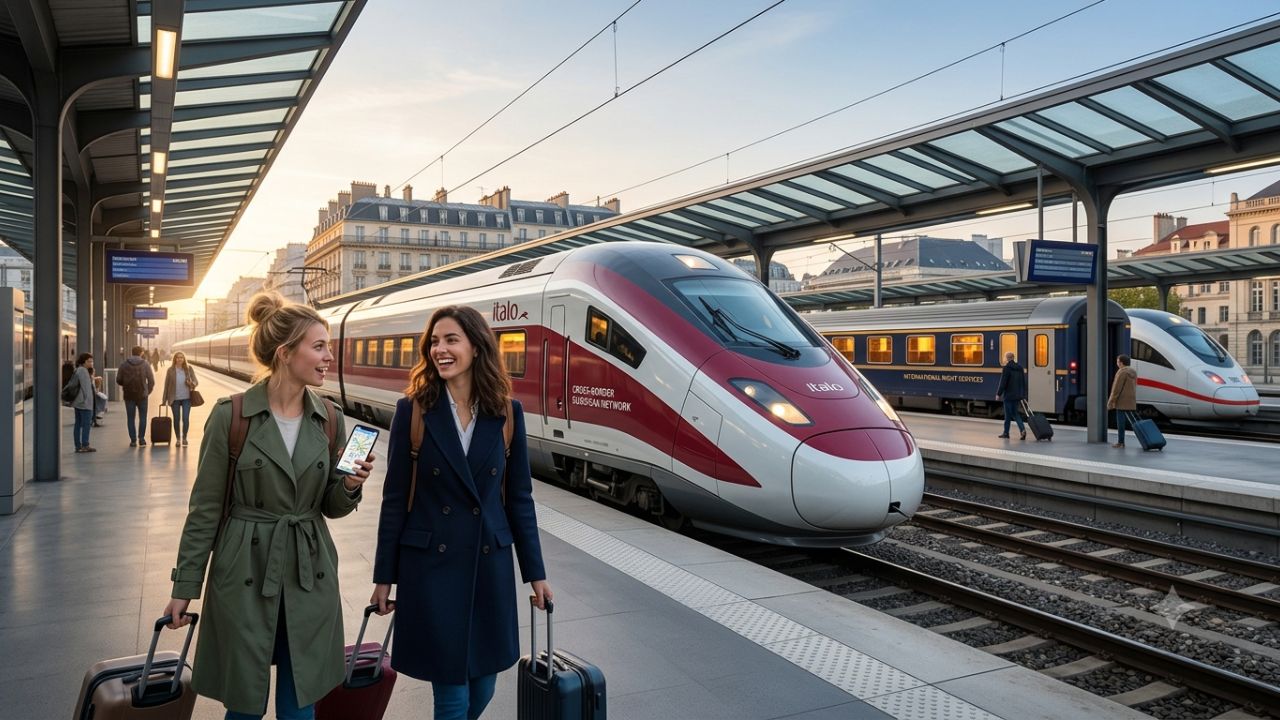
The high-profile passenger launch on the Mediterranean mainline—attended by French Transport Minister Philippe Tabarot, SNCF Group Chairman and Chief Executive Jean Castex, and Alstom Chief Executive Martin Sion—represents the initial deployment phase of a multi-billion-euro rolling stock modernization campaign. Designed around modular components, nearly 400 patented engineering innovations, and dedicated emergency battery banks capable of propelling the train during catenary power failures, the TGV Nouvelle Génération sets a new international benchmark for low-carbon intercity transit. Following its Paris–Marseille debut, the fleet will expand to the French Riviera, the Alpine valleys, and major cross-border corridors connecting France with Italy, Belgium, and the Eurostar network.
A Decadelong Industrial Journey: The Evolution of French High-Speed Rail
The commercial debut of the TGV Nouvelle Génération marks the culmination of an engineering development cycle initiated in 2016, when SNCF Voyageurs and Alstom formed an innovation joint venture to conceive the future of French high-speed rail (TGV du Futur). The programme represents the most comprehensive redesign of French high-speed rolling stock since the introduction of the iconic double-deck TGV Duplex in 1996.
For more than four decades, France’s high-speed railway system evolved through successive technological leaps:
- TGV Sud-Est (1981): The pioneer orange trainsets that introduced 260 km/h commercial passenger service between Paris and Lyon, establishing the viability of European high-speed rail.
- TGV Atlantique (1989): Second-generation silver-and-blue trainsets featuring synchronous traction motors, raising operating speeds to 300 km/h.
- TGV Réseau (1993): Third-generation pressurized trainsets engineered for multi-system voltage compatibility across regional and cross-border networks.
- TGV Duplex (1996–2010s): Fourth-generation bilevel trainsets utilizing lightweight aluminium extrusions to accommodate surging passenger demand on core high-density lines.
However, escalating climate imperatives, rising energy costs, and intensifying competition from open-access railway operators required a clean-sheet redesign. The resulting Avelia Horizon project mobilized approximately 2,000 engineers, technicians, and industrial specialists across SNCF Voyageurs and Alstom. Manufacturing drew upon 11 Alstom industrial facilities throughout France, with final assembly and testing anchored at historic manufacturing hubs in Belfort (power cars) and La Rochelle (passenger coaches), alongside specialized component production in Le Creusot (bogies), Tarbes (traction equipment), and Villeurbanne (onboard digital signaling).
SNCF TGV GENERATIONAL EVOLUTION (1981 - 2026)
| Column 1 | Column 2 | Column 3 | Column 4 | Column 5 | Column 6 | Column 7 |
|---|---|---|---|---|---|---|
| 1ST GEN: SUD-EST | 2ND/3RD: RESEAU | 4TH GEN: DUPLEX | 5TH GEN: TGV-M | |||
| (Year: 1981) | (1989 - 1993) | (Year: 1996) | (Year: 2026) | |||
| - 260 - 270 km/h | - 300 km/h | - 320 km/h | - 320 km/h | |||
| - Single Deck | - Single Deck | - Double Deck | - Double Deck | |||
| - Steel Body | - Steel Body | - Aluminium | - Avelia Horizon | |||
| - 350 Seats | - 377 Seats | - 510 Seats | - 573 Seats | |||
| - High Baseline | - Multi-voltage | - High-density | - 20% Energy Cut |
Architectural and Capacity Breakthroughs: 573 Seats Within 202 Metres
One of the most complex engineering constraints governing French high-speed rail is station platform length. Historic terminus facilities—most notably Paris Gare de Lyon, Marseille Saint-Charles, and Paris Montparnasse—are engineered around a standard maximum train length of 202 metres. Extending platform infrastructure in dense urban centers would require billions of euros in disruptive civil engineering.
To solve this challenge, Alstom’s engineering team achieved a structural breakthrough by redesigning the two end power cars:
- Compact Power Cars: By miniaturizing the traction converters, auxiliary transformers, and digital cooling blocks, Alstom shortened the length of the traction power cars at each end of the trainset.
- Nine Articulated Passenger Coaches: The space reclaimed from the power cars enabled Alstom to insert a ninth double-deck articulated passenger coach between the power units, compared to the eight coaches found on previous TGV Duplex trainsets.
- Capacity Expansion: In standard two-class French domestic configuration, the new train provides 573 comfortable seats—a 10 percent increase over the 510 to 516 seats typical of current TGV Duplex units.
- High-Density Potential: When configured for low-cost Ouigo services with single-class seating, the identical 202-metre trainset can accommodate up to 740 passengers, providing unmatched seat-density economics for budget travelers.
The train preserves the legendary articulated configuration pioneered by French high-speed rail, where adjacent passenger coaches rest upon a shared Jacobs bogie. This design choice places the wheels between cars rather than directly underneath passenger seating, dramatically reducing interior vibration and wheel noise while preventing the cars from jackknifing or telescoping in the rare event of a derailment.
| Technical Parameter | Previous TGV Duplex Generation | TGV Nouvelle Génération (Avelia Horizon) | Practical Advantage |
|---|---|---|---|
| Manufacturer & Platform | Alstom Duplex | Alstom Avelia Horizon | Modular cross-border architecture |
| Maximum Operating Speed | 320 km/h | 320 km/h | High-speed intercity connectivity |
| Total Trainset Length | 200 metres | Approximately 202 metres | Universal platform compatibility |
| Coach Configuration | 8 Articulated Bilevel Coaches | 9 Articulated Bilevel Coaches | 1 extra coach within fixed length |
| Standard Seating Capacity | 510 – 516 Seats | 573 Seats | 10% capacity expansion on busy routes |
| High-Density Capacity | Up to 634 Seats (Ouigo) | Up to 740 Seats (Ouigo) | Maximum low-cost passenger volume |
| Overall Energy Consumption | Baseline Standard | -20% Reduction | Lower operating costs & emissions |
| Energy per Passenger-Km | Baseline Standard | -32% Reduction (at full load) | Superior environmental efficiency |
| Initial Deployment | National Network | Paris–Marseille (6 trainsets) | High-volume Mediterranean corridor |
Environmental Performance: Slashing Energy Consumption by 20 Percent
In an era of rising energy costs and strict European transport decarbonization mandates, the environmental performance of the Avelia Horizon represents its primary commercial selling point. Alstom and SNCF Voyageurs report that the TGV Nouvelle Génération achieves a 20 percent reduction in overall electrical energy consumption compared to the preceding generation of TGV Duplex rolling stock.
This efficiency is delivered through coordinated engineering innovations:
- Aerodynamic Optimization: The elongated, tapered nose profile of the power cars—developed through extensive computational fluid dynamics and wind-tunnel trials—resembles the aerodynamic profile of a bird of prey. This sleek contour reduces aerodynamic drag by roughly 11 percent, minimizing sonic boom shockwaves when entering tunnels and decreasing turbulence at 320 km/h.
- Lightweight Composite Construction: Extensive utilization of high-strength, lightweight aluminium alloys and advanced carbon-fiber composite materials reduces overall trainset mass, requiring less tractive effort during acceleration phases.
- High-Efficiency Traction Motors: Next-generation permanent magnet and synchronous traction motors deliver higher power-to-weight ratios with minimal internal heat dissipation.
- Advanced Regenerative Braking: When slowing down from high speeds, the train’s traction motors reverse into electrical generators, capturing kinetic energy and feeding electricity directly back into the national overhead catenary grid.
- Per-Passenger Metric: When operating at full seating capacity, the combination of 10 percent higher seat counts and 20 percent lower total energy draw delivers a remarkable 32 percent reduction in energy consumption per passenger-kilometre.
These operational savings directly support SNCF's corporate pledge to lower its greenhouse gas footprint while providing an unassailable environmental counterpoint to domestic commercial aviation.
Inside the Train: Comfort, Connectivity, and Universal Accessibility
The interior passenger environment of the TGV Nouvelle Génération was conceived through extensive ergonomic consultations with frequent travelers, consumer advocacy groups, and mobility specialists.
Seating Ergonomics and Power Infrastructure
Recognizing the ubiquitous use of digital devices during intercity travel, every seat across both First Class and Standard Class is equipped with:
- Dedicated 230V mains electrical sockets alongside integrated USB-A and USB-C high-speed charging ports.
- Individual directional LED reading lights with touch-sensitive dimming controls.
- Sculpted ergonomic seat cushions designed with enhanced lumbar support and expanded knee clearance, ensuring superior comfort during three-hour non-stop journeys.
- Ultra-broadband 5G-ready Wi-Fi connectivity supported by external carriage roof antennas and internal cellular repeaters designed to mitigate signal degradation while speeding through the French countryside.
Passenger Navigation and Redesigned Shared Spaces
Throughout the passenger coaches, large dynamic ultra-high-definition digital display screens provide real-time updates regarding train speed, upcoming station connections, platform transfer tracks, and regional weather forecasts. Luggage storage racks have been redesigned with open sightlines and integrated vertical dividers, allowing travelers to keep baggage within easy view from their seats. Toilets have been expanded and equipped with contactless automated taps, soap dispensers, and touch-free flushing mechanisms.
Independent Wheelchair Mobility
A major advancement in inclusive transport engineering is located within Coach 3. Historically, passengers traveling in wheelchairs required manual assistance from station personnel deploying exterior mechanical boarding lifts. In the TGV Nouvelle Génération:
- Coach 3 incorporates a built-in motorized mobile platform and internal lift mechanism that allows wheelchair users to navigate from the station platform into the lower passenger deck completely independently.
- The lower deck features expanded wheelchair parking spaces, companion seating, and accessible emergency communication terminals, establishing a new standard for barrier-free rail transit.
- Dedicated interior racks also accommodate assembled bicycles, supporting the growing trend of cycle-tourism across regional France.
Emergency Traction Batteries: Overcoming the Stranded Train Dilemma
Among the nearly 400 patented innovations integrated into the Avelia Horizon platform, the inclusion of dedicated emergency traction energy storage systems represents one of the most significant operational resilience upgrades.
Positioned directly behind the traction power cars, high-capacity lithium-ion battery arrays provide autonomous emergency functionality:
- Life-Support and Comfort Continuity: If a severe storm, falling tree, or infrastructure failure severs the external 25kV overhead catenary power supply, the emergency battery system automatically engages within milliseconds. The stored energy maintains interior climate ventilation, saloon emergency lighting, passenger public address systems, and electronic door locks for several hours, preventing suffocating cabin conditions during summer heatwaves or freezing winter conditions.
- Autonomous Emergency Traction: Beyond auxiliary power, the battery system stores sufficient electrical reserve to provide limited tractive power to the drive axles. If a train loses electrical contact while stranded inside a tunnel, on a high bridge, or in a remote rural location, the train can propel itself under its own battery power at speeds between 30 and 50 km/h for several kilometres. This catenary-free capability allows train drivers to clear dangerous railway bottlenecks and limp safely into the nearest passenger station, eliminating the need for prolonged mid-track passenger evacuations.
AELIA HORIZON EMERGENCY BATTERY FUNCTIONALITY
| Column 1 | Column 2 | Column 3 | Column 4 | Column 5 |
|---|---|---|---|---|
| PASSENGER COMFORT | AUTONOMOUS LOCOMOTION | SAFETY & EVACUATION | ||
| - Saloon air exchange | - Catenary-free low- | - Self-rescue from | ||
| - Emergency LED lights | - 30 to 50 km/h | - Limps directly to | ||
| - Electronic doors | - Clears blocked main | - Eliminates trackside |
Maintenance Modernization: €300 Million Investment and IoT Diagnostics
The introduction of an advanced rolling stock fleet requires comprehensive transformation of shoreside maintenance facilities. SNCF Voyageurs has committed approximately €300 million to retool and modernize its maintenance depots, with primary investments focused on the Technicentre Sud-Est Européen facility located in Conflans and Villeneuve-Saint-Georges, south of Paris.
Key maintenance enhancements include:
- Modular Component Engineering: Alstom redesigned mechanical and electrical sub-assemblies into modular plug-and-play units. Rather than detaching entire bogies or disassembling coaches for routine maintenance, technicians can swap out modular modules within hours, returning trainsets to passenger service with minimal downtime.
- Predictive IoT Telemetry: Thousands of digital sensors embedded throughout the train continuously monitor bearing temperatures, pantograph contact pressure, traction motor vibrations, and wheel-rail dynamics. Real-time diagnostic data is transmitted via secure cellular channels to depot engineering teams while the train is traveling at 320 km/h, allowing technicians to prepare replacement components before the train even arrives at the maintenance depot.
- 30 Percent Maintenance Cost Reduction: Through modular components and predictive health tracking, Alstom forecasts that lifetime maintenance expenditures will drop by more than 30 percent compared to previous generations, significantly improving the commercial operating margin for SNCF Voyageurs.
Fleet Expansion Roadmap: From Domestic Mainlines to Cross-Border Europe
The initial deployment of six trainsets between Paris Gare de Lyon and Marseille Saint-Charles represents merely the opening chapter of a long-term rolling stock rollout plan extending across the next decade.
Domestic French Expansion (2026–2027)
Following the early November launch on the Marseille corridor:
- Paris to Nice (Late November 2026): SNCF plans to introduce return services connecting Paris with Nice, extending the modern trainsets across the glamorous French Riviera.
- Alpine Corridors (2027): Services will expand into high-demand winter ski and summer recreation routes serving Chambéry, Annecy, Grenoble, and the Tarentaise Valley (Bourg-Saint-Maurice).
International Cross-Border Deployments (2028–2031)
The underlying Avelia Horizon platform was engineered from inception as a modular multi-system vehicle capable of navigating differing national electrification standards and signaling networks across Europe:
- Italy Expansion (2028): In 2022, SNCF placed a firm order for 15 specialized international trainsets valued at approximately €590 million. These units are configured to operate on the Paris–Milan corridor and participate in proposed domestic Italian routes connecting Turin, Milan, Rome, Naples, and Venice.
- France to Belgium (2029): In January 2026, SNCF ordered an additional 15 quad-voltage Avelia Horizon trainsets capable of operating seamlessly across French 25kV AC, Belgian 3kV DC, and cross-border 1.5kV DC networks.
- Eurostar "Celestia" Fleet (May 2031): In October 2025, international high-speed operator Eurostar signed a landmark €1.4 billion contract for 30 high-speed trainsets based on the Avelia Horizon platform. Branded as the Celestia fleet, these customized trainsets will enter commercial service in May 2031, connecting London St Pancras with Paris, Brussels, Amsterdam, and Frankfurt through the Channel Tunnel.
- Global Commercial Appeal: Beyond SNCF and Eurostar, the Avelia Horizon platform has been selected by Morocco’s national railway operator ONCF for its expanding Al Boraq high-speed network, as well as French private open-access operator Velvet, which ordered 12 trainsets.
| Order / Customer | Order Date | Units Ordered | Contract Valuation | Planned Entry into Service | Target Route Corridors |
|---|---|---|---|---|---|
| SNCF Domestic Fleet | 2018 | 100 Trainsets | €2.7 Billion | 6 November 2026 | Paris–Marseille, Paris–Nice, French Alps |
| SNCF Italy Fleet | 2022 | 15 Trainsets | €590 Million | 2028 | Paris–Milan, Turin–Naples, Turin–Venice |
| SNCF Belgium Fleet | January 2026 | 15 Quad-Voltage Units | Undisclosed | 2029 | Cross-Border Paris–Brussels–Antwerp |
| Eurostar (Celestia) | October 2025 | 30 Custom Trainsets | €1.4 Billion | May 2031 | London–Paris–Brussels–Amsterdam |
| Velvet Rail (Open-Access) | Recent | 12 Trainsets | Commercial | 2028–2029 | French domestic liberalized corridors |
Practical Travel Advice for High-Speed Rail Travelers in France
For travelers eager to experience the TGV Nouvelle Génération firsthand on their next French journey, navigating booking systems and departure stations requires practical preparation:
1. Confirm Your Specific Train Assignment on SNCF Connect
Because the rollout of the TGV Nouvelle Génération is progressive, not every departure on the Paris–Marseille line utilizes the new trainsets. When booking tickets via the official SNCF Connect website or mobile app, inspect the train equipment designation. Services operated by the new fleet are labeled as TGV Nouvelle Génération or TGV-M, distinguishing them from standard TGV INOUI or Ouigo classic services.
2. Take Advantage of Class Amenities
First Class carriages offer spacious 2+1 seating layouts, expansive fold-down work tables, and enhanced luggage racks, making them ideal for business travelers and long-distance vacationers. Standard Class features a generous 2+2 seating layout with full USB and mains power connectivity at every seat. Both classes feature access to the redesigned café-bar coach, serving organic French regional snacks and hot meals.
3. Check Bicycle and Luggage Reservations Early
If traveling with an assembled bicycle, you must purchase a dedicated bicycle space reservation at the time of ticket booking, as capacity is strictly capped per trainset. Standard luggage remains free of weight restrictions, but all suitcases must carry physical identification tags bearing the passenger’s full name and telephone number, in accordance with French railway security laws.
4. Station Navigation: Paris Gare de Lyon and Marseille Saint-Charles
- At Paris Gare de Lyon, departures are divided across three separate boarding halls (Hall 1, Hall 2, and Hall 3). Boarding gates are posted on departure boards approximately 20 minutes prior to departure; allow at least 10 minutes to walk between halls if making tight metro transfers.
- At Marseille Saint-Charles, the historic monumental railway terminal sits atop a prominent hill overlooking the city. Utilize the central escalator and elevator banks to connect effortlessly between the high-speed platforms and the Marseille Metro (Lines M1 and M2).
Summary Assessment: Anchoring the Future of Sustainable European Mobility
The commercial launch of the TGV Nouvelle Génération on 6 November 2026 represents far more than an incremental fleet renewal; it embodies the strategic modernization of French and European intercity transportation. By pairing world-class French industrial engineering with cutting-edge environmental technology, SNCF Voyageurs and Alstom have delivered a high-speed train capable of meeting the demands of the 21st century.
With its 573 seats accommodated within standard platform lengths, a 20 percent reduction in operational energy draw, revolutionary autonomous battery traction, and barrier-free wheelchair access, the new trainset proves that high-speed rail can simultaneously expand commercial capacity while reducing ecological impacts. As the fleet steadily expands across the French Riviera, the Alps, and the cross-border capitals of Western Europe over the next five years, the TGV Nouvelle Génération will stand as the vanguard of sustainable, comfortable, and lightning-fast continental travel.
Related Travel Guides
- French High-Speed Rail Network: Complete Guide to TGV INOUI, Ouigo, and Eurostar
- Paris Gare de Lyon Transit Guide: Terminal Halls, Metro Links, and High-Speed Transfers
- Scenic Rail Journeys Across Southern France: From Paris to Marseille, Nice, and the Côte d'Azur
- European Cross-Border High-Speed Rail: Italy, Belgium, and Trans-European Corridors 2026
This article is for informational purposes. Flight routes, passenger regulations, visa rules, and transit advisories are subject to change by airlines and aviation authorities. Readers are advised to verify schedules and travel documentation with relevant carriers and border agencies before departure.
Related Stories

France Expands Winter Rail Travel: SNCF Deploys New OUIGO Routes and Over 336,000 Extra TGV Seats for Christmas Markets and Ski Resorts
Southern France Railway Disruption: Heavy Rains and Floods Trigger Severe Travel Delays Across Marseille, Miramas, and Occitanie