
Washington Dulles Airport Chaos: 133 Flight Delays and 40 Cancellations Hit United, Delta, and KLM in 2026
Massive operational disruptions at Washington Dulles International Airport resulted in 133 delays and 40 cancellations, severely impacting United Airlines and several global carriers.

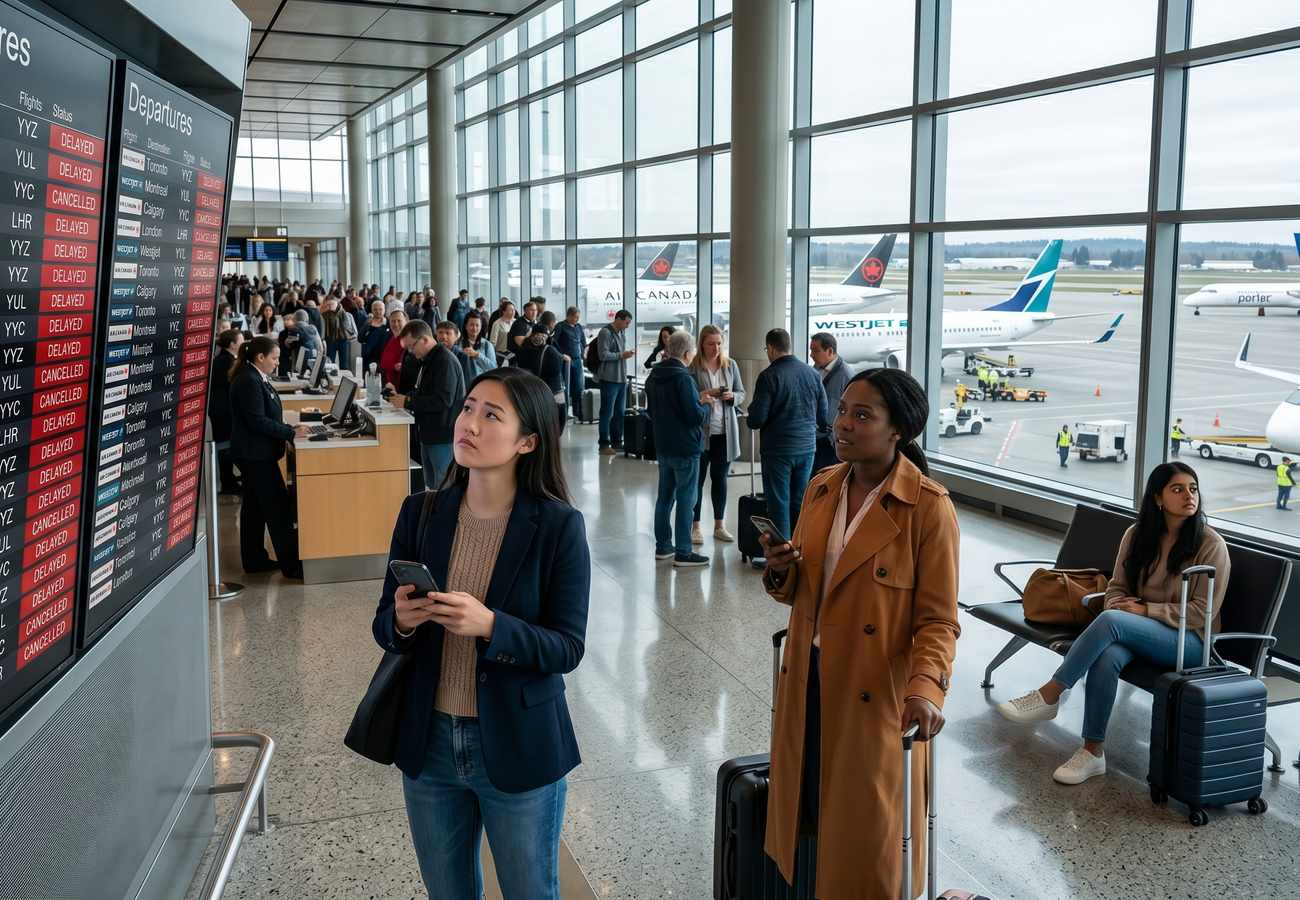
Image generated by AI
[Virginia, July 6, 2026] — A significant operational breakdown at Washington Dulles International Airport (IAD) has left thousands of passengers stranded, with flight tracking data confirming 133 delays and 40 cancellations. The disruption has rippled across major domestic corridors and international gateways, specifically affecting routes connecting Washington, Chicago, and New York.
The scale of the instability highlights the fragility of major international aviation hubs. Because Washington Dulles serves as a primary transit point for diplomatic missions, government officials, and global business travelers, any systemic failure at the facility creates a bottleneck that extends far beyond the Virginia shoreline, impacting travel schedules across North America and Europe.
United Airlines and Regional Partners Face Severe Disruptions
Industry reports indicate that United Airlines bore the heaviest burden of the operational failures. As the primary carrier operating out of the hub, United recorded 13 cancellations and 49 delays. The sheer volume of these disruptions created a cascading effect, as missed connections for United passengers triggered further scheduling conflicts across its domestic network.
Regional carriers, which provide essential feeder services to major hubs, were similarly crippled. Republic Airways saw 12 flights canceled and 14 delayed. CommuteAir, operating under the United Express brand, reported 15 delays and three cancellations. These regional failures are particularly impactful because they often strand passengers in smaller markets who have fewer alternative transport options to reach the capital.
Other domestic operators also reported losses. Delta Air Lines experienced seven delays and two cancellations, while its regional arm, Endeavor Air, saw two flights canceled. GoJet Airlines and Jazz Aviation each recorded two cancellations, and Frontier Airlines reported one canceled flight. Mesa Airlines also struggled, noting nine delays and a single cancellation.
Global Impact on International Carriers at IAD
The disruption was not limited to US-based airlines. The interconnected nature of the Dulles hub meant that several prestigious international carriers faced significant timing shifts. Reports confirm that KLM was among the most affected international airlines, recording two cancellations.
Additional global operators reported delays, complicating travel for passengers arriving from and departing to Europe, Africa, and the Middle East. Affected carriers include:
- Lufthansa and British Airways
- Emirates and Turkish Airlines
- Virgin Atlantic and Swiss
- Ethiopian Airlines and Royal Air Maroc
- Brussels Airlines and Icelandair
- Iberia
These delays create a "domino effect" for international travelers, where a two-hour delay in Washington can result in a missed connection in London, Frankfurt, or Dubai, forcing passengers into unplanned overnight stays.
Detailed Operational Breakdown of Flight Disruptions
The following data provides a comprehensive look at the carriers most affected by the operational collapse at Washington Dulles International Airport.
| Airline | Cancellations | Delays |
|---|---|---|
| United Airlines | 13 | 49 |
| Republic Airways | 12 | 14 |
| CommuteAir (United Express) | 3 | 15 |
| Delta Air Lines | 2 | 7 |
| GoJet Airlines | 2 | 6 |
| Jazz Aviation | 2 | 2 |
| Endeavor Air | 2 | 0 |
| Frontier Airlines | 1 | 0 |
| Mesa Airlines | 1 | 9 |
| KLM | 2 | 0 |
Passenger Hardship and Logistical Uncertainty
The combination of 173 total disrupted flights created a chaotic environment within the terminals. Travelers reported extended waiting periods and a lack of clarity regarding revised departure windows. For those using Dulles as a transfer point, the situation was particularly dire, as the arrival of delayed inbound flights frequently coincided with the departure of connecting aircraft, leading to a surge in missed connections.
Industry observers note that when cancellations occur at this scale, airline customer service infrastructure is often overwhelmed. Passengers are currently navigating rebooking protocols, seeking refunds, or arranging emergency accommodations. The volatility of the schedule means that many travelers are facing significant uncertainty regarding when they will eventually reach their destinations.
Economic Consequences for Washington DC Tourism
The ripple effects of these aviation failures extend into the local economy of the Washington metropolitan area. The region relies heavily on a steady stream of international tourists, diplomatic visitors, and corporate executives. Dulles is the primary gateway for these high-value travelers coming from Asia, Europe, and the Middle East.
When flights are canceled or delayed, the impact is felt immediately by the hospitality sector. Missed connections lead to canceled hotel bookings and missed appointments at conferences or diplomatic summits. For international tourists on tight itineraries, a single day of disruption can derail an entire trip, reducing spending on local sightseeing and dining.
While airport authorities and airlines utilize recovery procedures to normalize operations, the immediate loss of confidence in the reliability of the hub can lead to short-term economic dips in the regional travel industry.
Why This Matters: The Vulnerability of Hub-and-Spoke Systems
This incident serves as a critical case study in the inherent risks of the "hub-and-spoke" aviation model. In this system, a massive amount of traffic is funneled through a single point (the hub) before being distributed to smaller destinations (the spokes). When a hub like Washington Dulles experiences a failure, the entire network is compromised.
The data shows that the failure of regional carriers like Republic Airways and CommuteAir directly contributes to the instability of a global giant like United Airlines. This interdependence means that a localized technical or operational glitch in Virginia can effectively "freeze" travel for passengers in Chicago or New York.
Furthermore, the involvement of international carriers like KLM and Emirates demonstrates that the US capital's aviation infrastructure is a vital link in the global supply chain of human capital. The ability of the US to maintain seamless diplomatic and business connectivity depends entirely on the operational resilience of airports like Dulles. As air traffic continues to grow in 2026, the need for more robust contingency planning at these critical gateways becomes a matter of economic and political necessity.
Flight tracking data is subject to real-time updates; passengers are advised to monitor official airline channels for the latest itinerary changes.
Related Travel Guides
Disclaimer
This article is for informational and educational purposes only. It does not constitute legal, financial, or professional advice. While we strive to provide accurate and up-to-date information, travel policies, regulations, and conditions change rapidly. Always verify information with official sources before making travel decisions. Nomad Lawyer makes no representations about the accuracy, reliability, completeness, or suitability of the information provided. Readers should consult qualified professionals for advice specific to their circumstances. The views expressed in this article are those of the author and do not necessarily reflect the views of Nomad Lawyer.
Preeti Gunjan
Contributor & Community Manager
A passionate traveller and community builder. Preeti helps grow the Nomad Lawyer community, fostering engagement and bringing the reader experience to life.
Learn more about our team →