Vietnam High-Speed Rail Tourism Opens UNESCO and Cruise Routes as Ha Long Hotels Face a New Challenge

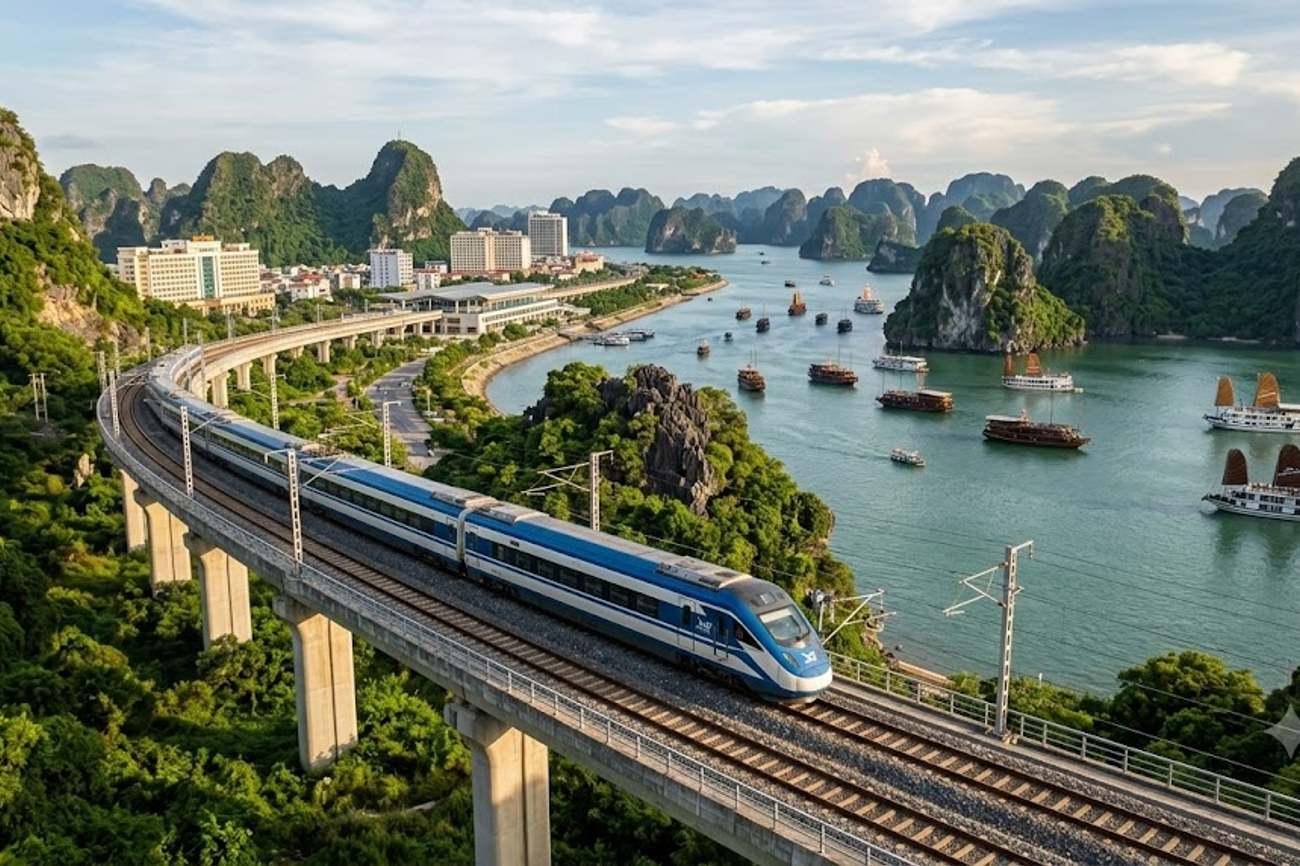
Image generated by AI
[Hanoi, September 22, 2026] — Siemens Mobility has secured a €1 billion turnkey contract to deliver high-speed rail infrastructure and rolling stock for Vietnam, a move expected to slash travel times between Hanoi and the coastal hub of Quang Ninh from over two hours to just 23 minutes.
The agreement, announced Monday, involves the supply of 10 Velaro Novo trainsets and the installation of comprehensive electrification and communication systems. This project is part of a broader national infrastructure push that includes the Hanoi–Quang Ninh and Ben Thanh–Can Gio lines. The first phase of the high-speed network is targeted for commercial operation in 2028.
The Siemens-VinSpeed Infrastructure Push
The project represents a massive capital injection into Vietnam's transport sector. While the Siemens contract is valued at €1 billion, the Ministry of Construction has estimated the total investment for the Hanoi–Quang Ninh line alone at over VND147 trillion (approximately US$5.6 billion). This figure excludes the significant costs associated with land clearance.
Construction on the Hanoi–Quang Ninh segment began on April 12, 2026. The rail line will span roughly 120 kilometers, originating in Co Loa and passing through Gia Binh, Ninh Xa, and Yen Tu before reaching its final destination in Ha Long.
The technical specifications of the rolling stock are designed for high-capacity, rapid transit:
- Train Model: Velaro Novo
- Configuration: Seven cars per train
- Capacity: 760 seats per trainset
- Top Speed: 350 km/h
- Quantity: 10 trains allocated for the initial phases
Markets and Routes Impacted
The rail network is designed to link the capital city with critical economic and tourism zones in the north and south. The primary impact will be felt across the following sectors:
| Segment | Primary Impact | Key Destinations |
|---|---|---|
| Hanoi $\rightarrow$ Quang Ninh | Tourism & Commuting | Ha Long Bay, Yen Tu, Tuan Chau |
| Ben Thanh $\rightarrow$ Can Gio | Urban Connectivity | Ho Chi Minh City outskirts, Can Gio |
| International Cruise | Transit Integration | Ha Long International Cruise Port |
The rail line creates a direct artery to two major UNESCO World Heritage sites. The Yen Tu station will provide unprecedented access to the Yen Tu–Vinh Nghiem–Con Son, Kiep Bac Complex of Monuments and Landscapes, which joined the World Heritage List in 2025. Simultaneously, the line terminates at Ha Long, the gateway to the Ha Long Bay–Cat Ba Archipelago, a massive protected area covering 65,650 hectares and 1,133 islands.
Practical Traveler Advisory and Strategic Insights
For the average tourist or business traveler, the primary shift is the elimination of the "travel day." A journey that previously required a significant portion of a morning or afternoon will now be a brief 23-minute transit.
The "Day-Tripper" Risk While speed is an advantage for the passenger, it creates a logistical challenge for the local economy. There is a high probability that the rail service will encourage "day-tripping," where visitors depart Hanoi in the morning, visit Ha Long Bay, and return to the capital by evening. This trend has already been observed; in 2024, a group of 4,500 Indian tourists visited Ha Long Bay but spent all four nights of their stay in Hanoi hotels.
Integrated Transit Potential The terminus at Ha Long Station in Tuan Chau Ward places passengers within immediate reach of the Tuan Chau International Passenger Port. This allows for a seamless transition from high-speed rail to cruise ships, including the Ha Long Bay–Lan Ha Bay route launched in April 2026. However, travelers should note that there are currently no unified "rail-and-cruise" ticketing packages available.
Accommodation Shifts With over 1,630 accommodation establishments in Quang Ninh, the hotel sector is under pressure to pivot. Because the rail makes Hanoi a viable base for visiting the coast, hotels in Quang Ninh must now compete by offering "night-time economy" experiences and cultural programs to incentivize overnight stays.
The Vietnam high-speed rail project is expected to revolutionize the country's transportation landscape, with plans to connect major cities and tourist destinations, including Ha Long Bay, a UNESCO World Heritage Site. For the most up-to-date information on Vietnam's railway development, visitors can check the official website of the Vietnam Ministry of Transport. This new rail line will significantly reduce travel times, making it easier for tourists to explore Vietnam's diverse culture and natural beauty.
Tourism Growth and Sustainable Management
The high-speed rail is entering a market that is already experiencing explosive growth. Quang Ninh's tourism metrics indicate a sector that is expanding regardless of the new rail link:
- 2024 Performance: 19 million visitors; VND46.55 trillion in revenue.
- 2025 Performance: 21.28 million visitors (including 4.5 million international arrivals); VND57 trillion in revenue.
- 2026 (Jan–Aug): Nearly 17.1 million arrivals; over VND51 trillion in revenue.
- 2026 Target: 23 million total visitors and over VND70 trillion in revenue.
This surge in volume has triggered warnings from UNESCO regarding "carrying capacity." The agency has called for formal tourism planning at Yen Tu and sustainable management measures for the Ha Long Bay–Cat Ba Archipelago to prevent environmental degradation caused by the anticipated influx of rail passengers.
Beyond rail, the region is diversifying its access points. A direct flight service between Ho Chi Minh City and Van Don launched in June 2026 and reached daily frequency by August, further integrating the northern coast with the rest of the country.
FAQ: Vietnam High-Speed Rail 2028
When will the Hanoi to Ha Long Bay train start running? Commercial operations for the first phase of the high-speed rail are targeted to begin in 2028.
How much faster is the new train compared to current transport? The journey from Hanoi to Quang Ninh is expected to drop from over two hours to approximately 23 minutes.
Can I book a combined train and cruise ticket? No. While the train terminates near the Tuan Chau International Passenger Port, no official integrated ticketing or guaranteed transfer system has been announced.
Which UNESCO sites are accessible via this new line? The line provides direct access to the Yen Tu–Vinh Nghiem–Con Son, Kiep Bac Complex and the Ha Long Bay–Cat Ba Archipelago.
Vietnam's transport map is shrinking, but the battle for the tourist's overnight stay is just beginning.
Related Travel Guides
- Wellington Station, Shropshire Upgrade Gains Approval for New Lifts and Footbridge Transforming UK Rail Travel
- UK Tourism Connectivity Rises As LNER Introduces Multilingual Onboard Travel Technology
- UK Tourism Connectivity Gets A Digital Boost As LNER Launches Seven Language Travel Portal Across London, York, Newcastle And Edinburgh Routes
This article is for informational purposes. Flight routes, passenger regulations, visa rules, and transit advisories are subject to change by airlines and aviation authorities. Readers are advised to verify schedules and travel documentation with relevant carriers and border agencies before departure.
Related Stories

France Expands Winter Rail Travel: SNCF Deploys New OUIGO Routes and Over 336,000 Extra TGV Seats for Christmas Markets and Ski Resorts