
Vietnam Airlines Boeing 787-9 Returns to Munich After Tailstrike and Emergency Landing in 2026
A Vietnam Airlines Boeing 787-9 Dreamliner flight VN34 from Munich to Hanoi was forced to make an emergency return after a suspected tailstrike and extended takeoff roll.

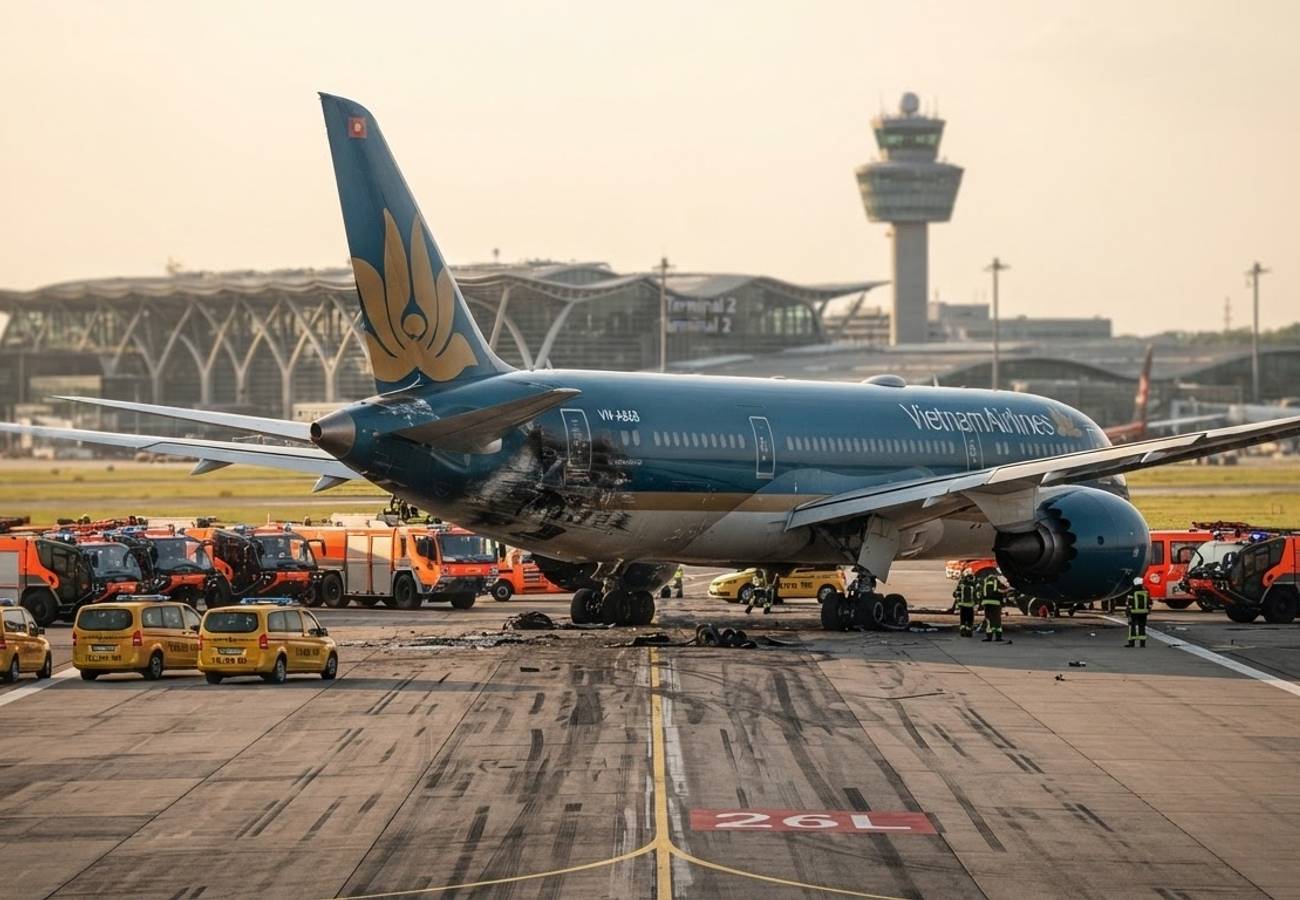
Image generated by AI
A Vietnam Airlines Boeing 787-9 Dreamliner was forced to abort its journey to Hanoi on 15 August 2026, returning to Munich Airport after a suspected tailstrike and an abnormally long takeoff roll.
The incident involving flight VN34 has highlighted the complexities of widebody departures during peak summer travel, resulting in significant structural damage to the aircraft and temporary operational disruptions at one of Germany's primary aviation hubs.
The Incident: Flight VN34 Departure Failure
The event began during the takeoff phase of flight VN34, a nonstop service from Munich to Hanoi. According to eyewitness accounts and aviation tracking data, the Boeing 787-9 accelerated along the runway for a duration significantly longer than standard operating procedures. Onlookers noted that the aircraft rotated late and maintained a steep, nose-high attitude, leading to a suspected tailstrike—where the rear fuselage makes contact with the runway surface.
Immediately after becoming airborne, the flight crew discontinued the climb. Flight-tracking data confirms the aircraft entered a holding pattern near Munich, a standard procedure used for fuel dumping. Because long-haul aircraft are too heavy for immediate landing upon takeoff, the crew had to reduce the aircraft's weight to meet safety limits for an emergency return.
The aircraft eventually touched down in Munich, where images later revealed severe damage. Beyond the scuffing and deformation of the rear fuselage, several main-gear tires were found to be shredded or deflated, a result of the high-energy braking required to stop a fuel-laden widebody aircraft during an emergency landing.
Cultural & Environmental Value: The Impact on Regional Connectivity
For the traveler, the real impact of such an event extends beyond the immediate delay. Flight VN34 serves as a critical artery connecting the Bavarian economic hub with Southeast Asia. When a widebody aircraft is removed from service for structural repairs—especially composite-bodied jets like the 787—it creates a ripple effect across the network.
The structural integrity of the 787's rear pressure bulkhead is paramount. Because these aircraft use advanced carbon-fiber composites, repairs are not as simple as patching aluminum. They often require specialized factory-authorized evaluations, meaning this aircraft will likely be out of rotation for a significant period.
From a community perspective, this disruption affects not only tourists but also the diplomatic and business ties between Germany and Vietnam. The reliance on a few key long-haul routes means that any capacity loss during the northern summer peak forces the airline to consolidate passengers or seek wet-lease alternatives, often increasing the carbon footprint per passenger as routes are rerouted through secondary hubs.
Visitor Insider Tips: Navigating Munich Airport Disruptions
When facing unexpected flight returns or emergency delays at Munich (MUC), travelers should utilize these local strategies:
- The MAC (Munich Airport Center): During major disruptions, the center provides the most reliable real-time updates. Avoid relying solely on app notifications, which can lag during emergency ground operations.
- Lufthansa Express Rail: If rebooked for a later flight or moved to a different hub, use the S-Bahn (S1 or S8) for the fastest transit to the city center rather than relying on taxis during peak congestion.
- Dining During Delays: While airport terminals are expensive, look for local Bavarian specialties in the "Airbräu" brewery within the terminal to make a long wait more culturally immersive.
- Rebooking Protocol: In the event of a technical return, prioritize contacting the airline's ground staff immediately over the phone, as physical queues at the service desk are often processed faster during fleet emergencies.
Tourism Outlook: Long-Term Fleet Stability
This incident underscores the volatility of peak-season fleet utilization. For Vietnam Airlines, the loss of a 787-9 creates a gap in their Germany–Vietnam program. Analysts suggest the airline may need to adjust frequencies or reposition aircraft from other routes to maintain the Hanoi and Ho Chi Minh City connections.
For Munich Airport, the event serves as a reminder of the necessity for rapid runway inspection protocols. The temporary restrictions placed on arrivals and departures during the VN34 emergency landing show how a single technical failure can impact hundreds of other passengers. As aviation moves toward more composite-heavy fleets, the industry is seeing a shift in how "minor" structural impacts are handled, moving toward more rigorous, data-driven safety inspections before a return to service.
A stark reminder that in the world of long-haul aviation, the first few minutes of flight are the most critical.
Related Travel Guides
Disclaimer
This article is for informational and educational purposes only. It does not constitute legal, financial, or professional advice. While we strive to provide accurate and up-to-date information, travel policies, regulations, and conditions change rapidly. Always verify information with official sources before making travel decisions. Nomad Lawyer makes no representations about the accuracy, reliability, completeness, or suitability of the information provided. Readers should consult qualified professionals for advice specific to their circumstances. The views expressed in this article are those of the author and do not necessarily reflect the views of Nomad Lawyer.
Preeti Gunjan
Contributor & Community Manager
A passionate traveller and community builder. Preeti helps grow the Nomad Lawyer community, fostering engagement and bringing the reader experience to life.
Learn more about our team →