
NIGERIA AIRLINES ON BRINK OF COLLAPSE: Nationwide Flight Shutdown Looms as Jet Fuel Prices Skyrocket 300% - Is Your Travel Planned for April 20?
Nigeria's domestic airlines face total shutdown by April 20, 2026 as Jet A1 fuel prices surge 300% from ₦900 to ₦3,300 per liter, with one carrier already grounded since March.

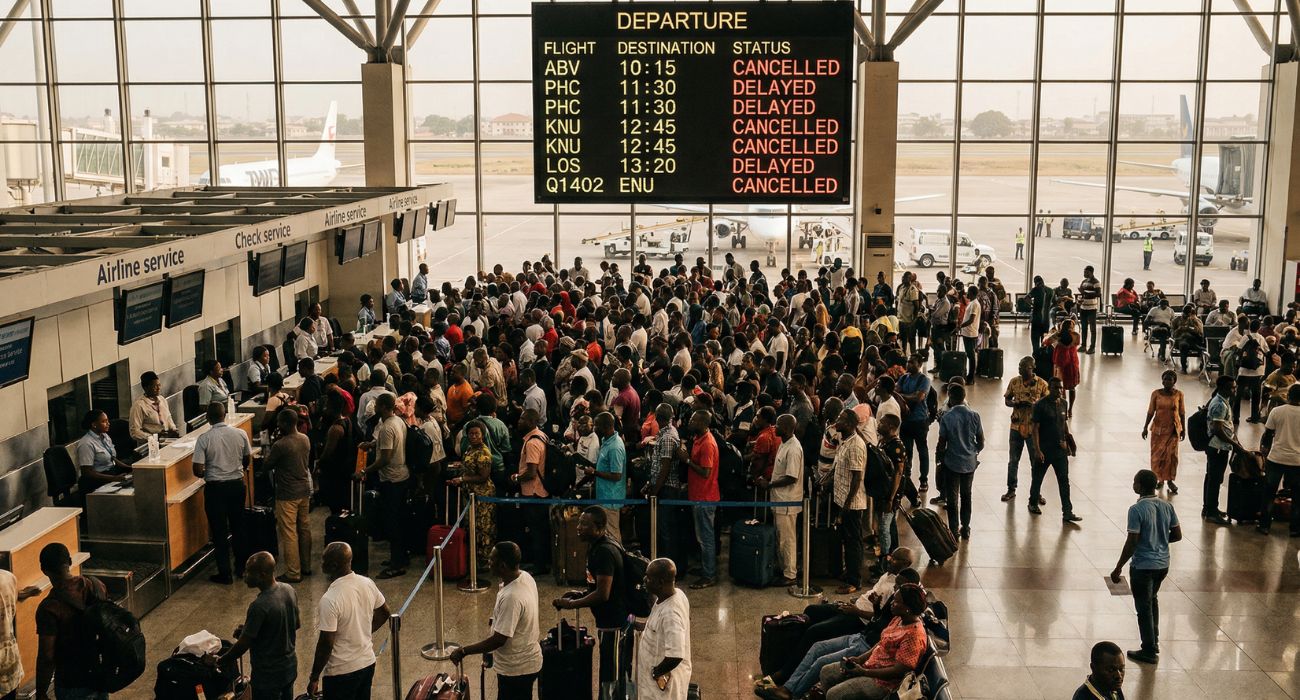
Image generated by AI
🚨 CRISIS ALERT: Nigerian Aviation Industry Faces Total Shutdown
Nigeria's entire domestic aviation sector is teetering on the edge of collapse. The Airline Operators of Nigeria (AON) have issued an ultimatum that nationwide flight suspensions could begin as early as April 20, 2026, unless the federal government intervenes immediately to address a catastrophic fuel pricing crisis.
The Numbers Behind the Crisis
The scale of the fuel price surge is staggering by any measure:
| Metric | Before Crisis | Current | Change |
|---|---|---|---|
| Jet A1 Fuel Price | ₦900/liter | ₦3,300/liter | +267% |
| Fuel as % of Operating Costs | 25–30% | 40%+ | +10–15 pts |
| Grounded Airlines | 0 | 1 (since March 13) | — |
| Shutdown Deadline | — | April 20, 2026 | Imminent |
While global crude oil prices rose by approximately 30% during this same period, Nigerian aviation fuel prices skyrocketed by nearly ten times that rate — a disparity the AON has described as "astronomical and unsustainable."
One Airline Already Grounded
One Nigerian carrier has already ceased all operations since March 13, 2026, becoming the first casualty of the fuel crisis. The remaining airlines have continued flying at mounting losses, absorbing costs out of commitment to national service — but their runway is nearly exhausted.
The AON has made their position unambiguous: "Without immediate relief from escalating fuel prices, the country's air travel sector could be grounded as early as April 20, 2026."
How This Crisis Impacts Travelers and Businesses
For Domestic Travelers
Passengers with bookings on Nigerian domestic routes after April 20 face immediate uncertainty. Airlines are unable to confirm flight operations beyond that date without government intervention. Travelers should:
- Contact their airline immediately for written contingency plans
- Monitor official AON announcements for any deadline extensions
- Prepare alternative transport options for journeys between major cities
For Corporate and Business Travel
Air connectivity between Nigeria's commercial hubs — Lagos, Abuja, Port Harcourt, Kano — underpins significant economic activity. A full suspension would trigger:
- Corporate travel paralysis across major business corridors
- Supply chain disruptions for time-sensitive air cargo
- Conference and event cancellations reliant on domestic connectivity
For Tourism and Hospitality
International visitors relying on domestic feeder flights to reach tourism destinations would face severely reduced accessibility. Hotel and hospitality businesses are already preparing contingency plans as inbound and domestic tourism faces potential collapse.
Three Pathways to Avert Disaster
The AON has outlined what would be required to prevent a full shutdown:
1. Government Emergency Intervention Immediate implementation of price controls on aviation fuel, a targeted subsidy program for carriers, and tax relief on aviation-related expenses could stabilize the sector.
2. Fuel Marketer Accountability Transparent, market-aligned fuel pricing and collaborative negotiations between fuel marketers, airlines, and government representatives remain essential to any medium-term solution.
3. Airline Adaptation Airlines themselves are exploring ultra-efficient fuel management protocols, route optimization to cut consumption, and accelerated fleet modernization — though these measures alone cannot offset a 300% cost increase.
What Happens If No Action Is Taken
Industry analysts warn that a complete shutdown would have cascading consequences extending well beyond April 20:
- Billions of naira in economic losses across aviation and connected industries
- Thousands of direct aviation jobs at risk, with broader supply-chain employment affected
- Long-term damage to investor confidence in Nigerian aviation infrastructure
- Recovery timelines potentially measured in years, not weeks
A Broader Warning for Emerging Markets
Nigeria's aviation fuel crisis is not occurring in isolation. It highlights a structural vulnerability common across emerging markets: fuel supply chains that are poorly insulated from currency volatility, regulatory gaps, and global commodity price shocks. When a country's domestic air travel infrastructure collapses, it reverberates across global supply chains, international investment sentiment, and regional aviation benchmarks.
What This Means for Travelers
If you have domestic flights booked in Nigeria on or after April 20, 2026, the immediate steps are clear:
- Verify your booking status directly with your airline
- Request written flight confirmation for all legs of your journey
- Identify ground transport alternatives for critical trips
- Check travel insurance coverage for flight disruption scenarios
- Follow official AON communications for real-time deadline updates
The situation remains fluid. All eyes are on the Nigerian government and aviation fuel marketers to determine whether emergency intervention will arrive in time to keep Nigeria's skies open.
Related Travel Guides
- 10 U.S. States Implement New Tourism Taxes in 2026: Washington, Hawaii, California and More Reshape Travel Costs
- 2026 FIFA World Cup Travel Packages: North American Services Launch Customized Tours Across USA, Canada, Mexico
- 20 Million Tourists and Counting: How Croatia's Visa-Free Access for USA, Germany, France and 62 Nations is Rewriting European Tourism in 2026
Disclaimer
This article is for informational and educational purposes only. It does not constitute legal, financial, or professional advice. While we strive to provide accurate and up-to-date information, travel policies, regulations, and conditions change rapidly. Always verify information with official sources before making travel decisions. Nomad Lawyer makes no representations about the accuracy, reliability, completeness, or suitability of the information provided. Readers should consult qualified professionals for advice specific to their circumstances. The views expressed in this article are those of the author and do not necessarily reflect the views of Nomad Lawyer.
Kunal K Choudhary
Co-Founder & Contributor
A passionate traveller and tech enthusiast. Kunal contributes to the vision and growth of Nomad Lawyer, bringing fresh perspectives and driving the community forward.
Learn more about our team →