
USA Travel Alert: MSP Airport Faces Tighter Seats Ahead of 2026 MEA Holiday Rush
USA Travel Alert: MSP Airport Faces Tighter Seats Ahead of 2026 MEA Holiday Rush

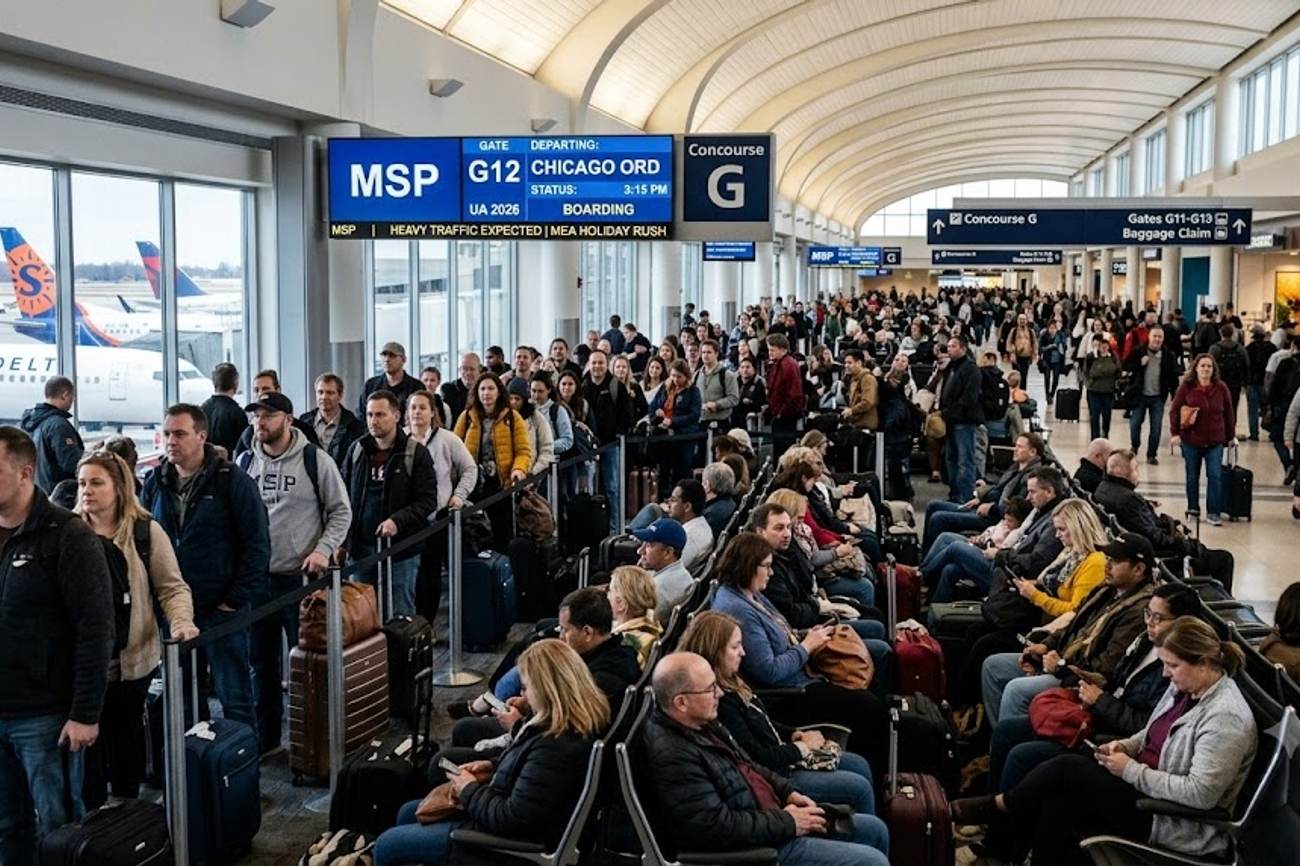
Image generated by AI
[Minneapolis, October 2026] — Minneapolis–Saint Paul International Airport (MSP) is bracing for a high-pressure travel surge during the annual MEA school-break window, coinciding with a significant reduction in available airline seating capacity compared to previous years.
The convergence of the Minnesota Educators Association (MEA) holiday and tighter flight schedules is creating a volatile environment for autumn travel. While passenger demand remains high for family vacations and warm-weather escapes, airlines are operating fewer seats, which officials warn will lead to overcrowded aircraft, diminished flight options, and a heightened risk of prolonged delays during service disruptions.
The Capacity Crunch
The immediate catalyst for this travel alert is the discrepancy between historical demand and current airline scheduling. The MEA break creates a concentrated spike in traffic because thousands of families must adhere to a rigid school calendar, forcing a massive volume of departures and arrivals into a narrow timeframe.
Unlike standard weekend travel, the MEA rush creates a "bottleneck effect" where demand for specific dates outweighs the available inventory. This is compounded by the fact that carriers have reduced their seat offerings for the 2026 season. When airlines operate with thinner margins of capacity, the system loses its "buffer," meaning a single mechanical failure or weather event can trigger a cascading series of cancellations with few available seats for rebooking.
Affected Travelers, Airlines and Logistics
The impact of these constraints is not distributed evenly across all travelers. Certain demographics and routes are facing higher risks of disruption and price volatility.
- Family Units: Parents and students are the most vulnerable due to the non-negotiable nature of school start and end dates. Finding multiple contiguous seats on alternative flights during a disruption is statistically more difficult when capacity is low.
- Leisure Seekers: Those targeting theme parks and warm-weather destinations are seeing the fastest depletion of available inventory.
- Budget Travelers: Passengers booking the lowest available fares often have the least flexibility for changes, making them more susceptible to the risks of a capacity-strained schedule.
- Regional Commuters: Because MSP serves as a primary hub for the Upper Midwest, travelers from neighboring states using the airport as a gateway are also facing tighter connection windows.
The scale of the impact is underscored by the airport's sheer volume. According to the Metropolitan Airports Commission, MSP handles roughly 36 million passengers every year. The economic stakes are high, as the airport supports approximately 93,350 jobs and generates an estimated $21.3 billion in economic output for the region.
Practical Traveler Advisory and Strategic Insights
For the average passenger, "reduced capacity" is corporate shorthand for a more stressful airport experience. Here is the plain-language breakdown of how this affects a trip:
Higher Ticket Costs: As the number of available seats drops while demand remains constant, the remaining inventory typically sees price spikes. Last-minute bookings for the MEA window are likely to be significantly more expensive than in previous years.
Zero Flexibility: In a normal travel year, a cancelled flight might mean a three-hour delay before the next available seat opens. In a reduced-capacity environment, the next available seat could be 24 to 48 hours away because the subsequent flights are already filled to 100% capacity.
Congested Infrastructure: The pressure extends beyond the aircraft. Increased demand during this specific window puts extreme stress on Transportation Security Administration (TSA) checkpoints, airport parking garages, and terminal access roads.
Booking Risks: Choosing a flight based solely on the lowest price is now a higher-risk strategy. Passengers are encouraged to prioritize airlines with higher flight frequencies on their specific route, as these carriers provide more "recovery options" if a flight is cancelled.
Managing the MEA Surge
To mitigate the risks of the 2026 autumn rush, MSP officials and aviation experts are urging a shift in passenger behavior. The traditional "arrive and hope" strategy is insufficient given the current capacity constraints.
Passengers are advised to utilize MSP RESERVE, a system that allows travelers to schedule their security screening times at participating checkpoints to avoid unpredictable lines. Additionally, pre-booking airport parking is strongly recommended to avoid the possibility of full lots during the peak departure days.
Travelers preparing for the 2026 MEA holiday rush should monitor updated seating configurations and terminal maps via the Minneapolis-Saint Paul International Airport official portal. These logistics are critical for passengers navigating increased congestion and modified cabin layouts during peak travel windows.
Timing remains the most critical factor. The airport continues to mandate a minimum arrival time of two hours for domestic departures and three hours for international flights. Given the expected crowds—which in 2025 saw peak days with over 52,000 travelers passing through TSA checkpoints—these windows may be the bare minimum required to clear security.
The ripple effect of this capacity crunch extends to the broader Minnesota tourism economy. Since the region relies heavily on air access for conventions, cultural events, and business travel, any sustained reduction in airline seating can stifle the growth of local attractions and hospitality sectors.
FAQ: MSP MEA Travel 2026
How early should I arrive at MSP for my MEA break flight? Arrive at least two hours before domestic flights and three hours before international departures. Given the reduced airline capacity and high passenger volume, expect longer-than-usual queues at security and check-in counters.
What happens if my flight is cancelled during this period? Because airlines are operating fewer seats, rebooking will be more difficult. Check your airline's app immediately for alternatives and consider contacting customer service via social media or phone to secure the next available seat.
How can I avoid long security lines at MSP? Use the MSP RESERVE service to schedule a specific time for your security screening. This helps distribute the passenger load and reduces the time spent standing in checkpoints.
Will reduced airline seats lead to higher fares? Yes. Lower supply coupled with the high demand of the MEA school break typically leads to increased ticket prices for the remaining available seats.
Travelers are urged to monitor flight status in real-time as carriers adjust aircraft assignments to meet demand.
Tags: MSP-Airport-2026, MEA-School-Break, Metropolitan-Airports-Commission, Minnesota-Tourism-2026, TSA-Minneapolis
Related Travel Guides
- Hundreds of Travelers Impacted Over Asia as 3,744 Delays and 268 Cancellations Hit Mumbai, Jeddah and More Airports
- Flights Cancelled Across United States As Chicago, Washington, And Other Major Airports Cancel 275 And Delay 4,218
- Emirates and Medical Tourism Association Forge Alliance to Shape Global Healthcare Travel
Disclaimer
This article is for informational and educational purposes only. It does not constitute legal, financial, or professional advice. While we strive to provide accurate and up-to-date information, travel policies, regulations, and conditions change rapidly. Always verify information with official sources before making travel decisions. Nomad Lawyer makes no representations about the accuracy, reliability, completeness, or suitability of the information provided. Readers should consult qualified professionals for advice specific to their circumstances. The views expressed in this article are those of the author and do not necessarily reflect the views of Nomad Lawyer.
Preeti Gunjan
Contributor & Community Manager
A passionate traveller and community builder. Preeti helps grow the Nomad Lawyer community, fostering engagement and bringing the reader experience to life.
Learn more about our team →