
US Unites Germany and More Countries as Istanbul Sees Massive Foreign Visitor Share in Tourism Growth
US Unites Germany and More Countries as Istanbul Sees Massive Foreign Visitor Share in Tourism Growth

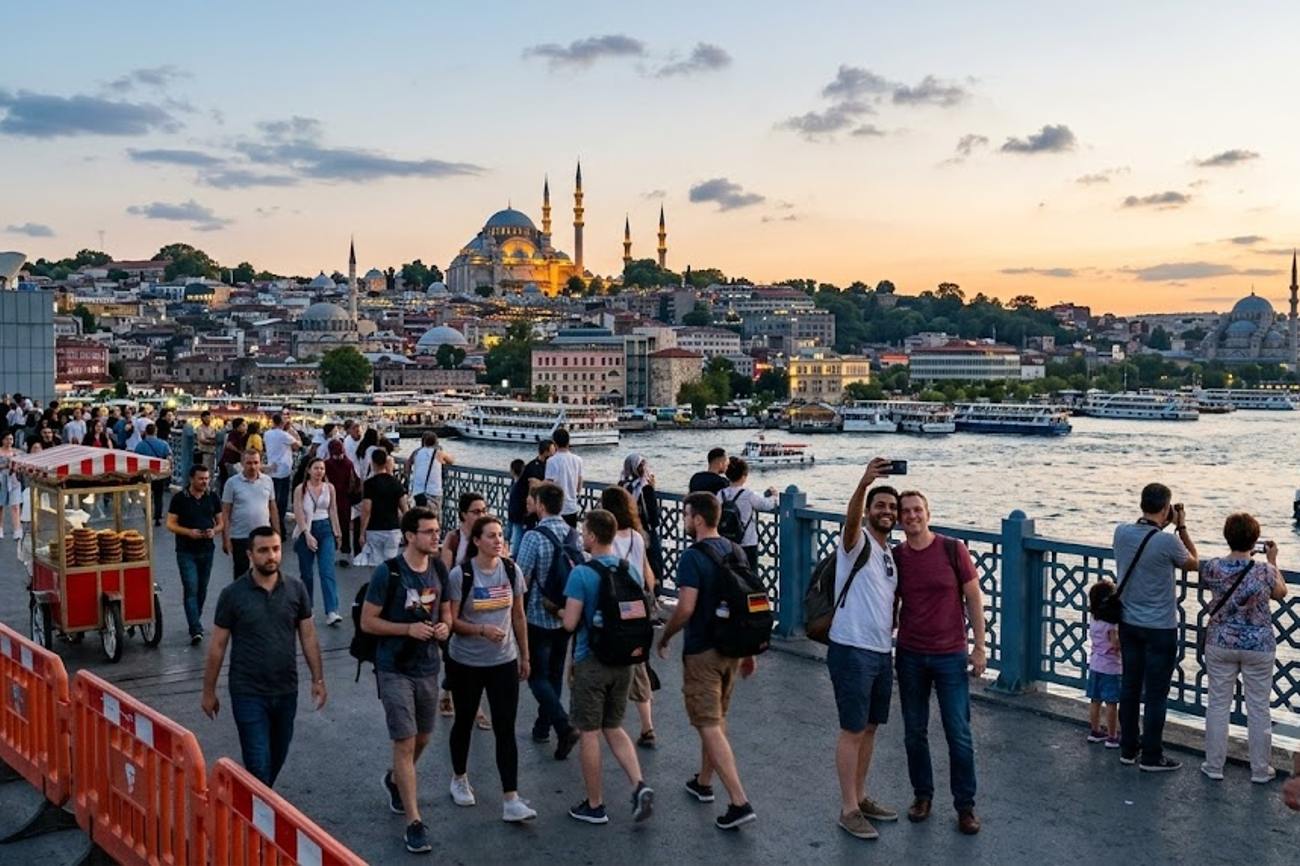
Image generated by AI
[Istanbul, May 2026] — Istanbul has officially become the most visited city on Earth, recording a historic 18.97 million foreign visitor entries in 2025. This milestone marks a consistent upward trajectory for the Turkish metropolis, which is now outperforming major Western European capitals in both total arrival volumes and overall revenue generation.
The surge is driven by a strategic pivot in source markets and the city's dual role as a global transit hub and a primary destination. While broader national tourism in Türkiye has seen a slight cooling in early 2026, Istanbul remains the country's dominant gateway, absorbing over half of all international arrivals. The growth is underpinned by a diversified visitor base, with a significant shift in demographics moving away from traditional US and European markets toward the Russian Federation and neighboring regions.
The Catalyst for Record Growth
The current tourism boom is the result of a rapid post-pandemic recovery that far exceeded pre-2020 benchmarks. In 2020, the city suffered a 66% collapse in tourism, with foreign visitors plummeting to 5 million compared to the 14.91 million recorded in 2019. However, the recovery was aggressive; by 2021, arrivals climbed to 9.03 million, and by 2022, the city surpassed its previous peak with 16.02 million guests.
This resilience is attributed to Istanbul's unique position as a bridge between Europe and Asia, supported by expanded aviation infrastructure and targeted diplomatic policies. Unlike many Mediterranean rivals that rely on seasonal leisure travel, Istanbul operates as a year-round engine fueled by three distinct sectors:
- Global Aviation: Serving as a primary connection point for long-haul flights.
- Medical Tourism: Attracting a steady stream of international patients for specialized procedures.
- Corporate and Diplomatic Hubs: Maintaining high volumes of business travel regardless of the season.
Between 2014 and 2025, the city maintained an annual average of 13.13 million foreign entries, providing a stable baseline that allowed for the explosive growth seen in the last 24 months.
Market Breakdown and Passenger Impact
The volume of traffic entering the city has reached a staggering scale. In 2025, an average of 51,980 foreign visitors arrived daily, up from 50,770 in 2024. While July was the peak month with 1.88 million entries, the city maintains high activity even in its slowest period; March 2025 recorded 1.23 million entries, which is still significantly higher than the peak seasons of many other global cities.
Impacted Markets and Route Trends:
| Market Segment | 2025 Performance | 2026 Trend | Primary Driver |
|---|---|---|---|
| Russian Federation | 2.02 Million Visitors | Increasing (11.34% share in Jan) | Visa-free travel & airspace restrictions |
| Western Europe/US | Declining Share | Shifting toward regional hubs | Geopolitical and economic pivots |
| Transit Passengers | High Volume | Robust (Winter surge) | Turkish Airlines connectivity |
| National Türkiye | 15.23M (Jan-May '26) | 2.56% Year-on-Year Decline | Cooling demand in coastal resorts |
The Russian market has emerged as the single most influential demographic. In 2025, Russian citizens accounted for 10.7% of all foreign entries. This dominance persisted into 2026, with Russians making up 11.34% of arrivals in January and 10.28% in February. This trend is largely fueled by the restriction of Russian access to Western European airspace, making Istanbul the primary alternative for luxury and leisure travel.
What This Means for Travelers
For passengers booking trips to or through Istanbul, the record-breaking numbers translate to specific operational challenges and opportunities.
1. Airport Congestion: With over 50,000 new foreign arrivals daily, Istanbul Airport (IST) is operating at near-maximum capacity. Travelers should expect longer queues at immigration and security, particularly during the peak window of July through October.
2. Accommodation Pricing: The shift toward year-round tourism—evidenced by the 1.35 million arrivals in January 2026—means that "off-season" discounts are disappearing. Hotels in the city center are seeing higher occupancy rates in winter than in previous decades.
3. Transit Efficiency: The city's role as a global hub means that transit tourism is a primary driver. Passengers with short layovers may find city-center transfers more congested than usual, necessitating more generous connection times.
4. Market Shifts: The heavy concentration of Russian and regional visitors is altering the retail and hospitality landscape, with more services and signage catering to these demographics in high-traffic tourist zones.
2026 Performance and Future Outlook
The first quarter of 2026 reveals a maturing market. January saw a strong start with 1,359,798 visitors, a 7.18% increase over January 2025. While February experienced a slight dip of 1.78% (1,233,088 entries), the overall trend remains dominant. Between January and March 2026, Istanbul accounted for 56.51% of all foreign entries into Türkiye, totaling 3,863,647 people.
This local strength stands in contrast to a cooling national trend. Total arrivals to Türkiye between January and May 2026 fell by 2.56% to 15.23 million. May 2026 specifically saw a 3.58% decrease (4.86 million arrivals), following a steeper 9.4% drop in April. This suggests that while coastal resort towns are struggling with a decline in demand, Istanbul’s diversified model—combining business, medicine, and transit—insulates it from the volatility affecting the rest of the country.
Looking ahead, the Ministry of Culture and Tourism is tasked with managing the stress these numbers place on city infrastructure. The challenge for the remainder of 2026 will be balancing the financial gains of record-breaking tourism with the social and physical burden placed on the city's transport and housing sectors.
FAQ: Istanbul Tourism 2026
Is Istanbul still a seasonal destination? No. While July (1.88 million) and October (1.86 million) remain the busiest months, the city now maintains a massive baseline of visitors year-round, with even the slowest month (March) seeing over 1.2 million arrivals.
Why are Russian visitor numbers increasing? A combination of visa-free travel arrangements and geopolitical restrictions on Russian flights into Western Europe has positioned Istanbul as the primary international gateway for Russian travelers.
How does Istanbul's growth compare to the rest of Türkiye? Istanbul is currently outperforming the national average. While total national arrivals dropped 2.56% in the first five months of 2026, Istanbul continues to capture the majority (over 56%) of the country's foreign visitors.
What is the best time to avoid crowds in Istanbul? Historically, March is the quietest month, though it still attracts millions. Travelers should avoid the July-October window if they wish to avoid the highest peaks of congestion.
Istanbul is no longer just a stopover; it is the center of gravity for global travel.
#IstanbulTourism2026 #ISTAirport #TurkishAirlines #RussiaToIstanbul #GlobalTravelTrends #TurkishMinistryOfTourism
Related Travel Guides
- UAE and Finland Lead 2026 Travel Transformation as AI Integration, Lapland Ski Escapes, and Experience-Led Tourism Reshape Global Demand
- Scottsdale Resort & Spa Welcomes Jake Rodriguez as New General Manager for Landmark Anniversary Year
- Vivian Lacroix Joins The LINE DC to Drive Catering Sales and Events Growth
Disclaimer
This article is for informational and educational purposes only. It does not constitute legal, financial, or professional advice. While we strive to provide accurate and up-to-date information, travel policies, regulations, and conditions change rapidly. Always verify information with official sources before making travel decisions. Nomad Lawyer makes no representations about the accuracy, reliability, completeness, or suitability of the information provided. Readers should consult qualified professionals for advice specific to their circumstances. The views expressed in this article are those of the author and do not necessarily reflect the views of Nomad Lawyer.
Naina Thakur
Contributor & Travel Specialist
Travel enthusiast and legal writer covering visa regulations, responsible tourism, and cultural journeys across global destinations.
Learn more about our team →